17-07-2026
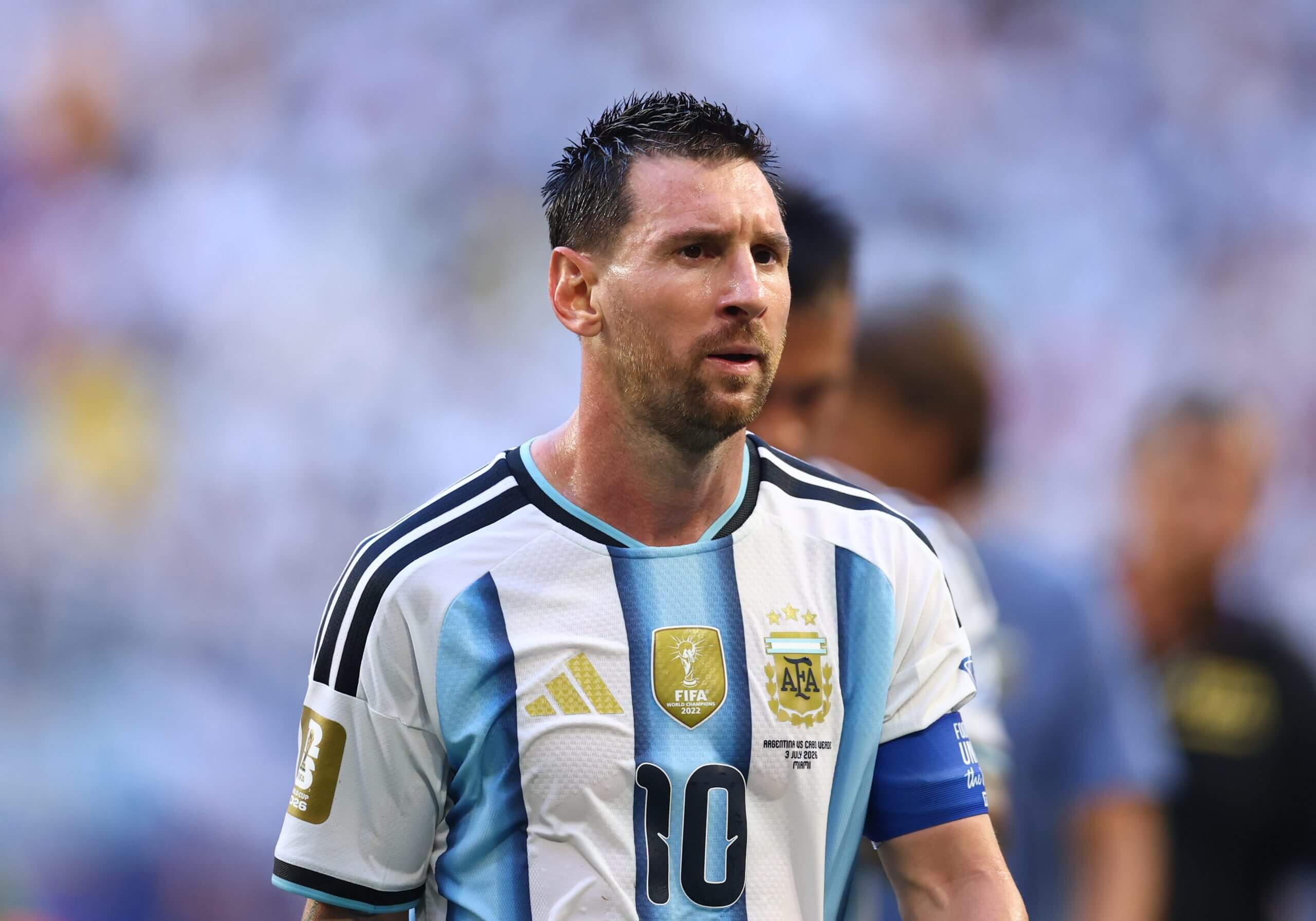
Argentina defeated England 2-1 in a tense, physical World Cup semifinal in Atlanta to secure a place in the final against Spain at MetLife Stadium. England took the lead in the 55th minute through Anthony Gordon, who finished a cross from Morgan Rogers, but Argentina responded late with a brilliant long-range equalizer from Enzo Fernandez in the 85th minute and a stoppage-time header from substitute Lautaro Martinez, both assisted by Lionel Messi. The win extended Argentina’s dramatic comeback trend throughout the tournament and deepened one of soccer’s most historic rivalries, especially given the countries’ long World Cup history and the political tensions that have surrounded their meetings, including references to the Falklands/Malvinas dispute. The article also highlights Messi’s continuing quest to lead Argentina to a second straight World Cup title and the significance of the loss for England, which again fell short in a semifinal. The match was marked by rough play, few chances in the first half, and heavy emotions at the final whistle, with Argentina celebrating exuberantly and England left devastated.
Entities: Argentina, England, Spain, Atlanta, Georgia, MetLife Stadium • Tone: analytical • Sentiment: neutral • Intent: inform
17-07-2026
The article examines how the 2026 FIFA World Cup semifinal between England and Argentina carried extraordinary emotional and historical weight beyond the pitch. Argentina’s 2-1 win, led by Lionel Messi, sent the team to the final and revived one of soccer’s most famous rivalries. The piece explains that the bitterness between the two nations is rooted in the Falklands/Malvinas dispute, especially the 1982 Falklands War, which still shapes public memory and national identity in both countries. It also revisits the most iconic football moment in the rivalry: Diego Maradona’s controversial 1986 “Hand of God” goal and his subsequent remarks framing it as symbolic revenge against England. The article traces other key encounters, including Argentina’s 1998 penalty-shootout win and England’s 2002 group-stage victory, to show how the rivalry has repeatedly resurfaced in major tournaments. Leading into the semifinal, players and coaches on both sides acknowledged the match’s emotional intensity, even when some tried to frame it as “just a football game.” The article presents the game as a rare sporting event where politics, war, cheating accusations, national pride, and football greatness all intersect.
Entities: England, Argentina, 2026 FIFA World Cup, Lionel Messi, Harry Kane • Tone: analytical • Sentiment: neutral • Intent: inform
17-07-2026
This opinion-style sports column riffs on the coincidence that Lionel Messi once held and bathed an infant Lamine Yamal during a 2007 UNICEF charity calendar shoot, and now, nearly two decades later, the two Spanish- and Argentina-linked stars are poised to face each other in the 2026 World Cup final at MetLife Stadium. The piece frames the matchup as something almost cinematic or preordained, asking whether the “soccer gods” somehow arranged the meeting and marveling at how viral old photos of Messi with baby Yamal seem to forecast the future. It notes that Yamal, now 19 and a rising Spanish phenom, was one of 12 babies chosen for the calendar by raffle and happened to be paired with Messi.
The article expands the theme by citing other famous images of future stars interacting with athletic legends, including Michael Jordan with Katie Ledecky, Lindsey Vonn meeting Picabo Street, and Patrick Mahomes playing baseball with Mike Hampton. The author uses these examples to underscore how strange and memorable such moments can feel in hindsight, but also insists that the Messi-Yamal image is uniquely unbelievable. The tone remains playful and incredulous, leaning into the idea that life sometimes resembles a script too absurd to be fiction. The writer ultimately declares support for Spain, especially players Mikel Oyarzabal and Nico Williams, while acknowledging Messi’s greatness and contrasting his established legacy with Yamal’s still-developing career.
Entities: Lionel Messi, Lamine Yamal, Spain, Argentina, World Cup final • Tone: analytical • Sentiment: neutral • Intent: analyze
17-07-2026
The article is a panel-style predictions piece from The Athletic ahead of the 2026 World Cup final between Spain and Argentina at MetLife Stadium. It frames the matchup as a meeting between two superstar-led teams: Spain, featuring Lamine Yamal, and Argentina, led by Lionel Messi. The piece notes that Argentina reached the final after a dramatic comeback against England, while Spain arrived after an emphatic win over France. Beyond predicting the winner, the writers also weigh in on the major individual awards to be decided after the final, including the Golden Ball, Golden Glove, and Golden Boot.
Most of the writers pick Spain to win, citing their tactical discipline, confidence, control of possession, and the overall cohesion they’ve shown throughout the tournament. Several argue that Spain look like the most complete and in-sync team, capable of strangling opponents and managing high-pressure matches. A smaller number of contributors back Argentina, emphasizing their resilience, emotional momentum, and the intangible force of playing for Messi’s legacy. The article also debates whether Spain and Argentina are truly the two best teams in the world, with most writers acknowledging that France was arguably the other elite team and might have been stronger than Argentina over the full tournament, even though Spain eliminated them decisively. The article’s structure is a set of short, opinionated commentary blocks rather than a single narrative report, and its purpose is to preview the final by collecting expert takes and highlighting the key storylines around the final and individual honors.
Entities: Spain, Argentina, World Cup final, MetLife Stadium, New Jersey • Tone: analytical • Sentiment: neutral • Intent: analyze
17-07-2026
The article tells the unlikely but compelling backstory of a famous photograph taken in December 2007 that shows a 20-year-old Lionel Messi with a five-month-old Lamine Yamal in a baby bath. Photographer Joan Monfort explains how difficult it was to create a natural image between an introverted young Messi and a baby who did not know him, and how Yamal’s mother played an important role in making the shoot work. The photo was originally part of a Barcelona charity calendar, raising money for UNICEF and other causes, and was largely forgotten until it resurfaced and went viral during Euro 2024 when Yamal’s father posted it online. The article emphasizes the striking coincidence that the baby in the photo has grown into Barcelona’s heir apparent to Messi and is now set to face Messi in the 2026 World Cup final, Spain versus Argentina. Monfort reflects on the randomness, destiny, and historical significance of the image, noting that it is now the most famous photograph of his career. The piece frames the photo as a rare, almost mythical overlap of football history: Messi at the start of his legendary rise and Yamal at the beginning of his own, now meeting on the sport’s biggest stage.
Entities: Lionel Messi, Lamine Yamal, Joan Monfort, Barcelona, Camp Nou • Tone: analytical • Sentiment: neutral • Intent: inform