17-07-2026
The article reports that Andy Burnham, the former Greater Manchester mayor and long-time Labour figure, is on course to become the United Kingdom’s next prime minister after Keir Starmer’s resignation. Burnham secured nominations from 322 of Labour’s 403 MPs on the first day of the leadership process, far exceeding the threshold needed to enter the contest and effectively leaving no realistic path for rivals. Fox News frames his rise as unusually rapid and politically unusual because Britain’s parliamentary system allows the governing party to replace its leader without a general election, meaning Burnham could be confirmed as Labour leader and then appointed prime minister by King Charles III within days. The piece emphasizes that this path has drawn criticism from opponents and analysts who argue that Burnham has not faced the kind of scrutiny that typically comes with a competitive leadership race or a national election. It quotes critics saying he lacks a fresh mandate and calling for a general election before he takes office. The article then provides background on Burnham’s political career: his upbringing in northwest England, education at Cambridge, election to Parliament in 2001, ministerial roles under Tony Blair and Gordon Brown, earlier unsuccessful Labour leadership bids, and his years as Greater Manchester mayor. It highlights some of his signature achievements, such as the Bee Network public-control bus reform and his advocacy for accountability for the Hillsborough disaster victims’ families.
Entities: Andy Burnham, Keir Starmer, Labour Party, King Charles III, Donald Trump • Tone: analytical • Sentiment: neutral • Intent: inform
17-07-2026
The article explains the procedural steps by which Andy Burnham is expected to become Britain’s next prime minister after Keir Starmer’s resignation. It emphasizes that in Britain’s parliamentary system, voters elect a party rather than a prime minister directly, so the governing Labour Party’s choice determines who becomes leader of the country. Because Burnham has secured overwhelming support and faces no meaningful opposition in the Labour leadership race, his rise to the premiership is presented as largely a formality.
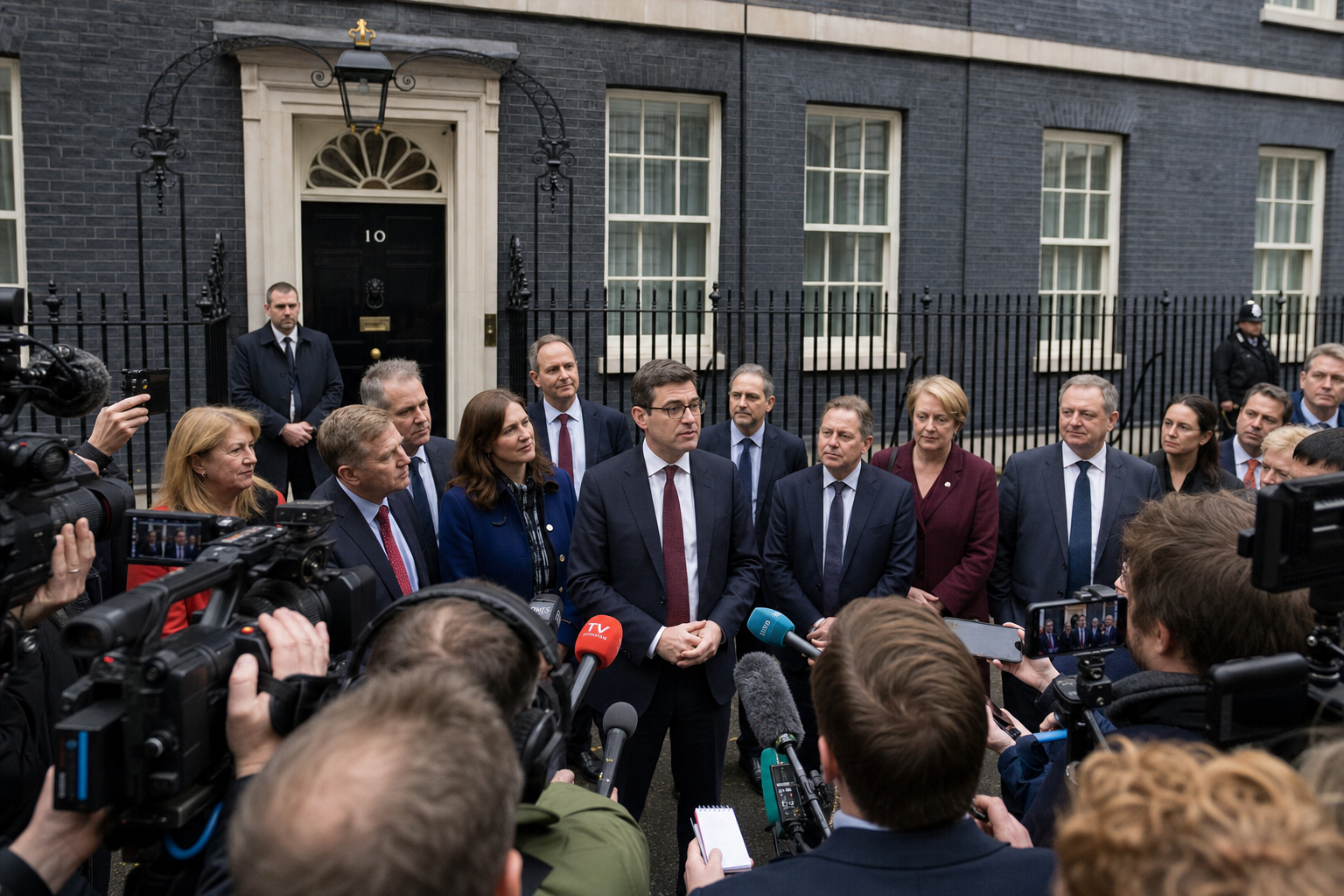
The piece walks readers through the expected transition in five stages: Labour will officially announce Burnham as party leader at a special conference; Starmer will then travel to Buckingham Palace to formally resign to King Charles III; Burnham will shortly afterward be invited by the king to form a government in the traditional “kissing hands” audience; he will then proceed to Downing Street for a public first appearance; and finally he will begin the practical work of governing by appointing a cabinet and setting his policy agenda. The article notes that Burnham’s priorities include raising living standards, devolving power away from London, and establishing a prime ministerial office branch in Manchester. Overall, the article is a straightforward explainer about the mechanics and symbolism of a British leadership transition rather than a political analysis of Burnham’s ideology or likely governing outcomes.
Entities: Andy Burnham, Keir Starmer, King Charles III, Labour Party, Parliament • Tone: analytical • Sentiment: neutral • Intent: inform
17-07-2026
The article examines the economic agenda awaiting Andy Burnham as he prepares to become Britain’s new prime minister, arguing that despite his promise of “good growth in every British postcode,” he inherits many of the same structural problems that have frustrated recent British leaders. Burnham’s broad strategy centers on devolution: shifting power from London to local officials so regions can make more of their own economic decisions. He also wants to bring more utilities and services under public control and reduce the cost of living, though he has not yet detailed his full program.
The piece emphasizes that Britain’s core challenge is stagnant growth. The economy has expanded only modestly since the 2008 financial crisis, productivity remains weak, inflation is stubborn, and public debt is high. These issues are compounded by the long-term effects of Brexit, underinvestment, and consumer caution. Burnham is further constrained by fiscal rules he has pledged to keep and by his party’s refusal to raise major taxes.
The article presents Manchester, where Burnham served as mayor, as a possible model for the rest of the country. Its revival illustrates how local control can help attract investment and improve productivity. Economists cited in the article say devolution could better align education, training, and transportation with local labor-market needs and reduce regional inequality. Still, the article stresses that Britain’s fragmented local-government system and entrenched centralization make reform difficult, and any economic benefits are likely to come slowly rather than immediately.
Entities: Andy Burnham, Britain, United Kingdom, Westminster, Greater Manchester • Tone: analytical • Sentiment: neutral • Intent: analyze