16-09-2026
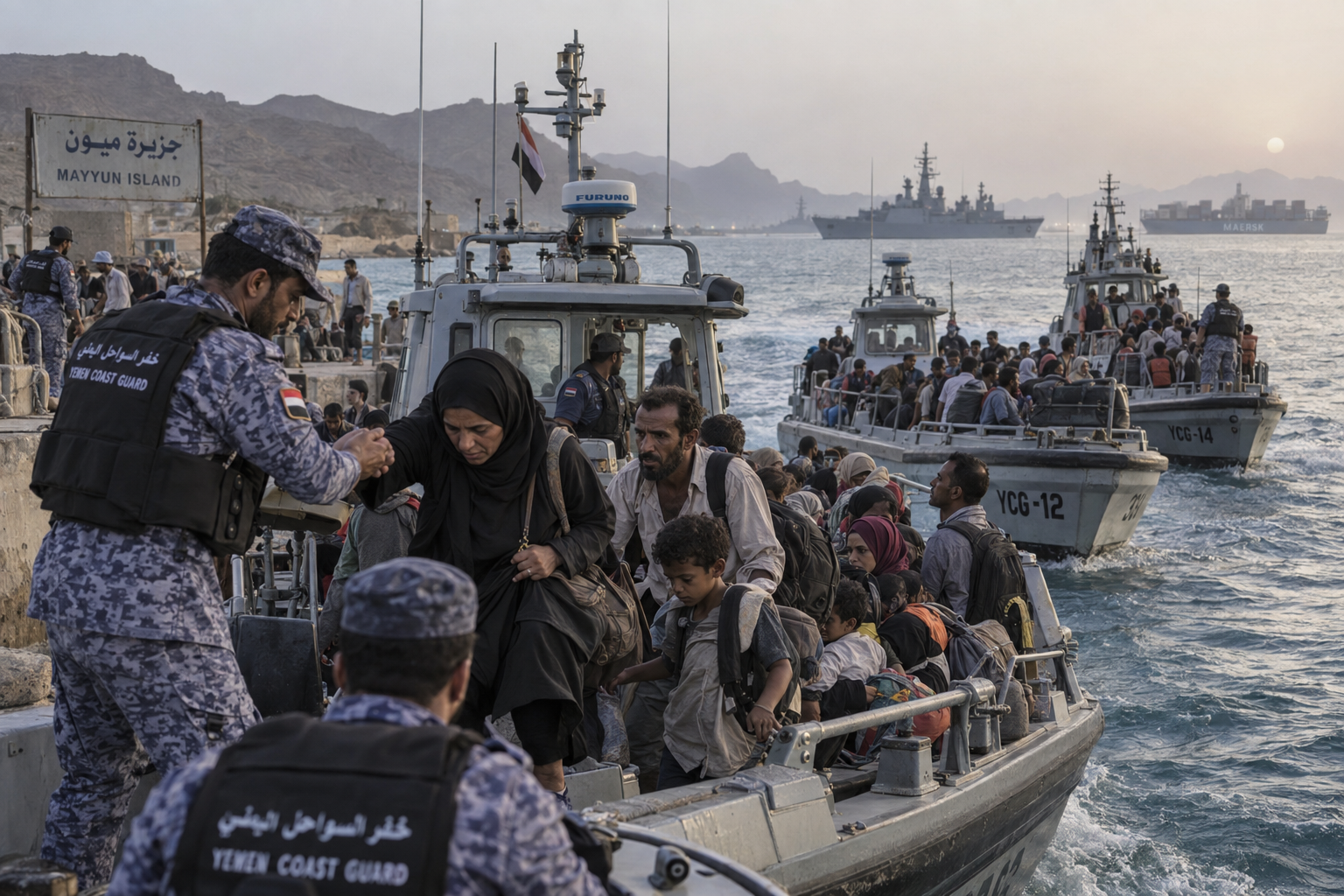
Yemen’s internationally backed coastguard has evacuated to Djibouti after Houthi forces advanced on Mokha and captured Perim island, ending the protection previously provided by forces loyal to Gen Tariq Saleh. The withdrawal threatens internationally supported efforts to combat piracy, intercept weapons shipments and disrupt smuggling routes across the Red Sea, Bab Al Mandeb strait and Gulf of Aden.
The UK had pledged $4 million to upgrade Yemen’s coastguard fleet, refurbish interceptor vessels and purchase two patrol boats. One of the British-sponsored vessels, the Mayun, was stationed on Perim island before its capture. Western governments are expected to continue supporting the coastguard, but assistance will now be restricted largely to areas of the Gulf of Aden still controlled by Yemen’s internationally recognised government.
The Houthis reportedly seized advanced coastal-surveillance equipment supplied to Saleh’s forces. Analysts fear this will allow the group to expand smuggling networks linked to Al Shabab and the Sudanese Armed Forces, while making it easier for weapons, dual-use components and other supplies to reach Houthi-controlled territory. In July, Saleh’s forces intercepted a large Iranian weapons shipment containing more than 750 tonnes of munitions and hardware.
The article also examines Saleh’s retreat to Saudi Arabia and his political background as the nephew of former president Ali Abdullah Saleh. Although his loss of the south-western coast is a major setback, former British ambassador Nicholas Hopton argues that Gen Saleh is likely to re-emerge politically. Experts say the crisis exposes the limits of international policy, which focused on securing Yemen’s coastline without adequately strengthening the country’s government or addressing the wider civil war.
Entities: Yemen, Houthi movement, Yemeni coastguard, Gen Tariq Saleh, Djibouti • Tone: analytical • Sentiment: negative • Intent: analyze
16-09-2026
The article reports that Djibouti has heightened its alert status as people leave Yemen following the Houthi takeover of Mayyun, an island located near the Bab al-Mandeb Strait. The development is presented as a potential security and humanitarian concern for Djibouti, which lies across the strategically important maritime passage from Yemen. The Bab al-Mandeb is a vital waterway connecting the Red Sea with the Gulf of Aden and is heavily used by commercial and other ships, making instability in the area significant for regional security and international maritime traffic.
Al Jazeera’s report is filmed from aboard a Djiboutian naval vessel assigned to protect ships and secure maritime movement through the strait. From that vessel, an Al Jazeera team says it is monitoring the situation on the ground and observing developments in the waterway. The report links the movement of people from Yemen with the Houthi takeover of Mayyun, suggesting that the change in control has prompted concern and displacement across the nearby maritime border.
The available article text provides only a brief overview and does not include detailed figures on the number of people fleeing, information about casualties, or statements from Houthi authorities, Djiboutian officials, or displaced civilians. It also does not describe the precise circumstances of the takeover or identify any specific military or humanitarian response beyond Djibouti’s naval patrol and heightened vigilance. Published on 16 September 2026, the report primarily functions as a concise video-news introduction, highlighting the connection between political change in Yemen, population movement, and the security of one of the world’s key shipping routes.
Entities: Djibouti, Yemen, Houthi movement, Mayyun, Bab al-Mandeb Strait • Tone: urgent • Sentiment: negative • Intent: inform
16-09-2026
The article examines how the Houthi movement’s growing control and military presence around Yemen’s coast is increasing economic and geopolitical pressure on Egypt, as well as on Saudi Arabia. The Houthis control Mayun, or Perim, Island at the southern entrance to the Red Sea and have threatened to restrict passage for Saudi-linked ships while allowing other vessels to transit. Although traffic through the Bab el-Mandeb Strait has not yet collapsed, maritime activity has declined substantially from its mid-July average, raising concerns about possible disruption to the Suez Canal route between Asia and Europe.
Egypt is particularly vulnerable because Suez Canal fees are a major source of national income. Houthi attacks in late 2023 contributed to a sharp fall in canal revenues, which the International Monetary Fund estimated at approximately $6 billion in 2024. Revenues had begun recovering as higher oil prices made rerouting ships around Africa more expensive, and the Suez Canal Authority reported a 23% increase in revenue during the 2025–2026 fiscal year. A renewed Houthi offensive could reverse that recovery.
The situation is further complicated by damage to Saudi Arabia’s east-west oil pipeline to Yanbu, which had provided an alternative to the Strait of Hormuz. If both maritime chokepoints become insecure, oil and global trade flows could face wider disruption. Analysts quoted in the article argue that Egypt has limited military options and is unlikely to intervene directly, given its past experience in Yemen and the limited success of Saudi and US efforts against the Houthis. Egypt will probably prioritize diplomacy, although it fears that direct talks could imply recognition of Houthi authority. Cairo must balance its alliance with Saudi Arabia against the economic damage it would suffer from a wider escalation. The eventual impact will depend on whether the Houthis restrict only Saudi-linked vessels or broaden their attacks to international shipping.
Entities: Houthi movement, Egypt, Saudi Arabia, Yemen, Suez Canal • Tone: analytical • Sentiment: negative • Intent: analyze