16-06-2026
Iran’s World Cup coach Amir Ghalenoei said the team was unexpectedly ordered to leave the United States and return to its training base in Tijuana just hours after drawing 2-2 with New Zealand in Inglewood, California. He said the team had expected to stay overnight in the Los Angeles area to recover properly, but was instead told to board a plane immediately. Ghalenoei and captain Mehdi Taremi described the travel and security process as burdensome and criticized the U.S. for denying visas to several important staff members, including federation officials and media personnel. The coach argued that these disruptions left players cramped and unprepared, worsening an already difficult World Cup campaign.
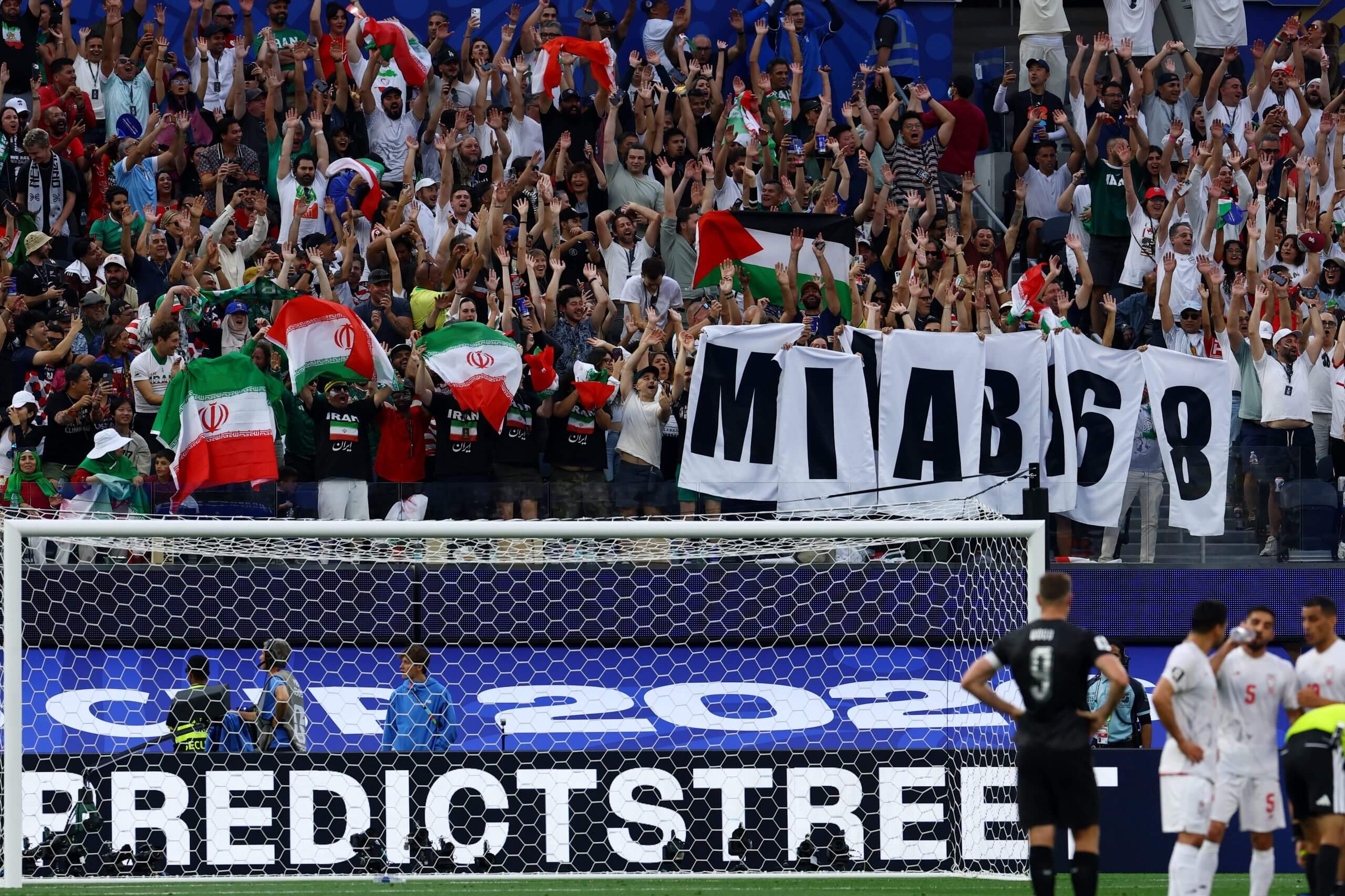
The article places the match in the context of broader political turmoil, noting that Iran’s World Cup preparations have been disrupted since the U.S. and Israel began a war against Iran, and that FIFA rejected Iran’s request to relocate its group-stage games out of the U.S. Despite the off-field difficulties, Iran produced an energetic comeback after conceding twice, drawing support from a large Iranian diaspora crowd at SoFi Stadium. Fans inside the stadium were politically divided, with some protesting the Iranian government and others displaying pre-1979 symbols such as the Lion and Sun emblem. The article also highlights a controversial celebration by Iran’s Mohammad Mohebi and notes that Iran still faces a challenging path in the group stage, with Belgium and Egypt remaining on the schedule.
Entities: Iran, World Cup, Amir Ghalenoei, Mehdi Taremi, Mohammad Mohebi • Tone: analytical • Sentiment: negative • Intent: inform
16-06-2026
Iran’s World Cup opener against New Zealand at SoFi Stadium in Los Angeles was framed by political tension and the aftermath of Iran’s war-disrupted preparations, but on the field it became a compelling 2-2 draw. Iran twice came from behind to salvage a point, with Mohammad Mohebi’s well-worked equalizer and a strong response to New Zealand’s early and renewed leads. New Zealand, despite being one of the tournament’s lowest-ranked teams, impressed throughout, with Chris Wood’s hold-up play and Elijah Just’s two goals giving them real belief and making them competitive against a higher-ranked opponent.
The article highlights how Iran’s preparation was clouded by war, travel difficulties, and public controversy around political symbols and flags. Outside the stadium, a court case over FIFA’s restriction on pre-revolution Iranian flags underscored the charged atmosphere, while inside, supporters displayed a mix of current-state and opposition imagery. The match itself, however, was described as a high-quality football contest, with tactical observations about Iran’s attacking shape and New Zealand’s resilience.
The piece also focuses on Elijah Just’s unusual path to the World Cup, tracing his journey from Auckland to Denmark, Austria, and then Motherwell in Scotland, where he became a standout under coach Jens Berthel Askou. His brace against Iran made him the first Motherwell player to score at a World Cup, adding a notable individual storyline to the group-stage opener. Overall, the article blends match analysis with geopolitical context, fan reaction, and player profiles to show how this World Cup encounter carried significance beyond the scoreline.
Entities: Iran, New Zealand, SoFi Stadium, Los Angeles, World Cup 2026 • Tone: analytical • Sentiment: neutral • Intent: analyze
16-06-2026
The article describes the fraught atmosphere surrounding Iran’s World Cup opener in Los Angeles, where the team became entangled in politics, protest, and diaspora tensions. Iranian fans, anti-regime demonstrators, and pro-team supporters converged around SoFi Stadium, turning the match into a highly charged political event rather than a routine group-stage game. Some Iranian Americans cheered New Zealand, seeing Iran’s team as a tool of the Tehran government, while others defended the players as separate from the regime.
The piece explains that Iran arrived at the tournament under extraordinary strain after months of war and diplomatic disruption. Following a joint U.S.-Israeli attack on Iran and a subsequent framework agreement ending the conflict, the team had to deal with visa delays, heavy security, relocated training arrangements in Mexico, and restrictions on travel within the United States. Several officials were denied visas, and FIFA also withdrew some tickets after sanctions concerns were raised.
Players and coaches said the team was under intense pressure, both from the political situation and from divisions within the Iranian diaspora. Coach Amir Ghalenoei called Iran “the most oppressed team at this World Cup,” while captain Mehdi Taremi said the conditions undermined the spirit of football and left the squad exhausted. The article emphasizes how the team was caught between competing expectations: to represent a country under sanctions and conflict, while being judged by exiled Iranians and protesters projecting their own political grievances onto the players.
Entities: Iran, New Zealand, World Cup, SoFi Stadium, Inglewood, California • Tone: analytical • Sentiment: negative • Intent: inform