16-06-2026
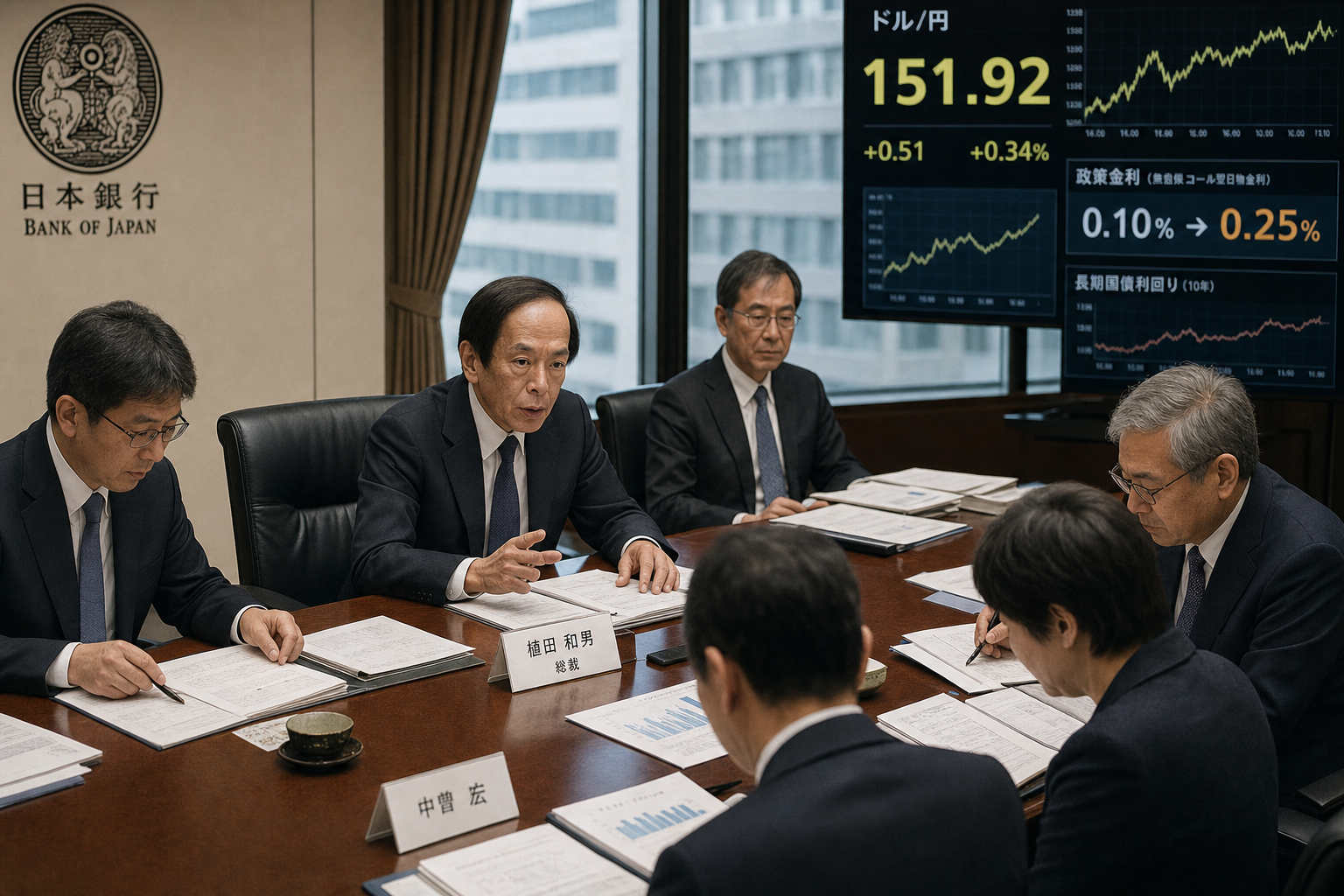
Japan’s central bank, the Bank of Japan, has raised its policy interest rate to 1%, the highest level since 1995, as it responds to rising inflation and higher global energy costs linked in part to the Iran war. The increase from 0.75% marks the second hike since Prime Minister Sanae Takaichi took office and continues a gradual tightening cycle that began in March 2024 after years of near-zero rates and ultra-loose monetary policy. Economists say Japan has shifted from decades of deflation into an inflationary phase, prompting the BOJ to move away from emergency-style policy and toward a more normal framework.
The article explains that inflation pressures remain complicated: wholesale prices rose more than 6% in May year-on-year, but overall inflation was still 1.4% in April, below the BOJ’s 2% target. The bank said the risk of a sharp economic downturn from the Iran war is lower partly because of government measures to cushion household fuel costs, but it also warned that medium- and long-term inflation expectations are rising and underlying inflation could exceed its target. The decision reflects a difficult trade-off between slowing inflation and raising borrowing costs for businesses and the government.
The piece also notes that BOJ governor Kazuo Ueda missed the meeting because of illness, though he has recently supported further rate increases if price risks outweigh economic risks. Prime Minister Sanae Takaichi, who favors higher public spending, has not publicly opposed the BOJ’s tightening. The rate rise also aims to support the yen, which has been under pressure against major currencies. Even after the hike, Japan’s interest rate remains far below those of the US, UK, and Australia, suggesting a broader global shift in monetary policy.
Entities: Bank of Japan (BOJ), Japan, Kazuo Ueda, Sanae Takaichi, Jesper Koll • Tone: analytical • Sentiment: neutral • Intent: inform
16-06-2026
The Bank of Japan raised its policy rate by 25 basis points to 1%, the highest level since 1995, marking a continuation of its policy normalization that began in 2024. The decision, which passed 7-1 with board member Toichiro Asada dissenting in favor of holding rates steady, comes as Japan continues to grapple with a weak yen and gradually rising inflation. Markets reacted modestly: the Nikkei 225 rose, the yen strengthened slightly, and Japanese government bond yields increased.
The BOJ also outlined a continued reduction in government bond purchases, cutting by 200 billion yen per quarter until it halts tapering and maintains monthly JGB purchases of 2 trillion yen starting in April 2027. In its statement, the central bank acknowledged that consumer inflation remains below its 2% target, but warned that rising crude oil prices are feeding through business-to-business transactions and could broaden consumer price pressures.
The article notes that producer prices in Japan rose 6.3% in May, signaling cost-push inflation driven largely by energy. Economists and market strategists said the rate hike reflected growing BOJ concern about inflation rather than growth, while easing fears over supply shocks in the Strait of Hormuz may have given policymakers more confidence. The piece also highlights persistent yen weakness, repeated government intervention in currency markets, and the inflationary effects of a weak currency on imports and public finances. Despite official inflation readings still below target, analysts said government measures such as gasoline tax cuts and free high school have helped suppress measured consumer inflation.
Entities: Bank of Japan, Tokyo, Japan, Toichiro Asada, Nikkei 225 • Tone: analytical • Sentiment: neutral • Intent: inform
16-06-2026
The article reports that the Bank of Japan raised its benchmark interest rate by a quarter point to 1 percent, the highest level in 31 years, in response to expected inflationary pressure from surging energy prices caused by the war in the Middle East and the closure of the Strait of Hormuz. The move reflects a broader shift among major central banks, which are acting more quickly to prevent a repeat of the inflation missteps seen in 2022 after Russia’s invasion of Ukraine. Japanese officials are trying to get ahead of an anticipated spike in prices for oil, gas, and other commodities, with economists expecting the effects to begin appearing in inflation data almost immediately and to persist through the rest of the year.
The decision places Japan’s central bank in a delicate political and economic position. Over the past year, Japan had been slowly moving away from decades of ultralow and negative interest rates as inflation increased. But the rise in rates conflicts with Prime Minister Sanae Takaichi’s preference for a weak yen and low borrowing costs, both of which support exporters and help finance her stimulus-oriented agenda. The yen has weakened sharply, making imports more expensive, and Japanese authorities have spent heavily in an attempt to support the currency with limited effect. Economists and U.S. officials, including Treasury Secretary Scott Bessent, have argued that higher Japanese rates may be necessary to stabilize the yen and reduce political pressure on the Bank of Japan. Overall, the article frames the rate increase as a preemptive defensive move against an inflation shock that Japan believes is already beginning.
Entities: Bank of Japan, interest rates, inflation, war in the Middle East, Strait of Hormuz • Tone: analytical • Sentiment: neutral • Intent: inform