16-06-2026
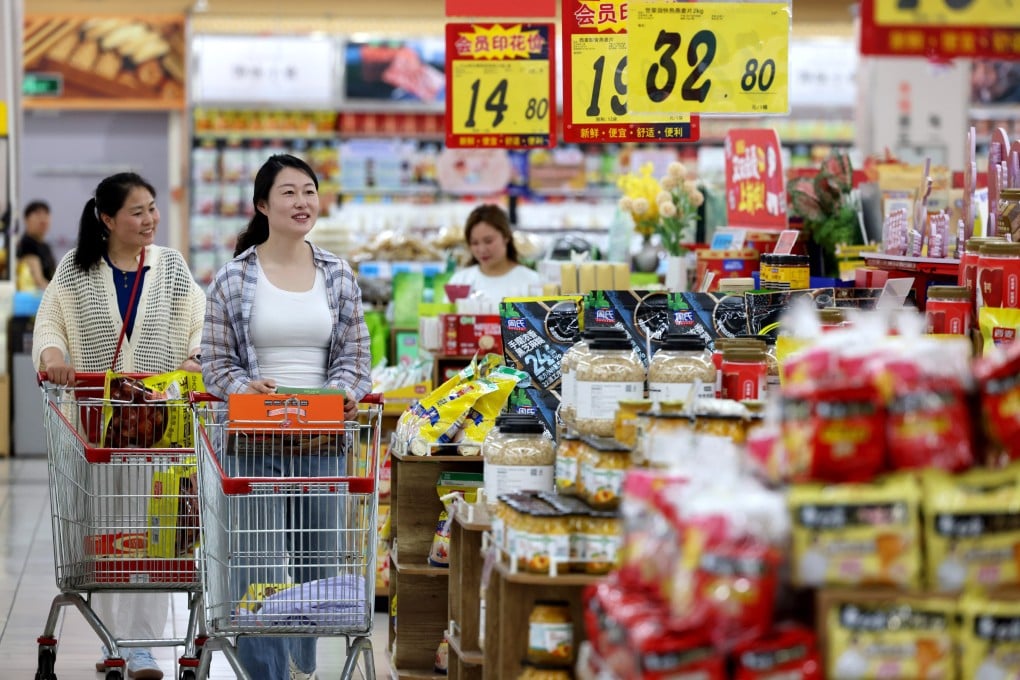
China’s economy weakened further in May, with retail sales posting their first year-over-year decline since December 2022 and fixed-asset investment contracting more than expected, intensifying pressure on Beijing to provide additional stimulus to support domestic demand. Retail sales fell 0.6% from a year earlier, missing economists’ expectations of flat growth and suggesting that consumer spending remained subdued despite the Labor Day holiday. The slowdown was compounded by a sharp deterioration in investment: urban fixed-asset investment fell 4.1% in the January-to-May period, driven by a deep slump in real estate and a first contraction in manufacturing investment since 2020. Infrastructure investment grew only modestly. Industrial output was the main bright spot, rising 4.5% in May and beating forecasts after a weak April, while the unemployment rate improved slightly to 5.1%. The article portrays an economy increasingly split between relatively resilient manufacturing and exports on one side and weak property, consumption, and business confidence on the other. Economists cited in the story warned that growth is likely to slow further and that policymakers may need to fine-tune support measures after second-quarter GDP data is released. The piece also notes that easing Middle East tensions may reduce near-term external risks, but does little to change China’s underlying domestic weakness, including weak pricing power, pressure on corporate margins, and a persistent imbalance between supply and demand.
Entities: China, National Bureau of Statistics, Fu Linghui, Reuters, Beijing • Tone: analytical • Sentiment: negative • Intent: inform
16-06-2026
China’s consumer slowdown worsened in May, with retail sales falling 0.6% from a year earlier, the first year-over-year decline since December 2022. The drop surprised economists because higher energy costs, especially gasoline prices, were expected to support sales, yet spending still weakened—suggesting that households are tightening their belts amid the country’s prolonged housing slump and weak consumer confidence. The article frames the decline as part of a broader split in China’s economy: domestic demand is soft, while exports and industrial production remain relatively strong.
The piece notes that China’s export sector continued to perform well, with exports reaching a record in April and rising further in May to $376.8 billion. Industrial output also improved, helped by strong production in electric vehicles and other high-tech goods. But investment fell in May, even excluding real estate, and private-sector investment was especially weak, indicating few profitable opportunities at home. The weakening domestic economy is also visible in a sharp drop in car sales, especially gasoline-powered vehicles, though electric and hybrid cars continued to hold up.
The article situates these trends in an international context, highlighting concern among Western officials and economists about China’s trade surplus, subsidized exports, and undervalued currency. The G7 summit in France is mentioned as a forum where these issues may be discussed. Overall, the article portrays a Chinese economy increasingly reliant on foreign demand while its own consumers and businesses remain cautious and constrained by the property downturn and broader uncertainty.
Entities: China, Beijing, Shanghai, National Bureau of Statistics, China General Administration of Customs • Tone: analytical • Sentiment: negative • Intent: analyze
16-06-2026
China’s economic data for May showed a sharper-than-expected divergence between strong external demand and weak household spending, reinforcing concerns that the country’s recovery remains unbalanced. Retail sales fell 0.6% year on year, the first decline since the end of China’s Covid-19 lockdowns in late 2022 and a significant miss against economists’ expectation of a slight increase. The drop came even after the Labour Day holiday, suggesting that consumers remain cautious amid uncertainty in the job market and lingering pressure on incomes and confidence.
At the same time, industrial output rose 4.5% year on year, slightly faster than in April, though still below March’s pace, indicating that factories continued to benefit from robust exports even as domestic demand softened. The article frames this as evidence that China’s growth model is still heavily dependent on overseas demand. Analysts quoted in the piece argued that earlier consumption-boosting policies, including trade-in programs for home appliances and electric vehicles, may have pulled spending forward rather than generated lasting momentum. One economist said the effects of those incentives were temporary and warned that policy alone would struggle to deliver a sustained rise in consumption.
Overall, the report suggests that weak retail demand, alongside resilient exports, is likely to intensify discussion of additional stimulus measures as policymakers try to address widening imbalances in the economy.
Entities: China, National Bureau of Statistics (NBS), Standard Chartered, Ding Shuang, Mia Nurmamatin • Tone: analytical • Sentiment: negative • Intent: inform
16-06-2026
China’s first-tier housing markets showed further signs of stabilization in May, with new home prices in Beijing, Shanghai, Guangzhou and Shenzhen collectively edging up 0.2 per cent from the previous month. This marked the third consecutive month of improvement after a prolonged downturn, suggesting that policy support and broader stabilization measures are gradually restoring buyer confidence. Among the major cities, Shanghai and Guangzhou each rose 0.2 per cent month on month, Shenzhen gained 0.4 per cent, while Beijing slipped 0.2 per cent. Nationwide, the improvement was also modestly broader: 16 of the 70 large and medium-sized cities tracked by the National Bureau of Statistics reported monthly price increases, up from 14 in April.
Despite the tentative recovery in prices, the property sector remains under pressure. New commercial property sales reached 2.94 trillion yuan in the first five months of the year, down 13.5 per cent from a year earlier, while residential property sales fell 14.1 per cent. On an annual basis, the four first-tier cities still saw average home prices fall 1.7 per cent in May, though that decline was slightly smaller than in April. Analysts said the data indicate that some cities with strong population inflows, solid economic bases and healthy industrial growth are beginning to benefit from housing demand, especially from younger buyers and those looking to upgrade. Overall, the article portrays a market that is improving, but only gradually and from a still-weak base.
Entities: China, Beijing, Shanghai, Guangzhou, Shenzhen • Tone: analytical • Sentiment: neutral • Intent: inform