15-10-2026
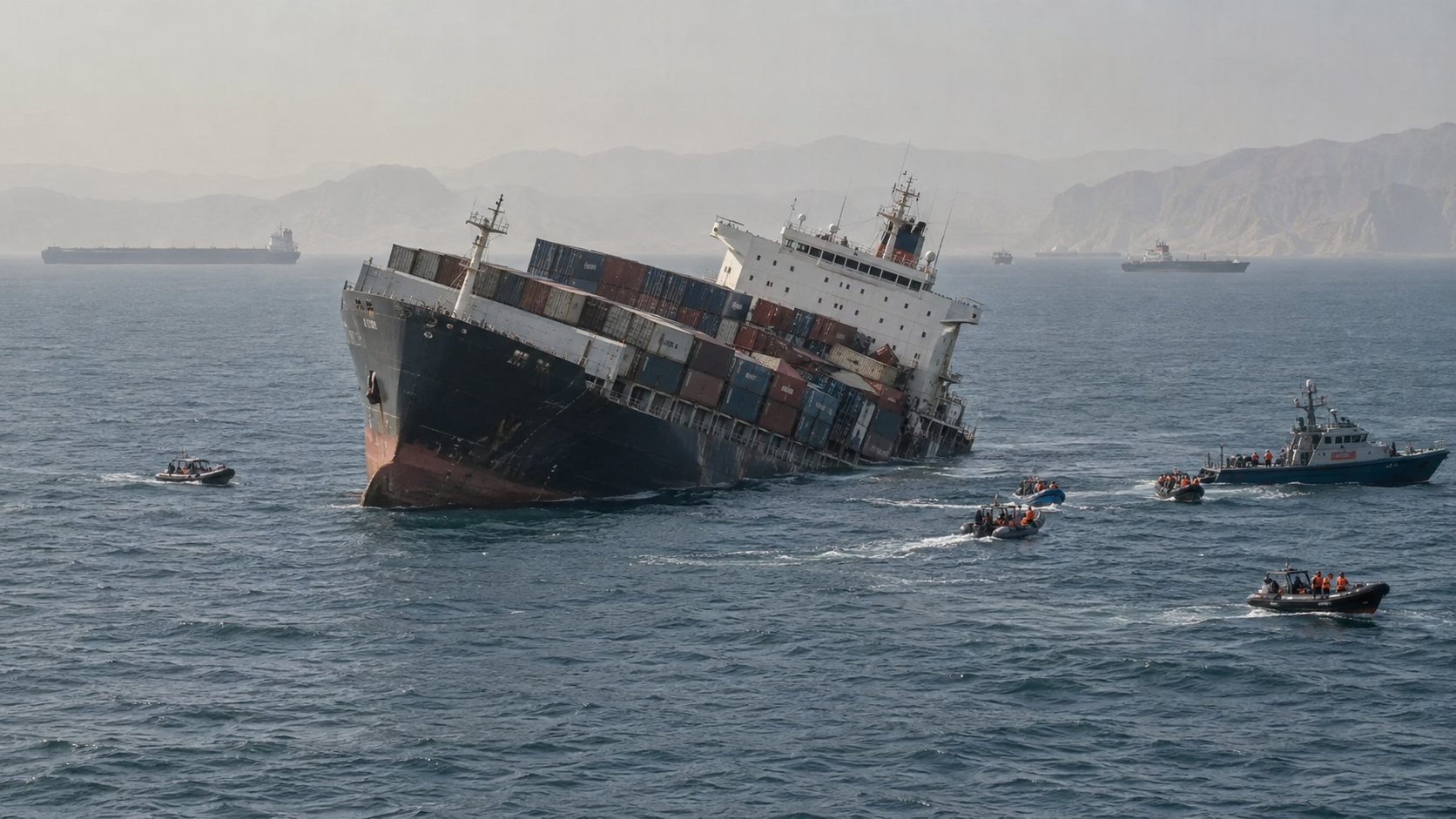
CNBC’s Daily Open reports on rising tensions in the Strait of Hormuz after the Singapore-registered container ship GFS Pride was struck by an unidentified projectile and sank. Its 21 crew members were evacuated safely. A second Singapore-registered vessel, the GFS Giselle, was damaged but reached safe anchorage. Iran’s Revolutionary Guard issued threats against U.S. warships, while U.S. Central Command said American forces and regional partners control the strait. Attacks on shipping and Saudi Aramco facilities have helped push oil prices higher, with Brent reaching $106.06 per barrel and U.S. West Texas Intermediate $95.09.
Higher energy costs contributed to U.S. September inflation exceeding forecasts: headline CPI rose 3.7% year over year and core CPI increased 2.6%. Stocks fell after the report, and Asian markets followed Wall Street lower. U.S. gasoline averaged $4.33 per gallon, compared with about $3.08 a year earlier. Analysts said President Donald Trump’s temporary easing of restrictions on Russian diesel exports was unlikely to meaningfully reduce fuel prices for truckers and farmers.
The article also covers Netflix’s plan to cut roughly 6% of its workforce, or about 1,000 jobs, mainly in product, technology, legal and human resources. Separately, eight U.S. states sued OpenAI, alleging ChatGPT is unsafe and has harmed children and misled parents. Finally, G20 finance ministers and central bank governors are meeting in Bangkok, though U.S. Treasury Secretary Scott Bessent will not attend. IMF Managing Director Kristalina Georgieva said relying on economic growth alone will not reduce U.S. deficits and debt quickly enough, and called for additional fiscal measures.
Entities: Strait of Hormuz, GFS Pride, GFS Giselle, Maritime and Port Authority of Singapore, Iran • Tone: analytical • Sentiment: negative • Intent: inform
15-10-2026
Oil prices declined Thursday as traders weighed the risk of supply disruption from attacks on ships in the Strait of Hormuz against factors that could limit a price surge. Brent crude futures for December delivery fell 1.5% to $104.52 per barrel, while November West Texas Intermediate futures were flat at $94.15. The article links market concern to the sinking of a Singapore-registered vessel in the strategically important waterway and to escalating rhetoric from Iran, which said it was “counting the moments” until it could strike U.S. warships. Singapore’s maritime authority condemned the ship attack as unprovoked, unjustifiable, and a breach of international law.
The International Energy Agency’s October oil market report warned that constraints in diesel markets could persist well into next year. The report also pointed to fresh attacks on Saudi Arabia as a threat to the recovery in oil supply. In response to pressure on prices, the Trump administration was reportedly considering easing sanctions on vessels in the so-called “shadow fleet,” which transport oil and petroleum products from countries including Russia.
Firas Bechwaty, head of business development at online trading platform ICM, said the lack of progress in U.S.-Iran diplomacy left little immediate prospect of a full reopening of the waterway. However, he noted that Saudi crude continued to reach international buyers via alternative routes and that accelerated emergency stock releases by IEA members provided a buffer. These supply alternatives and stock releases helped prevent a sharper rise in prices despite elevated tensions. Overall, the article describes a market balancing serious geopolitical risks and lingering fuel-market constraints against measures and routes that can soften the immediate supply impact.
Entities: Brent crude, West Texas Intermediate (WTI), Strait of Hormuz, Singapore-registered ship sinking, Iran • Tone: analytical • Sentiment: negative • Intent: inform
15-10-2026
Oil shipments through the Strait of Hormuz have risen to more than 12 million barrels per day this month, exceeding last month’s daily average despite a sharp increase in attacks attributed to Iran. TankerTracker.com and maritime analytics firm Kpler report that more than 9 million barrels a day have traveled under US military protection. The attacks have made October the most dangerous period for tankers and cargo ships since the war began, with 26 vessels reportedly targeted so far. A cargo ship sank on Wednesday after being struck by an unknown projectile, and a drone strike set the MT Petro Dolphin ablaze earlier in the week.
Despite the risks, sailors have reportedly earned tens of thousands of dollars more for taking on the dangerous voyages. US Central Command spokesman Capt. Tim Hawkins said about 19 million barrels passed through the strait on Monday and told The New York Times that transits continue despite Iran’s aggression.
However, recent traffic data indicate that the trade is under strain. Kpler recorded nearly 23 million barrels passing through last Thursday, but only about one-tenth of that amount on Wednesday. Its latest six-day average was below 4.6 million barrels per day. Ship-to-ship transfers around the Gulf of Oman also remained relatively low. The volatile security situation, along with repeated Houthi attacks on Saudi energy infrastructure, has helped keep oil prices elevated; Brent crude remained above $104 a barrel on Thursday.
Entities: Strait of Hormuz, Iran, United States military protection, TankerTracker.com, Kpler • Tone: analytical • Sentiment: negative • Intent: inform
15-10-2026
The live report describes escalating risks across the Middle East, with maritime traffic, regional security and civilian welfare all affected by the wider Iran-related conflict. A maritime monitoring firm warned that ships in the Strait of Hormuz remain exposed to indiscriminate attacks even when they switch off tracking systems. Iran’s military separately said an oil tanker caught fire in the Gulf of Oman after allegedly entering a prohibited area with its tracking system disabled; the report does not independently establish the cause of the fire. The monitor said three vessel strikes had occurred in the waterway that week.
The Saudi-led coalition said it intercepted a missile over the Medina region, while the Houthis denied launching an attack. President Donald Trump is considering whether to join Saudi-led operations against the Houthis. The rebels have threatened U.S. personnel and interests if he orders strikes, raising the possibility of deeper U.S. involvement in the conflict.
Other updates describe Hezbollah’s acknowledgment that a large shipment of explosives seized in Lebanon belonged to the group, amid the Lebanese government’s pledge to act against illegal weapons. Reuters reported that the U.S. is considering allowing certain companies to transport non-sanctioned oil using previously sanctioned Iranian shadow-fleet tankers in an effort to reduce shipping costs, though analysts expect limited effects. In Germany, two men were convicted of planning attacks on pro-Israel figures and spying on Jewish people on behalf of Iranian intelligence. The EU-Gulf Cooperation Council summit planned for Riyadh was postponed amid the security situation. Yemen’s government also appealed to the U.N. to help lift the Houthi siege of Taiz, warning that more than four million people face worsening humanitarian conditions and calling for access to essential supplies. The supplied article ends with the beginning of another update about Saudi Arabia’s reported missile interception.
Entities: Strait of Hormuz, Gulf of Oman, Iran, Saudi Arabia, Yemen • Tone: analytical • Sentiment: negative • Intent: inform