15-10-2026
Kenya’s response to imported Ebola cases has mobilised national surveillance, laboratory testing, contact tracing and public communication, but a suspected case in Wajir has drawn attention to whether these measures reach communities beyond Nairobi. The suspected Wajir case—a 20-year-old man who travelled from the Democratic Republic of the Congo through Uganda—tested negative. The investigation nonetheless illustrated why local facilities must be able to recognise possible infections, isolate patients, transport samples safely and explain next steps to residents.
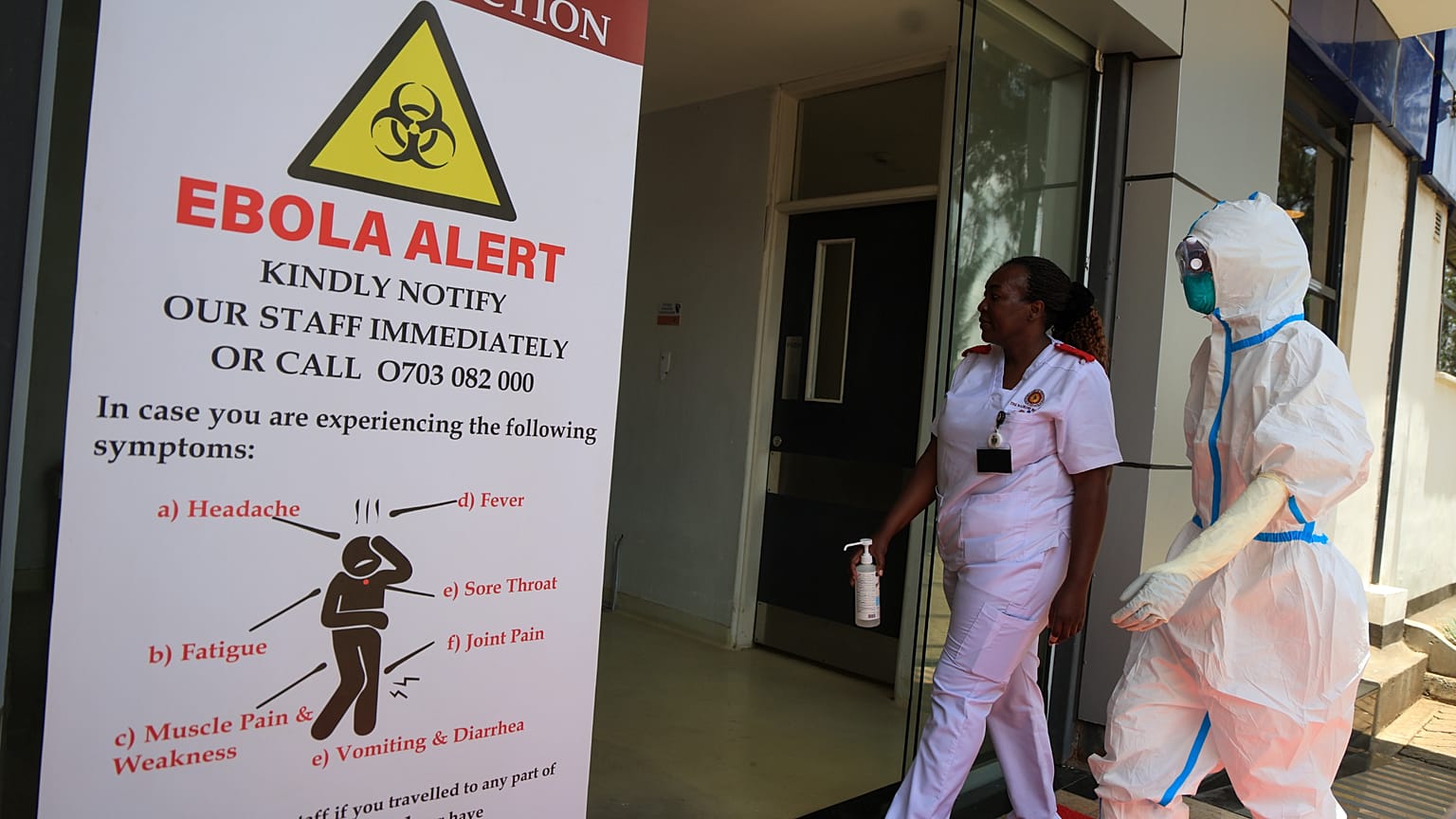
Wajir county says it has established an isolation centre, formed a rapid response team and used radio, school and community health campaigns and posters to raise awareness. It also says it has a preparedness plan and budget. But officials did not provide details about the centre’s capacity, Ebola-specific staff training or funding, leaving the county’s operational readiness difficult to assess. Wajir’s proximity to Somalia and cross-border movement make local surveillance and reliable public information especially important; airport screening alone cannot substitute for prepared local health services.
The article sets this uncertainty against Kenya’s national response to two confirmed cases of Bundibugyo virus disease. The first patient arrived in Nairobi on October 3 and died two days later. A close family member became the second confirmed case on October 14 after being monitored in quarantine. Authorities said the cases were linked, with no evidence of wider community transmission. By October 12, more than 665,000 travellers had been screened, 127 contacts listed and five laboratories designated, while nearly 5,000 health workers had received training.
These national figures and an improvement in the WHO’s preparedness score from 66 percent in May to 82 percent in July indicate progress, but do not show whether every county has sufficient staff, protective equipment, facilities and referral systems. The article argues that local capacity must be assessed directly and that residents need practical, trustworthy information to counter misinformation and know where and how to seek care.
Entities: Kenya, Wajir County, Nairobi, Garad Saney Mohamed, Dr Paul Olale • Tone: analytical • Sentiment: neutral • Intent: analyze
15-10-2026
Kenya has confirmed its second Ebola case, involving a 39-year-old close relative of the country’s first victim. The patient was already in quarantine and under observation when testing confirmed the infection. Health authorities say he was isolated after developing fever, fatigue and joint pain, and report no evidence of wider community transmission. Kenya has traced 113 of the 128 people identified as close contacts. The first patient, a Kenyan national who had been treated in the Democratic Republic of Congo (DRC), travelled through Kampala to Nairobi, where he was hospitalised and died on 5 October. The two infections are the first Ebola cases ever reported in Kenya.
The outbreak’s epicentre is Ituri Province in the DRC, while Uganda and Kenya have also reported cases. The article reports more than 9,000 confirmed cases and over 4,000 deaths in Congo since the outbreak was declared in May; in Ituri, 6,734 cases and 3,177 deaths had been reported. The European Centre for Disease Prevention and Control (ECDC) says the outbreak remains a public health emergency of international concern, with response efforts particularly difficult in remote areas. The World Health Organization has identified contact tracing as a major operational pressure, with follow-up below targets.
The outbreak is caused by Bundibugyo virus, for which there are no licensed vaccines or specific treatments. Frontline workers are receiving Ervebo, a vaccine licensed against other Ebola strains, but its effectiveness against Bundibugyo disease is uncertain. The ECDC assesses the risk of the virus being imported into Europe as very low, while noting that isolated importations cannot be ruled out.
Entities: Kenya, Democratic Republic of Congo (DRC), Ituri Province, Uganda, Kampala • Tone: analytical • Sentiment: negative • Intent: inform
15-10-2026
Kenya has reported a second Ebola case, according to a statement from the country’s health ministry. The newly confirmed patient is a 39-year-old man and a close family member of the first reported case. He was already in quarantine when he became ill on Tuesday, the ministry said.
The report places the second case about a week after Kenya recorded what it describes as its first-ever infection with the viral disease. The first patient was a Kenyan who had been living in Congo and died at a Nairobi hospital on October 5. The article was issued on October 15, 2026, and presents the case as a brief update on the developing health situation.
The report does not provide further details about the second patient’s condition, how the first patient became infected, or whether additional cases have been identified. It also does not describe public-health measures beyond the patient’s quarantine before he fell ill. The central information is that a close relative of the first case has now tested positive, raising the reported case count in Kenya to two.
Entities: Kenya, Ebola, Congo, Nairobi, Kenyan health ministry • Tone: neutral • Sentiment: negative • Intent: inform