14-09-2026
The article reports that a Russian drone struck a Ukrainian train near Ukraine’s border with Poland. The incident occurred shortly after former UK Prime Minister Boris Johnson and other diplomats had departed from the station, making the timing a central feature of the report. According to Ukrainian authorities, passengers on the affected train had been instructed to evacuate approximately 15 minutes before the strike took place.
The report presents the event as a potentially serious security incident involving civilian rail transport in an area close to an international border. The presence of Johnson and other diplomats shortly before the attack adds political and diplomatic significance, although the article does not state that they were targeted or that they remained in danger after leaving the station. It also does not provide details about casualties, the extent of damage, the precise location of the station, the train’s destination, or the reason for the evacuation order.
The account is brief and relies primarily on information attributed to Ukraine. It does not include a response from Russia, independent verification of the strike, or additional context about the wider military situation. The wording emphasizes the narrow interval between the diplomats’ departure, the evacuation warning, and the drone attack. Overall, the article informs readers about a reported strike on railway infrastructure and highlights the potential risks faced by passengers and high-profile visitors in a conflict zone. Its focus is on the timing of the attack and the evacuation of passengers rather than on broader political analysis or detailed battlefield developments.
Entities: Russia, Ukraine, Boris Johnson, United Kingdom, Poland • Tone: urgent • Sentiment: negative • Intent: inform
14-09-2026
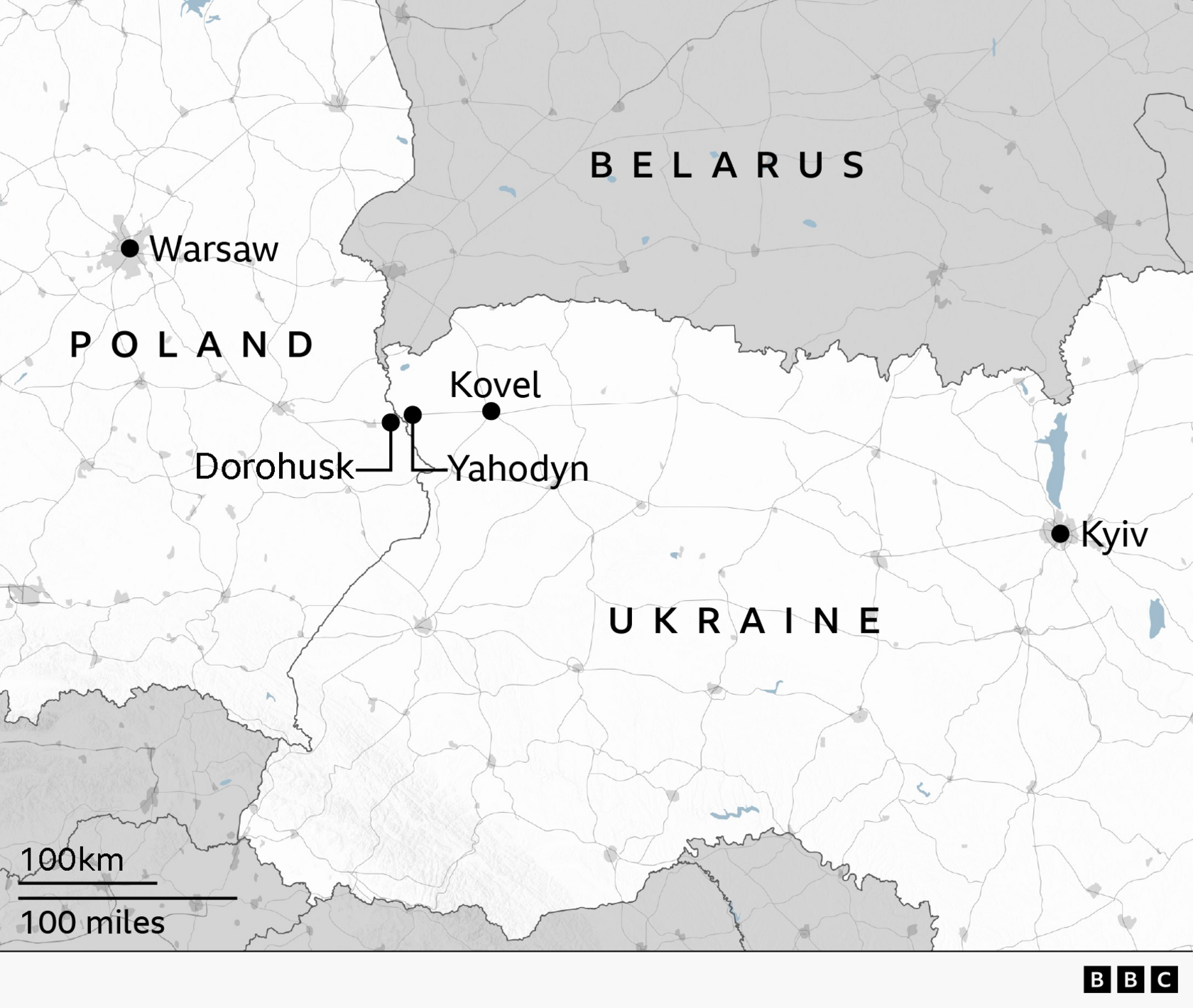
A Russian jet-propelled drone struck the engine of a passenger train at Yahodyn, near Ukraine’s border with Poland, shortly after former UK Prime Minister Boris Johnson and senior European security officials had passed through the area on another train. No casualties were reported, and passengers on the targeted train had been evacuated approximately 15 minutes before the strike. Ukrainian railway officials said the train had departed earlier than expected because of continuing threats and suggested that the diplomatic train carrying European officials may have been the intended target. Russia said it had attacked railway infrastructure in western Ukraine.
Former CIA director David Petraeus, who was at Yahodyn station on another train, described the incident as “terrifying” and condemned it as an effort to terrorize Ukrainian civilians. Former Swedish Prime Minister Carl Bildt said passengers on his train had been ordered to prepare for evacuation before being told it was safe to continue. The train later reached Poland’s border station at Dorohusk. Johnson called the attack random and senseless and urged Ukraine’s allies to provide more air-defence interceptors.
Ukrainian Foreign Minister Andrii Sybiha said the strike represented Russian terror directly approaching the European Union and Nato, while Polish Prime Minister Donald Tusk convened an emergency meeting and warned that Russian actions were escalating toward Poland’s border. The incident forms part of a broader pattern of Russian attacks on Ukraine’s railways, depots, petrol stations and border crossings. Recent strikes have killed civilians and railway workers, while repeated attacks have damaged the rail network, which is Ukraine’s primary means of transport because air travel has been suspended since Russia’s full-scale invasion in 2022. European governments have also accused Russia of involvement in suspected sabotage and fires on their territory, allegations Moscow has denied.
Entities: Boris Johnson, Vladimir Putin, David Petraeus, Carl Bildt, Andrii Sybiha • Tone: urgent • Sentiment: negative • Intent: inform
14-09-2026
Former CIA director David Petraeus narrowly escaped a Russian drone strike near Yahodyn station in north-western Ukraine, close to the Polish border, on Sept 13. Petraeus was travelling on a civilian train that had recently passed through Ukrainian Customs when passengers were evacuated after drones were heard overhead. A jet-powered drone subsequently struck the locomotive of a neighbouring train, causing a large explosion. Petraeus described the experience as terrifying for civilians and condemned the attack as an effort to terrorise Ukrainians.
The strike occurred shortly after a separate diplomatic train carrying former British prime minister Boris Johnson, European politicians, diplomats and national security advisers from European Union and NATO countries had left the station. Ukrainian state railway officials said the drone may have been targeting that train, which departed earlier than scheduled because of the ongoing threat of Russian attacks. If senior American, British and European officials were deliberately targeted, the incident would represent a major escalation in the conflict.
Petraeus and the other officials had been in Kyiv for the YES security forum. He said the train struck was neither a military target nor connected to military operations, and noted that another drone hit a petrol station nearby. The incident formed part of a broader Russian campaign against Ukraine’s railway infrastructure. Other attacks in September targeted railway property in central Ukraine and border crossings with Moldova and Romania, apparently seeking to disrupt Ukrainian logistics.
Ukrainian President Volodymyr Zelensky said Moscow was seeking to cripple the economy and destroy people’s lives. Petraeus eventually continued safely into Poland and said he was unaware of any casualties. Despite the expanding attacks, he argued that Russia’s campaign to exhaust the Ukrainian population would not succeed, describing Ukrainians as tired but “unbreakable.”
Entities: David Petraeus, Boris Johnson, Volodymyr Zelensky, Russia, Ukraine • Tone: urgent • Sentiment: negative • Intent: inform