10-08-2026
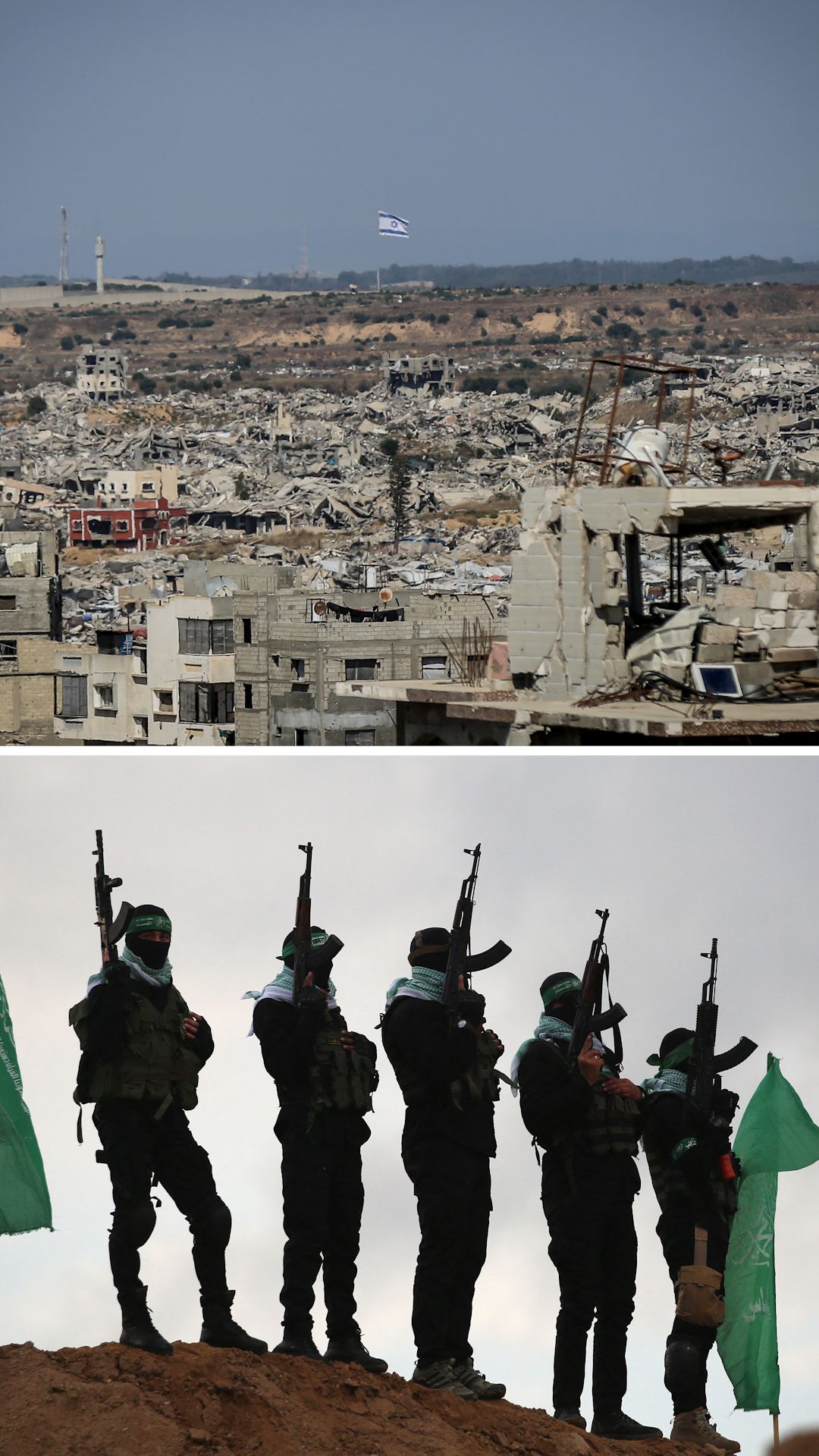
Israel has rejected Donald Trump’s 15-point Gaza peace plan, with Prime Minister Benjamin Netanyahu insisting that Israeli forces will not withdraw until Hamas is “genuinely” disarmed. The dispute highlights a major setback for the US-backed framework, which had envisioned a phased process including Hamas disarmament, Israeli troop withdrawal, and Gaza reconstruction under a Board of Peace. Hamas, for its part, says it remains committed to the agreement and is ready to implement it, while also arguing that any handover of heavy weapons depends on Israel ending hostilities and withdrawing troops.
The article explains that the deadlock reflects the difficult political position Netanyahu faces: he is under pressure from right-wing coalition partners to take a hard line, while also trying not to alienate Trump, Israel’s closest ally. Senior US-backed figures involved in the peace process continue to defend the plan, saying it is still the only viable path and that any Israeli withdrawal would be phased and contingent on verified Hamas disarmament. The broader context is the continuing Gaza war, which began after Hamas’s 7 October 2023 attack on southern Israel and has since left vast destruction, mass displacement, and heavy casualties. The piece frames the rejection as another blow to a fragile peace effort amid ongoing violence and unresolved core demands on both sides.
Entities: Benjamin Netanyahu, Donald Trump, Hamas, Gaza, Israel • Tone: analytical • Sentiment: negative • Intent: inform
10-08-2026
Israeli Prime Minister Benjamin Netanyahu publicly rejected a U.S.-backed Gaza peace plan on Sunday, saying Israel would not withdraw militarily until Hamas is genuinely disarmed. His remarks marked a sharper break with President Donald Trump’s framing of the plan as a historic agreement that would bring disarmament, a transitional governance structure, and eventually improved security for Israel and Palestinians. Netanyahu told his cabinet that Israel rejects the “15-point document,” and said the Israel Defense Forces would continue operations to thwart threats against Israeli forces and civilians.
The article explains that the dispute comes after more than a week of increasing criticism from Netanyahu’s right-wing political base, which has pressured him to harden his stance ahead of elections. Netanyahu said Israel is discussing its objections with the United States and emphasized that some parts of the plan are acceptable while others are not. A central point of contention is Hamas’s disarmament: Netanyahu insists on complete, real disarmament, while figures associated with the proposed peace structure have said total disarmament may not be realistic.
Hamas responded by saying it remains committed to the roadmap reached by mediators and the Board of Peace, and it accused Netanyahu of obstructing progress. The article situates the current dispute within the broader war that began after Hamas’s Oct. 7, 2023 attack on southern Israel and references Trump’s earlier 20-point peace proposal aimed at ending the conflict. Overall, the story highlights the gap between U.S.-led diplomacy and Israel’s security demands, as well as the continuing role of Hamas in negotiations over Gaza’s future.
Entities: Benjamin Netanyahu, Donald Trump, Hamas, Israel, Gaza • Tone: analytical • Sentiment: neutral • Intent: inform
10-08-2026
CNN’s analysis argues that Israeli Prime Minister Benjamin Netanyahu is deliberately and publicly rejecting key parts of Donald Trump’s Gaza roadmap because upsetting Trump is, for now, his least-bad political option. Netanyahu’s refusal to accept the 15-point document and his insistence that Israel will not withdraw from Gaza until Hamas is fully disarmed represent a sharp departure from his usual preference for ambiguity. The article says this move is risky because it could anger Trump, who has re-engaged on Gaza and is seeking a foreign-policy win, but Netanyahu appears to be speaking more to Israeli voters than to Washington.
The piece frames Netanyahu’s calculations in the context of Israel’s upcoming general election, which is less than 12 weeks away, and his need to keep far-right allies and skeptical voters onside. It suggests he is under pressure from both coalition politics and public opinion, with many Israelis supportive of Trump but unwilling to accept limits on Israel’s military freedom in Gaza. The article also highlights the deep distrust between Israel and Hamas, noting that each side has incentives to blame the other if the ceasefire process collapses. Hamas says it remains committed to the roadmap, while U.S. officials argue that any phased withdrawal depends on verified disarmament.
Ultimately, the analysis portrays a fragile and uncertain diplomatic process in which the fate of Gaza is being shaped by competing political incentives, unresolved questions over Hamas disarmament, and Netanyahu’s election-minded decision to confront Trump rather than accommodate him.
Entities: Benjamin Netanyahu, Donald Trump, Israel, Gaza, Hamas • Tone: analytical • Sentiment: neutral • Intent: analyze
10-08-2026
CNN reports that Israeli Prime Minister Benjamin Netanyahu has rejected the latest US-backed peace plan for Gaza, signaling that Israel is not willing to proceed with a ceasefire or withdrawal arrangement under the current terms. According to the report, Netanyahu’s central condition is the full disarmament of Hamas before any Israeli forces would pull back from Gaza. The piece frames this as a setback for renewed diplomatic efforts around the war, since the US-backed proposal appears to be aimed at creating a pathway toward ending the fighting and addressing the postwar future of the territory. The article is presented as a short news video item rather than a long-form analysis, and its main focus is the immediate political response from Israel. It highlights the continued deadlock between the parties over core issues: security guarantees, Hamas’s military capacity, and the sequencing of any Israeli withdrawal. By emphasizing Netanyahu’s rejection, the report suggests that negotiations remain fragile and that a lasting agreement is still distant absent major concessions. The surrounding CNN video page also includes several unrelated news clips, but the substantive article content is limited to the Gaza peace plan and Israel’s response.
Entities: Israel, Donald Trump, Gaza, Benjamin Netanyahu, Hamas • Tone: analytical • Sentiment: negative • Intent: inform
10-08-2026
Israel has rejected a 15-point Gaza proposal advanced by the Board of Peace, with Prime Minister Benjamin Netanyahu saying Israeli forces will not withdraw from Gaza until Hamas has been fully and genuinely disarmed. Speaking at a Cabinet meeting, Netanyahu stressed that Israel will not accept what he called “fictitious disarmament,” insisting that Hamas must surrender all weapons, including both heavy and light arms, before any pullback occurs. The article frames this as a major obstacle to implementing the latest U.S.-backed peace effort, despite the Trump administration’s push to build on a ceasefire reached last October and advance a broader settlement for Gaza.
The piece also notes that Hamas says it remains committed to the Gaza roadmap agreed in Cairo with mediators and Board of Peace representatives, and expects the United States and other mediators to pressure Israel to comply. This sets up a direct clash between Hamas’ view of the roadmap and Netanyahu’s security-first approach. Netanyahu reiterated that Israel will not allow a Palestinian state in Gaza or the West Bank and used strong language to reject the idea of territorial or political concessions that could leave Hamas or Fatah in control.
Beyond Gaza, Netanyahu linked his remarks to broader regional security concerns, saying Israel has acted forcefully in Lebanon and warning Iran that it has not attacked Israel because it fears the consequences. He also praised President Donald Trump and the U.S.-Israel alliance on efforts to block Iran from obtaining nuclear weapons. Overall, the article highlights the deep disagreement over sequencing disarmament and withdrawal, the fragility of ceasefire diplomacy, and Netanyahu’s refusal to compromise on core Israeli security demands.
Entities: Benjamin Netanyahu, Hamas, Board of Peace, Gaza, Israel • Tone: analytical • Sentiment: neutral • Intent: inform