09-06-2026
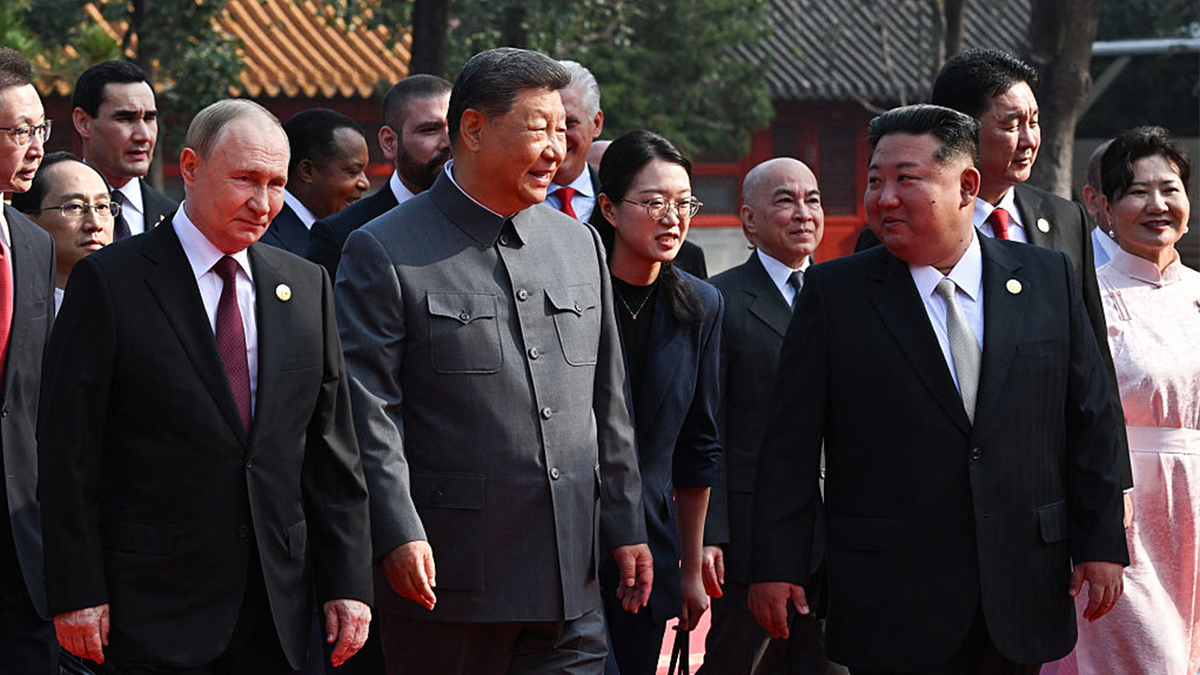
Chinese President Xi Jinping’s rare visit to North Korea marks a significant effort by Beijing to restore and reinforce its traditional alliance with Pyongyang at a moment of shifting regional alignments. The article says Xi’s trip to Pyongyang is his first in seven years and comes as China seeks to reassert its influence over North Korea after years in which Pyongyang has leaned more heavily on Russia for military and economic support amid the war in Ukraine. Analysts quoted in the article suggest Xi may offer Kim Jong Un economic incentives such as food aid, fertilizer shipments, resumed Chinese tourism, and joint projects, while likely avoiding direct pressure on North Korea’s nuclear program.
The article frames the visit as strategically important for both countries. For China, restoring a tighter relationship with North Korea could increase leverage with the United States, especially as President Donald Trump has signaled interest in reviving diplomacy with Kim. For North Korea, the visit could help secure economic support and diplomatic cover while it continues accelerating its nuclear and missile programs. The piece notes that Kim has recently unveiled a new facility for nuclear ingredients and vowed to expand nuclear forces rapidly, while his sister Kim Yo Jong has dismissed U.S. denuclearization efforts as outdated.
Overall, the article presents Xi’s visit as part of broader great-power maneuvering involving China, North Korea, Russia, and the United States, with the Korean Peninsula’s nuclear issue remaining unresolved and tensions likely to remain high.
Entities: Xi Jinping, Kim Jong Un, North Korea, China, Pyongyang • Tone: analytical • Sentiment: neutral • Intent: inform
09-06-2026
Chinese President Xi Jinping has returned to Pyongyang for a two-day state visit to North Korea and is staying at the Kumsusan State Guest House, an exclusive and highly secluded facility often likened to Beijing’s Diaoyutai State Guest House. The article emphasizes the symbolic and diplomatic significance of the accommodation choice, noting that Xi was welcomed at the airport by North Korean leader Kim Jong-un before attending a ceremony at Kim Il-sung Square and heading to the guest house. Opened in 2019, the Kumsusan State Guest House was first publicly used during Xi’s earlier visit that year, highlighting the close relationship between China and North Korea as well as the careful ceremonial framing of high-level visits. The piece also provides historical context by contrasting the new guest house with the older Paekhwawon guest house, which previously hosted foreign dignitaries including Chinese leaders Jiang Zemin and Hu Jintao and former US president Jimmy Carter. By mentioning the nearby Kumsusan Palace of the Sun, described as North Korea’s most sacred political site, the article underscores the political symbolism and exclusivity surrounding Xi’s visit and the locations associated with it.
Entities: Xi Jinping, Kim Jong-un, Pyongyang, Kumsusan State Guest House, Diaoyutai State Guest House • Tone: analytical • Sentiment: neutral • Intent: inform
09-06-2026
China and North Korea have signaled a fresh effort to deepen their bilateral relationship during Chinese President Xi Jinping’s two-day visit to Pyongyang, with both sides pledging to strengthen strategic cooperation and defend each other’s sovereignty. According to North Korea’s state media, Xi and North Korean leader Kim Jong-un agreed to “open a new chapter” in ties and expand exchanges across political, economic, cultural, and other fields. Kim described improving relations with China as North Korea’s “most important strategic mission,” underscoring the importance Pyongyang places on the partnership.
Xi, speaking at a state banquet in Pyongyang, said the relationship had reached “a new historical starting point” and that he and Kim had achieved “important consensus.” His remarks, reported by Chinese state media, emphasized longstanding friendship and historical continuity, portraying the two countries as “good neighbours, good friends and good comrades.” He also framed the relationship in terms of a shared destiny, saying the countries are linked by mountains and rivers and have a traditional friendship that has endured and strengthened over generations despite changes in the international environment.
The article suggests a possible tilt by North Korea toward Beijing amid shifting geopolitical conditions, but the reporting itself stays focused on the leaders’ public statements and the symbolic reaffirmation of ties rather than specific policy details or concrete agreements. Overall, it presents a diplomatic development with potential strategic implications for regional politics and China-North Korea relations.
Entities: Xi Jinping, Kim Jong-un, China, North Korea, Pyongyang • Tone: analytical • Sentiment: neutral • Intent: inform