09-06-2026
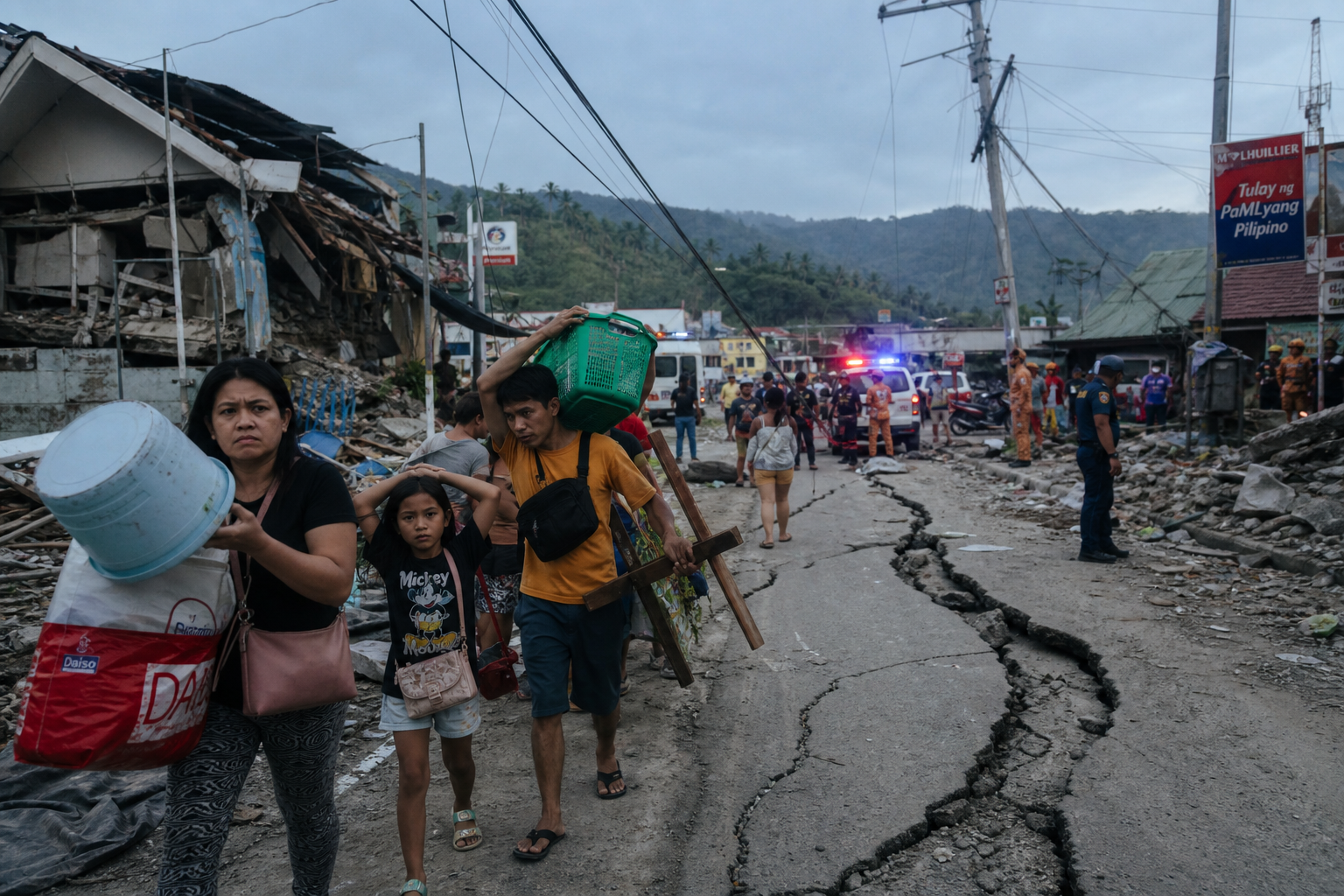
A powerful magnitude-7.8 earthquake struck off the coast of Mindanao in the southern Philippines, killing at least 35 people, injuring more than 130, and displacing around 10,000 families, according to officials. The quake occurred early Monday local time and triggered tsunami warnings across the Philippines, Indonesia, Japan, and Australia, though the alerts were later cancelled or downgraded. Videos and images from affected areas showed severe damage, including collapsed buildings and landslides. The Philippine Office of Civil Defense reported that most deaths were in Soccsksargen and others in Davao, while authorities said casualty counts still needed verification by the national disaster agency.
President Ferdinand Marcos Jr. said the national government was coordinating the response and promised not to abandon Mindanao. He also suspended classes in affected areas, coinciding with the first day of the school year. Reports from a school in Davao Occidental showed terrified students during the shaking, though no injuries were reported there. More than 130 aftershocks followed, and a separate magnitude-5.7 quake struck offshore later that day. The article places the disaster in context by noting that the Philippines lies on the Pacific Ring of Fire and has a history of deadly earthquakes, including a 6.9-magnitude quake in Visayas last September that killed more than 70 people. Japan, Indonesia, Palau, and the Philippines later recorded small tsunami waves, with some reaching up to 1.4 meters.
Entities: Philippines, Mindanao, Davao, Soccsksargen, Office of Civil Defense • Tone: urgent • Sentiment: negative • Intent: inform
09-06-2026
A powerful 7.8-magnitude earthquake struck the southern Philippines, killing at least 35 people and causing widespread damage, panic, and evacuations across Mindanao and nearby areas. Many of the deaths were linked to a landslide in Sarangani province, where homes in the mountainous town of Glan were hit, while other fatalities occurred from collapsed buildings, falling debris, and additional landslides in several southern provinces. The quake also triggered small tsunamis and warning alerts in the Philippines, Indonesia, Palau, and even distant southern Japan, though the tsunami threat later eased and warnings were lifted.
The earthquake’s effects were felt broadly: buildings collapsed or were severely damaged in General Santos and other cities, a school collapse prompted concern about trapped students, flights were canceled, and the airport in General Santos was temporarily shut down. Thousands of residents were displaced, and students at school flag ceremonies were injured or fainted in panic. Aftershocks as strong as 6.5 magnitude followed. Philippine President Ferdinand Marcos Jr. ordered class cancellations and directed disaster-response agencies to act immediately. Officials urged the public to avoid damaged structures until they could be assessed, emphasizing the risk from aftershocks. The article also places the disaster in context, noting that the Philippines sits on the Pacific Ring of Fire and is highly vulnerable to earthquakes, volcanic activity, and typhoons.
Entities: Philippines, Mindanao, Sarangani province, Glan, General Santos • Tone: urgent • Sentiment: negative • Intent: inform
09-06-2026
A powerful magnitude-7.8 earthquake struck southern Philippines early Monday morning, killing at least 37 people, injuring hundreds, and causing widespread damage across Mindanao. The quake’s epicenter was offshore near Sarangani province, with strong tremors felt in General Santos City, Davao del Sur, and even parts of Indonesia. Buildings, including a Jollibee restaurant, a commercial complex, a high school, and multiple hospitals, were damaged or collapsed, while landslides, falling debris, power outages, and disrupted transport compounded the crisis. Authorities reported tens of thousands of displaced or affected residents and urged people to avoid damaged structures because of aftershock risks. Tsunami warnings were issued in the Philippines, northern Indonesia, and Malaysia’s Sabah state before being lifted later in the day. President Ferdinand Marcos Jr said evacuation centers were ready and that the national government was mobilizing to support rescue and recovery efforts. The quake struck as schools reopened, causing panic among students and prompting the suspension of classes in affected areas. The article places the disaster in the broader context of the Philippines’ exposure to earthquakes, volcanic activity, and typhoons due to its location on the Pacific Ring of Fire.
Entities: Philippines, Mindanao, Sarangani province, General Santos City, Davao del Sur • Tone: urgent • Sentiment: negative • Intent: inform