09-06-2026
According to a source familiar with Treasury Secretary Scott Bessent’s thinking, the Treasury Department plans to use available authorities to help U.S. Gulf allies recover from damage caused by Iran during the war. The department is reportedly considering ways to make Iranian assets accessible for rebuilding and repair efforts tied to future or already sustained damage, while also asking Gulf allies to provide cost estimates for repairs. The article notes that the specific assets being considered are unclear, and could include frozen Iranian cash or hard assets such as oil tankers. The plan comes as indirect peace talks continue between the U.S. and Iran, with Tehran reportedly insisting that sanctions be lifted so billions of dollars in frozen Iranian assets abroad can be released as part of any deal. The article also places the issue in the context of ongoing Iranian missile and drone attacks on Gulf states since the conflict began in late February, including Saudi Arabia, the United Arab Emirates, Kuwait, Bahrain, Qatar, and Oman.
Entities: Scott Bessent, Treasury Department, Iran, United States, Gulf allies • Tone: analytical • Sentiment: negative • Intent: inform
09-06-2026
Iraq and the United Arab Emirates are moving quickly to expand alternative oil export routes as the Strait of Hormuz remains effectively shut because of the war and associated security risks. The article explains that Iraq is especially vulnerable because most of its oil exports historically depend on Hormuz, leaving its economy exposed to disruptions. To reduce that dependence, Iraq’s cabinet approved accelerating crude exports through the Kurdistan-Turkey pipeline network, which could raise throughput from 220,000 barrels per day to 770,000 and provide access to Turkey’s Mediterranean port of Ceyhan. The report notes that Iraq’s oil sector accounted for 53% of real GDP in 2025, underscoring how severe the export disruption is. Economic intelligence data cited by CNBC show Iraqi and UAE port activity has sharply weakened since the war began, with Iraq’s oil exports through Hormuz dropping from 93 million barrels in a prior month to 10 million barrels in April.
The UAE is also fast-tracking its West-East pipeline to Fujairah, a project expected online in 2027 that would double ADNOC’s export capacity and help the country bypass the Hormuz chokepoint. Still, the article stresses that even these alternatives have limits: existing routes like Saudi Arabia’s East-West pipeline and the UAE’s Fujairah terminal have been attacked or disrupted during the conflict, and combined spare capacity remains far below the roughly 20 million barrels per day that transited Hormuz before the war. The piece concludes that building alternative export infrastructure is costly, time-consuming, and often dependent on cross-border agreements, while shipping through Hormuz remains constrained by Iranian approval requirements and the risk of U.S. sanctions.
Entities: Iraq, United Arab Emirates, Strait of Hormuz, Kurdistan-Turkey pipeline network, Turkey • Tone: analytical • Sentiment: negative • Intent: inform
09-06-2026
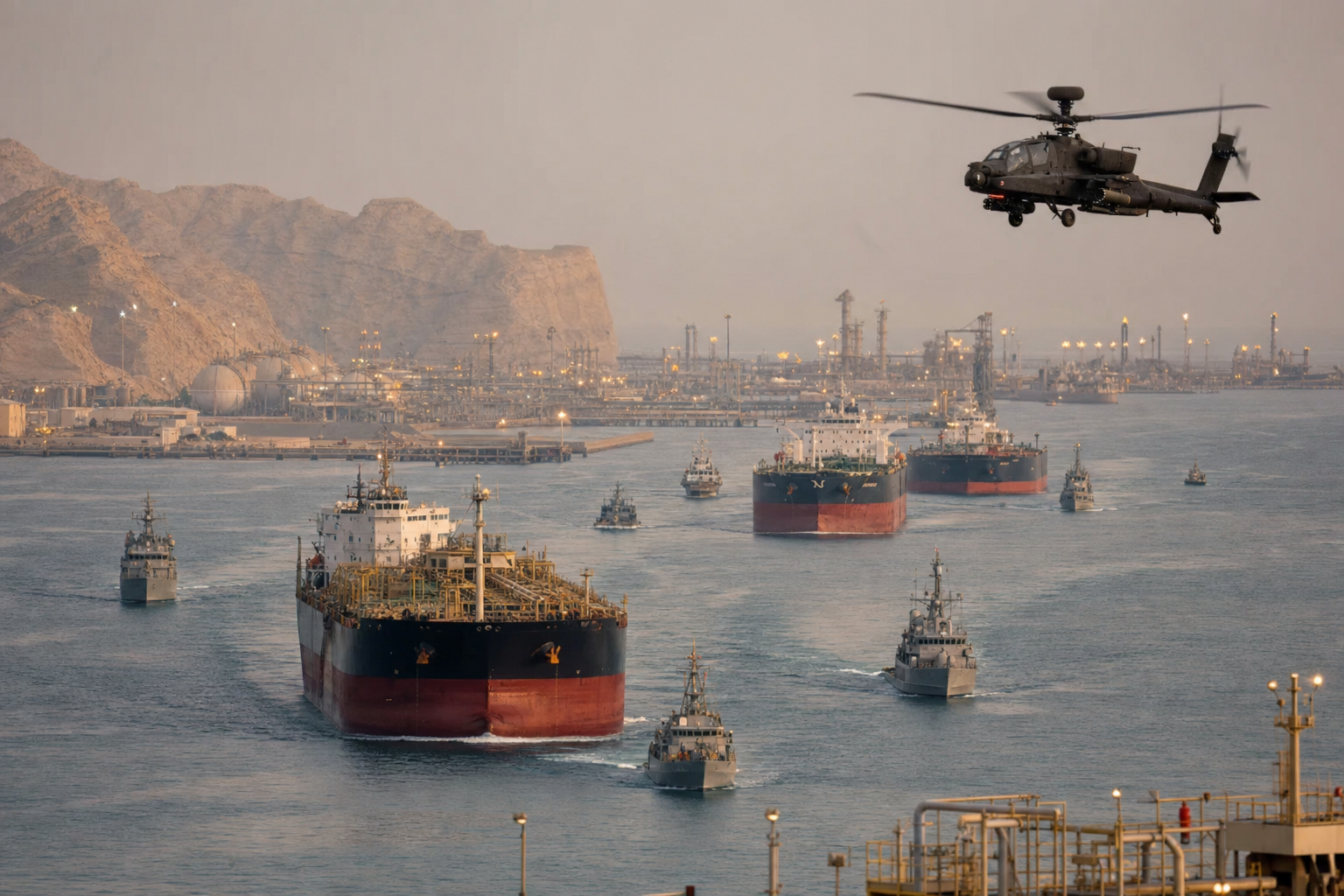
A U.S. Army Apache helicopter gunship went down near the Strait of Hormuz, but its two crew members were safely rescued, according to people briefed on the incident. Officials said the cause of the crash was not yet known and remained under investigation; it was unclear whether the aircraft had been hit by Iranian fire, suffered a mechanical failure, or experienced another problem. President Trump later confirmed the crew was fine but offered no additional details, saying a report would be issued soon.
The incident comes amid heightened tension in the region following days of escalatory military exchanges between Israel and Iran that had briefly eased, underscoring the fragile nature of the cease-fire. The article places the crash within a broader U.S. military campaign to pressure Iran over its effective restriction of commercial traffic through the Strait of Hormuz. Central Command has deployed Apaches, Reaper drones, and attack aircraft to challenge that blockade and deter attacks on shipping.
The report also notes the broader conflict’s toll on U.S. forces, including the loss of numerous Reaper drones and some fighter jets to hostile or friendly fire since the war began. It highlights the strategic importance of the strait, the Navy’s short-lived Project Freedom effort to help escort commercial ships, and recent U.S. measures that have blocked Iranian commerce in response to Iran’s actions. Overall, the article frames the helicopter loss as another potentially significant but still unexplained event in a volatile regional conflict.
Entities: U.S. Army, Apache helicopter, Strait of Hormuz, Iran, Israel • Tone: analytical • Sentiment: neutral • Intent: inform