08-06-2026
This article examines why Chinese leader Xi Jinping is expected to visit North Korea and argues that the trip is driven less by friendship than by strategic leverage. China sees North Korea as an unstable but indispensable neighbor: one that buffers US military power, yet whose nuclear ambitions and deepening ties with Russia could weaken Beijing’s influence. Over the past year, ties between Beijing and Pyongyang cooled, with few high-level exchanges and muted public celebrations, while North Korea drew much closer to Moscow through military cooperation, a defense pact, and reported troop and ammunition support for Russia’s war in Ukraine. That shift has alarmed China, the US, and its allies.
The article explains that Xi is likely trying to reset relations, keep Kim Jong Un from becoming overly dependent on Russia, and preserve China’s leverage over Pyongyang. Beijing also appears to be reopening practical links such as transport and trade, including renewed train services and rising Chinese exports to North Korea. At the same time, China does not want to endorse North Korea’s nuclear program, because that would trigger stronger US-led regional coordination. The piece also revisits the troubled history between Xi and Kim, including past tensions over North Korea’s accelerating weapons program and Beijing’s discomfort with Kim’s unpredictability. Ultimately, the article presents the relationship as a cautious, transactional one in which both sides need each other, but neither fully trusts the other.
Entities: Xi Jinping, Kim Jong Un, Vladimir Putin, North Korea, China • Tone: analytical • Sentiment: neutral • Intent: analyze
08-06-2026
Chinese President Xi Jinping is beginning a two-day visit to North Korea in a move that underscores Beijing’s effort to preserve influence over Pyongyang at a time when North Korea has become more closely aligned with Russia. The trip is Xi’s first to North Korea in nearly seven years and his first overseas visit of 2026, signaling the importance China places on stabilizing and reinforcing ties with Kim Jong Un’s government. Ahead of the visit, Xi published a commentary in North Korea’s state media pledging “unwavering” friendship and deeper cooperation, including military ties.
Analysts say North Korea now has greater leverage than it did when Xi last visited in 2019 because of its deepening military relationship with Moscow, its advances in nuclear capabilities, and an improved economy. Pyongyang is expected to use the summit to seek economic concessions and possibly some form of tacit Chinese recognition of its nuclear status, even as China has historically opposed North Korea’s nuclear tests. China, meanwhile, is likely to push for North Korean alignment on Taiwan, push back against Japan’s increasingly assertive defense posture, and reduce the risk of escalation on the Korean peninsula.
The article also places the visit in the context of broader geopolitics: North Korea has sent troops to support Russia in Ukraine, while Kim Jong Un continues expanding his nuclear arsenal despite UN sanctions. Xi’s visit may also be intended to counter Russia’s growing influence over Pyongyang and could potentially carry a message from U.S. President Donald Trump, who has expressed interest in resuming diplomacy with Kim. South Korea welcomed the visit as a possible constructive step and suggested a future Pyongyang-Washington summit could be discussed.
Entities: Xi Jinping, Kim Jong Un, North Korea, China, Pyongyang • Tone: analytical • Sentiment: neutral • Intent: analyze
08-06-2026
Chinese leader Xi Jinping has arrived in North Korea for a rare two-day state visit, his first trip there in seven years, signaling Beijing’s effort to reaffirm its central role in Pyongyang’s diplomatic and economic future. The visit comes at a moment of shifting regional alignments: North Korea has deepened ties with Russia, China’s relationship with Pyongyang has cooled somewhat since the pandemic, and the Trump administration has revived interest in high-level diplomacy with Kim Jong Un. Xi’s trip is meant to underscore that China remains North Korea’s most important economic lifeline and strategic partner, even as Kim balances relations with both Beijing and Moscow.
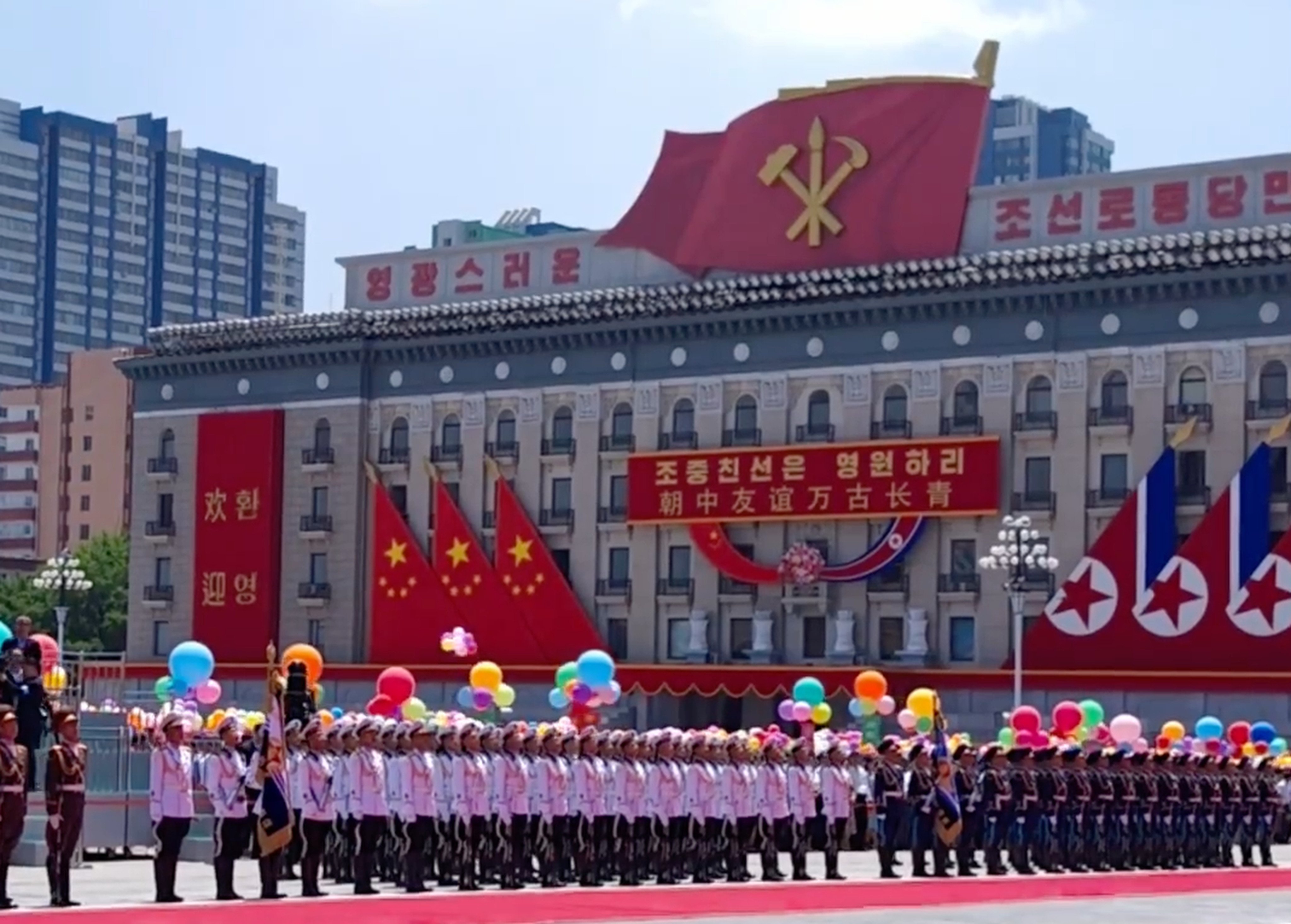
The article emphasizes the symbolic and geopolitical significance of the visit. North Korean state media and Chinese outlets portrayed Xi’s arrival as a warm, ceremonious event, with Kim Jong Un, Ri Sol Ju, and North Korean children greeting the Chinese leader at the airport. Streets in Pyongyang were decorated with Chinese flags and Xi’s portrait, reinforcing the image of close ties. Xi’s visit also coincides with the 65th anniversary of the 1961 China–North Korea treaty, further highlighting the historical foundation of the relationship.
At the same time, the report notes the tension underlying the trip. Kim has recently showcased North Korea’s expanding missile and nuclear capabilities, while Beijing is wary of instability caused by Pyongyang’s illegal nuclear program. Xi is expected to use the visit to rebalance relations and reinforce China’s influence, amid a broader regional contest involving the United States, Russia, and North Korea.
Entities: Xi Jinping, Kim Jong Un, Ri Sol Ju, Peng Liyuan, China • Tone: analytical • Sentiment: neutral • Intent: inform
08-06-2026
The article examines how Kim Jong-un transformed North Korea during and after the Covid-19 pandemic, turning a national crisis into an opportunity to tighten his control over society, the economy, and information. While ordinary North Koreans suffered from border closures, shortages, and the collapse of informal markets, Kim used the emergency to cut off trade with China, suppress smuggling, and destroy the black-market ecosystem that had helped many citizens survive since the 1990s famine. The article argues that this crackdown strengthened the regime’s monopoly over both economics and ideology, even as punishment for dissent became more severe.
At the same time, Kim accelerated North Korea’s weapons development, expanding its nuclear and missile capabilities and strengthening ties with Russia by supplying weapons and troops for the war in Ukraine. In return, Moscow provided food, oil, military technology, and diplomatic support, helping ease North Korea’s isolation. China, concerned by North Korea’s alignment with Russia but still valuing Pyongyang as a strategic buffer against the United States, is also warming ties again. Xi Jinping’s state visit to North Korea and the reopening of trade, transport, and infrastructure links signal a new phase in North Korea’s external relations.
The article also details the human cost of these changes. Defectors describe hunger, medical deprivation, fear of quarantine, and the crackdown on South Korean media and culture. Yet despite ongoing poverty outside Pyongyang, many North Koreans now see the regime as stronger and more stable than before, even as it continues to rely on repression, militarization, and controlled reopening to maintain power.
Entities: Kim Jong-un, North Korea, China, Russia, Ukraine • Tone: analytical • Sentiment: neutral • Intent: analyze
08-06-2026
Chinese President Xi Jinping arrived in Pyongyang for a two-day state visit to North Korea, marking his first trip to the country since 2019 and his first overseas trip of the year. The visit comes after Xi recently emphasized the longstanding and “everlasting” friendship between China and North Korea, underscoring the symbolic and diplomatic significance of the trip. Xi was greeted warmly at the airport by North Korean leader Kim Jong-un and his wife Ri Sol-ju, according to CCTV, with ceremonial elements including a red carpet, honour guard, and flower-bearing children highlighting the highly choreographed nature of the welcome.
Following the airport reception, Xi received a grand welcome ceremony at Kim Il-sung Square, one of Pyongyang’s most important public venues and a regular site for military parades and state events. Kim and Ri then accompanied Xi and first lady Peng Liyuan to the Kumsusan State Guest House, where the Chinese delegation is staying. Xi was accompanied by senior Chinese officials Cai Qi and Foreign Minister Wang Yi, signaling the importance Beijing attaches to the visit. The article focuses on the optics and diplomatic symbolism of the arrival rather than substantive policy outcomes, portraying the trip as a notable reaffirmation of bilateral ties between China and North Korea.
Entities: Xi Jinping, Kim Jong-un, Ri Sol-ju, Peng Liyuan, Cai Qi • Tone: analytical • Sentiment: neutral • Intent: inform
08-06-2026
Xi Jinping is set to travel to North Korea for a two-day visit, his first in nearly seven years, in a move aimed at revitalising China’s strained relationship with its only formal treaty ally. The article frames the trip as both diplomatic and strategic: Beijing wants to prevent North Korea from drifting too far toward Russia, while also preserving China’s influence over Pyongyang amid shifting regional dynamics. The relationship has weakened in recent years because of pandemic-era trade disruptions and North Korea’s deepening military and political ties with Moscow, including troop deployments in support of Russia’s war in Ukraine and a mutual defence pact signed in 2024.
The visit comes shortly after a highly publicised Trump-Xi summit in Beijing, where North Korea was reportedly discussed. Although Washington and Beijing have not fully aligned on denuclearisation, there has been speculation that Trump may have asked Xi to convey a message to Kim Jong-un. North Korea has recently escalated its nuclear rhetoric and unveiled a new nuclear material production facility, while Kim Jong-un’s sister dismissed claims about denuclearisation talks as false.
Beyond nuclear issues, Xi is also said to be focused on North-east Asian security, especially concerns about Japan’s military posture. Analysts quoted in the article suggest China’s cooperation with North Korea on such issues is likely to be more rhetorical than practical. Overall, the visit reflects Beijing’s effort to maintain leverage in the region, preserve the China-North Korea alliance, and keep North Korea within China’s strategic orbit as Russia’s influence grows.
Entities: Xi Jinping, Kim Jong-un, North Korea, China, Pyongyang • Tone: analytical • Sentiment: neutral • Intent: inform