06-11-2026
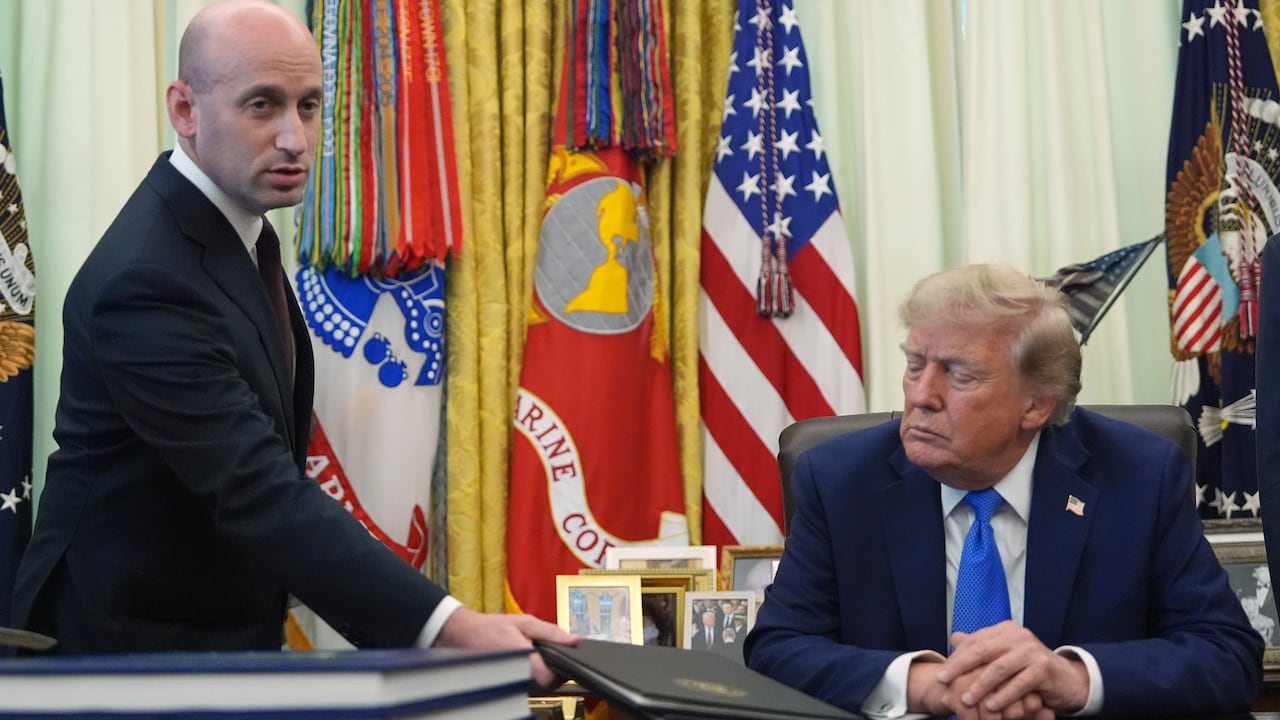
U.S. President Donald Trump has named Stephen Miller, his deputy chief of staff for policy and a leading architect of the administration’s immigration crackdown, as his new chief of staff. Miller will replace Susie Wiles, who is leaving the role just days after Republicans suffered a resounding defeat in the midterm elections. Trump announced the change on Truth Social, praised Miller as a trusted adviser, and said Wiles would move to the Trump Political Operation. He told reporters he wanted a change and that Miller had been with him from the beginning.
The appointment is widely viewed as a signal that Trump will maintain, rather than moderate, the policies that have defined his second term. Those include a mass deportation campaign that has extended beyond its stated focus on the most serious criminals. Opposition to ICE detentions of long-settled immigrants was among the factors that helped turn Hispanic voters against Republicans and contributed to Democrat James Talarico winning a Texas Senate seat.
Democrats and immigrant-rights advocates criticized the choice. Senate Democratic leader Chuck Schumer called Miller an architect of the administration’s most inhumane policies, while the American Immigration Council’s Jeremy Robbins cited the Muslim Ban, family separation and ICE conduct. Former Obama spokesperson Tommy Vietor described the move as a decision to double down on the MAGA agenda. Former Trump aide Marc Short, meanwhile, predicted Miller would take a combative approach as Democrats assume control of Congress.
The article also places Wiles’s departure in the context of Trump’s search for explanations and scapegoats after Democrats won the House popular vote by 13 percentage points, the widest margin for either party since 1976. Reports said Trump was blaming Wiles, who had advocated campaigning on affordability, while Trump’s messaging often dismissed cost-of-living concerns. Wiles said her role was changing but that her commitment to Trump remained. Her exit follows several other senior women leaving the administration this year. Former press secretary Karoline Leavitt endorsed Miller as a loyal and hardworking choice.
Entities: Donald Trump, Stephen Miller, Susie Wiles, Republican Party midterm defeat, White House chief of staff • Tone: analytical • Sentiment: neutral • Intent: analyze
06-11-2026
President Donald Trump has appointed Stephen Miller, his deputy chief of staff and a leading architect of his immigration policy, as his new White House chief of staff. Miller replaces Susie Wiles, who had held the role since Trump’s inauguration and is moving to the president’s political operation. Trump praised Miller as a trusted adviser and capable manager, while Wiles described her White House service as the honor of a lifetime.
The appointment follows a major midterm defeat for Trump’s Republican Party, which lost control of both chambers of Congress to Democrats. Miller, 41, has been a close Trump adviser since joining the 2016 campaign as a speechwriter. Although his deputy-chief-of-staff portfolio covered many areas, he is especially associated with the administration’s immigration policies and rhetoric. The article presents his promotion as a sign that Trump intends to maintain a hardline approach despite voters’ rejection of Republicans.
Miller has drawn controversy for advocating aggressive immigration enforcement, including a target of 3,000 federal arrests per day and the possibility of pursuing migrants who have lived in the United States for decades. He is also credited with expanding the role of Immigration and Customs Enforcement. On foreign policy, he defended strikes against boats allegedly used by drug smugglers and the operation to capture Venezuelan leader Nicolas Maduro. In January 2026, he argued on CNN that the United States had the right to seize Greenland, invoking power and force as governing realities.
The article also notes Miller’s attacks on political opponents, his promotion of unsubstantiated election-fraud claims, and his reported role in developing a strategy to obstruct Democratic legislation. Democratic leaders Hakeem Jeffries and Chuck Schumer sharply condemned the appointment, describing Miller as dangerous and his policies as inhumane. Schumer vowed that Democrats would oppose Miller’s agenda.
Entities: Stephen Miller, Donald Trump, Susie Wiles, White House chief of staff, Trump’s 2016 presidential campaign • Tone: analytical • Sentiment: negative • Intent: inform
06-11-2026
US President Donald Trump has appointed Stephen Miller, his deputy chief of staff and homeland security adviser, as White House chief of staff. Miller is due to take up the role on Monday, November 9, replacing Susie Wiles, who will move to Trump’s political operation. Trump announced the appointment on Truth Social, describing Miller as a trusted adviser. Wiles, the first woman to serve as chief of staff, called her service in the White House “the honor of a lifetime”; Trump praised her tenure as outstanding.
Miller has advised Trump for more than a decade, beginning with the 2016 presidential campaign. He has been a central architect and advocate of the administration’s restrictive immigration agenda, including its mass-deportation drive. His promotion puts a prominent hardliner at the centre of White House decision-making.
The change comes at a politically sensitive time. Republicans suffered a major midterm defeat, with Democrats winning control of both chambers of Congress, a result likely to increase scrutiny of Trump’s domestic agenda. The article also describes heightened scrutiny of immigration enforcement following the fatal shootings of two protesters by immigration agents in Minneapolis in January, which prompted widespread demonstrations and criticism of federal tactics.
Wiles had been viewed as an important organisational presence who managed competing interests and maintained discipline within Trump’s inner circle. Her departure follows weeks of speculation about staffing changes, which the administration had previously rejected. The reshuffle therefore both elevates Miller and rearranges Trump’s closest advisers amid political pressure and controversy over immigration operations.
Entities: Donald Trump, Stephen Miller, Susie Wiles, White House, United States • Tone: analytical • Sentiment: negative • Intent: inform
06-11-2026
US President Donald Trump announced that Stephen Miller, his close adviser and the White House deputy chief of staff for policy, will become chief of staff starting Monday, November 9, 2026. Miller will replace Susie Wiles, whom Trump praised for her work and said would move to the Trump political operation. Wiles said Friday was her last day in the role and described serving in the White House as an honour. She also highlighted the administration’s record on border security, tax cuts, the economy and its “America First” agenda.
Miller, 41, has been one of Trump’s closest aides for more than a decade and is described in the article as a powerful, hawkish voice on immigration. He has played a central role in the administration’s mass deportation programme, which has included violent raids by masked agents. His record drew particular criticism after immigration agents fatally shot two protesters in Minneapolis in January, setting off mass demonstrations.
Senate Democratic leader Chuck Schumer vowed to oppose Miller’s appointment, calling him the architect of the administration’s “most barbaric, inhumane policies” and saying Democrats would fight the choice. The appointment comes after Republicans suffered a major defeat in the midterm elections and Democrats took control of both the House and Senate. The article presents Miller’s promotion as a sign that Trump intends to continue or intensify his policy agenda despite the electoral setback. It also notes that the White House had recently denied reports that Wiles was about to be dismissed, while Wiles had recently announced that she had been given the all-clear from breast cancer.
Entities: Donald Trump, Stephen Miller, Susie Wiles, Chuck Schumer, White House • Tone: analytical • Sentiment: negative • Intent: inform
06-11-2026
President Donald Trump announced that Stephen Miller, a close adviser and leading architect of his administration’s hardline immigration agenda, will replace Susie Wiles as White House chief of staff. The appointment takes effect Monday. Wiles, who has held the position since the beginning of Trump’s second term, will move to the “Trump Political Operation,” though Trump did not specify her new responsibilities. She said Friday was her last day as chief of staff and described serving in the White House as the honour of a lifetime, adding that her commitment to Trump and his mission would continue.
The change comes after Republicans suffered sweeping losses to Democrats in Tuesday’s midterm elections. The article presents Miller’s promotion as a sign that Trump is not seeking to moderate his policies in response to the defeat. His immigration crackdown, including mass arrests and deportations, has been unpopular with most voters and some Republicans, according to polls. The article also notes that killings of American citizens by immigration enforcement officers during raids have intensified opposition.
Wiles was widely regarded as an effective manager. The chief of staff oversees the administration’s daily operations, manages the president’s schedule and acts as a gatekeeper to the executive. Trump told reporters he simply wanted to make a change, praising Miller and saying that “sometimes in life, you have to make moves.”
Wiles’s departure followed days of speculation about personnel changes. Although midterm reshuffles are not unusual, the scale of the Republican losses fuelled rumours of broader turnover. Trump had said the previous week there was “zero chance” he would replace Wiles and had called her “the most powerful woman in the world.” Democratic Minority Leader Chuck Schumer condemned the appointment, calling Miller the architect of the administration’s “barbaric, inhumane policies” and saying Trump had made a poor choice.
Entities: Donald Trump, Stephen Miller, Susie Wiles, Chuck Schumer, White House • Tone: analytical • Sentiment: neutral • Intent: inform
06-11-2026
The article reports that Susie Wiles announced she was leaving her position as White House chief of staff, with her final day falling on the Friday of the announcement. President Donald Trump appointed deputy chief of staff Stephen Miller to replace her. Wiles described serving in the administration as an honor and said she remained committed to Trump and his agenda, including border security, tax cuts, economic policy, and “America First.”
The article identifies the Republicans’ poor performance in the midterm elections—after which Democrats gained control of Congress—as the most immediate apparent trigger for Wiles’s departure. It also describes mounting internal tensions at the White House. A Washington Post report cited in the story said senior advisers, including Miller, Bill Pulte, and EPA Administrator Lee Zeldin, were involved in factional struggles over influence. The article further says staffing decisions were made without consulting Wiles, including the appointment of Katie Zacharia as White House spokesperson; Zacharia was reportedly dismissed five days later.
Another source of friction involved Trump campaign advisers James Blair and Chris LaCivita, whose consulting work for the pro-Russian government in Republika Srpska, Bosnia, reportedly angered Trump. The controversy grew after a photograph emerged of Wiles’s daughter, Katie Wiles, visiting the territory. She is described as a partner at lobbying firm Continental Strategy, which represents its government. The article portrays Miller’s growing influence and the election defeat as factors in the leadership change, while noting that speculation about Wiles’s future had begun before the midterm loss.
Entities: Susie Wiles, Donald Trump, Stephen Miller, Republican midterm losses, Democratic control of Congress • Tone: analytical • Sentiment: negative • Intent: inform