06-11-2026
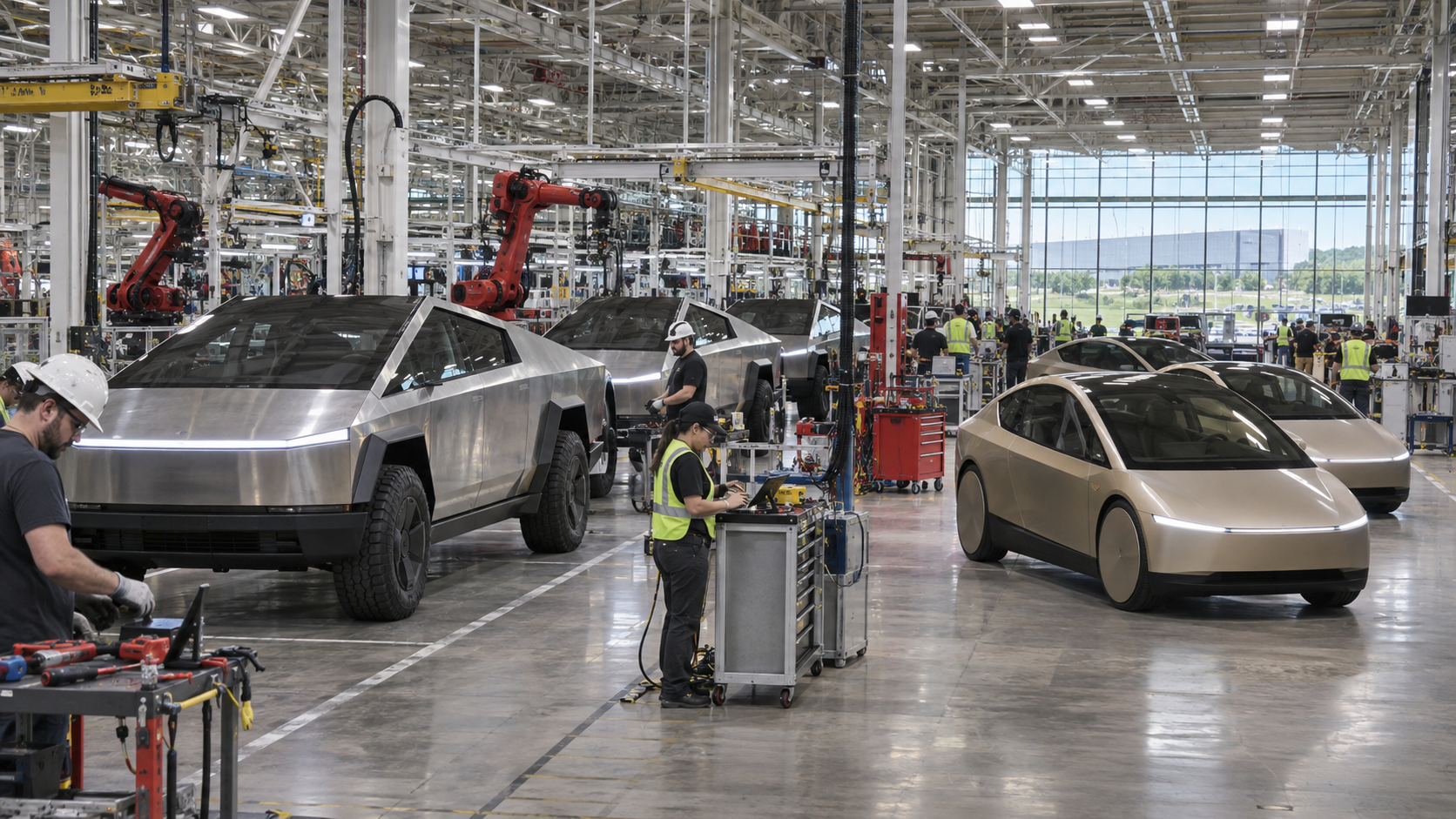
Tesla plans to wind down Cybertruck production at its Texas factory next year, according to Elon Musk, to make room for more self-driving Cybercab vehicles. Musk did not clarify whether Cybertruck production would end altogether or move elsewhere. However, lead engineer Wes Morrill’s statement that the Cybertruck “lives on through Cybercab” appeared to suggest the model could be discontinued. Musk said the existing fleet would remain in use for a long time.
The Cybertruck was a personal passion project for Musk, who repeatedly praised it as one of Tesla’s best products. It drew devoted fans with its angular, stainless-steel design, but its path to market was marked by delays and a widely publicized 2019 demonstration in which its supposedly unbreakable window glass shattered. Although Musk reported 146,000 orders while the vehicle was still in development, sales later fell well short of his expectations. Tesla sold 20,237 Cybertrucks in 2025, down from 38,965 in 2024, compared with Musk’s prediction of 250,000 annual sales.
The vehicle has also faced multiple recalls, including one in 2025 affecting more than 46,000 trucks because trim could fall off. Its price may have further limited demand: a fully equipped version cost $61,000, while the 2026 Cyberbeast model was priced at $102,000. The announcement was followed by a 4.7% rise in Tesla’s stock on Friday. The article presents the production change against the backdrop of the Cybertruck’s uneven launch, weak sales, recalls, high price, and contrasting fan and critic reactions.
Entities: Elon Musk, Wes Morrill, Tesla, Cybertruck, Cybercab • Tone: analytical • Sentiment: neutral • Intent: analyze
06-11-2026
Tesla CEO Elon Musk said the company plans to wind down Cybertruck production at its Gigafactory Texas around the middle of 2027. The change would free factory capacity for higher production of the Cybercab robotaxi, which Musk has described as important to Tesla’s future. The Cybertruck is currently produced only at the Texas plant, alongside the Model Y and Cybercab. Musk did not clarify whether production might move to another facility, but said the existing Cybertruck fleet would remain on the road for a long time. Tesla did not immediately respond to CNBC’s request for comment.
The Cybertruck, unveiled in 2019 and delivered to customers beginning in late 2023, attracted a niche following with its unconventional design but did not reach the mass-market sales Musk had predicted. Cox Automotive estimated U.S. sales fell to 20,237 vehicles last year, down 48% from 38,965 in 2024. SpaceX, another company led by Musk, was a major buyer, spending $131 million on the trucks last year, according to a financial filing.
The article also describes challenges surrounding the vehicle. Its distinctive appearance has led some owners to report harassment and road rage, with some incidents connected to political reactions to Musk. The vehicle’s specifications reportedly fell short of early Tesla claims and, in some cases, those of competing gasoline-powered pickups. Quality and production problems have also prompted safety concerns. The 2024 Cybertruck was subject to 11 voluntary recalls, covering issues including a potentially trapped accelerator pedal, software defects and an inverter fault that could cause a sudden loss of drive power.
Entities: Elon Musk, Tesla, Cybertruck, Gigafactory Texas, Cybercab robotaxi • Tone: analytical • Sentiment: neutral • Intent: inform
06-11-2026
Tesla plans to wind down Cybertruck production at its Gigafactory Texas around the middle of next year, according to Elon Musk, and use the factory capacity for increased production of the Cybercab. The announcement comes after a difficult week for Musk and his companies, amid political controversy and declines in their market value. The article examines why the Cybertruck struggled to attract buyers despite years of Musk’s promotion. Its unconventional, oversized stainless-steel design drew criticism and mockery, while its electric powertrain may have limited its appeal in the US pickup market, where gasoline-powered trucks such as the Ford F-150 and Chevrolet Silverado are major competitors. Its size and shape also prevented Tesla from registering it for road use in Europe under safety rules that emphasize risks to pedestrians, and would likely make it impractical on many European roads.
Tesla does not publish sales figures by model. Kelley Blue Book data cited in the article puts US Cybertruck sales at 20,237 last year, down from 38,965 in 2024. That is far below Musk’s 2023 prediction of sales approaching 250,000 units. Ford, by comparison, sold more than 800,000 F-Series pickups in the US last year. SpaceX, another Musk company, was reportedly the largest Cybertruck buyer in 2025, purchasing $131 million worth at list price.
The planned production shift reflects Musk’s ambition to reposition Tesla around artificial intelligence and robotics as well as cars. The Cybercab is designed to operate without a steering wheel, pedals, or mirrors, with no human driver in control. About 300 Cybercabs have reportedly begun operating on approved roads in the Austin area, alongside autonomous Model Y vehicles, within a geofenced area of roughly 680 square kilometers. The article presents the Cybertruck’s sales shortfall and the Cybercab’s early deployment as contrasting parts of Tesla’s changing strategy.
Entities: Elon Musk, Tesla, Cybertruck, Cybercab, Gigafactory Texas • Tone: analytical • Sentiment: neutral • Intent: inform