06-07-2026
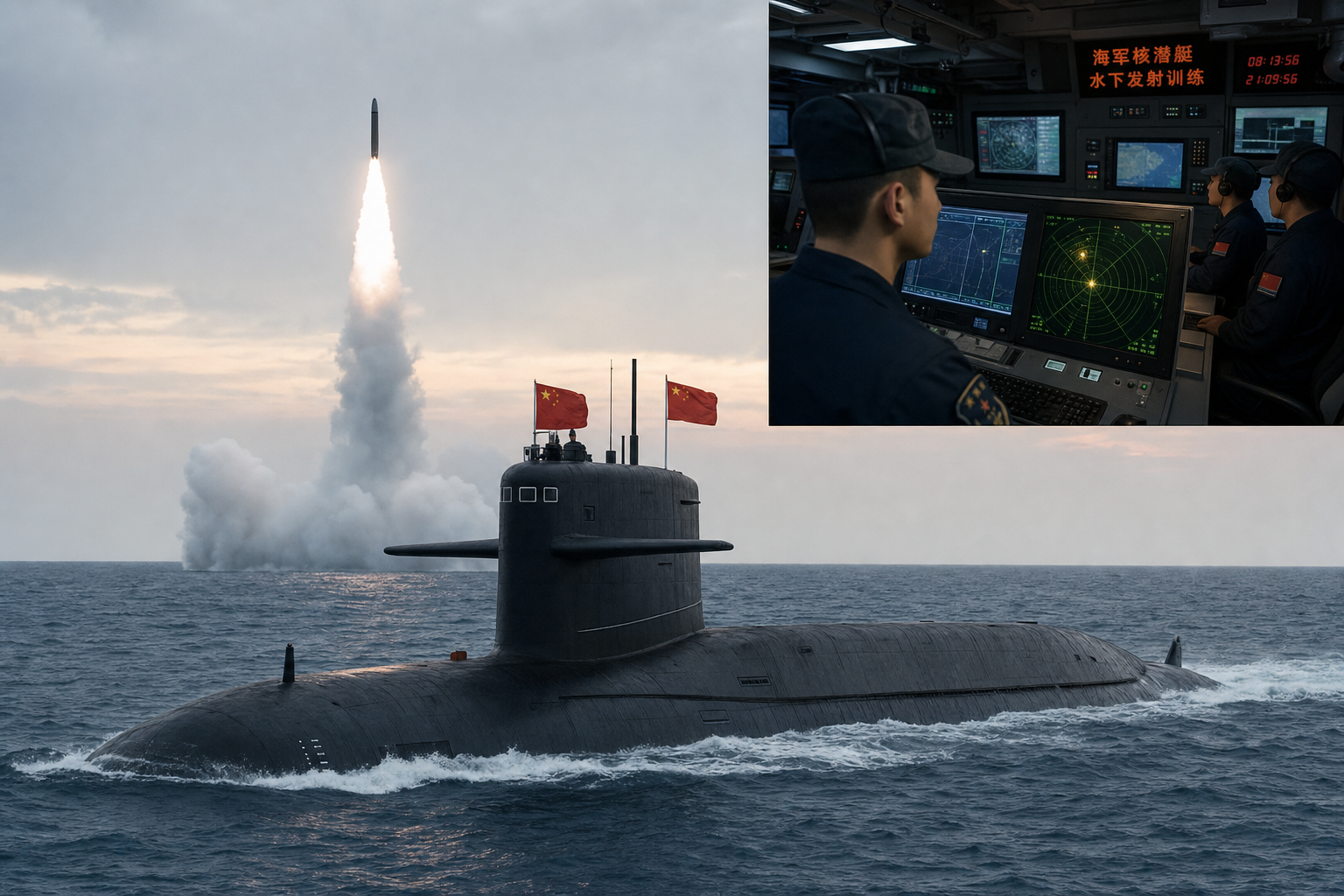
China test-fired an intercontinental ballistic missile carrying a dummy warhead into the Pacific Ocean, its first such launch in two years and a move that immediately drew concern from regional governments. According to China’s state news agency Xinhua, the missile was launched from a Chinese nuclear-powered submarine at 12:01 p.m. Beijing time and landed in a designated area, though officials did not specify exactly where in the Pacific it came down. The Chinese government said the test was not directed at any specific country or target and had warned governments in the region shortly before the launch.
The launch came at a sensitive regional moment, as Australia and Fiji announced a mutual defense treaty and a broader security alliance, part of Canberra’s efforts to strengthen ties with Pacific Island nations amid growing concern about China’s influence in the region. Officials in New Zealand, Australia, and Japan responded sharply. New Zealand Foreign Minister Winston Peters said the test was deeply concerning and reflected a recurring pattern, while Australian Foreign Minister Penny Wong called it destabilizing and tied it to China’s rapid military buildup and lack of transparency. Japan said it conveyed serious concern about the intensification of China’s military activities.
Analysts said the missile was likely the JL-3, a submarine-launched system shown publicly in Beijing the previous year. Jeffrey Lewis, a scholar who studies China’s nuclear modernization, said the test may signal a broader acceleration in China’s testing of nuclear-capable weapons and a willingness to absorb the political costs of such launches. The article places the test in the context of China’s expanding nuclear arsenal and a shifting regional security environment in the Pacific.
Entities: China, Pacific Ocean, intercontinental ballistic missile (ICBM), dummy warhead, Chinese nuclear-powered submarine • Tone: analytical • Sentiment: negative • Intent: inform
06-07-2026
Chinese state media reported that a nuclear-powered People’s Liberation Army (PLA) submarine conducted a missile test on the high seas in the Pacific on Monday, marking a notable milestone in China’s undersea deterrent capabilities. According to Xinhua, the test occurred at 12:01 p.m. and involved a dummy warhead. The agency said the launch was a routine test and not directed at any specific country or target, adding that relevant countries had been notified in advance. The report identifies the launch as China’s first known submarine-based missile test since 1982, and the first known missile test launched from a nuclear-powered Chinese submarine.
The article places particular emphasis on the significance of the event: it suggests a rare public confirmation of a PLA submarine missile launch and highlights its historical importance after more than four decades without a known test of this kind. The notification of neighboring states is also noted as a way Beijing appears to have reduced the risk of misinterpretation. Japan and Australia confirmed they had advance notice, while Agence France-Presse reported that Papua New Guinea and New Zealand were also informed. Overall, the piece frames the event as a significant military development for China with potential strategic implications in the Pacific, while stressing the official description of the launch as routine and non-threatening.
Entities: People’s Liberation Army (PLA), China, Pacific Ocean, Western Pacific, Xinhua • Tone: analytical • Sentiment: neutral • Intent: inform
06-07-2026
China conducted a long-range missile test in the Pacific Ocean, prompting sharp criticism from Australia, which said it viewed the move as destabilising to regional peace and security. According to China’s state news agency Xinhua, the missile carried a dummy warhead and landed in designated waters as part of a routine annual military training exercise, with prior notification to relevant countries. However, Australia’s acting prime minister Richard Marles said China informed Canberra only on the day of the test, and foreign minister Penny Wong later said Australia had been advised the launch would occur within 24 hours. Wong said the test came amid China’s rapid military buildup and a lack of transparency and reassurance about its intentions, arguing it was inconsistent with the Pacific Islands Forum’s goal of making the region an “Ocean of Peace.” The article notes that the test followed the signing of a major Australia-Fiji defence alliance earlier the same day, and that Chinese satellite-tracking vessels were positioned across the Pacific, likely to collect data from the launch. The story also highlights that China last tested an intercontinental ballistic missile in 2024, underscoring its expanding military capabilities and the strategic sensitivity of the event.
Entities: China, Pacific Ocean, Australia, Richard Marles, Penny Wong • Tone: analytical • Sentiment: neutral • Intent: inform