06-07-2026
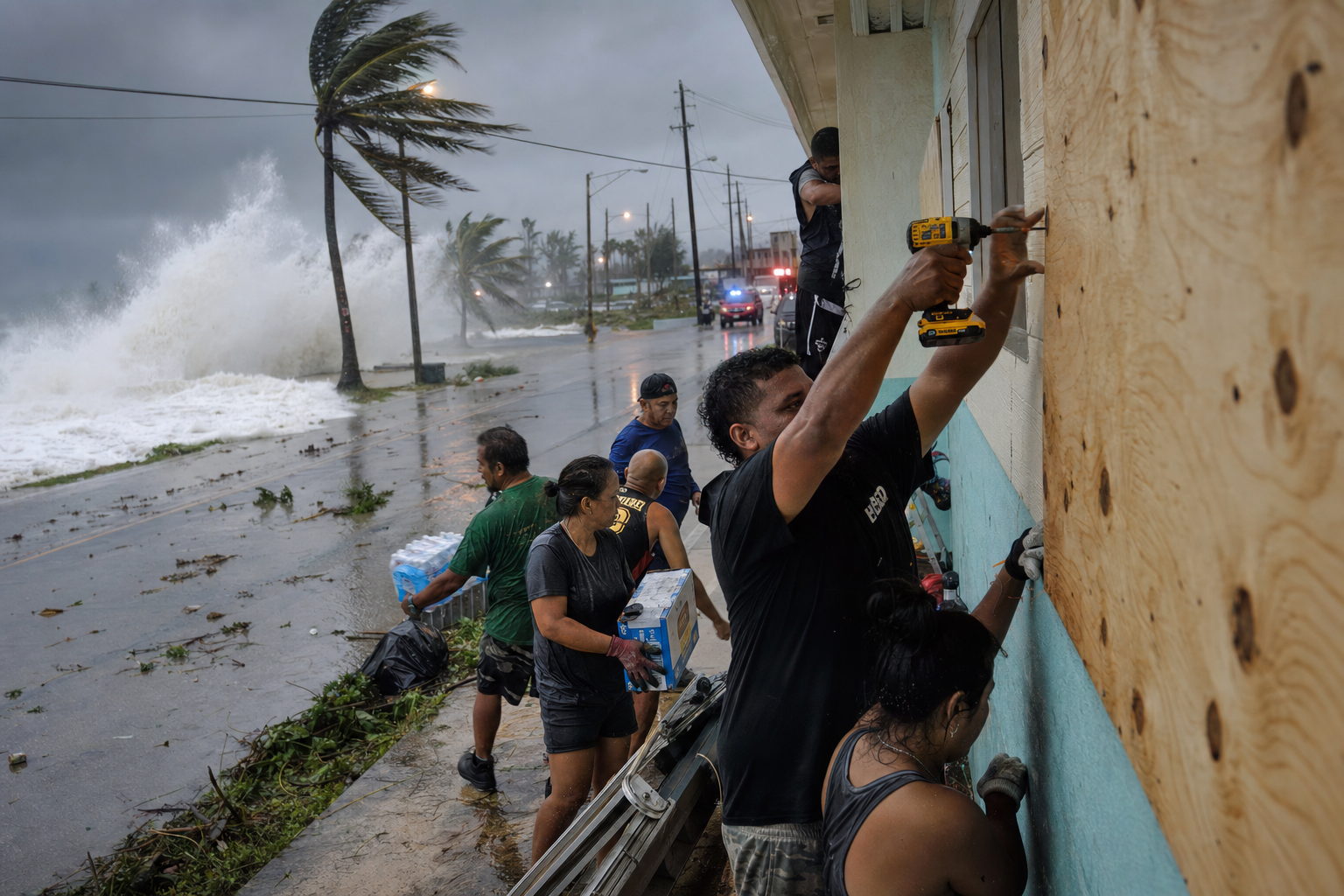
Super Typhoon Bavi has struck Guam and the Northern Mariana Islands with extremely powerful winds, heavy rain and dangerous surf, prompting warnings of catastrophic damage and emergency preparations across the US Pacific territories. The US National Weather Service said Bavi was packing sustained winds near 290 km/h (180 mph) and gusts up to 350 km/h, with waves possibly reaching 11 meters (35 feet). Officials reported major damage on parts of the Northern Mariana Islands, while residents sought shelter and braced for worsening conditions.
The article focuses on the direct impacts on Rota, Saipan, and Guam, where people were boarding up homes and businesses, opening evacuation centers, and coping with power outages and travel disruptions. On Saipan, wind gusts above 161 km/h were recorded, and many residents were already without electricity after a previous super typhoon, Sinlaku, hit in April, killing 17 people and causing about $1.5 billion in damage. Guam opened evacuation centers for vulnerable residents, with at least one reaching capacity.
Beyond the immediate storm, the article places Bavi in a broader climate context. It notes that storms of this intensity are unusual but becoming more common, with scientists linking stronger typhoons to climate change, warmer sea surface temperatures, and a strong El Niño event that can intensify Pacific storms. The piece also highlights the economic strain on small businesses and the disruption to travelers, underscoring how repeated extreme weather events are affecting life in the region.
Entities: Super Typhoon Bavi, Guam, Northern Mariana Islands, Rota, Saipan • Tone: urgent • Sentiment: negative • Intent: inform
06-07-2026
Super Typhoon Bavi struck the U.S. territorial island of Rota in the Northern Mariana Islands near Guam on Monday, bringing catastrophic winds, torrential rain, and an extreme wind warning from the National Weather Service. Officials warned that the storm posed an "imminent danger to life," with forecasts calling for winds up to 180 miles per hour and gusts reaching 215 miles per hour, placing Rota under extreme wind warning and Guam, Tinian, and Saipan under various typhoon alerts. Residents across the region were told to stay indoors, move to interior rooms, avoid windows, and not venture outside because of the risk from flying debris, downed power lines, and falling utility poles.
Although Bavi was moving relatively quickly, which offered some hope that it would pass through sooner, its size meant tropical storm conditions and heavy rain could still affect the islands through at least Monday night. The article notes that the region was still recovering from Super Typhoon Sinlaku, another destructive storm that hit earlier in the year, underscoring the area’s repeated exposure to severe cyclones. Guam Gov. Lou Leon Guerrero urged residents to remain home or seek shelter and avoid roads, while a local priest expressed cautious optimism that widespread structural damage might be limited because many homes are concrete, though power outages remained a major concern. Overall, the piece emphasizes the severity of the storm, the immediate public safety warnings, and the ongoing vulnerability of the Pacific island territory to major typhoons.
Entities: Super Typhoon Bavi, Rota, Guam, Northern Mariana Islands, National Weather Service • Tone: urgent • Sentiment: negative • Intent: inform
06-07-2026
Super Typhoon Bavi, one of the strongest storms on Earth in 2026, struck the U.S. Pacific island territories of the Northern Mariana Islands on Monday morning, passing over Rota and threatening Guam, Saipan, and Tinian with destructive winds, torrential rain, storm surge, and dangerous surf. The storm was especially concerning because these islands host critical U.S. military infrastructure, particularly Guam, where Andersen Air Force Base and U.S. Naval Base Guam play major strategic roles in projecting American power across the Pacific. Meteorologists warned that Bavi’s Category 5-equivalent winds could cause catastrophic structural damage, prolonged outages, flash flooding, and life-threatening coastal flooding.
The article emphasizes that Guam and the surrounding islands were already vulnerable after Super Typhoon Sinlaku struck the region in April, leaving parts of Saipan and Tinian without electricity and causing widespread flooding and damage. Residents were again preparing for severe impacts, while the U.S. military on Guam said it was at the highest storm readiness level. The piece also places the storm in a broader strategic context, noting that Tinian’s North Field—historic for its role in World War II atomic bomb missions—is being renovated as Washington seeks to disperse military assets in the Pacific to better counter China. Bavi was expected to move away from the Marianas later that day.
Entities: Super Typhoon Bavi, Northern Mariana Islands, Rota, Guam, Saipan • Tone: urgent • Sentiment: negative • Intent: inform