04-09-2026
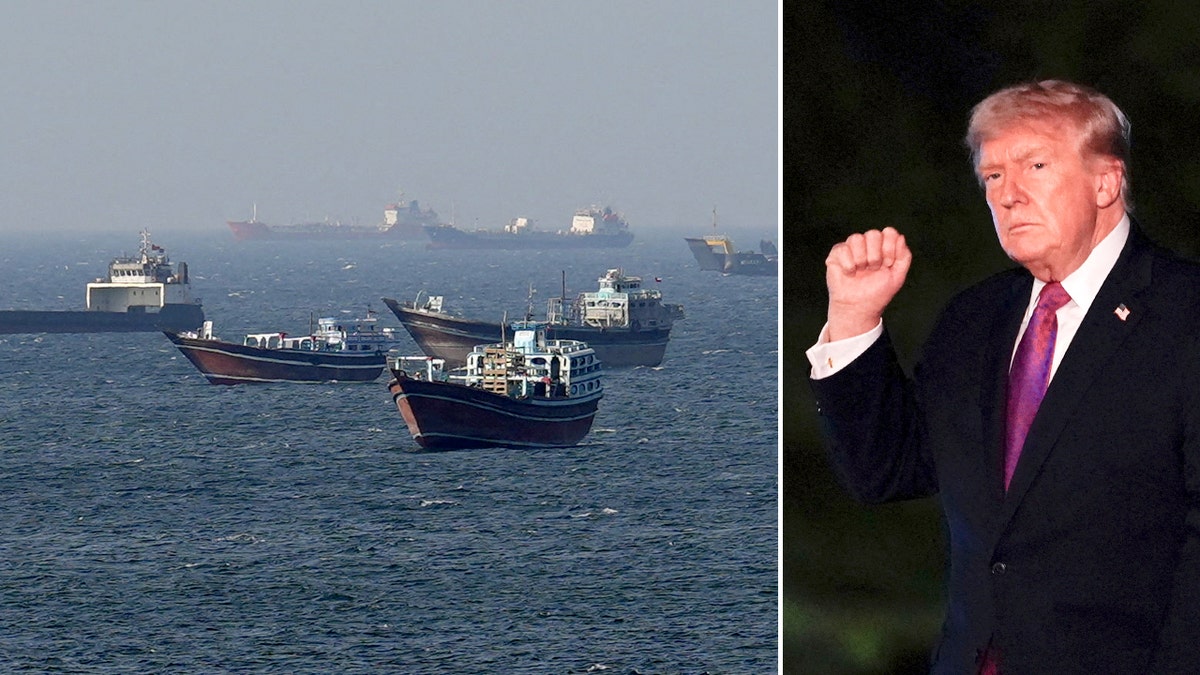
South Korea is considering whether to make a military or other contribution to efforts to ensure freedom of navigation through the Strait of Hormuz, according to its presidential office. The strategic waterway has become a focus of international concern after Iran restricted maritime traffic during its war with the United States, threatening a major route for global energy supplies.
Reports by South Korean broadcaster JTBC suggested that Seoul was leaning toward sending troops and was reviewing the details before seeking approval from the National Assembly. The presidential office subsequently emphasized that no decision had been made. Officials said possible options could include combat participation, non-combat roles, and search operations, but stressed that any contribution would have to preserve South Korea’s military readiness and comply with domestic legal procedures.
A deployment would require approval from the National Security Council, a cabinet resolution, and consent from the National Assembly. The issue could also be discussed when President Lee Jae Myung meets French President Emmanuel Macron the following week.
The proposal faces limited domestic support. A March Gallup Korea poll found that 55 percent of respondents opposed sending South Korean warships to the strait. At the same time, South Korea has significant economic reasons to protect access to the waterway: in the previous year, 61 percent of its crude oil imports and 54 percent of its naphtha imports passed through the Strait of Hormuz.
Seoul is also under pressure from Washington, its most important ally. US President Donald Trump said he had canceled joint US-South Korea military exercises partly because Seoul declined to assist the US war effort against Iran. South Korea had previously said it would consider deploying forces only after the conflict ended. The presidential office rejected claims that Seoul had provided no assistance, noting that practical contributions had long been discussed internationally. In late 2019, South Korea expanded its anti-piracy deployment from Somalia to waters around Hormuz after US requests for help protecting oil tankers.
Entities: South Korea, Strait of Hormuz, Iran, United States, President Lee Jae Myung • Tone: analytical • Sentiment: neutral • Intent: inform
04-09-2026
The European Union has formally endorsed the U.S.-led “Operation Economic Outcast,” a sanctions campaign intended to isolate Iran from the global financial system. U.S. Treasury Secretary Scott Bessent welcomed the EU’s support and said Washington and its allies would continue cutting off financial channels that Tehran could use to fund its nuclear activities, weapons programs, and regional proxies. The campaign, launched by the Trump administration in late August, targets Iran’s access to digital assets, advanced technology, gold, commercial aviation, and shipping. Bessent has also warned that banks and other institutions facilitating Iran-related transactions could face secondary sanctions and exclusion from the dollar-based financial system.
The EU said its endorsement was aimed at countering Iran’s “destabilizing activities” and supporting a return to peace talks. However, Iran’s Foreign Ministry rejected the move as “economic terrorism,” accusing the bloc of surrendering its sovereignty to U.S. pressure. The EU already maintains separate sanctions on Iran’s nuclear and ballistic missile programs and its military support for Russia. China remains Iran’s largest trading partner and reportedly purchased most of the country’s sanctioned crude exports before the conflict.
At the same time, South Korea is considering whether to provide military assistance to a U.S. effort to reopen the Strait of Hormuz to commercial shipping. Seoul has denied reports that it has already decided to deploy troops, although local media said a Gulf deployment could occur before the end of the year and might require parliamentary approval. The issue follows U.S. frustration with South Korea’s reluctance to provide military support.
The developments come amid escalating hostilities. The U.S. has launched strikes on Iranian military targets, while Iran has retaliated against American bases across the Middle East. Shipping through the Strait of Hormuz, a major route for global oil flows, remains heavily disrupted. The U.S. says it has redirected 87 commercial vessels, disabled three, and boarded two while enforcing a naval blockade around Iranian ports.
Entities: European Union, United States, Iran, South Korea, Strait of Hormuz • Tone: analytical • Sentiment: negative • Intent: inform
04-09-2026
The article reports that Iran’s leaders may prefer continued, low-level confrontation with the United States and neighboring Gulf states over a peace agreement because external conflict helps suppress attention to domestic dissatisfaction. Dr. Majid Sadeghpour, a human rights activist and political director of the Organization of Iranian-American Communities, argues that the regime’s primary threat is not U.S. military action but a potential uprising by Iran’s population.
Sadeghpour says Iran continued attacking ships and U.S.-linked targets even after receiving assurances that Washington would not seek regime change. He interprets this behavior as evidence that the government depends on ongoing friction to maintain its grip on power and redirect public anger away from economic hardship, inflation, religious restrictions, and government repression.
The article describes recent Iranian uprisings as having been met with deadly force, arbitrary arrests, and detention. It also cites Vice President JD Vance, who said Iran’s ability to control the Strait of Hormuz is declining and that the country is losing military capabilities. According to Sadeghpour, Tehran may attempt to prolong the conflict until an exhausted population becomes less active, while remaining fearful that Iranians will then seek to overthrow the regime.
President Donald Trump is quoted as saying he is not focused on bringing Tehran back to negotiations and that any agreement would be “worthless.” He also called on the Iranian people to “rise up and fight.” Overall, the article presents the conflict as serving both military and political purposes for Iran, while emphasizing the vulnerability of the regime to renewed domestic unrest. Its central argument comes from Sadeghpour and is presented alongside statements from U.S. officials and descriptions of Iran’s recent repression and maritime actions.
Entities: Iranian government/regime, United States, Dr. Majid Sadeghpour, Organization of Iranian-American Communities, President Donald Trump • Tone: analytical • Sentiment: negative • Intent: analyze
04-09-2026
France 24’s live Middle East report, issued September 4, 2026, focuses on escalating tensions involving Iran, the United States, Israel, and regional states. The lead development is that South Korea is reportedly considering sending military assets to the Strait of Hormuz to help protect freedom of navigation. However, Seoul denied that it had made a final decision to deploy forces, making the proposal unconfirmed.
The report also states that Iran launched attacks against American military targets in the Gulf. Iran reportedly described the strikes as retaliation for an attack on Tuesday night that killed four people at a wedding. The Strait of Hormuz is a strategically important waterway for global energy shipments, and any military escalation there could threaten maritime traffic and oil and gas supplies.
The article’s recap of the previous day’s events highlights several other significant developments. Israeli Prime Minister Benjamin Netanyahu expressed confidence that Iran’s Islamic Republic could soon collapse, describing it as “weaker than ever.” US Vice President JD Vance said he would not classify the conflict with Iran as a war, despite continuing clashes that the report says have lasted six months. Iran’s army also claimed to have targeted US bases in the United Arab Emirates and Kuwait, in spite of warnings from US President Donald Trump that further Iranian strikes could prompt additional consequences.
Overall, the article presents a rapidly deteriorating regional security situation involving military retaliation, threats against American facilities, uncertainty over South Korean involvement, and risks to navigation through the Strait of Hormuz. It is framed as a developing liveblog and attributes its reporting to France 24, Reuters, the Associated Press, and Agence France-Presse.
Entities: South Korea, Strait of Hormuz, Iran, United States, Israel • Tone: urgent • Sentiment: negative • Intent: inform
04-09-2026
The article reports that Iran is increasingly struggling under a US naval blockade and intensified economic sanctions, according to three senior Iranian sources cited by Reuters. Tehran’s oil exports, its principal source of revenue, have fallen to historic lows for seven consecutive weeks. Although Iran shipped approximately 2 million barrels of oil per day during the height of the conflict in March, maritime analysts Vortexa and Kpler estimate that the country loaded an average of only about 250,000 barrels per day in August.
The decline suggests that the US blockade is preventing Iran from using the oil-trading networks that previously helped it evade Western sanctions. Vortexa analyst Claire Jungman said Iranian crude flows through the Strait of Hormuz had never remained near zero for such an extended period, even during the maximum-pressure sanctions of 2019–20. The US Central Command says the Navy has redirected or intercepted 86 commercial vessels, disabled three ships, and boarded two others connected to Iranian ports.
Iranian officials say the country still has tens of millions of barrels stored aboard tankers outside the blockade zone, while Vortexa estimates that 107 million barrels of Iranian oil are afloat. However, selling those reserves is difficult and temporary: once tankers unload, they may be unable to return to Iran to restock. Falling oil income, high inflation, and the declining value of the rial have also reduced Tehran’s ability to pay the elevated costs required to circumvent sanctions.
The pressure is expected to intensify. Treasury Secretary Scott has threatened additional sanctions and asset seizures, including properties in the British Virgin Islands and an alleged $130 million London real-estate portfolio linked to Supreme Leader Mojtaba Khamenei. Scott said the US would continue squeezing Iran until it agrees to a peace deal with President Trump.
Entities: Iran, United States, Donald Trump, Mojtaba Khamenei, Treasury Secretary Scott • Tone: urgent • Sentiment: negative • Intent: inform
04-09-2026
South Korea is reviewing, but has not approved, a possible deployment of military assets to the Strait of Hormuz as pressure grows from US President Donald Trump for Seoul to support regional security efforts. South Korean media, citing unnamed government and military sources, reported that preparations were under way and that the government planned to seek parliamentary approval. The reports mentioned a P-8 Poseidon maritime patrol aircraft, a naval logistics support ship and, according to one outlet, a navy explosive ordnance disposal team. The deployment’s size and timing reportedly remain undecided.
South Korea’s presidential office rejected claims that a deployment had been finalized, telling The Guardian that the reports were “different from the facts” and that “nothing related to the matter has been decided”. It nevertheless confirmed that discussions were continuing with international partners about contributing to the restoration of free navigation through the strait and to Middle East stability.
Any new mission would require review by the national security council, a cabinet resolution and approval from the national assembly. Seoul is particularly sensitive to disruptions in the waterway because it imports more than 90% of its primary energy, including about 70% of its crude oil, through the Strait of Hormuz. In 2020, the Moon Jae-in government expanded an existing anti-piracy unit’s mandate to cover the strait without seeking approval for a separate deployment, but Defence Minister Ahn Gyu-back said in March that a substantially different mission would require parliamentary consent.
The reports come amid tensions in the US-South Korea alliance. Trump has criticized Seoul for declining a request related to Iran, and joint US-South Korean military exercises were subsequently reduced. The allies are also dealing with delays over a $350bn investment agreement, alleged restrictions on intelligence sharing and a dispute involving the South Korean e-commerce company Coupang. Separately, Seoul is interested in renewed US-North Korea diplomacy as Trump signals openness to meeting Kim Jong-un again.
Entities: South Korea, Strait of Hormuz, Donald Trump, Lee Jae Myung, Ahn Gyu-back • Tone: analytical • Sentiment: neutral • Intent: inform
04-09-2026
The supplied page is a live-news entry dated September 4, 2026, focused on the continuing Iran war and its regional consequences. The headline reports that the Israeli military claims to have established “operational control” of the strategically important Ali Al Taher ridge in southern Lebanon, indicating an expansion or consolidation of Israeli military activity beyond the previously referenced “yellow line.” The page also lists several major developments: the US Vice President described the conflict with Iran as “not a war”; former US President Donald Trump welcomed reports that Syria might provide an alternative route to the Strait of Hormuz; and the European Union joined a US campaign to increase economic pressure on Iran.
The updates further report that 13 Iranian military personnel were killed in the latest round of US strikes. Israeli Defence Minister Israel Katz attributed Iran’s economic difficulties to rising fears of a popular uprising. Other listed developments include the arrival of a US aircraft carrier in Thailand after 286 days at sea, discussion of the future strategic value of Hormuz, and statements by US Treasury Secretary Scott Bessent that Iran is responding to economic pressure. Vice President JD Vance reportedly said that Trump was sending Iran a warning through an AI-generated video, while Trump described Iran as a “failing nation.”
The page also references heightened US-Iran tensions ahead of a Shanghai Cooperation Organisation summit and continuing Houthi activity extending toward the Horn of Africa. However, the supplied content contains no detailed article body, eyewitness accounts, official statements beyond the listed headlines, or independent verification of the claims. It primarily consists of the headline, live-update summaries, video captions, and website navigation elements.
Entities: Iran war, Israeli military, Israel, Lebanon, Ali Al Taher ridge • Tone: urgent • Sentiment: negative • Intent: inform
04-09-2026
Iran’s embassy in Sierra Leone used a 35-second animated Minesweeper-style video to taunt the United States over the strategically important Strait of Hormuz. The post showed a 3D map of the waterway with minesweeper gameplay and carried the message, “Habibi (Uncle Sam), come to Iran!” The social-media message followed US President Donald Trump’s claim that American forces had removed mines allegedly laid by Iran and were continuing to escort oil tankers through the strait.
Trump said the United States had control of the waterway, was moving millions of barrels of oil daily, and had eliminated Iran’s mines. He also claimed that Iran was rebuilding radar and missile systems and attempting to restore its mine-laying capabilities. The article places the Iranian post within a broader escalation in the US-Iran conflict, which it says has passed the six-month mark.
According to the report, Washington recently struck Iranian rocket launchers on an island in the Strait of Hormuz, alleging that Tehran planned to use them to lay mines. Iran responded by launching ballistic missiles at two US military targets in Jordan, claiming heavy damage, while Jordan’s military said it intercepted eight missiles. US forces later conducted another attack on Iranian military targets. US Central Command said the strikes hit air-defense and radar systems, maritime assets, mine-laying capabilities, and communications facilities.
Iranian state media alleged that the United States had also struck a wedding, but Central Command spokesperson Timothy Hawkins rejected the claim and said the US military does not target civilians. The report concludes by noting that preventing Iran from obtaining a nuclear weapon remains Trump’s stated central objective.
Entities: Iran, United States, Strait of Hormuz, Iranian embassy in Sierra Leone, Donald Trump • Tone: analytical • Sentiment: negative • Intent: inform
04-09-2026
The European Union has signalled support for stronger economic pressure on Iran, prompting US Treasury Secretary Scott Bessent to say that the bloc has officially joined President Donald Trump’s “Operation Economic Outcast.” The US campaign is intended to isolate Iran from international financial networks and cut off revenue streams that Washington says support Tehran’s government, nuclear and weapons programmes, and regional proxies.
The EU cited several concerns behind its position, including Iran’s nuclear and ballistic missile activities, alleged destabilising actions in the Middle East and Europe, military support for Russia’s war in Ukraine, and repression of its own population. Brussels said it already maintains broad sanctions restricting Iran’s access to international economic and financial systems and remains prepared to impose additional measures if necessary.
However, the EU emphasised that economic pressure must be accompanied by diplomacy and de-escalation. It said negotiations remain essential to achieving peace, restoring regional stability, and securing freedom of navigation through the Strait of Hormuz, where disruptions to shipping and energy flows have created wider international concerns. The bloc also linked any new sanctions to efforts to bring Iran back to talks and urged Tehran to enter negotiations in good faith.
Operation Economic Outcast, announced by Washington the previous month, includes efforts to map oil-smuggling and sanctions-evasion networks and expands scrutiny of Iran-linked digital assets, technology, and shipping. Bessent presented Iran with a choice between global isolation and a subsistence economy or reintegration into the global economy.
The article characterises the EU’s position as a balancing act: coordinating more closely with Washington while preserving diplomacy and seeking to prevent further escalation of the conflict.
Entities: Operation Economic Outcast, European Union (EU), Donald Trump, Scott Bessent, Iran • Tone: analytical • Sentiment: neutral • Intent: inform
04-09-2026
Oil prices were on track for their strongest weekly performance in several weeks as fighting between the United States and Iran continued into its seventh month. Brent crude futures fell 1.66 per cent to $93.93 a barrel, while US West Texas Intermediate declined 2.1 per cent to $89.38 by 6.19pm UAE time on Friday. Despite the daily declines, Brent was up 5 per cent for the week and WTI had gained 7 per cent, its best weekly performance since July 13.
The rise in crude prices, together with a sharper increase in fuel costs, is adding to global inflation and government borrowing expenses. The article warns that these pressures are increasing concerns about a possible hard landing for the world economy. Saxo Bank’s Ole Hansen said commodities were being affected differently by rising interest rates, inflation, supply constraints and geopolitical disruption.
US diesel prices reached record highs as renewed fighting and Ukrainian attacks on Russian refineries worsened supply disruptions. European diesel inventories also remained well below seasonal levels. The conflict has intensified, with US strikes killing and injuring dozens, Iranian forces attacking vessels in the Strait of Hormuz and firing missiles at Jordan, Kuwait and Bahrain, and Israel warning that it could target Iranian military, civilian and energy infrastructure.
Shipping through Hormuz remains significantly reduced. Four commodity vessels crossed the strait on Thursday, compared with a 10-day average of about 15. Although Washington said regional flows had returned close to normal, analysts and tanker trackers continued to report severe disruption. Before the war, roughly one-fifth of global oil and liquefied natural gas shipments passed through the strait.
Iraq increased August oil exports, while Saudi Arabia kept its flagship crude price for Asia unchanged. Citi raised its third-quarter Brent forecast to $86 a barrel, and ANZ raised its short-term forecast to $95. Brent has risen almost 60 per cent this year.
Entities: US-Iran conflict, Brent crude, US West Texas Intermediate (WTI), Strait of Hormuz, Ole Hansen • Tone: analytical • Sentiment: negative • Intent: inform
04-09-2026
The United States Treasury Department has imposed new Iran-related sanctions on three entities based in Turkey: Golden Global Portfoy Yonetimi Anonim Sirketi, Golden Global Varlik Kiralama Anonim Sirketi and Golden Global Yatirim Bankasi Anonim Sirketi. The department also issued a general license permitting parties to wind down transactions with the sanctioned organizations.
The measures are part of the Trump administration’s broader campaign to intensify economic pressure on Tehran. The article describes the sanctions as coming six months into Washington’s war with Iran, a conflict that has contributed to higher energy prices worldwide. Treasury Secretary Scott Bessent has characterized the administration’s efforts as an “economic onslaught” against Iran’s financial connections internationally. He has said the objective is to pressure Tehran into returning to negotiations.
The latest action follows Washington’s decision the previous week to restrict Banque Misr’s branches in the United Arab Emirates from conducting US-dollar transactions because of their dealings with Iran. Bessent also told Reuters that the Treasury Department was likely to introduce new secondary sanctions every week. The initial focus would be banks, forming part of a wider effort to increase economic pressure on Iran and disrupt its international financial relationships.
The sanctions reflect an expanding effort by the United States to target financial institutions and intermediaries connected to Iran, including entities operating outside Iran itself. The use of a wind-down license indicates that the Treasury is allowing existing transactions to be concluded under specified conditions, even as it blocks future dealings with the designated entities. The measures are likely to affect Turkey-based financial organizations and add to economic uncertainty linked to the conflict and ongoing diplomatic pressure.
Entities: U.S. Treasury Department, Trump administration, Scott Bessent, Iran, Turkey • Tone: analytical • Sentiment: negative • Intent: inform
04-09-2026
The supplied content does not include the substantive body of the Al Jazeera liveblog. It contains the headline, a reference to 17 updates, and repeated advertising or user-engagement prompts. The headline reports that the United States has ruled out talks with Iran while attacks on ships continue. It frames the issue as part of an ongoing Iran war and identifies Donald Trump in the page title, but provides no direct quotations, official statements, timeline, locations, casualty figures, or explanation of the alleged ship attacks. Because the liveblog entries are absent, the article’s broader political, military, and diplomatic context cannot be reliably assessed from the provided text. It is also impossible to determine whether the reported US position was presented as a new announcement, a response to a specific incident, or part of a wider negotiation strategy. The available material suggests that the central subject is the relationship between maritime attacks and US-Iran diplomacy: Washington is reportedly conditioning or withholding negotiations until those attacks stop. The page appears to have been designed as a rolling news report, as indicated by the “17 Updates” label, but none of those updates are included in the supplied content. The remaining text consists of advertisements and prompts encouraging readers to enable alerts, which do not contribute substantive information about the conflict. Consequently, this analysis is limited to the headline and cannot summarize the missing developments without introducing unsupported claims.
Entities: Iran, United States, Donald Trump, Al Jazeera, Iran war • Tone: urgent • Sentiment: negative • Intent: inform
04-09-2026
The U.S. Treasury Department has sanctioned Golden Global Bank, an Istanbul-based Turkish financial institution accused of helping Iran move proceeds from oil sales to China and channeling funds to the Islamic Revolutionary Guard Corps and its Qods Force. The action is part of Treasury Secretary Scott Bessent’s “Operation Economic Outcast,” a campaign intended to impose enough economic pressure on Iran to force it into a peace agreement or cause the regime to collapse.
Golden Global Bank, founded in 2019, describes itself as Turkey’s first investment bank operating under interest-free Islamic finance principles. It ranks as Turkey’s 35th-largest bank and reportedly controls approximately $517 million in assets. Treasury officials said the bank was connected to Iran’s “rahbar” network of front organizations, which allegedly transfers oil revenues from China to Turkey, where the money can be converted into cash and gold. The department said Golden Global and its subsidiaries facilitated tens of millions of dollars in transactions for the IRGC-QF and provided correspondent banking access that enabled Iran to move funds internationally.
The sanctions cut Golden Global off from the international financial system and, according to Treasury, sever Iran’s financial lifelines in Turkey. The action is believed to be the first time Washington has sanctioned a Turkish bank, although U.S. prosecutors previously charged Halkbank with helping Iran evade sanctions. That case ended in a legal settlement earlier in the year.
It remains unclear whether Turkey will seize the bank’s assets or whether President Recep Tayyip Erdoğan discussed the matter with President Donald Trump before the sanctions were announced. The move follows similar Treasury actions against financial institutions in the United Arab Emirates accused of servicing Iranian clients.
Entities: U.S. Treasury Department, Scott Bessent, Golden Global Bank, Turkey, Iran • Tone: urgent • Sentiment: negative • Intent: inform
04-09-2026
The article examines why prices for refined fuels and petrochemical feedstocks are rising faster than crude oil prices, using Japan’s shortage of naphtha as a vivid example of the broader strain on global industrial supply chains. Naphtha, a crude-derived liquid used in polyester, packaging and solvents, has become difficult to obtain in Japan. The shortage was visible to consumers when Calbee changed the packaging of a popular potato-chip brand because of limited access to naphtha-based materials. Japanese media have even begun using the phrase “naphtha bankruptcies” to describe the financial pressure on companies that cannot secure essential oil-derived inputs.
The problem appears widespread rather than confined to a few businesses. A June survey by Tokyo Shoko Research found that roughly 80 per cent of more than 7,000 responding companies were having difficulty procuring oil-derived products. The article links these local shortages to tightening global refined-product supplies. Goldman Sachs analysts led by Yulia Zhestkova Grigsby estimated in late August that refinery outages were 60 per cent above seasonal norms. These outages either remove refining capacity entirely or force facilities to cut production, reducing supplies of fuels and petrochemical feedstocks even when crude markets are less constrained.
Analysts identify two principal causes: escalating geopolitical conflict and China’s controls on fuel exports. China possesses the world’s largest oil-refining capacity, so restrictions on its refined-product exports can have an outsized effect on international markets. The article also notes that global refined-product exports fell 25 per cent year on year in August, with the losses concentrated in Russia and the Persian Gulf. Together, refinery disruptions and export controls have created a supply squeeze that is affecting manufacturers and consumers. The central question is how long these conditions will persist, but the supplied excerpt does not provide a definitive forecast.
Entities: David Chen, Emma Main, Calbee, Tokyo Shoko Research, Goldman Sachs • Tone: analytical • Sentiment: negative • Intent: analyze
04-09-2026
The live-update article examines the economic and humanitarian effects of the reported Iran war, focusing on record U.S. fuel prices and competing claims about the conflict. U.S. diesel reached $5.85 per gallon, an all-time high, while regular gasoline rose to $4.15 per gallon ahead of the Labor Day weekend. AAA predicted that travelers would face the most expensive Labor Day fuel prices on record. Diesel prices are especially significant because they influence the cost of transporting goods domestically and internationally.
Vice President JD Vance declined to predict when prices might fall and argued that fuel costs could have been higher without U.S. actions. He also rejected characterizing the conflict as a war. President Trump and economic adviser Kevin Hassett similarly emphasized efforts to maintain oil flows, but shipping data showed that traffic through the Strait of Hormuz remained substantially below pre-conflict levels. Hassett described the price increase as a short-term problem.
The article also reports Iran’s response to economic pressure. President Masoud Pezeshkian said the government would not raise gasoline prices for now and would instead manage consumption through non-price measures, with savings directed to electronic food vouchers. Government spokeswoman Fatemeh Mohajerani acknowledged shortages and economic hardship, attributing infrastructure delays partly to severe U.S. sanctions.
On the military and humanitarian front, Iranian officials claimed that the United States and Israel failed to achieve their war objectives. Thousands attended the funeral of a four-year-old boy whom Iranian authorities said was killed in a U.S. strike on a wedding gathering. The U.S. military said it was investigating, while Vance expressed skepticism and reiterated that civilians are not deliberately targeted. The reports and allegations remain contested.
Entities: Iran war and U.S.-Iran conflict, U.S. diesel and gasoline prices, Labor Day weekend, JD Vance, Donald Trump • Tone: analytical • Sentiment: negative • Intent: inform
04-09-2026
The Washington Post article, based on the supplied excerpt, reports that Iran has launched missiles and drones toward Kuwait as strikes resume in the broader U.S.-Iran conflict. The headline presents the attack as a significant escalation involving U.S. forces and a neighboring Gulf state. The report is datelined Dubai and identifies economic pressure and the struggle to preserve diplomatic leverage over the Strait of Hormuz as central factors shaping Tehran’s conduct.
According to the excerpt, Iran is responding to these pressures with increasingly aggressive rhetoric and direct military action. The immediate event described is a Thursday strike against U.S. forces in Kuwait. The reference to the Strait of Hormuz is important because the waterway is a major strategic and economic chokepoint, and control or influence over it can provide leverage in regional and international negotiations.
The available text does not include details about casualties, damage, the precise targets, the scale of the missile and drone attack, or the responses from the United States or Kuwait. It also does not provide the broader chronology of the conflict or explain how the renewed strikes affect diplomatic efforts. Therefore, the summary is necessarily limited to the headline and the short article excerpt provided. Within that material, the central theme is escalation: Iran appears to be combining hostile rhetoric with attacks on U.S. forces while using its strategic position near the Strait of Hormuz to maintain diplomatic leverage amid economic strain.
Entities: Iran, Kuwait, Tehran, United States, U.S. forces • Tone: urgent • Sentiment: negative • Intent: inform