04-07-2026
The article describes the harrowing scene at a makeshift morgue in La Guaira, Venezuela, where families of victims from twin earthquakes are being forced to identify the dead under traumatic and chaotic conditions. With the death toll surpassing 2,600 and local infrastructure overwhelmed, bodies are stored in temporary tents and outside in the heat at a port facility called Los Silos. Families who have spent days searching hospitals, shelters, and rubble are confronted with rows of bodies, television screens showing more than 1,000 images, and forensic staff trying to use clothing, tattoos, dental records, and other clues to confirm identities. The article focuses on the anguish, exhaustion, and emotional damage experienced by relatives who must sometimes identify loved ones by visual details or photographs because decomposition has made recognition difficult. It also highlights the bureaucratic delays that follow identification, including fingerprints, coffins, death certificates, and funeral arrangements. Through accounts from several grieving relatives, the piece portrays both the scale of the disaster and the deeply personal suffering caused by the need to identify victims in an improvised, overcrowded mortuary setting.
Entities: Venezuela, La Guaira, Los Silos, BBC News Mundo, Norberto Paredes • Tone: emotional • Sentiment: negative • Intent: inform
04-07-2026
Rescue workers in Venezuela pulled security guard Hernan Gil alive from the rubble of a collapsed seven-story building eight days after twin earthquakes struck the country, an outcome described by his wife and rescuers as a miracle. The dramatic rescue in Catia La Mar, near Caracas, came amid a catastrophic disaster that has left the death toll near 2,600, with thousands injured, many still missing, and tens of thousands displaced. Rescue teams from seven countries, including the United States and several Latin American nations, worked around the clock to reach Gil after making contact with him days earlier and feeding him through a syringe while they carefully avoided triggering further collapses.
The article places the rescue in the broader context of Venezuela’s worsening humanitarian emergency. Despite a few other rescues, hopes of finding more survivors are fading, with many damaged buildings already marked as searched with no signs of life. Officials say more than 11,000 people have been injured, nearly 13,000 left homeless, and many remain unaccounted for. Beyond the immediate search-and-rescue effort, survivors face shortages of food and water, reports of looting, and growing public health concerns, including the risk of outbreaks of vaccine-preventable diseases. International aid agencies and rescue teams continue to respond, but the scale of destruction is immense, with satellite assessments suggesting nearly 59,000 buildings were damaged or destroyed.
Entities: Hernan Gil, Gusbimar Gonzalez, Nayib Bukele, Manny Sampang, Dustin Reynolds • Tone: urgent • Sentiment: negative • Intent: inform
04-07-2026
A Venezuelan security guard, Hernán Alberto Gil Flores, was rescued alive from the rubble of a collapsed shopping center in La Guaira eight days after twin earthquakes devastated northern Venezuela. The 43-year-old was trapped in a basement security booth when the first quake struck on June 24; the booth remained intact enough to protect him from the collapsing concrete. Rescue teams first detected signs of life over the weekend and then worked through aftershocks, heavy rain, and unstable debris to reach him. To keep him alive, rescuers used a telescopic camera to communicate with him and lowered water and liquid nutrients through a narrow shaft. When the rescuers found him, Gil Flores reportedly asked them not to tell his wife he was alive in case he did not survive the extraction.
His rescue became a rare moment of relief amid the wider catastrophe caused by the 7.2 and 7.5 magnitude earthquakes, which killed more than 2,200 people and injured more than 11,000 others while destroying tens of thousands of buildings. The operation involved Chilean firefighters and search-and-rescue teams from Costa Rica, the United States, Portugal, Mexico, and other countries, highlighting the international response to the disaster. The article also notes other recent rescues, including a 2-year-old boy pulled from the rubble after six days and a 9-month-old girl rescued by American teams. The U.S. government has mobilized $150 million in humanitarian aid for Venezuela.
Entities: Hernán Alberto Gil Flores, Gusbimar González, Minyar Collado, Venezuela, La Guaira • Tone: neutral • Sentiment: neutral • Intent: inform
04-07-2026
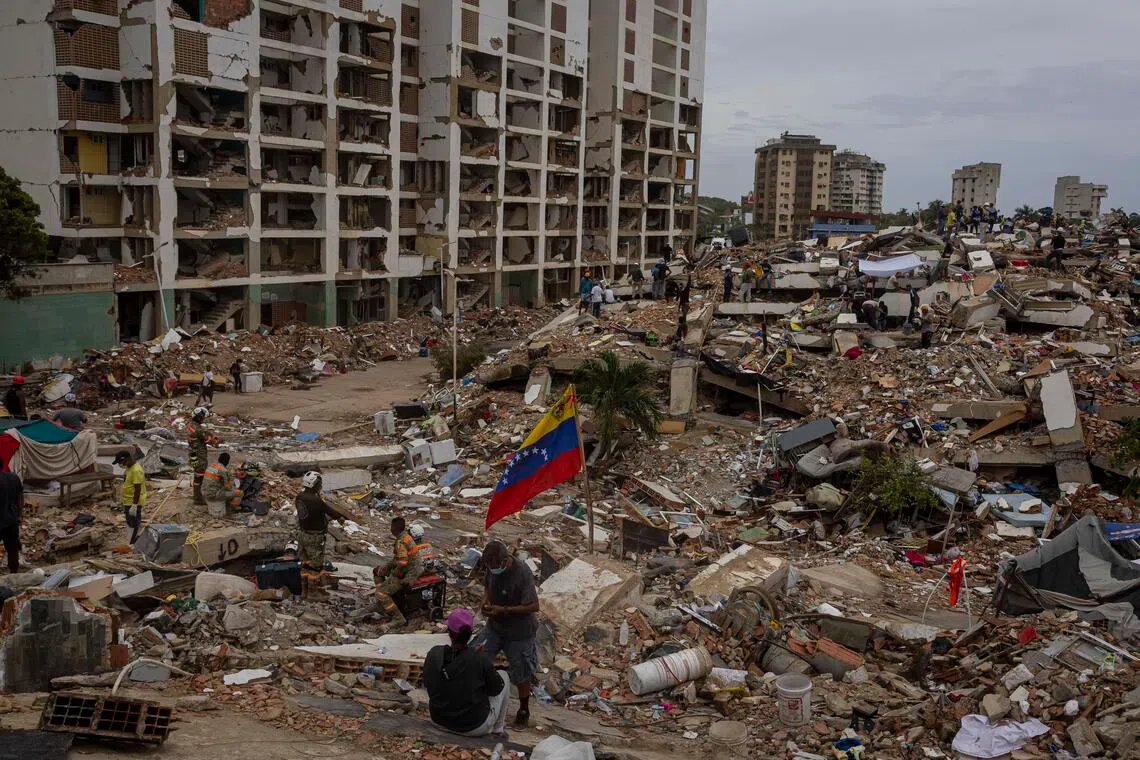
A rumour that a child might still be alive beneath the rubble of Venezuela’s Tahiti Residence became a source of false hope, confusion and conflict among survivors and relatives coping with the aftermath of a devastating double earthquake. In Caraballeda, where two earthquakes in La Guaira and Caracas have killed more than 2,600 people and left thousands missing, rescue teams returned repeatedly to the site after social media and word-of-mouth reports suggested a child was trapped and breathing. Despite the use of dogs and sound-detection equipment, rescuers found no signs of life, and a Spanish rescue report later confirmed negative results. The article shows how misinformation can intensify grief in disaster zones, especially when families are still searching for remains and answers.
The piece focuses on the emotional strain created by competing claims at the Tahiti site: some residents wanted to continue digging in case someone alive could still be saved, while others wanted the search to shift toward recovering bodies of loved ones. Survivors described feeling manipulated by unconfirmed claims circulating online, with one relative saying people were “playing with the families’ pain.” Another grieving woman, who had already buried her parents and was trying to recover other relatives, said that even though she would have welcomed a rescue, repeated rumors and the departure of rescuers made the situation unbearable. The article also notes that rescue chances decline sharply after 72 hours, though one man was rescued after eight days because teams had maintained contact and supplied him with water and oxygen. Authorities say all deceased victims will be identified, while the U.N. estimates the number of missing could reach 50,000.
Entities: Venezuela, Caraballeda, La Guaira, Caracas, Tahiti Residence • Tone: analytical • Sentiment: negative • Intent: inform