04-07-2026
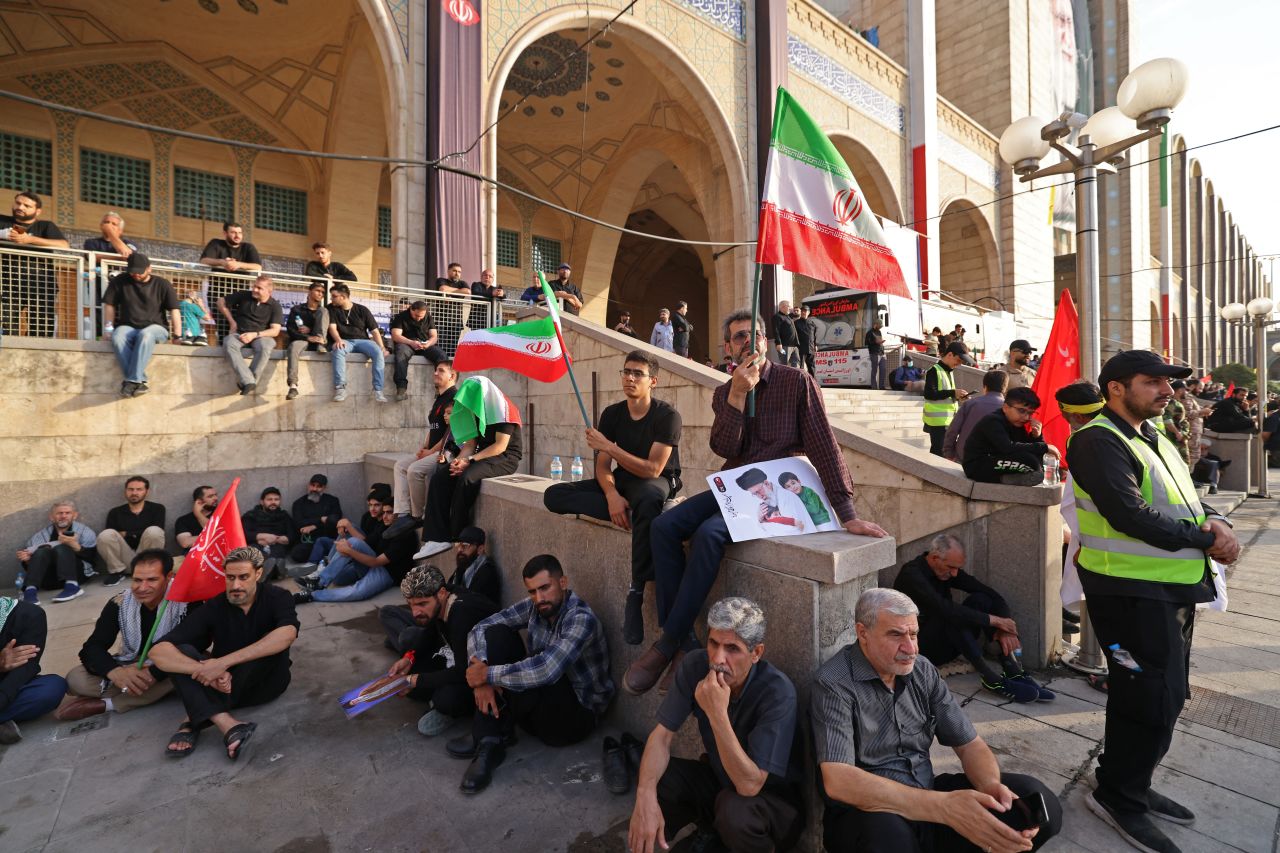
Iran has begun a multi-day public mourning period and elaborate funeral procession for former Supreme Leader Ayatollah Ali Khamenei, who was killed in joint US and Israeli strikes in February. The ceremonies, described by Iranian authorities as the “funeral of the century,” are unfolding across several cities and will culminate in burial at the Imam Reza Shrine in Mashhad next Thursday. The body is lying in state at Tehran’s Grand Mosalla, where Iranian officials say millions may attend, alongside a range of foreign dignitaries and regional representatives.
The article details the sequence of public events: a ceremony in Tehran, prayers in Qom, processions in Najaf and Karbala in Iraq, and final burial in Mashhad. Iranian officials frame the funeral as both a religious occasion and a symbol of Khamenei’s influence across the Shia Muslim world. The mourning period has also prompted practical measures in Tehran, including office closures, traffic restrictions, and airspace limitations.
A major point of uncertainty is the attendance of Khamenei’s successor, his son Mojtaba Khamenei, who has not been seen publicly since taking power. The article notes that questions also remain over who will lead the funeral prayer, a role carrying significant religious and political meaning in Shia tradition. The piece places the funeral in the broader context of the fragile ceasefire between Iran and the United States and the wider regional conflict triggered by the February strikes.
Entities: Ayatollah Ali Khamenei, Mojtaba Khamenei, Masoud Pezeshkian, Shehbaz Sharif, Dmitry Medvedev • Tone: analytical • Sentiment: neutral • Intent: inform
04-07-2026
Iran has begun preparing for a six-day funeral procession for Ayatollah Ali Khamenei, the Islamic Republic’s longtime Supreme Leader, whose death reportedly occurred during the early phase of the U.S.-Israeli war in February. The ceremonies, delayed for months because of continued conflict, are intended to culminate in Khamenei’s burial in Mashhad, a city of deep religious importance and his birthplace. The route will move through Tehran, Qom, Najaf, Karbala, and finally Mashhad, turning the funeral into a transnational religious and political spectacle across Iran and Iraq.
The article emphasizes that the procession is expected to attract enormous crowds—possibly tens of millions—and will require an extraordinary security and logistics operation led by the Islamic Revolutionary Guard Corps and the Basij paramilitary force. Schools, mosques, universities, sports halls, and highways are being repurposed to manage visitors, while flights and access to major cities may be disrupted. Analysts quoted by CNBC describe the event as both a religious ritual and a political demonstration meant to project regime continuity, legitimacy at home, and deterrence abroad.
Attendance by foreign officials is also a key question. More than 30 countries reportedly requested to participate, with Pakistan confirmed and a senior Chinese lawmaker expected to attend, while Gulf Arab states have not publicly committed. The article notes that Iran’s new Supreme Leader, Mojtaba Khamenei, has not yet appeared publicly since his accession, and his presence at the funeral would likely be interpreted as a signal of authority and stability. Overall, the piece frames the funeral as a major test of Iran’s political control, security capacity, and ability to manage public mourning amid economic strain, social discontent, and the risk of renewed hostilities.
Entities: Ayatollah Ali Khamenei, Mojtaba Khamenei, Tehran, Qom, Najaf • Tone: analytical • Sentiment: neutral • Intent: inform
04-07-2026
Iran has begun a multi-day public funeral process for Supreme Leader Ayatollah Ali Khamenei and several members of his family, with large crowds gathering in Tehran and ceremonies expected to continue in multiple locations in Iran and Iraq through July 9. The article describes heavy security around the funeral, including street patrols, airspace restrictions over Tehran, and warnings from Iran’s military and Revolutionary Guard against any U.S. or Israeli attack during the events. It also notes that the funeral is taking place amid heightened regional tensions and a pause in indirect diplomacy between Iran and the United States over the war. The reporting emphasizes both the scale of public mourning and the political volatility surrounding the ceremonies, including the possibility that Mojtaba Khamenei may make his first public appearance since the killing of his father and other family members on the first day of the war. The article includes emotional reactions from mourners, international diplomatic attendance, and statements from U.S. President Donald Trump and other officials, underscoring the combination of grief, symbolism, and security risk surrounding the funeral.
Entities: Iran, Tehran, Imam Khomeini Grand Mosalla, Ayatollah Ali Khamenei, Mojtaba Khamenei • Tone: urgent • Sentiment: negative • Intent: inform
04-07-2026
The article is a live blog from France 24 covering the start of Iran’s days-long funeral ceremonies for Supreme Leader Ayatollah Ali Khamenei in Tehran. It reports that the 86-year-old Khamenei was killed in an air strike at the start of the US-Israeli war with Iran, and that his body was brought to Tehran’s Grand Mosalla religious complex for public mourning. Early updates describe large crowds gathering, mourners weeping as the casket was unveiled, and state television framing the event as a display of strength against Iran’s enemies. The liveblog also includes photo captions showing people paying their respects and imagery associated with the Islamic Revolution, along with a brief recap of developments from the previous day, including the arrival of the body and the appearance of Iran’s new IRGC chief. The page content ends with a notice that the requested page is unavailable, indicating the article may no longer be accessible in full.
Entities: Ayatollah Ali Khamenei, Iran, Tehran, Grand Mosalla, Imam Khomeini Mosalla Grand Mosque • Tone: analytical • Sentiment: neutral • Intent: inform
04-07-2026
Iran held a dayslong funeral in Tehran for Supreme Leader Ayatollah Ali Khamenei, who was killed months earlier in an Israeli airstrike at the start of the Iran war. The ceremonies drew large crowds to the Grand Mosalla mosque, where Khamenei’s casket was displayed alongside the coffins of family members also killed in the attack. Mourners wept, chanted for revenge, and beat their chests in traditional Shiite mourning rituals, while government organizers tried to manage the heat and prepare for what they hoped would be a massive turnout.
The article frames the funeral not only as a religious and national event, but also as a political show of force. Iranian officials expected millions to attend, hoping the spectacle would bolster the government’s legitimacy and signal resilience amid ongoing tensions with the United States and Israel. The timing was notable: Iran began the funeral on July 4, the 250th anniversary of the United States, prompting anti-American chants in Tehran and sharp rhetoric from both sides. U.S. President Donald Trump made remarks the same day in South Dakota, while some mourners in Iran displayed a flag calling to “#KillTrump.”
The piece also highlights broader strategic concerns, including Iran’s leverage over the Strait of Hormuz in negotiations for a permanent end to the war, fears of renewed Israeli attacks, and uncertainty over whether Mojtaba Khamenei, the late leader’s son and likely successor, would appear publicly. Authorities shut down streets, airspace, and much of daily life in Tehran for the mourning period, underscoring both the scale of the event and the tense political atmosphere surrounding it.
Entities: Ayatollah Ali Khamenei, Tehran, Iran, Grand Mosalla, Israeli airstrike • Tone: urgent • Sentiment: negative • Intent: inform
04-07-2026
The article describes mass mourning in Tehran for Iran’s late Supreme Leader Ali Khamenei, who reportedly died in a US-Israeli strike in February. Crowds were expected to reach into the tens of millions as Iran staged multi-day funeral ceremonies at the Imam Khomeini Grand Mosalla and other sites, with burial planned in Mashhad at the shrine of Imam Reza. The piece frames the funeral as both a major religious-political event and a display of state power after a period of war, unrest, and heightened tensions with the United States.
The article places the funeral in the context of the 109-day Iran war and fragile peace talks, noting that the ceremonies coincided with America’s July 4 celebrations and were delayed for months because of security fears. It also recounts Khamenei’s legacy: his role in strengthening the Islamic Revolutionary Guard Corps, supporting proxy forces abroad, overseeing violent crackdowns inside Iran, and advancing secret underground nuclear facilities. The article says foreign leaders attended some services, though the US sent no representative, and mentions that Khamenei’s daughter and son-in-law were also killed in the February strike. Overall, the piece portrays Khamenei as a polarizing figure whose death ended a long, hardline rule but also left Iran under the leadership of his son Mojtaba Khamenei.
Entities: Ali Khamenei, Mojtaba Khamenei, Donald Trump, Tehran, Iran • Tone: analytical • Sentiment: negative • Intent: inform
04-07-2026
Iran is preparing a weeklong, highly symbolic funeral procession for Supreme Leader Ayatollah Ali Khamenei, whose death after the U.S.-Israeli war on Iran was announced months earlier and whose burial was delayed by the conflict. The public mourning ceremonies are set to begin in Tehran and then move through several cities in Iran and neighboring Iraq, reflecting both religious devotion and the political significance of Khamenei’s role as Iran’s top cleric and ruling authority. According to Iranian state media, the procession will pass through at least five cities, including Tehran, Qom, Karbala, Najaf, and Mashhad, with major rituals at important Shiite shrines such as the Grand Mosalla, the Jamkaran Mosque, and the shrine of Imam Reza. The article describes the scale and logistics of the event, including public holidays, crowd control, water and food provisions, and expectations that millions of mourners will participate. It also notes uncertainty over whether Khamenei’s son and designated successor, Mojtaba Khamenei, will appear, given reports that he was injured in the same airstrike that killed his father. Overall, the piece frames the procession as both a religious event of immense significance for Shiite communities and a major challenge for Iran’s government amid continuing war and extreme summer heat.
Entities: Ayatollah Ali Khamenei, Mojtaba Khamenei, Tehran, Qom, Karbala • Tone: analytical • Sentiment: neutral • Intent: inform