03-11-2026
The US Supreme Court has rejected a last-minute request from the Trump administration to intervene in California’s midterm election vote count. The Justice Department sought to have about 20,000 ballots set aside, alleging that they may have been cast by non-US citizens. Two lower courts had already refused the request, and the Supreme Court’s one-line order leaves those rulings in place, effectively ending the administration’s effort to disqualify the ballots.
The Justice Department had written to California’s secretary of state and the Los Angeles County registrar demanding that the ballots be segregated. It later sent armed Department of Homeland Security officials to deliver letters threatening county officials and employees with criminal charges if they did not comply. In court, the department argued that votes cast by non-citizens could “debase or dilute valid votes.”
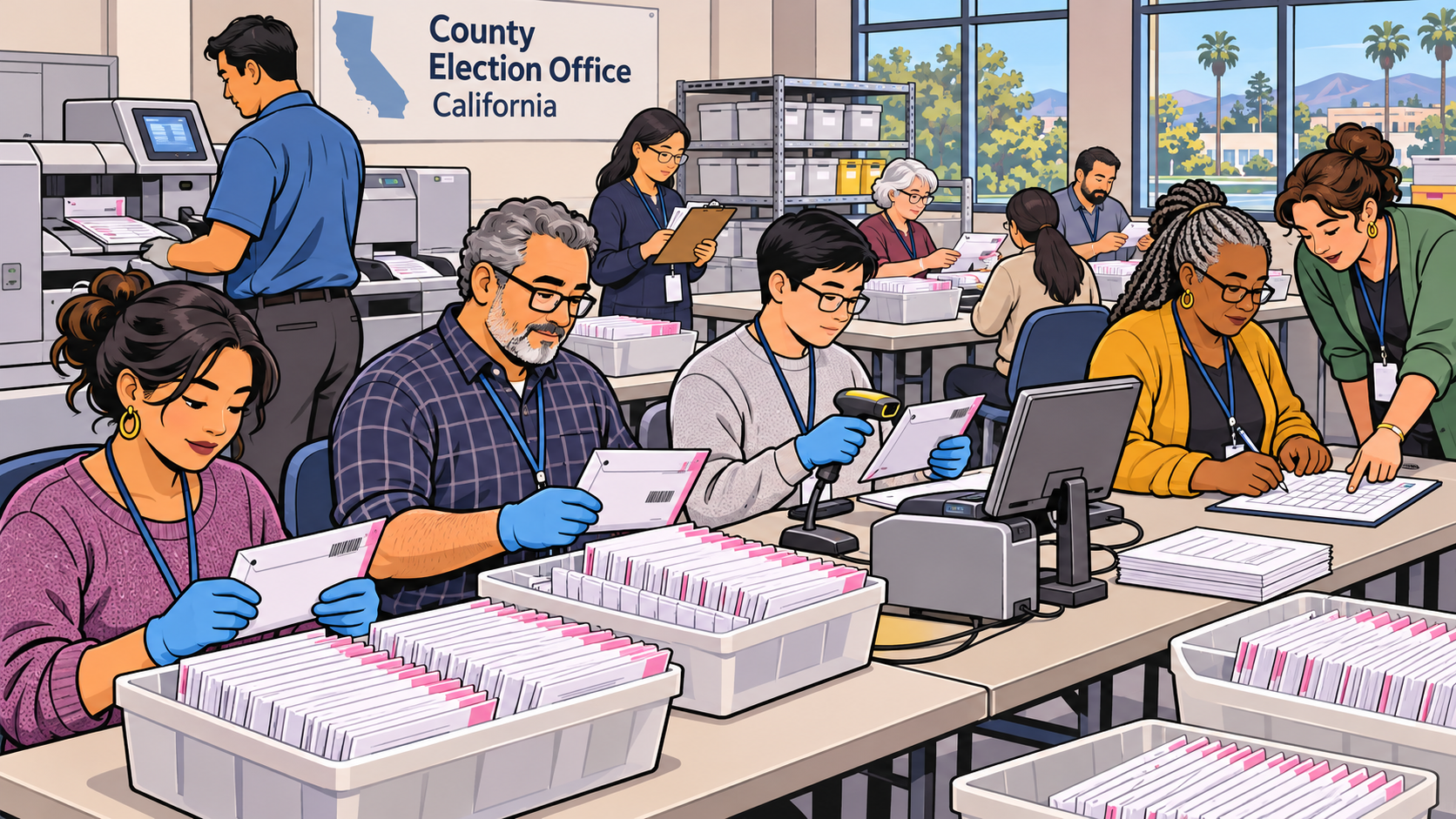
California election officials disputed the government’s claims, saying the list of purported non-citizens contained inaccuracies. They warned that eligible voters could be disenfranchised and argued that separating ballots while voting was underway was unfeasible. A federal appeals court declined the government’s request on Friday, before the Supreme Court denied its application for an injunction on Monday, the eve of the midterms.
The election will determine which party controls Congress during the final two years of President Donald Trump’s second term. California, the country’s most populous state, has about 23 million registered voters; more than six million mail-in ballots had been received by Sunday night. The article places the administration’s effort within its broader campaign against alleged voter fraud, which research indicates is extremely rare. A federal judge described the California action as part of an “ongoing pattern of attempted election interference” and said the government had sought to pressure state and local authorities to depart from their election procedures.
Entities: US Supreme Court, Donald Trump, California, United States midterm elections, US Congress • Tone: analytical • Sentiment: neutral • Intent: inform
03-11-2026
The U.S. Supreme Court rejected the Department of Justice’s emergency request to stop California from counting mail-in ballots cast by roughly 20,000 voters whom the department said may not be U.S. citizens. The court issued a one-sentence order Monday evening, without explaining its reasoning or noting any dissents. The request came on the eve of Election Day and followed a federal district court ruling allowing the ballots to be counted and a 2-1 denial of the DOJ’s appeal by the 9th Circuit Court of Appeals. The lower courts found, among other concerns, that the government had not established its standing and that blocking the ballots could disenfranchise eligible voters.
California Attorney General Rob Bonta called the Supreme Court’s decision appropriate and expected, describing the DOJ request as baseless. The article also reports a separate California case in which a federal judge barred the DOJ from threatening election workers with criminal prosecution for refusing to stop ballot processing or comply with other demands. During a hearing in that case, a DOJ lawyer acknowledged that the lists of purported noncitizens had a high error rate, while arguing that the errors made voter-roll review necessary.
The DOJ’s lawsuit, filed October 15, sought to prevent election officials from counting ballots associated with people identified on government-prepared lists until their citizenship could be confirmed. Solicitor General D. John Sauer argued that the United States had an interest in preventing violations of federal law and that ballots could not be separated once combined with valid ballots. The dispute is part of broader election-related litigation involving the Trump administration, including an unsuccessful DOJ effort in Alaska concerning certification of a U.S. Senate election result. The article places the ruling in the context of closely watched 2026 midterm elections that will determine control of Congress.
Entities: U.S. Supreme Court, Department of Justice (DOJ), California, mail-in ballots, 2026 midterm elections • Tone: analytical • Sentiment: neutral • Intent: inform
03-11-2026
The US Supreme Court declined to grant the Trump administration’s request to prevent California from counting more than 20,000 mail-in ballots ahead of the midterm elections. The administration argued that non-US citizens may be attempting to vote and sought an injunction that would have required California to keep suspected illegal ballots separate from valid ones while voter eligibility was checked. The Justice Department’s case relied on a list compiled by the Department of Homeland Security. A California district court had already rejected an earlier lawsuit, and the Supreme Court’s decision left the state free to continue counting ballots.
California challenged the federal government’s identification process as likely flawed. An analysis of the list, discussed in a legal filing, found that thousands of US citizens appeared to have been incorrectly flagged as ineligible. A federal judge had also noted that people identified as noncitizens on voter rolls in other states have repeatedly turned out to be naturalized citizens. With early voting underway and hundreds of thousands of ballots already processed, the effort to isolate ballots raised concerns about disrupting election administration and undermining voter confidence.
The article places the dispute in the context of Donald Trump’s repeated claims of voter fraud, which it describes as unfounded and contradicted by investigations and research. Judge David Carter warned that singling out ballots based on unproven allegations could cause havoc and put democracy at risk. California Governor Gavin Newsom, a vocal Trump critic, said his state was preparing for possible interference by deploying election law experts and poll observers and providing a voter hotline. California is heavily Democratic and not expected to be competitive for Republicans, adding political context to the dispute.
Entities: Donald Trump, Gavin Newsom, Todd Blanche, David Carter, Supreme Court of the United States • Tone: analytical • Sentiment: negative • Intent: inform