03-10-2026
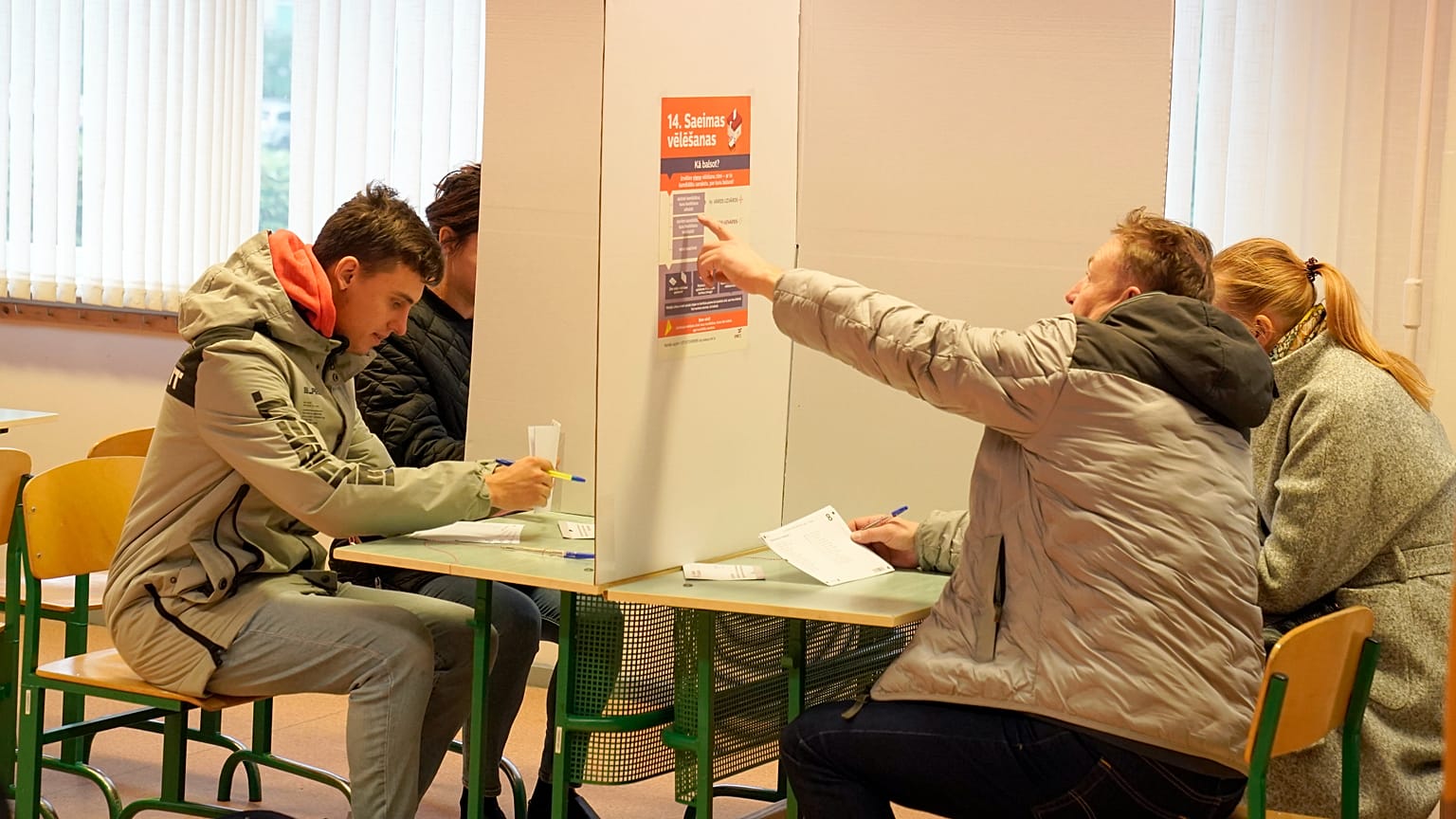
Latvians went to the polls in a parliamentary election to choose all 100 members of the Saeima, with around 1.5 million people eligible to vote. The contest involved 14 parties and took place amid public concern over rising living costs, sluggish economic conditions, and national security. Prime Minister Andris Kulbergs, in office since May following the collapse of the previous government over a dispute involving Ukrainian drones, and his center-right United List alliance were leading in opinion polls. However, the governing coalition was expected to lose strength as populist parties sought to capitalize on voter dissatisfaction.
Russia’s war against Ukraine looms large in Latvia, a former Soviet republic that borders Russia and Belarus and has a sizable ethnic Russian and Russian-speaking minority. Latvia views the invasion as a direct security threat. It is also a member of both NATO and the European Union, and one of Kyiv’s closest supporters. A legal commitment to spend at least 5% of GDP on defense adds pressure to public finances while Latvians face high prices, low wages, a strained health system, emigration, and an ageing population.
Populist groups, including Sovereign Power/Young Latvians and Latvia First, have argued for a less stringent approach toward Moscow and claimed that completely severing economic ties with Russia is harmful. Despite this debate, no party proposed a major change to Latvia’s alignment with the EU and NATO. At Riga’s request, four German Eurofighter jets were deployed to protect Latvian airspace during the election. After voting, attention was expected to turn to potentially lengthy and complex coalition negotiations. Partial results were expected Saturday evening, with preliminary official results due Sunday.
Entities: Latvia, Andris Kulbergs, Saeima, United List alliance, Sovereign Power/Young Latvians Alliance • Tone: analytical • Sentiment: neutral • Intent: inform
03-10-2026
Latvians are voting in the country’s 11th parliamentary election since it regained independence from the Soviet Union in 1991. About 1.5 million people are eligible to choose among 14 parties competing for 100 seats in the Saeima. The election is shaped by two major concerns: security in a country bordering Russia and economic pressures, including the rising cost of living, sluggish growth, healthcare and strained public finances.
Polls forecast that the centre-right United List, led by Prime Minister Andris Kulbergs, will be the largest party, though its current coalition partners are expected to lose strength. Latvia’s NATO role and support for Ukraine remain broadly backed, with analysts describing defence and security as voters’ leading priority and noting consensus on high military spending.
Economic hardship is unevenly distributed. While the Riga region’s GDP per capita was close to the European average in 2024, other regions were below half that level. Latgale, in the east, faces depopulation and limited job prospects. In Daugavpils, a city with a large Russian-speaking population, residents describe a lack of work and young people leaving. The article notes that Russian-speaking voters, about 35 percent of the population, no longer vote as a unified bloc; economic and social issues increasingly shape their choices alongside identity.
Populist parties have gained support amid economic dissatisfaction. The Sovereign Power party, which opposes aid to Ukraine and increased military spending, is polling at nine percent but is considered unlikely to join a governing coalition. Latvia First is also polling at nine percent and may have greater leverage in coalition negotiations. Its leader, Ainars Slesers, promotes conservative policies and economic revival. The election could therefore weaken the existing governing bloc and make the shape of a future coalition uncertain.
Entities: Latvia, Saeima, Andris Kulbergs, United List, NATO • Tone: analytical • Sentiment: neutral • Intent: inform
03-10-2026
Latvia is holding a parliamentary election shaped chiefly by concerns about neighbouring Russia and the rising cost of living. The country, a member of Nato, regards Russia as its main security threat and has substantially increased defence spending during the war in Ukraine. Despite these concerns and the possibility of political change, the election result is not expected to alter Latvia’s broadly pro-European and pro-Ukrainian direction.
The centre-right United List, led by incumbent Prime Minister Andris Kulbergs, is leading the race, with more than 14 per cent of the vote according to polling institute SKDS. That lead may not translate into a strong governing position: the article expects the incumbent coalition to emerge weakened as populist parties gain support by emphasizing economic concerns. These concerns are particularly salient in Latvia, described as the least affluent of the three Baltic states.
The current coalition comprises United List, New Unity, the Union of Greens and Farmers, and the National Alliance. Polls indicate that this grouping is unlikely to retain power in its existing form after the vote. The article does not predict which parties will form a new government, but presents the election as one in which domestic economic pressures and security concerns are prominent while the country’s general foreign-policy alignment is expected to persist.
Entities: Latvia, Andris Kulbergs, United List, SKDS institute, Nato • Tone: analytical • Sentiment: neutral • Intent: inform