03-06-2026
The article argues that Maine Senate candidate Graham Platner’s growing list of personal scandals — including alleged explicit messages to multiple women, offensive statements, and other controversial behavior — may actually be helping, rather than hurting, his campaign. Framed as an example of modern “ragebait,” the piece contends that media coverage and Republican outrage are amplifying Platner’s profile, reinforcing his image as an outsider and giving him more attention, fundraising, and political momentum. The article says Platner and adviser Morris Katz are deliberately responding to scandals with deflection, accusations of media bias, and emotionally charged messaging that keeps him in the news cycle. It suggests this strategy mirrors the success of other polarizing figures: outrage from opponents can energize supporters, strengthen negative polarization, and make a flawed candidate seem authentic and battle-tested.
The piece also argues that Platner’s controversial background may be useful to him politically because it fits an “everyman” persona, differentiating him from polished establishment politicians. It claims his opponents’ repeated attacks help build his national recognition and cash advantage, while simultaneously deepening loyalty among his left-wing base. The article concludes that Republicans may be overplaying their hand by intensifying attention on Platner, potentially helping him in the general election against Sen. Susan Collins, even though his scandals could still ultimately damage his chances.
Entities: Graham Platner, Maine, US Senate, Republican Party, Sen. Susan Collins • Tone: negative • Sentiment: negative • Intent: critique
03-06-2026
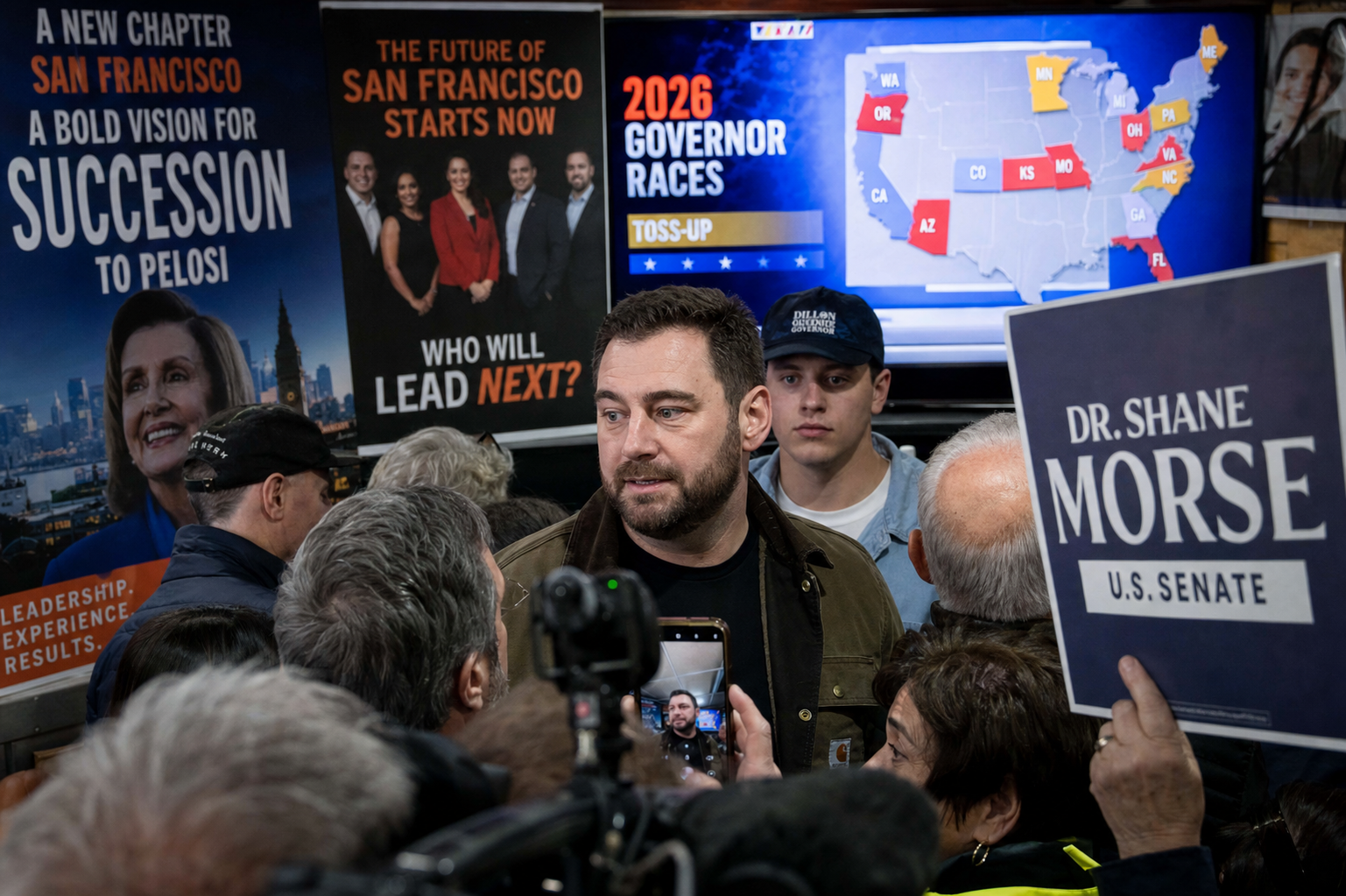
San Francisco state Sen. Scott Wiener took an early lead in the contest to succeed retiring Rep. Nancy Pelosi, winning 43.4% of the first votes counted in the city’s Democratic primary. Pelosi-backed supervisor Connie Chan followed with 28.5%, while tech entrepreneur Saikat Chakrabarti trailed with 13.5%. The article frames the race as a bitter intra-party battle shaped by San Francisco’s local priorities more than national politics, even though all three leading candidates oppose Donald Trump’s administration. Wiener, a longtime San Francisco lawmaker known for housing, transit, and LGBTQ advocacy, used his election-night remarks to pitch himself as a candidate for “bold forward looking leadership” and “real results.” Pelosi, who is retiring after nearly four decades in Congress, publicly endorsed Chan and criticized both Wiener and Chakrabarti, including dismissing Chakrabarti’s community ties. The piece notes that the top two vote-getters will advance to the November general election, setting up a likely runoff between Wiener and one of his rivals. It also situates the race in broader San Francisco anxieties over housing affordability, the AI-driven rent surge, and tensions with the Republican-led Congress over sanctuary city policies.
Entities: Scott Wiener, Nancy Pelosi, Connie Chan, Saikat Chakrabarti, San Francisco • Tone: neutral • Sentiment: neutral • Intent: inform
03-06-2026
NPR’s article provides an overview of the 2026 governor’s races across the United States, organizing the contests by expected partisan advantage and highlighting major dates in the primary calendar. It identifies which states are considered solidly Democratic, solidly Republican, leaning, or toss-up, and notes whether each race features an incumbent, an open seat, a retirement, or a term-limited governor. The article also points readers to local public media coverage in each state and includes voter registration deadlines and key primary dates for upcoming elections. A major theme is that many of the most consequential gubernatorial contests are open races created by term limits or retirements, including in states such as California, Georgia, Wisconsin, Florida, and Arizona, while others feature incumbents seeking re-election. The piece functions as a practical election guide rather than a narrative story, giving readers a nationwide snapshot of the political landscape heading into the gubernatorial cycle. It also includes a correction noting that Wisconsin Gov. Tony Evers is retiring, not term limited.
Entities: 2026 gubernatorial elections, NPR, Doug Jones, Tommy Tuberville, Kay Ivey • Tone: analytical • Sentiment: neutral • Intent: inform