02-07-2026
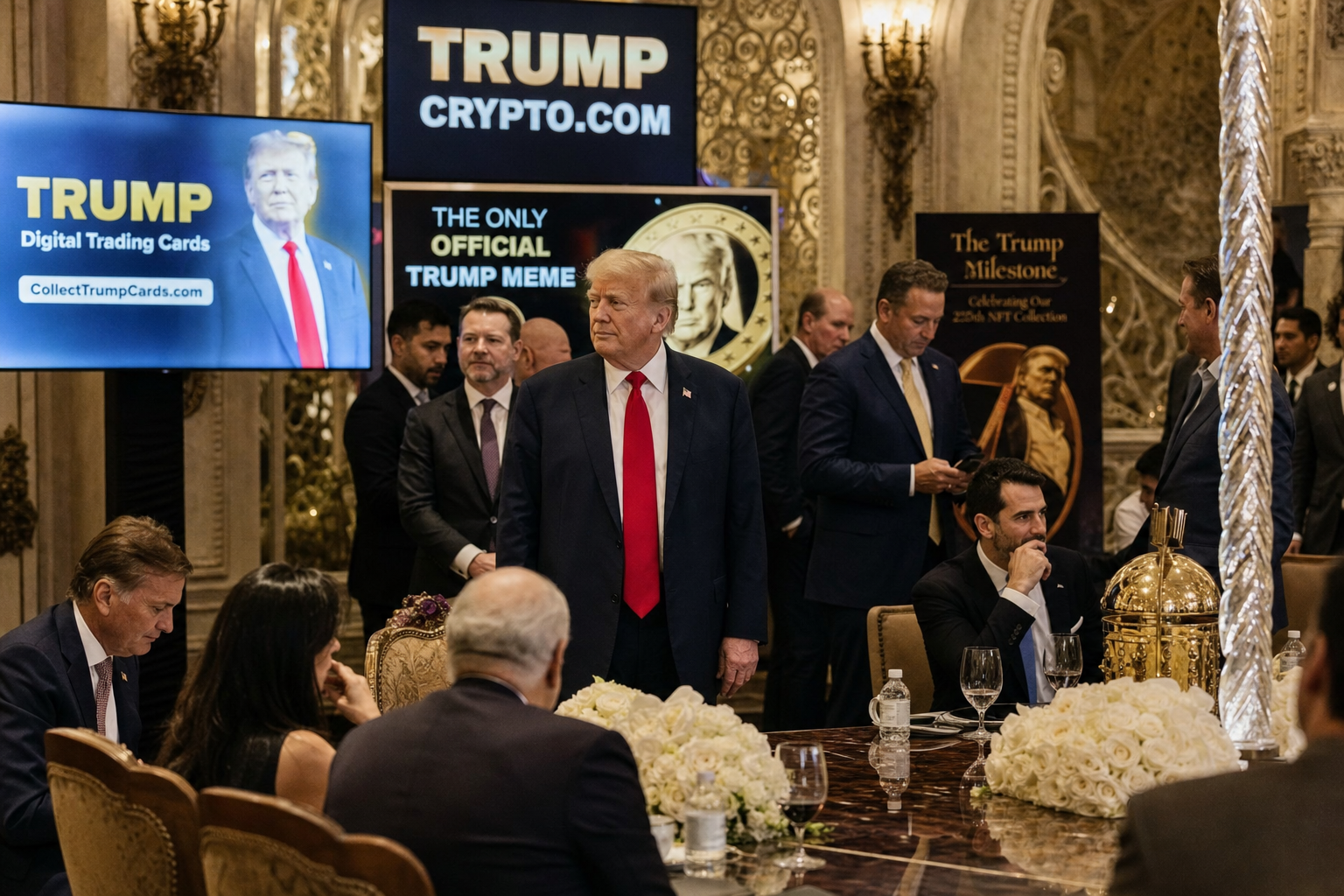
CNN analysis argues that Donald Trump’s expanding personal wealth is becoming an increasingly salient political issue at a time when many Americans are not sharing in the same economic gains. The piece says Trump’s latest financial disclosure showed billions of dollars in earnings from cryptocurrency, licensing deals, royalties, and branded merchandise, reinforcing how unusual his presidency is compared with modern predecessors who traditionally separated themselves from personal business interests. While the article notes there is no evidence of criminal wrongdoing, it focuses on the ethical and political questions raised by Trump’s business entanglements, especially his role in promoting and benefiting from crypto while his administration shapes policy affecting the industry. It also raises concerns about the Qatari gift of a luxury Boeing 747 and the broader perception that foreign governments or private interests might gain influence. The central question is whether these issues will matter to voters, particularly amid economic dissatisfaction and midterm politics. The article suggests that even without proof of wrongdoing, the appearance of conflicts of interest could damage public trust and create long-term harm to the U.S. political system and economy.
Entities: Donald Trump, Stephen Collinson, CNN Politics, World Liberty Financial LLC, Eric Trump • Tone: analytical • Sentiment: neutral • Intent: analyze
02-07-2026
The article examines President Trump’s apparent indifference to conflicts of interest as he returns to office and benefits financially from business ventures tied to his family and presidency. It focuses on a newly released financial disclosure showing Trump made about $1.4 billion from his family’s cryptocurrency businesses during his first year back in the White House, contributing to at least $2.2 billion in total income from his holdings. The report contrasts Trump’s approach with longstanding presidential norms that discourage profiting from office and avoiding entanglements that could influence policy decisions.
The piece describes how Trump has abandoned even the limited ethical guardrails he observed in his first term, such as restraining foreign business activity and using a blind trust. It notes that his administration has relaxed crypto regulation while Trump’s family businesses expand into financial products that monetize the Trump name. Critics from watchdog and anti-corruption groups call the situation unprecedented and ethically troubling, arguing that Trump appears to believe conflict-of-interest laws do not apply to him.
The article also highlights broader second-term patterns consistent with Trump’s first-term regrets: appointing loyalists, sidelining independent watchdogs, and placing election deniers in key roles. Public polling suggests widespread disapproval among Americans regarding Trump’s use of office to enrich himself and his family. Despite the criticism, Trump dismisses the concerns, insisting he is not personally directing the money and framing his profits as a consequence of stock market gains and general business success.
Entities: Donald Trump, Eric Trump, Donald Trump Jr., The White House, Pew Research Center • Tone: analytical • Sentiment: negative • Intent: analyze
02-07-2026
The article examines President Trump’s annual financial disclosure and argues that his business empire has generated extraordinary revenue during his second term while intersecting directly with government policy. According to the filing, Trump earned at least $2.2 billion last year, with large sums coming from cryptocurrency ventures, real estate deals, media settlements, and investments in stocks and bonds tied to companies affected by his administration’s actions. The piece highlights how Trump and his family have expanded into crypto, including World Liberty Financial, a memecoin, and a stablecoin, while the administration has relaxed oversight of the industry and approved policies favorable to it. It also describes foreign-linked transactions, including an Emirati investment in Trump’s crypto company and Middle East real estate deals, raising concerns about conflicts of interest.
The article further notes that Trump’s holdings include major stakes in regulated firms such as Nvidia, Alphabet, and Broadcom, and points out a particularly notable timing coincidence involving an Nvidia purchase and a subsequent administration announcement easing chip exports to Saudi Arabia. It also discusses settlements with tech and media companies, Trump’s use of Truth Social as a government communication platform, and the role of Trump family projects such as an Amazon-promoted Melania Trump documentary. The White House denies any conflicts of interest, but the article frames the president’s finances as an unprecedented overlap between private gain and public policy, creating potential ethical and political scrutiny.
Entities: Donald Trump, White House, Anna Kelly, United Arab Emirates, World Liberty Financial • Tone: analytical • Sentiment: neutral • Intent: analyze
02-07-2026
The article examines the extraordinary personal wealth Donald Trump has reportedly accumulated since returning to the White House, contrasting it with the financial modesty and ethical norms of earlier presidents. Using a new financial disclosure report, the BBC reports that Trump made at least $2.2 billion in 2025, including $1.4 billion from crypto-related ventures alone, far surpassing the income of modern predecessors and, according to historians, breaking long-standing expectations that presidents avoid even the appearance of financial self-dealing while in office.
The piece places Trump’s earnings in historical context by recalling figures such as Harry Truman, who left office with only a small Army pension, and George W. Bush, who used a blind trust to insulate himself from financial conflicts. It notes that although presidents’ relatives and associates have sometimes profited from their proximity to power, historians say Trump’s case is unprecedented because he appears to have benefited directly and extensively from ventures linked to policy decisions, family businesses, and close advisers. Examples cited include Trump’s support for stablecoins, his pardon of crypto founder Changpeng Zhao, the growth of World Liberty Financial, and other deals involving the Trump family. The White House rejects the conflict-of-interest criticism, insisting Trump and his family have not engaged in wrongdoing and that his actions serve the public interest. Ethics experts quoted in the article say the situation is deeply troubling and ethically unprecedented, even if not necessarily illegal.
Entities: Donald Trump, Harry Truman, George W. Bush, Barbara Perry, University of Virginia's Miller Center • Tone: analytical • Sentiment: neutral • Intent: analyze
02-07-2026
CNN reports that President Donald Trump’s latest financial disclosure reveals a striking rise in income from his Florida properties, especially Mar-a-Lago and Trump National Doral, underscoring how his business holdings and political power have become increasingly intertwined. The article says Mar-a-Lago generated nearly $77.5 million in income in 2025, more than 50% above the previous year and far above earlier-term levels, while Doral also rebounded sharply to about $122 million in 2025. The growth is attributed to higher membership fees, increased event bookings, and the attraction of proximity to the president. The story notes that Trump has hosted political fundraisers, Republican National Committee events, corporate gatherings, foreign dignitaries, and crypto-related galas at his clubs, creating what ethics experts describe as a direct line to the president for people seeking influence.
The disclosure also shows Trump’s wealth is now dominated by newer cryptocurrency ventures, with more than $1.4 billion in crypto income surpassing earnings from his traditional real estate and hospitality empire. Still, Mar-a-Lago remains important both financially and symbolically, since Trump uses it as a primary residence and frequent meeting place. The article highlights concerns from ethics advocates who argue that the arrangement gives special interests access to Trump, while the White House insists there is no conflict of interest and that all decisions are made in the public interest. Overall, the piece frames Trump’s post-return financial surge as a vivid example of the blending of presidential influence, political fundraising, and private profit.
Entities: Donald Trump, Mar-a-Lago, Trump National Doral, Office of Government Ethics, Public Citizen • Tone: analytical • Sentiment: neutral • Intent: inform