01-09-2026
US Army Secretary Dan Driscoll has resigned after approximately 18 months in office, in the latest leadership change affecting the Pentagon and the US military. The White House announced his departure but did not provide a reason. Reports have pointed to tensions between Driscoll and Defense Secretary Pete Hegseth, although a US Army official said Driscoll spoke with President Donald Trump about the state of the army before submitting his resignation.
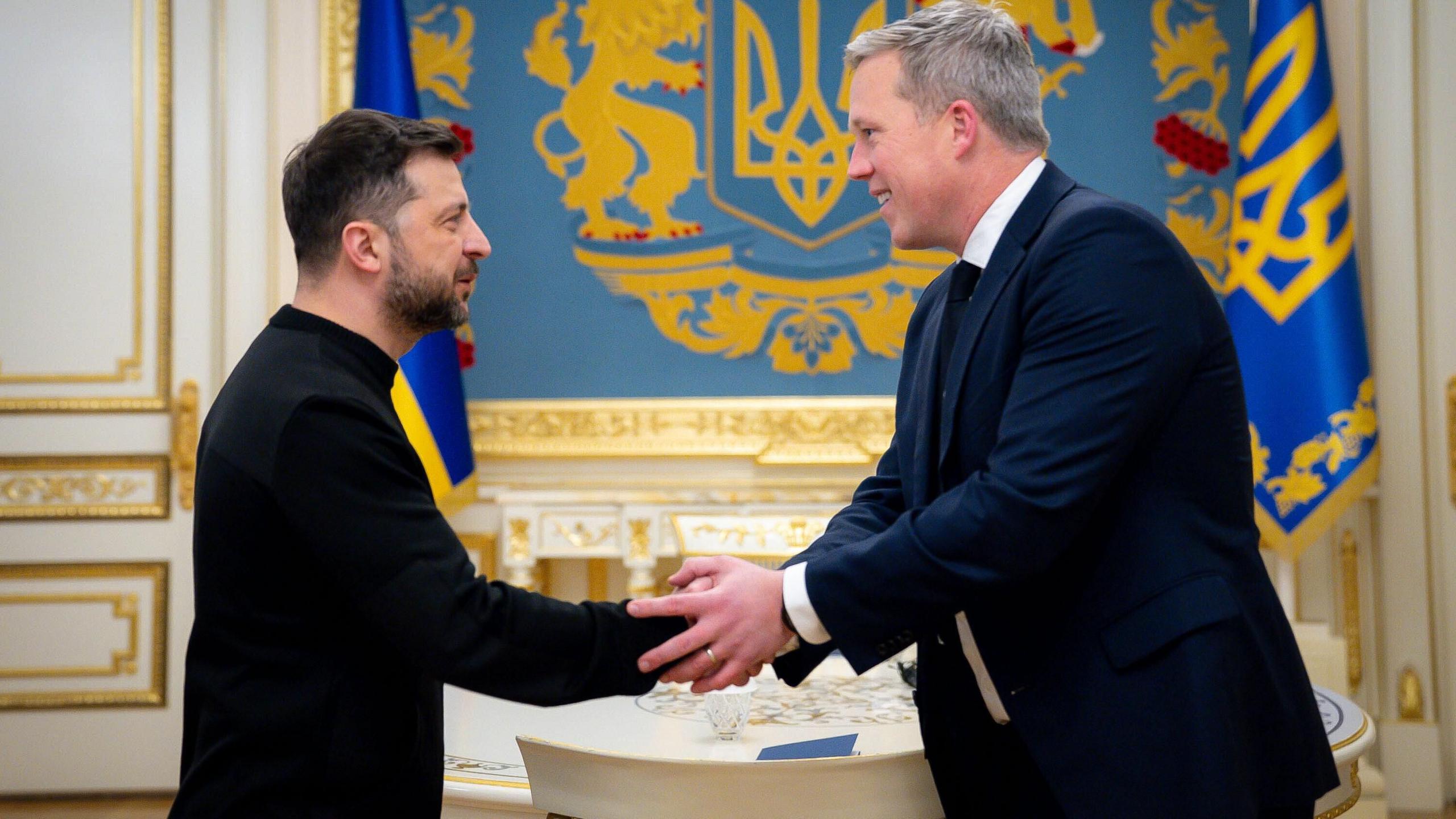
Driscoll, a friend and former adviser to Vice-President JD Vance, was appointed by Trump and confirmed by the Senate in February 2025. An Iraq war veteran, former armour officer, technology investor and unsuccessful congressional candidate, he was described by Trump as a “disruptor and change agent.” As army secretary, he was responsible for presenting Army policies, plans and budgets to the Defense Secretary and Congress. He also played unusual diplomatic and technological roles, including assisting negotiations aimed at ending the Russia-Ukraine war and advocating faster development of drones and counter-drone systems.
His departure follows several other senior military changes. Hegseth removed Army Chief of Staff General Randy George in April, while General Christopher Donahue, who led US forces in Europe and Africa, stepped down in June. Driscoll had been an ally of George and publicly expressed regret over his removal. Under acting Army chief General Christopher LaNeve, the Army is reportedly ending a drone modernization effort Driscoll supported.
The shake-up comes as the US military remains heavily committed to the war with Iran, which the article says has passed six months. Reports have raised concerns about overstretched personnel, depleted munitions and supply shortages. The USS Abraham Lincoln spent a record 250 days deployed and reportedly faced serious supply and crew mental-health problems. President Trump continued hostile rhetoric toward Iran, while Iranian President Masoud Pezeshkian was reported to favor a negotiated solution.
Entities: Dan Driscoll, Pete Hegseth, Donald Trump, JD Vance, United States Army • Tone: analytical • Sentiment: negative • Intent: inform
01-09-2026
US Army Secretary Daniel Driscoll has submitted his resignation after months of reported tension with Defense Secretary Pete Hegseth, according to The Wall Street Journal and Reuters. The White House did not deny the report, although Reuters said it remained unclear whether President Donald Trump’s administration had formally accepted the resignation. The Army declined to comment, while White House spokesperson Anna Kelly praised Driscoll’s leadership and said he had advanced Trump’s agenda by emphasizing military readiness, lethality and Army modernization.
Driscoll is the latest senior Pentagon official to depart amid a broader reshaping of the US military leadership under Hegseth. Hegseth fired Army Chief of Staff Randy George in April, while General Christopher Donahue, who commanded US forces in Europe and Africa, stepped down unexpectedly in June. Navy Secretary John Phelan also left in April, becoming the first head of a US military service to depart during Trump’s second term. Hegseth has removed several other senior generals and admirals.
A Reuters source said Driscoll had raised concerns about Army transformation and readiness, including Hegseth’s alleged obstruction of those efforts through the dismissal of senior military leaders. Another US official said Hegseth viewed Driscoll as a bureaucratic threat and had wanted to remove him, but Driscoll’s relationship with Vice President JD Vance made that difficult. George’s firing reportedly intensified Driscoll’s frustration.
Confirmed as Army secretary in February 2025, Driscoll promoted more agile acquisition of lower-cost weapons and criticized major defense contractors. He also gained prominence after Trump appointed him to participate in diplomatic discussions with Moscow and Kyiv regarding the war in Ukraine. Driscoll previously served in Iraq and advised Trump’s 2024 reelection campaign after an unsuccessful 2020 congressional run.
Entities: Daniel Driscoll, Pete Hegseth, Donald Trump, JD Vance, Randy George • Tone: analytical • Sentiment: negative • Intent: inform
01-09-2026
US Army Secretary Dan Driscoll has submitted his resignation after approximately 18 months in office, according to reporting by CBS, the BBC’s US media partner. His departure follows months of reported tension with Defence Secretary Pete Hegseth, although the precise reasons for the conflict have not been made public. The White House described Driscoll as highly effective in advancing President Donald Trump’s agenda and praised his leadership during military operations. The BBC said it had contacted the White House, Pentagon and Army for comment.
Driscoll, 41, was the youngest person to serve as Army secretary and became closely associated with Trump’s interest in emerging military technologies, earning the nickname “drone guy.” Before becoming the Army’s senior civilian leader, he served in the military, including as a cavalry platoon leader and during a 2009 deployment to Iraq. He later played a prominent role in US diplomatic efforts concerning the Russia-Ukraine war, meeting Ukrainian President Volodymyr Zelensky, and was known as a close ally of Vice-President JD Vance.
His tenure also included a key role in Trump’s deployment of National Guard troops to US cities and a period as acting director of the Bureau of Alcohol, Tobacco, Firearms and Explosives. Driscoll’s resignation is part of a broader pattern of senior military departures since Hegseth took over at the Pentagon. These include Navy Secretary John Phelan, Army Chief of Staff Randy George, Army Gen David Hodne and Maj Gen William Green. Hegseth has reportedly dismissed more than a dozen senior officers, including the chief of naval operations and the Air Force’s vice-chief of staff. CBS reported that Driscoll’s friendship with George may have contributed to tensions, as George was reportedly asked to resign.
Entities: Dan Driscoll, Pete Hegseth, Donald Trump, JD Vance, United States Army • Tone: analytical • Sentiment: neutral • Intent: inform
01-09-2026
U.S. Army Secretary Dan Driscoll is resigning after 18 months in office, the White House announced Monday, making him the latest senior military leader to leave President Donald Trump’s second administration. No official reason was provided. Driscoll is reportedly close to Vice-President JD Vance, but tensions between him and Secretary of War Pete Hegseth have been widely reported.
The resignation follows a series of senior military leadership changes. Navy Secretary John Phelan left in April, Gen. Randy George was abruptly removed as the Army’s top uniformed leader that same month, and Gen. Christopher Donahue stepped down from his command overseeing U.S. Army forces in Europe and Africa in June. Gen. Christopher LaNeve, who rose quickly under Hegseth, became the Army’s acting chief of staff.
The Army has also experienced policy disagreements and organizational changes. Under LaNeve, the service cancelled a drone modernization effort that Driscoll had supported. A European-based Army unit developing its own drones was ordered to stop the project and return to operating as a traditional infantry battalion.
Driscoll had been an ally of George and publicly expressed regret over George’s removal, although he acknowledged that civilian leaders have the authority to select military commanders. Trump had described Driscoll as a “disruptor and change agent” when nominating him in 2024.
An Iraq war veteran, technology investor and former adviser to Vance, Driscoll served as Army secretary in several prominent roles. He helped negotiate efforts to end the Russia-Ukraine war and pushed to reduce bureaucratic barriers so military contractors could develop drones and counter-drone systems more quickly. The Senate confirmed him in February 2025 by a 66-28 vote. Before entering senior government service, he served as an Army armor officer, including a deployment to Iraq, and unsuccessfully sought the Republican nomination for a North Carolina congressional seat in 2020.
Entities: Dan Driscoll, Donald Trump, JD Vance, Pete Hegseth, Anna Kelly • Tone: analytical • Sentiment: neutral • Intent: inform
01-09-2026
US Army Secretary Dan Driscoll is resigning after approximately 18 months in office, the White House announced on Monday. The administration did not provide a reason for his departure, although the article notes that tensions between Driscoll and Defence Secretary Pete Hegseth have been widely reported. Driscoll is also described as a friend of Vice-President J.D. Vance.
The resignation represents the latest change involving senior military leaders during the Trump administration, with particularly significant disruption within the Army. White House spokeswoman Anna Kelly praised Driscoll, saying he had effectively advanced President Donald Trump’s agenda by providing leadership during what she called historic military operations, emphasizing readiness and lethality, and helping with negotiations between Russia and Ukraine. The statement also credited him with contributing to an Army that was “more powerful than ever.”
The Pentagon referred questions about the resignation to the Army. Neither the Army nor Driscoll’s spokesman had immediately responded to requests for comment.
The article places Driscoll’s departure within a broader series of Army leadership changes. Hegseth removed the service’s top uniformed officer, General Randy George, in April, while General Christopher Donahue, who commanded Army forces in Europe and Africa, stepped down unexpectedly in June. General Christopher LaNeve, who had rapidly risen under Hegseth, became the Army’s acting chief of staff.
Policy differences may also have emerged under the new leadership. The Army is ending a drone modernization program that Driscoll had publicly supported. Officials said an Army unit in Europe had been developing its own drones, but LaNeve ordered it to abandon that effort and return to its traditional role as an infantry battalion. The article presents the resignation as part of continuing uncertainty and upheaval in the Army’s senior leadership and modernization priorities.
Entities: Dan Driscoll, United States Army, White House, Donald Trump and the Trump administration, J.D. Vance • Tone: analytical • Sentiment: negative • Intent: inform
01-09-2026
US Army Secretary Dan Driscoll has resigned after repeated clashes with Defence Secretary Pete Hegseth, leaving the Army without Senate-confirmed leadership as military tensions with Iran continue. Driscoll submitted his resignation to President Donald Trump, according to an unnamed official, and the departure was first reported by The Wall Street Journal. White House spokeswoman Anna Kelly praised Driscoll for providing “outstanding leadership” during military operations, improving readiness and lethality, helping with Russia-Ukraine negotiations and pursuing other reforms.
Driscoll’s departure follows Hegseth’s earlier dismissal of Army Chief of Staff General Randy George, a close ally and collaborator. The two leaders had promoted major efforts to modernise the Army, integrate artificial intelligence and prepare for new forms of warfare. Their relationship with Hegseth deteriorated over personnel and control issues. Hegseth reportedly intervened directly in Army affairs and ordered Driscoll to remove senior advisers. Driscoll also resisted efforts to remove certain officers, including women and black officers, from promotion lists.
Nominated by Trump and confirmed in 2025 at age 38, Driscoll was the youngest Army secretary and a close friend of Vice-President J.D. Vance. A venture capitalist by background, he sought to manage the Army more like a business during a period of restructuring and budget pressure. He supported cheaper, mass-producible weapons and urged defence companies to develop affordable air-defence interceptors more quickly.
Driscoll also attracted attention for helping broker negotiations between Russia and Ukraine and for holding the unusual concurrent role of acting head of the Bureau of Alcohol, Tobacco, Firearms and Explosives. His resignation is part of a broader pattern of firings and departures in the US military.
Entities: Dan Driscoll, Pete Hegseth, Donald Trump, J.D. Vance, General Randy George • Tone: analytical • Sentiment: negative • Intent: inform
01-09-2026
U.S. Secretary of the Army Dan Driscoll has submitted his resignation to the White House after months of reported tension with Defense Secretary Pete Hegseth, according to a source familiar with the matter. It was not immediately clear whether the White House had accepted the resignation. Driscoll, who is considered close to Vice President JD Vance, is the latest senior Pentagon official to be fired or pushed out during Hegseth’s tenure.
The resignation comes while the United States remains engaged in a war with Iran and has thousands of Army soldiers deployed in the Middle East. A source said Driscoll had raised concerns about the administration’s approach to Army transformation and readiness, particularly Hegseth’s alleged blocking of those efforts and removal of generals responsible for them. The Army declined to comment, while White House spokeswoman Anna Kelly praised Driscoll’s leadership, citing military operations, readiness, lethality, and his role in Russia-Ukraine negotiations.
Dave Fitzgerald, the Army’s deputy undersecretary for innovation, was also expected to resign. Driscoll became Army secretary in February 2025 and advocated for faster acquisition of lower-cost weapons, while criticizing major defense contractors. One official said Hegseth viewed Driscoll as a bureaucratic threat and had wanted to remove him, but Driscoll’s relationship with Vance made that difficult.
Driscoll’s profile grew after former President Donald Trump selected him to participate in diplomatic discussions with Moscow and Kyiv. Tensions reportedly intensified after Hegseth fired Army Chief of Staff Randy George in April, a decision that surprised Driscoll. Hegseth later removed the head of U.S. Army forces in Europe and blocked the promotions of senior Army officials. Republican Congressman Pat Harrigan defended Driscoll’s record, saying he had brought urgency to the Army and that his public service was not over.
Entities: Dan (Daniel) Driscoll, Pete Hegseth, JD Vance, Donald Trump, Dave Fitzgerald • Tone: analytical • Sentiment: negative • Intent: inform