31-07-2026
Spain is sending troops to its North African enclave of Ceuta after thousands of migrants crossed from Morocco in a chaotic surge that left at least 15 people dead. The crossings, which occurred on Thursday, overwhelmed local reception centers and border controls, prompting Ceuta’s local authorities to ask Madrid for immediate support. Spain’s interior ministry said the armed forces would reinforce the Civil Guard to maintain security, while the government accused human-trafficking networks of exploiting a recent court ruling that limited the ability to summarily return migrants stopped at sea.
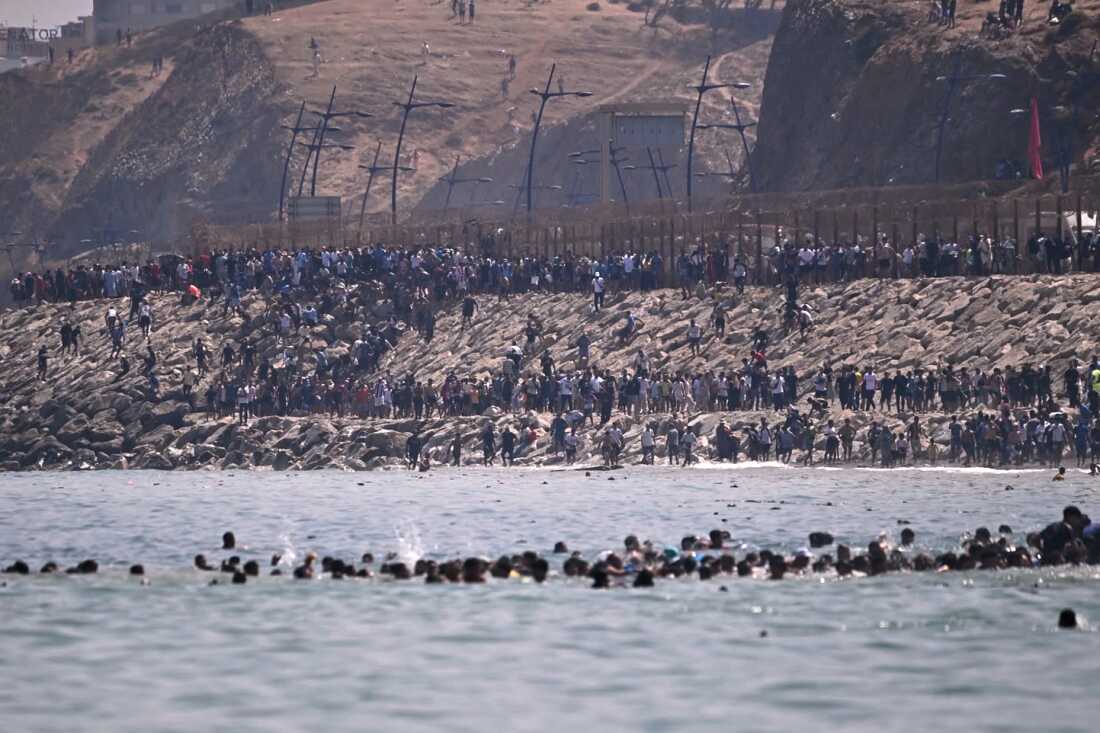
The article describes scenes of people swimming around the border jetty, with rubber rings and flippers left on the beaches as migrants arrived. Spanish officials said the border was effectively collapsing, and Prime Minister Pedro Sanchez planned to visit Ceuta to restore normality. The surge also triggered a political dispute with Italy, where Prime Minister Giorgia Meloni and Foreign Minister Antonio Tajani raised concerns about uncontrolled migration and suggested Spain might face border-related consequences. Spain’s Foreign Minister rejected Italy’s comments as partisan and inappropriate.
The article places the crisis in a broader context of recurring migration pressure on Ceuta and Melilla, Spain’s two enclaves in North Africa and the EU’s only land border with Africa. It notes that the exact number of arrivals is unclear, that Moroccan authorities tried to deter crossings with water cannons, and that the event recalls a similar mass crossing in May 2021 that strained Spanish-Moroccan relations.
Entities: Ceuta, Morocco, Spain, Melilla, Pedro Sanchez • Tone: urgent • Sentiment: negative • Intent: inform
31-07-2026
Spain is deploying its military to the Spanish enclave of Ceuta after an unprecedented surge of migrants crossing from Morocco, a crisis that left at least nine people dead and overwhelmed local authorities. The Spanish government said it would send the Armed Forces to support the Civil Guard and maintain security, while Prime Minister Pedro Sánchez planned to visit the territory along with Interior Minister Fernando Grande-Marlaska. Local officials described the situation as chaotic and said the border had effectively collapsed as thousands of people, many of them Moroccan and including families with children, entered Ceuta by swimming, wading, or moving around border barriers.
The article explains that the crisis followed an increase in crossings over several days and comes amid long-running tensions over migration, border enforcement, and the status of Spain’s North African enclaves. Ceuta’s leaders asked Madrid to declare a national emergency and send the army, arguing that reception centers were overwhelmed and that more than 1,500 people had entered in the past week. Spain’s Interior Ministry said it could not declare a migration-based national emergency but was coordinating with Moroccan authorities to restore order and return those who entered illegally. The report also places the events in broader context, noting Ceuta’s geography, its role as a key entry point into Europe, and memories of the 2021 border crisis when more than 8,000 migrants crossed in two days.
Entities: Ceuta, Morocco, Spain, Armed Forces, Civil Guard • Tone: urgent • Sentiment: negative • Intent: inform
31-07-2026
The article reports that video footage shows large crowds of migrants crossing from Morocco into Ceuta, a small Spanish territory on Morocco’s Mediterranean coast. The influx is significant enough that local leaders are calling on Madrid to declare a national emergency. Although the article is brief and primarily video-focused, its core message is that a sudden, mass movement of people has created pressure on local authorities in the enclave and prompted demands for a higher-level government response. The event is framed as a developing border and migration crisis involving Spain, Morocco, and the Spanish enclave of Ceuta. The article does not provide detailed background on why the crossings occurred, how many migrants entered, or what immediate measures were being taken, but it clearly emphasizes the scale of the crowd and the political urgency it has created.
Entities: CNN, Austin Mabeus, Morocco, Ceuta, Spain • Tone: urgent • Sentiment: negative • Intent: inform
31-07-2026
The article reports on a sudden surge of migrants crossing from Morocco into Spain’s North African enclave of Ceuta, prompting local officials to request a national emergency declaration. More than 2,000 migrants reportedly entered Ceuta over a 10-day period, with videos and images showing chaotic scenes of people swimming around barriers, climbing ashore, and running through the streets while authorities struggled to respond. Ceuta’s president, Juan Jesús Vivas, asked Spanish Prime Minister Pedro Sánchez’s government to invoke emergency powers to help manage the situation, but Madrid رفضed the request, saying migratory flows are not treated as a civil protection emergency under Spain’s regulations. The article also highlights political fallout, including criticism from the White House, which blamed Spain’s left-wing government and broader “far-left, globalist policies” for enabling mass migration. Sánchez responded by saying the government was committed to restoring order and mobilizing resources in coordination with Moroccan and international authorities. The story places the migration crisis within a broader debate over immigration policy in Spain and Europe, including conservative arguments that Spain’s support for migrant minors encourages further illegal crossings and left-leaning arguments that immigration is needed to sustain the economy amid low birth rates.
Entities: Spain, Ceuta, Morocco, Pedro Sánchez, Juan Jesús Vivas • Tone: urgent • Sentiment: negative • Intent: inform
31-07-2026
Spain deployed its military to the North African enclave of Ceuta after thousands of migrants from Morocco overwhelmed the border in one of the territory’s largest surges in years, prompting emergency security measures and raising fresh tensions over migration policy. Spanish officials said the Armed Forces would support the Civil Guard in restoring order after local authorities warned they could no longer handle the influx. At least nine people died during the crossings, though officials did not immediately explain the circumstances; AP video and reporting described bodies floating in the water as rescue and security operations continued. The article says many migrants entered by swimming around coastal barriers near the Tarajal area, with mostly young men but also families with women and children among them.
The surge echoed the major 2021 Ceuta crossing and renewed debate about border enforcement, legal procedures for returns, and Spain’s capacity to manage migration pressure. Spanish authorities said Morocco was cooperating by intercepting migrants and working with Spain to return those who entered illegally. Ceuta officials suggested a recent Spanish Supreme Court ruling limiting immediate returns without due process may have contributed to the situation, while migration advocates questioned whether that ruling could explain the scale of the influx. The crisis also had broader European political effects, with Italian Prime Minister Giorgia Meloni threatening to suspend Italy’s participation in the Schengen open-border arrangement with Spain. The article frames Ceuta as a longstanding migration flashpoint and notes that nearly 3,000 migrants had already entered the territory this year before the latest surge.
Entities: Ceuta, Morocco, Spain, Spanish military, Civil Guard • Tone: urgent • Sentiment: negative • Intent: inform
31-07-2026
Spain said it would deploy its military to Ceuta, its small North African enclave on the border with Morocco, after a sudden surge of migrants breached the border and entered the territory in large numbers. Local officials described the scene as chaotic and said the border had effectively collapsed, while Spain’s central government moved to support the Civil Guard and promised a visit by Prime Minister Pedro Sánchez and Interior Minister Fernando Grande-Marlaska. At least nine people were reported dead during the crossings, with bodies seen in the water, and local authorities said the territory’s reception centers were overwhelmed.
The article places the event within a broader pattern of migration pressure on Ceuta, a longstanding Spanish possession on the northern coast of Africa that many migrants try to reach by swimming from nearby Moroccan towns. Officials in Spain and Morocco said they were coordinating to return people who entered illegally, though Morocco had not publicly commented in detail. The article also notes that the exact cause of the sudden influx was unclear, though some local officials linked it to a Spanish Supreme Court ruling on how migrants arriving by sea are handled, while activists questioned that explanation. The story recalls the major Ceuta migration crisis of May 2021 and highlights the diplomatic sensitivity of border control, migration, and Spain-Morocco relations.
Entities: Spain, Morocco, Ceuta, Pedro Sánchez, Fernando Grande-Marlaska • Tone: urgent • Sentiment: negative • Intent: inform
31-07-2026
The article explains why Ceuta, a small Spanish enclave on Morocco’s northern coast, has become a recurring flashpoint in Europe’s migration politics and in Spain-Morocco relations. Ceuta is one of only two European Union land borders with Africa, which makes it a prime crossing point for migrants seeking better economic prospects or access to Europe. The piece describes how migrants typically attempt to enter by swimming, taking small boats, or climbing and cutting through a heavily fortified fence guarded by Spanish police, paramilitary forces, and surveillance systems.
The immediate context of the article is a large and deadly migration surge this week, when thousands of migrants attempted to enter Ceuta, prompting Spain to send military units, increase air and naval support, and request assistance from Frontex, the EU border agency. At least 18 people reportedly died during the crossings. The article also places the event in a broader political context: Spain’s left-leaning government under Prime Minister Pedro Sánchez faces pressure from conservatives and far-right groups, who accuse it of weak border enforcement, while pro-immigration advocates criticize harsh enforcement tactics.
Internationally, Ceuta is tied to delicate diplomacy with Morocco, which Spain depends on to help curb migration. The article notes that past crossing crises have led Spain to provide financial aid to Morocco for border policing, and suggests that the latest surge may be connected to tensions over Spain’s efforts to strengthen relations with Algeria. Overall, the article frames Ceuta as both a geographic border crossing and a symbol of the larger political, humanitarian, and diplomatic struggles surrounding migration in Europe.
Entities: Ceuta, Melilla, Morocco, Spain, Madrid • Tone: analytical • Sentiment: neutral • Intent: inform