30-10-2026
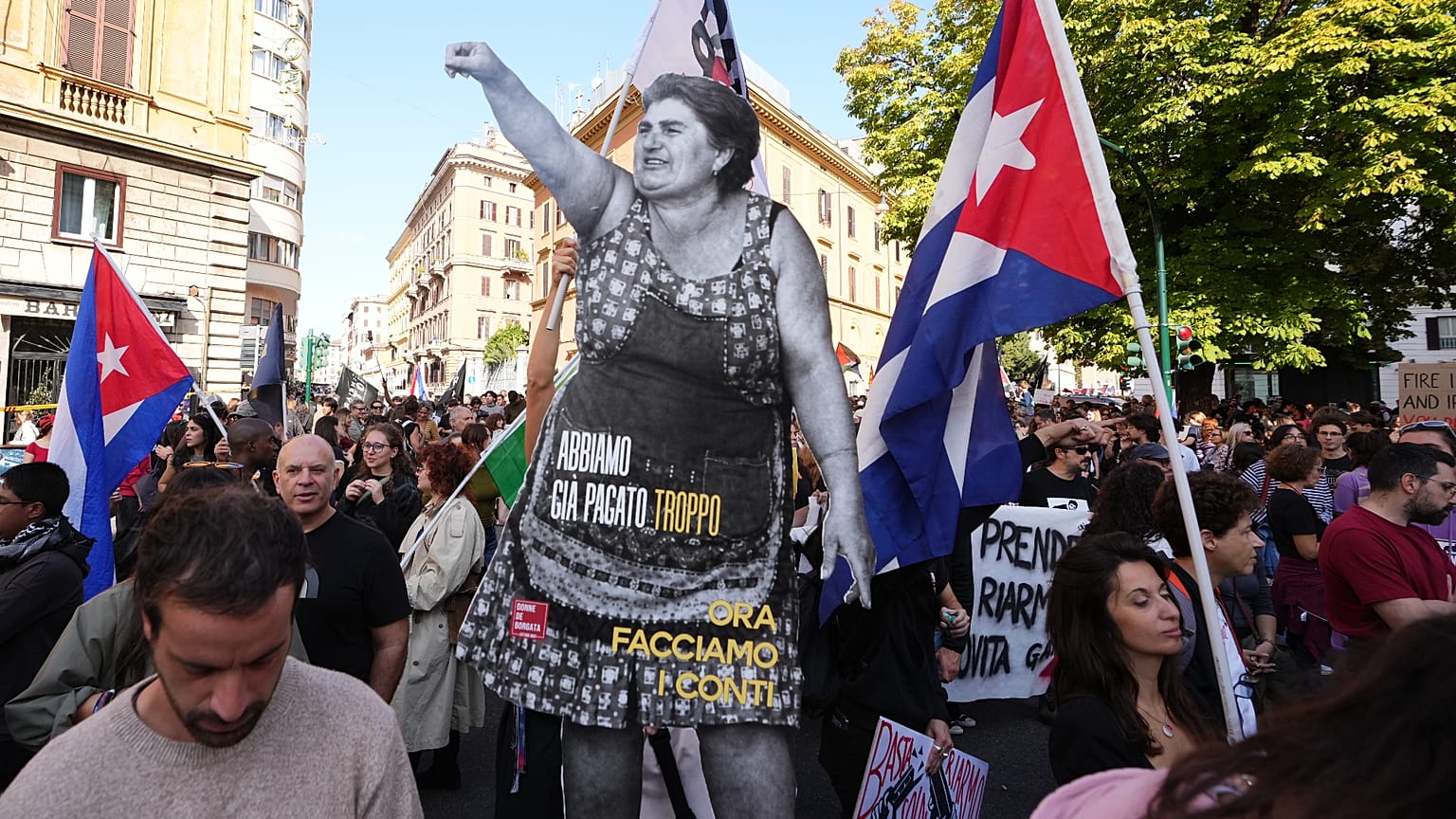
Thousands of demonstrators marched through Rome during a general strike, bringing together workers, students, farmers, truck drivers, firefighters and other groups concerned about the cost of living and government spending priorities. The procession gathered near Termini railway station and set off from Piazza dei Cinquecento at about 10:40 a.m. A large banner led the march, accusing some of benefiting from workers’ labour while putting workers’ futures at risk. Dancers performed as the procession began, followed by tractors and a taxi, while participants carried placards and banners through the capital.
The mobilisation, led by the USB, combined several ongoing complaints. Students have been protesting for weeks for greater investment in schools and more support for housing. Farmers and truck drivers have raised concerns about fuel prices and the broader cost of living. Demonstrators also objected to increased defence spending, arguing that public resources should instead address social needs. The march therefore brought younger protesters together with workers and agricultural representatives around shared concerns about economic pressures and how government funds are allocated. The article describes the groups present and the demands they voiced, without reporting a government response or specifying the strike’s wider effects.
Entities: Rome, Italy, Termini railway station, Piazza dei Cinquecento, USB • Tone: neutral • Sentiment: neutral • Intent: inform
30-10-2026
Italy tightened security as tens of thousands of students, workers and union members joined protests and strikes in dozens of cities on Friday. Demonstrations in Rome, Milan, Naples and elsewhere focused on the rising cost of living, called for more investment in education, and demanded an end to wars in the Middle East. The USB trade union called a general strike that drew participants including truck drivers, taxi drivers and farmers. Unions from Italy, France, Greece, Spain, Turkiye and Morocco also called for ports not to be used to transport weapons, ammunition, military equipment or troops, declaring that dockworkers should not be made to work for war.
Authorities deployed large numbers of police and increased security around prominent sites, including Rome’s Colosseum and Milan’s cathedral. The measures came amid concern about unrest in Italy and elsewhere in Europe. A few clashes between protesters and riot police were reported at the beginning of a march in Turin; rallies also took place in Bologna and Genoa.
The protests come as households and businesses face sharply higher costs. Prices for food, energy, transport and bills in Italy have risen 68 percent since 2000, while average wages have fallen by almost 5 percent. The government recently approved a 175 million euro aid package for truck drivers, farmers and fishermen affected by fuel-price increases linked to the war in the Middle East.
The draft 2027 budget, under discussion among governing parties, includes measures for young people and families, including an annual 2,500 euro bonus for workers under 30. Prime Minister Giorgia Meloni said she hoped the measures would respond to young people who feel the state does not care about them, while distinguishing the proposed support from assistance for those who commit vandalism. Her government had recently toughened laws on public gatherings and eased restrictions on detaining minors, following clashes in Milan on October 17–18 in which mainly young people looted shops and smashed windows.
Entities: Italy, Giorgia Meloni, Rome, Milan, Naples • Tone: analytical • Sentiment: neutral • Intent: inform
30-10-2026
Thousands of people marched through Rome on Friday, 30 October, during a general strike called by the left-wing Unione Sindacale di Base (USB) trade union. Demonstrators gathered near Termini railway station and began the procession from Piazza dei Cinquecento at about 10:40 a.m. A large banner led the march, denouncing people accused of profiting from workers’ labour while endangering their future. Dancers performed as the procession set off, followed by tractors and a taxi. Firefighters, farmers, students, workers and other demonstrators joined, carrying placards and banners through the Italian capital.
The protest brought together groups objecting to the government’s economic and spending priorities. Students, who have been demonstrating for weeks, called for greater investment in schools and more support for housing. Farmers and truck drivers have protested rising fuel prices and the cost of living. Demonstrators also opposed increased defence spending, arguing that public resources should instead address social needs.
The USB-led mobilisation combined these concerns in a single march, bringing younger protesters together with workers and agricultural representatives. The article reports the demonstration’s timing, route, participants and stated concerns, presenting it as a gathering around living costs, public services and the allocation of government spending.
Entities: Rome, Italy, Unione Sindacale di Base (USB), Termini railway station, Piazza dei Cinquecento • Tone: analytical • Sentiment: neutral • Intent: inform
30-10-2026
Students in several Italian cities are expected to rally on October 30, demanding more funding for schools, housing support and relief from rising living costs. Their protests come after weeks of school occupations and tent camps, and overlap with wider demonstrations by truck drivers and farmers over fuel prices and the cost of living, as well as objections to increased defence spending. Students also oppose the government’s education budget cuts and rearmament policies. A student movement spokesperson said protesters planned to “block and empty schools.”
Authorities are preparing for possible clashes, concerned about violence in Milan on October 17 and 18, when young people set cars on fire and looted shops. A general strike has also been called by the radical-left USB union for October 30.
Historian Rosario Forlenza described the unrest as part of a broader social, economic and cultural malaise. He said young people feel politically under-represented, ignored by leaders and faced with precarious lives and an uncertain future. Psychologist Matteo Lancini argued that schools themselves are disconnected from young people’s needs and need radical change, rather than problems being blamed on social media.
Prime Minister Giorgia Meloni’s government has tightened rules on detaining minors and laws on public gatherings in response to the protests. It has also approved a €175.2 million package for truck drivers, farmers and fishermen affected by fuel-price increases linked to the war in the Middle East. Proposed measures in the draft 2027 budget include an annual €2,500 bonus for workers under 30. Meloni said she hoped the measures would answer young people who feel the state does not care about them, while distinguishing them from people who commit vandalism.
Entities: Italy, Rome, Milan, Giorgia Meloni, Laura Teresi • Tone: analytical • Sentiment: neutral • Intent: inform