26-10-2026
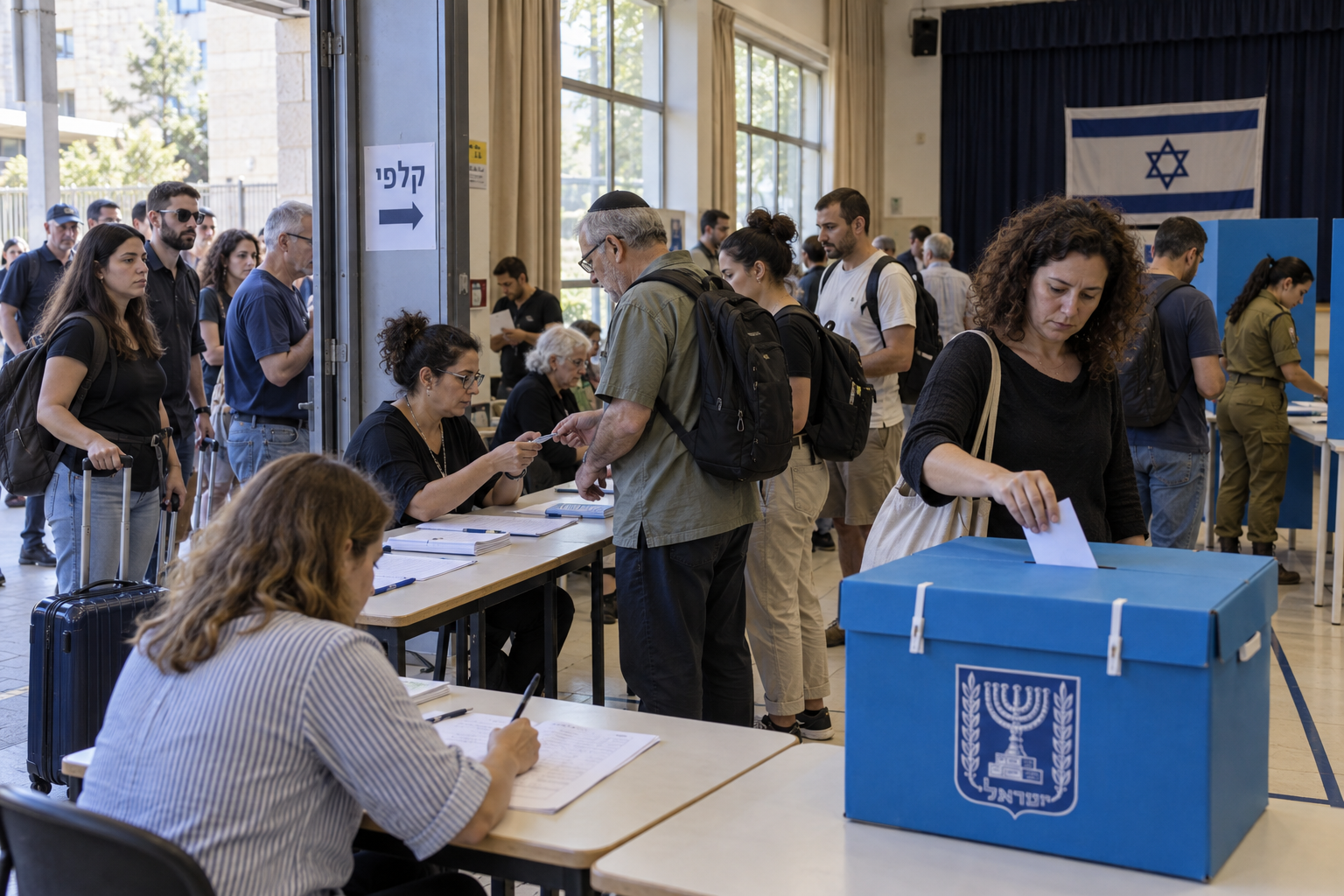
Thousands of Israeli citizens living overseas are travelling to Israel to vote in an election widely viewed as a referendum on Prime Minister Benjamin Netanyahu’s leadership and his government’s handling of Hamas’s October 7, 2023 attacks. Because most overseas citizens cannot vote abroad, political activists have organised efforts to bring voters home. The US-based AID Coalition estimates that as many as 67,000 expatriates may return through its Fly&Vote initiative, with around half coming from the United States and others from Europe, Canada, Australia and New Zealand. Some estimates suggest 500 to 1,000 voters could travel from Australia.
The article follows two Australian-based Israeli citizens making the trip. Anat Dror, who has lived in Melbourne for nearly five years and recently became an Australian citizen, says voting is essential despite the expense, missed work and separation from her children. She believes Netanyahu’s government should leave office, but is wary of endorsing an individual opposition candidate, saying she is counting on the anti-Netanyahu “change bloc” to form a coalition. Dror also describes Israel as still traumatised by the October 7 attacks and points to earlier challenges, including the cost of living.
Guy Marom, who moved with his family to Australia during the COVID-19 pandemic, is also undecided between candidates but says he will vote for one of the change parties. He views Netanyahu as contributing to divisions within Israeli society, though not necessarily as their sole cause.
Recent Israeli television polling placed Gadi Eisenkot’s newly established Yashar party a few seats ahead of Netanyahu’s Likud. Neither party is expected to govern alone: both would need coalition negotiations to secure the 61 seats required for a parliamentary majority. The article also notes that Likud tried to block Fly&Vote through an appeal to the elections committee, then withdrew it after reaching an agreement with the coalition.
Entities: Benjamin Netanyahu, Gadi Eisenkot, Anat Dror, Guy Marom, Israel • Tone: analytical • Sentiment: neutral • Intent: inform
26-10-2026
The live report describes rising tensions between the United States and Iran, with President Donald Trump publicly weighing a diplomatic agreement against renewed military action. Trump said he was deciding whether to make a deal or “finish them off,” while also stating that there would be no U.S. strike on Iran that day. Iran’s Foreign Ministry said messages were still being exchanged through intermediaries and that Tehran had not closed the door to diplomacy, though it rejected what it characterized as U.S. demands for “complete surrender.” Iranian Foreign Minister Abbas Araghchi said a possible resumption of war would not change Iran’s position. The report also covers threats and military activity across the region. Yemen’s Iran-backed Houthis claimed attacks on Riyadh’s international airport, an air base, and a naval base. The airport had only recently reopened after earlier strikes forced it to close for more than two weeks. Saudi Arabia said it had intercepted Houthi missiles and a drone. Israeli Prime Minister Benjamin Netanyahu warned that Iran or its allies might attempt to disrupt Israel’s upcoming elections and said the military was prepared to respond. Inside Iran, residents described anxiety about renewed war alongside severe economic hardship: medicine shortages, inflation, and soaring food prices. A U.S. naval blockade has constrained Iranian oil exports, while trade has shifted toward land routes. The report also notes U.S. intelligence warnings about Iranian efforts to target Americans abroad and U.S. Central Command’s account of military support for commercial shipping through the Strait of Hormuz. Overall, the updates portray a region facing the risk of renewed conflict, with diplomacy still being pursued amid military threats, economic strain, and election-related concerns.
Entities: Donald Trump, Abbas Araghchi, Esmail Baghaei, Jay Clayton, Benjamin Netanyahu • Tone: analytical • Sentiment: negative • Intent: inform
26-10-2026
President Donald Trump said he is nearing a decision on whether to reach an agreement with Iran or resume US attacks, as threats to American interests in the Middle East increase. In an interview with Fox News, Trump framed his options as making a deal or “finish[ing] it off,” while telling reporters there would be no strike that day. He has suggested strikes could resume after the Nov 3 US midterm elections and has sent additional military forces, including a third aircraft carrier group, toward the Persian Gulf.
Officials regard the period between the election and the new Congress taking office as potentially dangerous, and see a negotiated agreement as the likeliest path to ending the conflict. The US is reducing diplomatic and military staffing in parts of the region amid threats from Iran and Iran-backed Houthi militants in Yemen. The Houthis have repeatedly attacked Riyadh airport, which reopened to commercial flights on Oct 25. US staffing changes are reportedly broader than the initially acknowledged departures from Saudi Arabia, as Iran intensifies attacks on ships near the Strait of Hormuz. Tehran is also preparing for possible US bombing and could retaliate against Israel and the United Arab Emirates. Maritime officials say Iran is attacking more ships and inflicting greater damage, using guided missiles rather than drones.
Middle East expert Aslı Aydıntaşbaş said indications point toward renewed war and a major bombing campaign, though its timing is uncertain. Israel’s political situation may also affect events: US Defense Secretary Pete Hegseth met Prime Minister Benjamin Netanyahu ahead of Israel’s Oct 27 election. The vote is the first since the 2023 Hamas attacks that prompted Netanyahu’s wars in Gaza and Lebanon. If Netanyahu loses, rival Gadi Eisenkot may be less inclined to restart the Iran war.
Entities: Donald Trump, Iran, United States, Strait of Hormuz, Persian Gulf • Tone: analytical • Sentiment: negative • Intent: inform
26-10-2026
The Times of India reports an alleged disagreement between Israeli Prime Minister Benjamin Netanyahu and Israel Defense Forces Chief of Staff Eyal Zamir over a possible military operation, one day before Israel’s election. Citing anonymous sources reported by Israel’s Channel 12, the article says Zamir requested further discussions and written legal authorisation before proceeding. The report did not describe the operation, but a military source said it could risk escalation with Iran at a sensitive moment. Other unnamed sources raised concern that the Iran issue might be used for political advantage. Netanyahu rejected the allegations as “nonsense” and has separately said he instructed the IDF and Mossad to work toward toppling Iran’s regime.
The reported dispute unfolds amid a close election contest between Netanyahu and his main rival, Gadi Eisenkot. US President Donald Trump publicly endorsed Netanyahu, urging Israeli voters to support him and arguing that the two leaders had worked together to address threats. Trump invoked slogans directed against the United States and Israel and said the work they had started needed to be finished.
The article also describes Netanyahu’s election messaging on Iran. He posted an AI-generated image depicting a nuclear explosion in Tel Aviv and warned that voting for another candidate could expose Israelis to a “second Holocaust.” A post quoting right-wing activist Yuval Blumberg called Iran’s potential acquisition of nuclear weapons an existential danger and argued that Trump’s remaining time in office offered an opportunity to confront the threat. Finally, election projections published October 23 suggested neither the governing coalition nor the opposition would win enough support to form a government, pointing to continued political gridlock.
Entities: Benjamin Netanyahu, Eyal Zamir, Israel Defense Forces (IDF), Gadi Eisenkot, Donald Trump • Tone: analytical • Sentiment: neutral • Intent: inform
26-10-2026
The article reports that US President Donald Trump publicly urged Israeli voters to re-elect Prime Minister Benjamin Netanyahu, two days before an Israeli election. In a Truth Social post, Trump repeated an endorsement he had issued the previous week and described his relationship with Netanyahu as successful. He argued that the two leaders should continue their joint campaign against Iran and asked voters to consider what he called Netanyahu’s record as an “outstanding Warrior Prime Minister.”
Trump’s message invoked US and Israeli military operations, including Operation Midnight Hammer and Operation Epic Fury, and made sweeping claims about Iran’s military capabilities, economy, inflation and leadership. He framed the conflict as a shared effort to prevent threats to Israel and the United States, and concluded with a direct appeal to “Vote for Bibi Netanyahu” and “finish the job” against Iran.
The report says the endorsement came as polls indicated Netanyahu’s coalition was well short of a parliamentary majority. It also cites an Axios report that Netanyahu had pressed Trump to reaffirm his support publicly. The article places the endorsement against a backdrop of reported tensions between the leaders over the Iran conflict. Media reports had said Trump was frustrated by Netanyahu’s alleged early promises of a quick victory, while Israel reportedly worried that Washington’s decision to halt its campaign and seek an agreement with Iran could undermine Israeli security. Trump had also criticized Netanyahu over Israeli strikes in Lebanon that complicated peace talks, though he had previously said he would most likely endorse him.
Despite those reported differences, both leaders have continued to describe their relationship as good. The article concludes by noting that Trump’s public intervention in an allied country’s election departs from the longstanding norm that US presidents avoid publicly influencing such contests.
Entities: Donald Trump, Benjamin Netanyahu, Israel, United States, Iran • Tone: neutral • Sentiment: neutral • Intent: inform
26-10-2026
The Times of India reports that US President Donald Trump claimed Iran had lost its senior leaders and much of its military capability amid an ongoing conflict. Speaking at a rally in Georgia, Trump said Iran had no aircraft, ships or leaders, and remarked that he needed to stop killing Iranian leaders so he could determine whom Washington should negotiate with. The article notes that the United States is weighing possible further military action while diplomatic efforts to reach an agreement remain uncertain.
Trump said the US would not strike Iran immediately that Sunday, while also describing two differing sets of intelligence reports as “very advanced” and asserting that Washington was doing well. His statements did not rule out renewed attacks: in a Fox News interview, he framed the choice as making a deal with Tehran or “finish[ing] them off.”
Trump also asserted that the United States now controls the Strait of Hormuz and that a blockade on Iranian ports and shipping was succeeding. The article characterizes the strait as a critical global shipping route and says it remains central to the confrontation. It concludes that, despite a ceasefire and efforts to secure a durable peace agreement, tensions remain high and Washington continues to consider both diplomatic and military options.
Entities: Donald Trump, Iran, United States, Tehran, Georgia • Tone: analytical • Sentiment: negative • Intent: inform
26-10-2026
Israel’s legislative election, scheduled for Tuesday, is the country’s first since the Hamas-led October 7, 2023 attacks and the ensuing war in Gaza. The result will shape government policy amid prolonged conflicts, international criticism and sharp domestic divisions. Two broad blocs are competing: Prime Minister Benjamin Netanyahu’s Likud-led coalition, which includes far-right and ultra-Orthodox parties, and a four-party opposition grouping led by former military officials and politicians including Naftali Bennett and Yair Lapid. Final pre-election polling suggested neither bloc would reach the 61 seats needed for a majority, while both have ruled out partnering with Arab-led parties. That leaves the possibility of difficult coalition negotiations, a minority government or another election.
Voters are weighing security failures preceding the 2023 attacks, exemptions from military service for ultra-Orthodox Israelis, judicial reforms, economic and security concerns, and how to handle military conflicts in Gaza, the occupied West Bank and Lebanon. The election also matters because of rising far-right attitudes and worsening relations with other countries, including criticism of Israel’s actions and sanctions on settlements. The result may indicate whether the next government continues Netanyahu’s approach or tries to repair international ties.
Netanyahu’s political future is at stake. He faces scrutiny over the security failures, a corruption trial underway since 2019 and an International Criminal Court arrest warrant for alleged war crimes. Defeat could leave him more exposed in court and affect prospects for an inquiry into the October 2023 attacks.
About 1.2 million Palestinian citizens of Israel are eligible to vote, while millions of Palestinians in Gaza, the West Bank and East Jerusalem cannot vote in the Israeli election despite being subject to Israeli control over key aspects of their lives. Higher Arab voter turnout could translate into more Knesset seats and influence the balance of power. The article notes that Israel’s top court overturned a decision barring the Joint List and Ra’am, although Balad leader Sami Abu Shehadeh was required to withdraw. The supplied article ends mid-sentence while introducing a comment from former aide Joseph Mansour.
Entities: Benjamin Netanyahu, Stephen Quillen, Israel, Gaza Strip, Hamas-led October 7, 2023 attacks • Tone: analytical • Sentiment: neutral • Intent: inform
26-10-2026
France 24 reports on an alleged dispute between Israeli Prime Minister Benjamin Netanyahu and Israel Defense Forces chief Eyal Zamir over Iran, occurring two days before an election. Citing Israeli media reports, the article says Zamir fears that government instructions could lead to an immediate military escalation. He has reportedly demanded written authorisation before proceeding. Netanyahu denies that a confrontation has taken place.
The report places the alleged disagreement in the context of Netanyahu’s warning that Iran could attack Israel in an effort to disrupt Tuesday’s vote. The article does not independently confirm the Israeli media reports or provide further details about the instructions at issue, the nature of the possible military action, or Zamir’s response beyond the reported demand for written authorisation. It presents the claims as reports and distinguishes them from Netanyahu’s denial.
The story’s central focus is the reported tension between civilian political leadership and the military chief, as well as the possibility that decisions concerning Iran could escalate the situation during a politically sensitive period. France 24 presents the item as a short video report, credited to Alessandro Xenos and Jean-Emile Jammine.
Entities: Israel, Benjamin Netanyahu, Eyal Zamir, Israel Defense Forces (IDF), Iran • Tone: analytical • Sentiment: neutral • Intent: inform