25-07-2026
Saudi Arabia and the Iran-backed Houthi movement exchanged fire on Friday and early Saturday amid escalating regional tensions tied to shipping in the Red Sea and the Strait of Hormuz. Saudi Arabia said it launched airstrikes on Houthi targets in Yemen’s port city of Hodeida and on a nearby island after the Houthis announced a maritime blockade and attacked Saudi ships. Saudi authorities later issued emergency alerts for the Jizan province after the Houthis claimed a missile strike on the Saudi city of Jizan. In a separate but related development, the US military said it fired on and disabled a tanker in the Gulf of Oman that was allegedly trying to evade the American blockade on Iranian ports; it was the second commercial ship disabled since the blockade was reimposed earlier in the month. The article places these events within a broader pattern of US-Iran hostilities, noting that Iran had carried out drone strikes on US military sites in retaliation for ongoing American attacks, while President Trump said negotiations were continuing even as he warned the US was “locked and loaded.” The report also highlights growing concern over threats to shipping, which pushed crude oil prices above $100 a barrel earlier in the week before easing after two Chinese-chartered supertankers passed safely through the Bab el-Mandeb Strait. The article closes by noting upcoming US-UK discussions in London on the Strait of Hormuz and a scheduled White House meeting between Trump and Israeli Prime Minister Benjamin Netanyahu.
Entities: Saudi Arabia, Houthis, Hodeida, Kamaran island, Jizan • Tone: urgent • Sentiment: negative • Intent: inform
25-07-2026
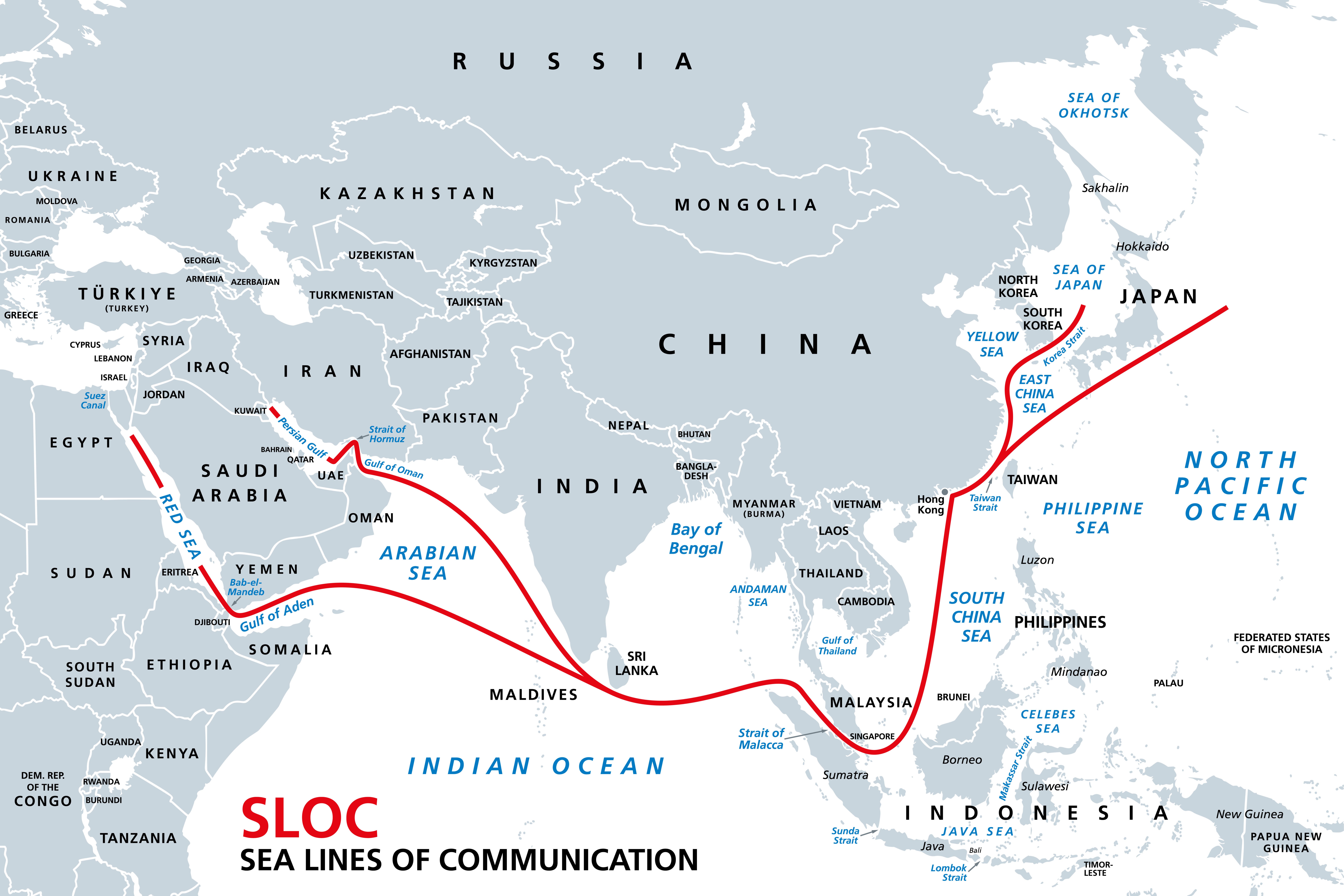
The article explains how escalating U.S.-Iran conflict and disruption around the Strait of Hormuz are prompting Middle Eastern oil producers to accelerate long-discussed efforts to build alternative export routes. The Strait is one of the world’s most important energy chokepoints, carrying roughly 15 million barrels of Persian Gulf oil per day before the war, and fears of a prolonged blockade have helped push Brent crude above $100 per barrel. In response, Gulf states are investing billions in pipelines and port expansions to move oil to the Red Sea and Gulf of Oman, reducing reliance on shipping through waters near Iran.
Saudi Arabia and the United Arab Emirates are already using existing bypass routes. Saudi Arabia’s East-West pipeline moves oil from Abqaiq to Yanbu on the Red Sea, while the UAE is sending more crude to Fujairah on the Gulf of Oman. The UAE is also building a $3 billion pipeline to Fujairah to add more than 1.2 million barrels per day of capacity. Iraq is pushing multiple projects to move oil from Basra to Turkey’s Ceyhan port, to Syria’s Baniyas, and potentially to Jordan’s Aqaba. Analysts estimate that, if completed, these new projects could allow a majority of the Gulf’s prewar exports to avoid Hormuz by the late 2020s.
However, the article stresses that these alternatives are not foolproof. Red Sea routes face threats from Houthi attacks, pipelines can be struck, and the Suez Canal cannot handle the largest tankers. The article also notes that pipeline solutions do nothing to solve disruptions to liquefied natural gas exports, much of which also passes through Hormuz. Overall, the piece frames the war as a wake-up call that is reshaping long-term Gulf energy strategy, but it emphasizes that global oil and gas supplies remain vulnerable.
Entities: Strait of Hormuz, Iran, U.S.-Iran war, Persian Gulf, Brent crude • Tone: analytical • Sentiment: negative • Intent: inform
25-07-2026
CNN’s live update covers the latest developments in the US-Iran conflict, with President Donald Trump saying he does not “think it’s time yet” for a deal even as negotiations continue. The article notes an unusual pause: for the first time in nearly two weeks, US Central Command did not announce a new round of strikes on Iran on Friday, though CNN says it is unclear whether that means no military action occurred. Trump described the war as going “extremely well,” claimed the US has “hit Iran very hard,” and said Tehran would “love to make a deal” but is not ready. He also said the US remains open to negotiation while leaving open the possibility of continued or escalated bombing.
The live blog also highlights wider regional tensions. Saudi Arabia issued temporary warnings of “potential danger” near Yanbu and in Jazan province, then lifted them without specifying the source. Separately, a US military official told CNN that US forces disabled a tanker in the Gulf of Oman after the crew repeatedly tried to evade the US blockade of Iranian ports. In the Red Sea, Saudi Arabia said it struck Houthi targets in Yemen’s Hodeidah after the group attacked another Saudi vessel. The article also reports that Israeli Prime Minister Benjamin Netanyahu will visit the United States the following week and meet Trump at the White House on Tuesday. Overall, the piece frames an active, volatile regional conflict marked by military pressure, ongoing diplomacy, and uncertainty about whether the US campaign is changing course.
Entities: Donald Trump, US Central Command (CENTCOM), Iran, Tehran, Saudi Arabia • Tone: analytical • Sentiment: negative • Intent: inform
25-07-2026
Secretary of State Marco Rubio accused Iran of escalating tensions in Yemen by allegedly flying Islamic Revolutionary Guard Corps (IRGC) personnel into the country to support the Iran-backed Houthi rebels. Rubio made the remarks while attending an ASEAN foreign ministers’ meeting in Manila, where concerns over the U.S.-Iran confrontation and threats to maritime shipping were prominent. He did not provide evidence for the allegation, but said the reported Iranian flights contributed to renewed conflict between Saudi Arabia and the Houthis.
The article says the Houthis declared a blockade targeting Saudi-linked vessels in the Bab el-Mandeb Strait, a major global shipping chokepoint connecting the Red Sea and Gulf of Aden. The rebels say the action is retaliation for Saudi restrictions on Yemen and a recent strike on an airport in Houthi-controlled Sanaa. Rubio disputed the Houthis’ account and said U.S. officials had been in repeated contact with Saudi counterparts about the threat. Saudi Arabia vowed to keep the strait open and respond firmly.
The story emphasizes the strategic importance of Bab el-Mandeb and the Red Sea, especially as shipping through the Strait of Hormuz has already been disrupted by the wider U.S.-Iran conflict. It notes that roughly 12% of global trade and about a quarter of worldwide container traffic normally pass through the route. The article also reports that Houthi media claimed several vessels altered course after warnings, though that could not be independently verified.
President Donald Trump downplayed the immediate impact, saying the latest Houthi threat had not yet materialized but that the U.S. would act if necessary. The piece closes by noting that the U.S. military was carrying out its 11th consecutive night of strikes against targets in Iran, including aircraft hangars and drone storage sites.
Entities: Marco Rubio, Iran, Islamic Revolutionary Guard Corps (IRGC), Yemen, Houthis • Tone: urgent • Sentiment: negative • Intent: inform
25-07-2026
The article argues that President Trump’s renewed wave of tariffs is arriving at a particularly fragile moment for the world economy, but that the greater immediate threat is the war with Iran and its effects on global energy markets. Trump has imposed new tariffs on more than 80 countries after the Supreme Court struck down many earlier levies, reviving trade tensions that can raise prices, complicate business planning, and slow growth. Still, economists say much of the tariff-related inflation has already been absorbed because companies raised prices earlier and have not reversed them.
By contrast, the Iran conflict has disrupted key shipping lanes such as the Strait of Hormuz and the Red Sea, driving oil prices toward $100 a barrel and causing spillover effects in bond, stock, gas, and mortgage markets. The article emphasizes that energy shocks are hitting Asia especially hard because many economies there depend on both exports and imported fuel. Some countries, however, have proven resilient, particularly those benefiting from the A.I. boom and semiconductor demand, such as South Korea and Taiwan. Others, like the Philippines, are struggling more because of energy costs.
The article also frames the U.S.-China trade relationship as the key battleground in Trump’s renewed tariff strategy. China is portrayed as prepared for the conflict and able to retaliate through its leverage over minerals, rare earths, and magnets essential to U.S. technology and defense industries. The piece suggests China may secure relatively lower tariffs than some neighbors, potentially giving it an advantage. Overall, the story presents a global economy under pressure from the combined forces of war, tariffs, energy shocks, and strategic trade competition.
Entities: Donald Trump, Iran, United States, China, Japan • Tone: analytical • Sentiment: negative • Intent: analyze
25-07-2026
Iran-backed Houthi rebels claimed responsibility for a missile strike on the Saudi Arabian city of Jizan on July 25, saying it was retaliation for Saudi attacks on Houthi targets in Yemen’s Hodeida region. The reported strike came amid a broader regional escalation linked to the wider Middle East conflict, including earlier US-Israeli strikes on Tehran and Iran’s blockade of the Strait of Hormuz. Saudi Arabia had struck Houthi military sites on July 24, including targets near Hodeida’s port, in response to Houthi attacks on Red Sea shipping and the rebels’ declared maritime blockade of Saudi-linked vessels.
The article describes a rapid exchange of attacks that widened the Yemen war into a more direct Saudi-Houthi confrontation at sea and across the border. While the Houthis said their missile attack caused fires in Jizan, Saudi authorities did not immediately confirm the claim. Saudi civil defence warnings in Jizan and Yanbu were issued and then quickly lifted, suggesting heightened alert but no immediately disclosed damage. The story also notes reported injuries in Hodeida from the Saudi strikes, the targeting of a telecommunications building and naval base, and the Houthis’ prior warning that ships tied to Saudi Arabia would be targeted if they ignored the blockade. The escalation threatens a fragile truce from 2022 and underscores the strategic importance of Red Sea shipping routes to Saudi Arabia, especially as access through the Strait of Hormuz remains constrained.
Entities: Houthis, Saudi Arabia, Jizan, Hodeida, Red Sea • Tone: urgent • Sentiment: negative • Intent: inform
25-07-2026
The article reports a sharp escalation in the US-Iran war, with US missiles striking targets across Iran and President Donald Trump threatening further punishment while still leaving room for a negotiated settlement. Iran retaliated by attacking US bases in neighboring countries and warning that it may target non-military sites used by US personnel, heightening fears of a wider regional conflict. The fighting has now entered its fifth month, with the Strait of Hormuz and Red Sea shipping lanes under severe pressure, disrupting oil flows, raising insurance costs, and pushing up global energy prices.
Trump said he had not yet decided whether to authorize more major strikes, but repeatedly signaled that the US was prepared to escalate. He mentioned possible attacks on Iran’s energy infrastructure, bridges, and even a deep underground nuclear-linked site, while also saying the administration was still talking to Iranian counterparts and that a deal remained possible. The article also notes that Israeli Prime Minister Benjamin Netanyahu was expected to visit the United States, underscoring the conflict’s wider diplomatic implications.
Beyond the battlefield, the war has intensified regional and economic instability. The Houthis have imposed a naval blockade affecting shipping routes, Saudi tankers were reportedly attacked in the Red Sea, and vessels have been forced to reroute around Africa through the Suez Canal. Iranian and US-linked targets in Kuwait and Bahrain were also struck or threatened, while casualty figures on both sides continue to rise. Meanwhile, Pakistan and China were described as exploring diplomatic pathways to restart stalled US-Iran talks, suggesting that negotiations are still being tested even as military actions dominate the moment.
Entities: Donald Trump, Benjamin Netanyahu, Iran, United States, Yemen • Tone: urgent • Sentiment: negative • Intent: inform
25-07-2026
The article reports that President Donald Trump shifted back toward diplomacy on Friday amid an escalating war with Iran, saying he was engaged in negotiations with Iranian officials. That public emphasis on talks suggested a possible effort to de-escalate after several days of attacks by both sides and amid warnings that the White House was considering a much sharper military escalation. The piece frames Trump’s posture as a notable swing from confrontation toward a diplomatic track, even as the conflict remained active and uncertain.
The story appears to sit within a broader context of U.S.-Iran brinkmanship, with the administration under pressure to balance military response, ceasefire prospects, and negotiation. The article’s surrounding links and references indicate continuing coverage of the war, including analysis of possible off-ramps, issues around the Strait of Hormuz, and earlier reports that the U.S. and Iran were nearing a deal to end the war and reopen the waterway. Taken together, the article suggests a volatile situation in which diplomacy is being revived, but only after significant escalation and amid ongoing skepticism about whether a negotiated settlement can hold.
Entities: Donald Trump, Iran, Iranian officials, The White House, U.S.-Iran war • Tone: analytical • Sentiment: neutral • Intent: inform