24-10-2026
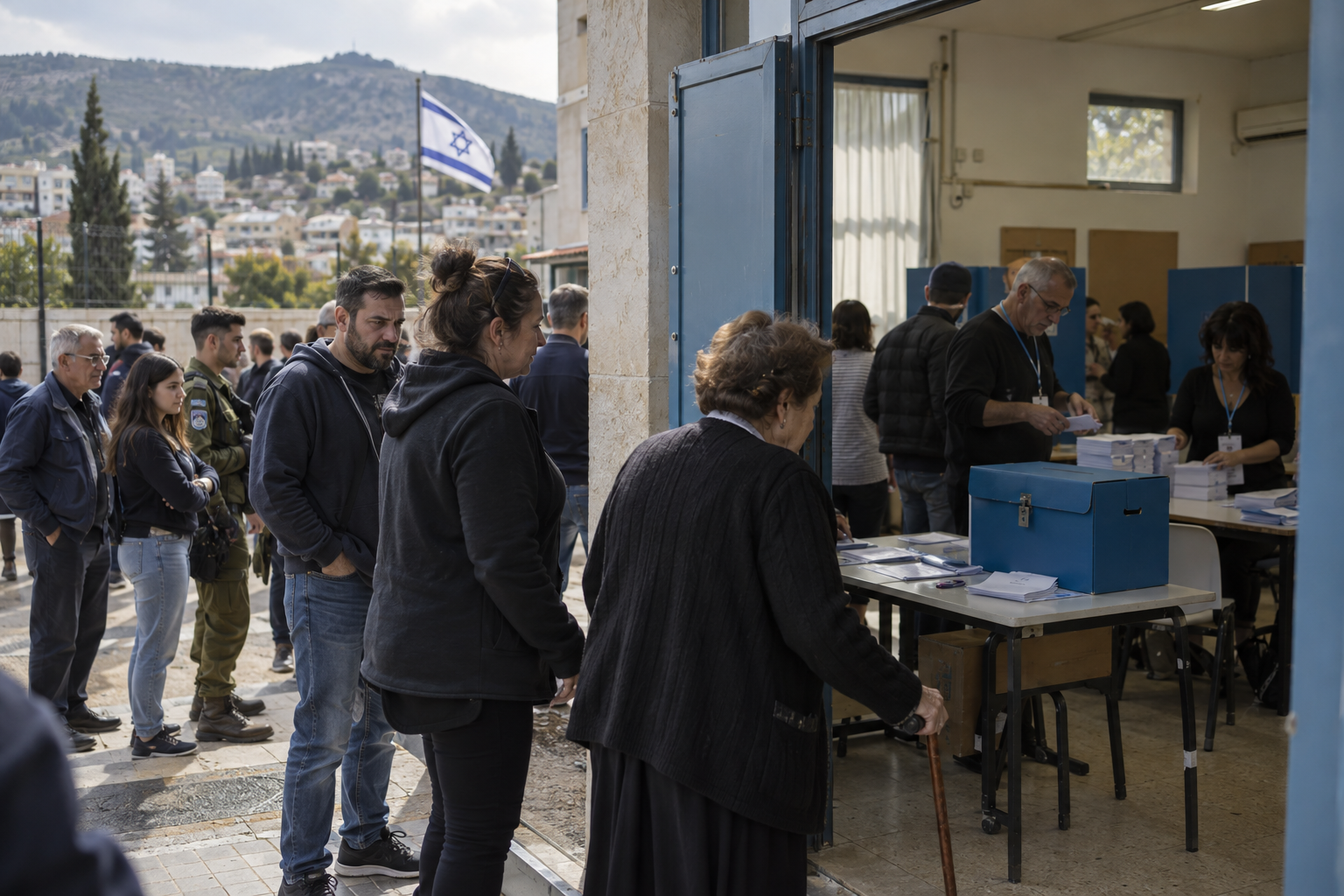
Ahead of Israel’s October 27 election, residents of Kiryat Shmona describe sharply divided views of Prime Minister Benjamin Netanyahu after years of war and upheaval. The northern city, close to the Lebanese border and long a Likud stronghold, was hit by Hezbollah rocket and drone attacks following the October 7, 2023 Hamas-led attacks on Israel. After a ceasefire in late 2024, fighting resumed this year amid a wider US-Israeli war with Iran and renewed Israeli military operations in Lebanon. Many residents have not returned: only about half of the city’s 25,000 people are back.
Kebab-shop owner Amnon Oved says Netanyahu has had his time and faults politicians across the board for putting themselves first. Former deputy mayor Shimon Kamari believes Likud retains support through family and community loyalty, even though he says the party abandoned the city. Kamari, whose own views have shifted rightward, plans to vote for opposition leader Gadi Eisenkot and says a change of government is vital to Kiryat Shmona’s future. Polling suggests Eisenkot’s Yashar may become the largest party, ahead of Likud, but either side would need coalition partners to govern.
Other residents remain strongly behind Netanyahu. Former deputy mayor and local editor Herzl Ben Asher argues that longevity in office is not, by itself, a reason to replace a leader, and praises Netanyahu’s record and influence. Yoav Sabbag also says Netanyahu gives him a sense of security and may be the person best able to revive the largely empty city. The article presents the election as a referendum on Netanyahu’s leadership, his handling of multiple conflicts and the corruption charges against him, while showing that even in a historic Likud stronghold, opinions are far from unanimous.
Entities: Benjamin Netanyahu, Amnon Oved, Kiryat Shmona, Gadi Eisenkot, Likud • Tone: analytical • Sentiment: neutral • Intent: inform
24-10-2026
Gadi Eisenkot, a former chief of the Israeli military, is challenging Prime Minister Benjamin Netanyahu in Israel’s Oct. 27 election. He presents the contest as a choice between responsibility and evasion, arguing that Netanyahu has failed to accept blame for the security failures behind the Oct. 7, 2023, Hamas-led attack, weakened Israel’s international standing, encouraged authoritarianism and deepened divisions within Israeli society. Eisenkot promises an inquiry and a different approach to leadership, security and national unity. His candidacy is shaped by personal loss: his son Gal was killed while serving as a reservist in Gaza, as were two of Eisenkot’s nephews. Eisenkot says he hopes to honor the price his family has paid by creating a better future for Israeli children.
Eisenkot’s background and manner contrast sharply with Netanyahu’s. Born in Tiberias to Moroccan immigrants and raised in working-class Eilat, he could become Israel’s first Mizrahi prime minister. Supporters describe him as direct, strategic and committed to truth, while critics and supporters alike may find his understated, matter-of-fact campaign less inspiring than conventional political rhetoric. His limited experience in elected office, a shrinking polling lead and questions about how he would handle international pressure add to doubts about his ability to defeat Netanyahu.
The article also examines Eisenkot’s military record. He enforced discipline in the Golani Brigade, played a role in Israel’s response to the Second Intifada, opposed collective punishment of Palestinians and advocated political engagement to give them hope. At the same time, he took a hard line toward Hezbollah, including articulating the deterrence-focused “Dahiyeh doctrine.” The article portrays a security pragmatist whose character, personal grief and leadership style are central to an election increasingly framed around trust and responsibility.
Entities: Gadi Eisenkot, Benjamin Netanyahu, Israel's Oct. 27 election, Hamas-led attack of Oct. 7, 2023, Gaza Strip • Tone: analytical • Sentiment: negative • Intent: inform
24-10-2026
Thousands of Israelis who live overseas have returned to Israel ahead of a closely contested election, intending to vote for political change and potentially help end Benjamin Netanyahu’s time as prime minister. An estimated 67,000 Israelis from the United States and Europe have arrived—about 25 per cent more than expected. Their numbers could be equivalent to two seats in the 120-member Knesset, making the arrivals potentially significant in a tight race. Travelers described unusually full flights during what would normally be an off-season period, and most passengers on one London–Tel Aviv flight were reportedly secular Israelis. The influx is said to be causing concern within Netanyahu’s Likud camp.
Several voters interviewed by The National said they believed the country needed a new direction after roughly two decades of current leadership. Some linked their dissatisfaction to Israel’s conduct in Gaza and the consequences of the October 7 Hamas attacks. The article notes that more than 1,200 Israelis were killed in the attacks and that 74,000 people have been killed in Gaza over the subsequent three years. It also describes continuing signs of insecurity around Sderot and the ruins of Gaza, despite a supposed ceasefire.
Shirley Segal said Netanyahu had failed the country and called the events in Gaza sad, while also stressing the need to find a way to live alongside Gaza. Her brother, Danny Segal, argued that Israel needs a different long-term vision and that current policies threaten the future of a Jewish homeland. He said coexistence with Palestinians and neighboring Arab countries is necessary, although he believes the October 7 attacks mean a Palestinian state may take time to become possible. Danny Segal said he plans to vote for the centre-right party led by former prime minister Naftali Bennett. The article does not predict the election result, but emphasizes that overseas voters could affect it.
Entities: Benjamin Netanyahu, Naftali Bennett, Ben (American-Israeli voter), Shirley Segal, Danny Segal • Tone: analytical • Sentiment: neutral • Intent: inform
24-10-2026
The article profiles the leading figures in Israel’s October 27, 2026 election and examines their positions on Palestinian statehood. It presents the contest as a choice shaped less by a conventional left-right divide than by whether Benjamin Netanyahu can remain in power. Although polls do not show Netanyahu nearing a majority, the article notes that he could still benefit from coalition negotiations if the result is inconclusive. Supporters emphasize his experience and international relationships; critics blame him for Israel’s global isolation, prolonged wars, and the rise of far-right and ultra-Orthodox influence. Netanyahu opposes a Palestinian state, and the article points to settlement expansion under his government as an obstacle to a two-state solution.
Gadi Eisenkot, a former military chief, has emerged as a leading opposition figure, though the article describes his campaign as cautious and comparatively policy-light. His military record includes the Dahieh doctrine, and he does not oppose West Bank settlements. He has also rejected the prospect of a Palestinian state. Itamar Ben-Gvir, a prominent coalition figure and national security minister, is described as a staunch opponent of Palestinian statehood who advocates West Bank annexation, Gaza resettlement, and the expulsion of Palestinian residents.
Former prime ministers Naftali Bennett and Yair Lapid have joined forces in the Together party but have lost ground in polling. Bennett opposes Palestinian statehood; Lapid has previously been more receptive to separation between Israelis and Palestinians but has recently condemned international recognition of Palestine. Finally, Mansour Abbas, leader of the Arab-Israeli Ra’am party, could become a kingmaker if turnout among Palestinian citizens of Israel is high enough to give Arab parties significant Knesset representation. The supplied article ends mid-sentence during its discussion of Abbas and the Arab community.
Entities: Benjamin Netanyahu, Gadi Eisenkot, Itamar Ben-Gvir, Naftali Bennett, Yair Lapid • Tone: analytical • Sentiment: negative • Intent: inform