22-10-2026
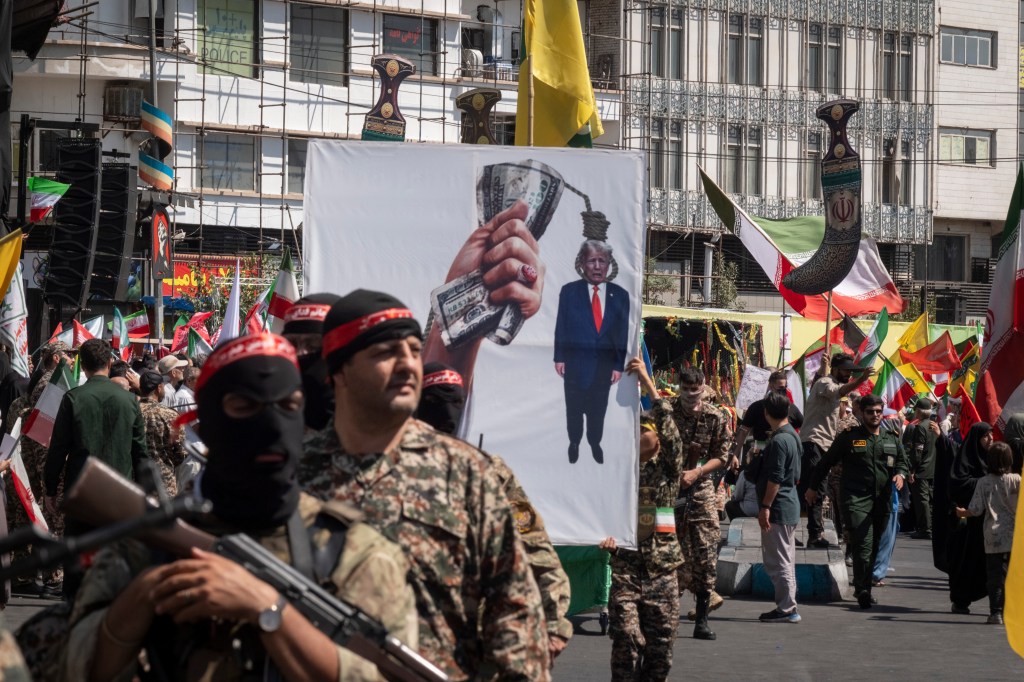
The article reports that Iranian officials are deliberately prolonging peace negotiations with the United States to deny President Donald Trump a political win before the November 3 midterm elections. Three Iranian officials and an insider told Reuters that Tehran believes Trump cannot be trusted and expects him to renew strikes against Iran after the vote. One official said Iran is preparing for renewed Israeli and U.S. attacks rather than seeking an agreement to end the war. The article says Iran’s clerical establishment is determined not to give Trump a political victory.
The negotiations are unfolding amid political pressure on Trump and his allies over high gasoline and diesel prices linked to the war. Although Trump has predicted that fuel prices will fall after the elections, and has referred to a Russian diesel deal, the article says there is no clear route to reopening the Strait of Hormuz, where Iran has intensified attacks. Tehran has also used the conflict—which is approaching its ninth month—to criticize Trump and encourage Americans to express their views in the midterms.
According to the officials, Iran has avoided concessions that could produce a breakthrough before Election Day. Instead, it is pressing for a cease-fire that would reopen the Strait of Hormuz in exchange for the United States lifting its naval blockade and sanctions. The article further reports that Iran is preparing for a large-scale retaliation campaign in the Middle East, based on its assumption that Trump will resume regional strikes after the elections.
Entities: Donald Trump, Iran, United States, Tehran, Islamic Revolutionary Guard Corps (IRGC) • Tone: analytical • Sentiment: negative • Intent: inform
22-10-2026
The United States and Israel have developed plans for renewed strikes on Iran following the American midterm elections, according to officials and people familiar with the discussions. The proposed operation would be short but intensive, with potential targets including Iran’s energy infrastructure, nuclear facilities, and missile and drone capabilities. The two militaries have increased exercises, including flights over Iraq to practise strike manoeuvres, and US Defence Secretary Pete Hegseth reportedly discussed possible attacks with Israeli Prime Minister Benjamin Netanyahu during an October visit.
Some officials believe another major round of strikes could put further pressure on Iran’s economy and encourage diplomatic concessions. However, the article outlines substantial doubts about whether renewed attacks would achieve more than the earlier US-Israeli campaign, which lasted from February to April. That fighting raised energy prices and inflation internationally, weakened regional security, and depleted US missile-interceptor supplies. President Donald Trump has also repeatedly rejected plans to resume major combat operations, so his approval is uncertain.
Iranian officials have threatened broader retaliation, potentially targeting data centres and underwater internet cables in addition to commercial shipping and energy infrastructure. Meanwhile, the United States is building up its military resources as diplomats use the prospect of renewed war to press Iran on its nuclear programme and control of the Strait of Hormuz. Iran’s negotiators have so far resisted nuclear concessions, preferring to defer the issue.
Israel’s October 27 election could further complicate the plans. If Netanyahu loses, his status as caretaker prime minister may make it difficult to launch a war. Alternatively, analysts say, he could use the prospect of joint strikes to push political rivals into a unity government, potentially extending his time in power. The article presents renewed conflict as a possibility shaped by military preparations, stalled diplomacy, political calculations, and significant risks.
Entities: United States, Israel, Iran, Donald Trump, Benjamin Netanyahu • Tone: analytical • Sentiment: negative • Intent: inform
22-10-2026
The article reports that the United States and Israel have prepared options for renewed military strikes against Iran, potentially after the US midterm elections. According to The New York Times, the proposed campaign could be brief but intense, targeting Iran’s energy infrastructure, nuclear facilities, and missile and drone capabilities. US and Israeli forces have reportedly increased exercises, and Washington is assembling a substantial military presence, including aircraft carriers, Marines, fighter jets, and special operations forces. President Donald Trump has not decided whether to authorize an operation, while the White House says it is keeping options open to prevent Iran from obtaining nuclear weapons.
Iran has warned that it would respond to any new attack. IRGC spokesperson Hossein Mohebbi said Tehran was preparing to unveil a weapon dubbed the “Father of All Bombs,” but provided no details. He also claimed that Iran’s missile stockpile and capabilities had grown since the 12-day war with Israel in June 2025, and described a shift toward deterrence and asymmetric warfare. Iranian officials have rejected the prospect that a new conflict could be ended quickly, warning that attacks could extend to shipping, energy infrastructure, data centres, and undersea internet cables.
The article also examines speculation that the US might use its GBU-43/B MOAB, or “Mother of All Bombs,” against Iran’s deeply buried Pickaxe Mountain nuclear facility. Experts question whether the surface-blast weapon could penetrate the site’s granite protection, and officials have raised concerns about the vulnerability of the aircraft needed to deliver it.
Diplomatic efforts continue alongside military preparations. Washington reportedly hopes the threat of force will influence negotiations over Iran’s nuclear programme and the Strait of Hormuz, but Iranian negotiators have resisted concessions. The article notes that earlier strikes raised global energy prices and inflation and strained US missile-interceptor supplies. Iranian President Masoud Pezeshkian described the situation as a “super-challenge” for Iran and said the country would remain firm.
Entities: United States, Israel, Iran, Donald Trump, Pete Hegseth • Tone: analytical • Sentiment: negative • Intent: inform
22-10-2026
The supplied material does not include the body of the Al Jazeera liveblog. It contains a headline, a URL, and website advertising text, so the article’s reported events, supporting details, and updates cannot be summarized reliably. The headline says that Donald Trump denies that the United States is engaged in talks with Iran and says the situation will resolve soon. It also refers to a vow by Iran’s Islamic Revolutionary Guard Corps (IRGC) to invade and to a change in Iran’s defence doctrine toward an offensive posture. The headline frames these developments as part of the US-Israel war on Iran and presents the page as a live news update. Without the article text, it is not possible to establish what Trump said in context, what the IRGC’s vow referred to, how the doctrine change was described, or whether the liveblog contains later developments or responses. The advertising and alert prompt in the supplied content are not substantive reporting and have been excluded from the clean text. The tone, sentiment, and intent assessments below therefore apply only to the headline and the limited accompanying material, not to the unavailable full article.
Entities: Iran, Donald Trump, Islamic Revolutionary Guard Corps (IRGC), United States, Israel • Tone: urgent • Sentiment: neutral • Intent: inform
22-10-2026
CNBC’s Daily Open surveys geopolitical, technology and labor-market developments, with uncertainty over a possible renewed U.S.-Israeli campaign against Iran at its center. Although Washington says it does not plan to strike before the Nov. 3 midterms, The New York Times reported that military plans for strikes afterward have been drawn up, potentially targeting energy infrastructure, nuclear facilities, and missile and drone arsenals. Oil has remained above $108 a barrel, while gas prices in Asia and Europe are at multiyear highs, raising the prospect of prolonged pressure on households.
The briefing also describes damage to Russian oil infrastructure from Ukrainian drone attacks and the collapse of a short-lived energy ceasefire declared by Donald Trump. In a separate dispute, The Wall Street Journal reported that Elon Musk ordered a Starlink slowdown affecting Ukraine; Trump denied involvement, while the article notes that both men have criticized Ukrainian President Volodymyr Zelenskyy.
Corporate and technology news includes a strong SpaceX earnings reaction and Musk’s hint at a possible Tesla tie-up; Meta CEO Mark Zuckerberg’s eight-year residency commitment, linked to the creation of non-voting Class C shares; and Anthropic’s preview of Claude Duet, an AI agent designed to perform tasks while seeking approval before sending messages or making payments. EBay, meanwhile, plans to eliminate about 1,000 jobs, or 9% of its workforce, as it streamlines operations and focuses on priority areas. The article connects this announcement to growing central-bank concern about AI and employment.
The briefing additionally reports that PHP vulnerabilities briefly took government websites offline and that South Korea is expected to leave interest rates unchanged. In its closing item, BlackRock fixed-income chief Rick Rieder argues that high-quality bonds offer an unusually attractive opportunity: he says a diversified portfolio could yield more than 7% with short duration and A- average credit quality.
Entities: Anniek Bao, Donald Trump, Elon Musk, Volodymyr Zelenskyy, United States and Israel • Tone: analytical • Sentiment: neutral • Intent: inform