22-10-2026
The US embassy in Canada has accused Canadian politicians of trying to influence the United States’ November 3 midterm elections, citing public opposition to President Donald Trump’s tariffs and meetings with American politicians. The accusation appears in a fact sheet released amid a trade conflict that began after Trump returned to office in 2025 and Canada imposed retaliatory import taxes on US goods.
The embassy singled out Canadian Industry Minister Melanie Joly, quoting her description of targeting products from particular US states to apply political pressure. It also cited her September meetings with Democratic officials in Boston and Chicago. Joly rejected the charge of election interference, saying her US meetings—including meetings with both Democrats and Republicans—were intended to attract investment and build Canada’s economy. Ontario Premier Doug Ford’s calls for retaliation and his government’s anti-tariff advertising campaign were also cited. That campaign used excerpts from a 1987 address by former President Ronald Reagan and prompted Trump to end trade talks in October 2025.
The fact sheet additionally mentioned Liberal MP Anthony Housefather’s campaigning in Florida for Democratic Representative Debbie Wasserman Schultz, and named 11 Canadians charged or sentenced for voting in US elections between 2012 and 2024. It did not provide evidence connecting those individuals to a Canadian government effort. Nor, the article notes, did the embassy explain how the cited public statements and trade-policy actions constituted election interference.
The allegations follow US Ambassador Pete Hoekstra’s warning that Washington was monitoring Canada and could respond if activity amounted to interference. Relations between the long-standing allies have deteriorated during Trump’s second term, amid tariffs, his repeated suggestion that Canada become a US state, and reports of Alberta separatists seeking support from Trump administration officials. Canadian Prime Minister Mark Carney said foreign governments, including the United States, should stay out of each other’s elections. Al Jazeera said it sought comment from Canadian federal and provincial offices.
Entities: Donald Trump, Mark Carney, Melanie Joly, Doug Ford, Pete Hoekstra • Tone: analytical • Sentiment: neutral • Intent: inform
22-10-2026
The US Embassy in Ottawa has accused Canadian officials of dismissing concerns about possible interference in the November US midterm elections. In a fact sheet released Wednesday, the embassy said Canadian ministers and premiers have discussed plans to influence US politics in official documents and public appearances. It cited meetings with US Democrats and calls for retaliatory tariffs, including remarks by Industry Minister Mélanie Joly about meeting US governors and potential presidential candidates, and Ontario Premier Doug Ford’s support for considering tariffs aimed at politically significant states.
Canadian leaders rejected the allegation. Prime Minister Mark Carney said Canada’s trade actions were a response to US-initiated tariffs and intended to protect Canadian jobs, companies and the economy. He made the comments while announcing nearly C$9bn in aid to address the effects of US tariffs. Ford said he had no interest in interfering in US elections and that American voters would decide the outcome of the midterms. Joly has also denied interference, saying her US visits were aimed at attracting investment.
The dispute comes amid worsening relations between the neighbouring countries during Donald Trump’s second administration and months of conflict over tariffs and trade. The midterm elections will determine which party controls both chambers of Congress, with potential consequences for the remainder of Trump’s presidency. US Ambassador Pete Hoekstra previously said US officials were closely watching Canadian politicians for signs of interference. Separately, Trump administration officials have faced accusations of making inappropriate comments about an Alberta separatism referendum. A petition seeking Hoekstra’s removal, accusing him of undermining Canada-US relations, has gathered more than 280,000 signatures.
Entities: US Embassy in Ottawa, Canada, United States, Mark Carney, Mélanie Joly • Tone: analytical • Sentiment: neutral • Intent: inform
22-10-2026
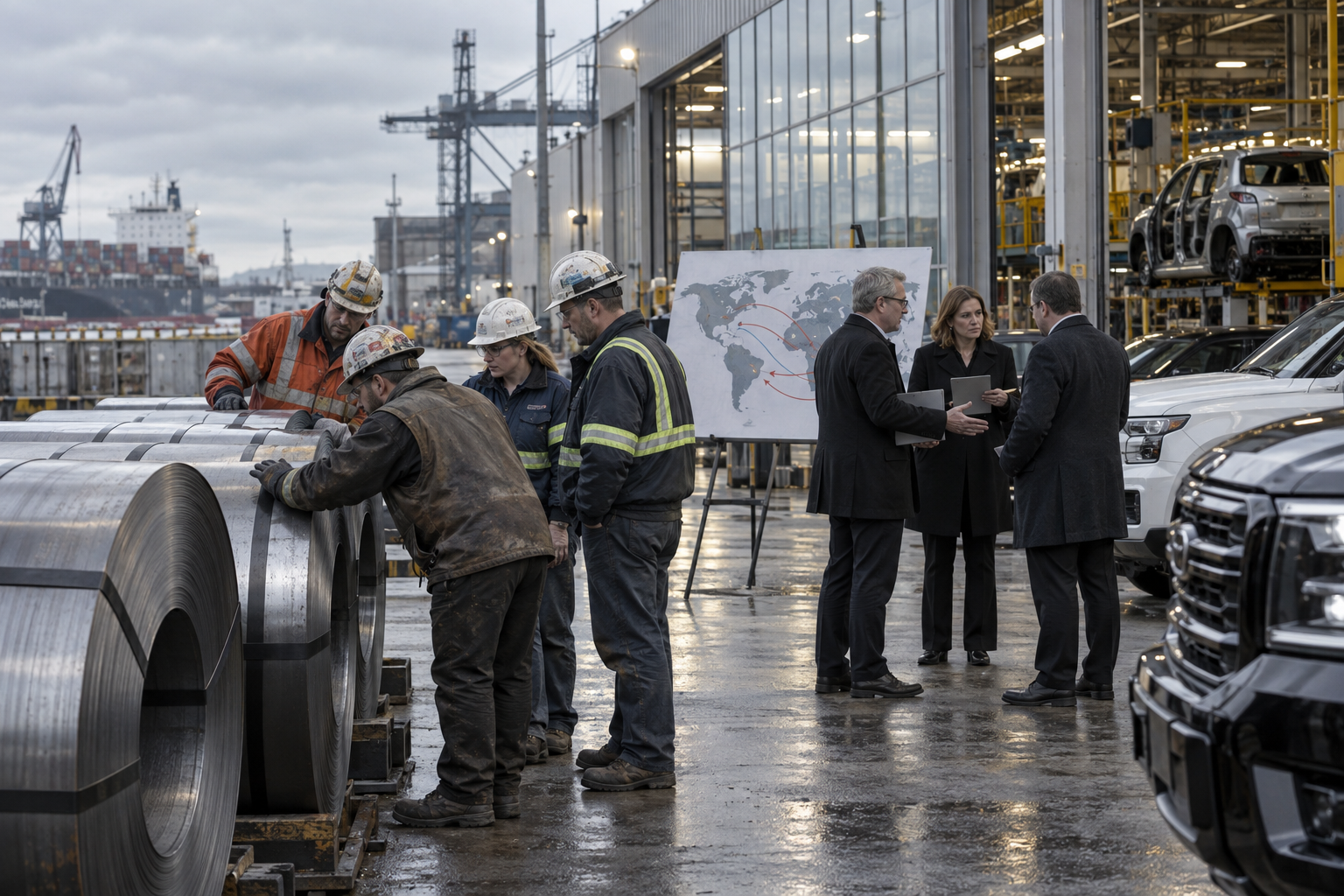
Canada has announced a C$6.2 billion (about €5.7 billion) support package for its steel and automotive industries as US tariffs disrupt cross-border trade. Prime Minister Mark Carney and Ontario Premier Doug Ford unveiled the plan, which allocates C$3.7 billion to steelmakers and C$1.8 billion to automakers over five years. Of the auto funding, C$1.1 billion will come from the federal government. The announcement coincided with Cleveland-Cliffs, a US-owned company, confirming layoffs at its Hamilton, Ontario, plant.
Carney said US tariffs have upended a decades-old trade arrangement, raising costs for American households while disadvantaging Canadian workers and businesses. Canadian auto exports to the United States have fallen by more than 10 percent, and US auto exports to Canada have declined by more than 20 percent. Carney argued that the tariffs weaken industries and reduce consumer choice on both sides of the border. Although he spoke with President Donald Trump about trade and other international issues, Carney reported no breakthrough and said Canada remains willing to negotiate. Trade talks broke down in August after the US imposed 50 percent tariffs on approximately C$20 billion in Canadian goods, prompting Canadian retaliation.
Ford said the relationship between the countries would not return to its former state, regardless of the outcome of the US midterm elections or who occupies the White House. Carney has set a goal of doubling Canadian exports to markets outside the United States within ten years, reflecting concern that Washington may no longer prioritize an integrated North American auto industry.
The dispute also generated diplomatic tension. The US Embassy accused Canadian officials of trying to influence the upcoming midterms, pointing to Industry Minister Mélanie Joly’s comments about retaliatory tariffs on Republican states and Ford’s use of a television advertisement featuring former President Ronald Reagan criticizing tariffs. The ad had contributed to Trump ending trade talks in October 2025. Joly and Ford rejected the embassy’s allegations, as did independent analysts; McGill professor Daniel Béland called the idea that Canada could substantially change the election outcome absurd.
Entities: Mark Carney, Donald Trump, Doug Ford, Mélanie Joly, Daniel Béland • Tone: analytical • Sentiment: negative • Intent: inform