22-10-2026
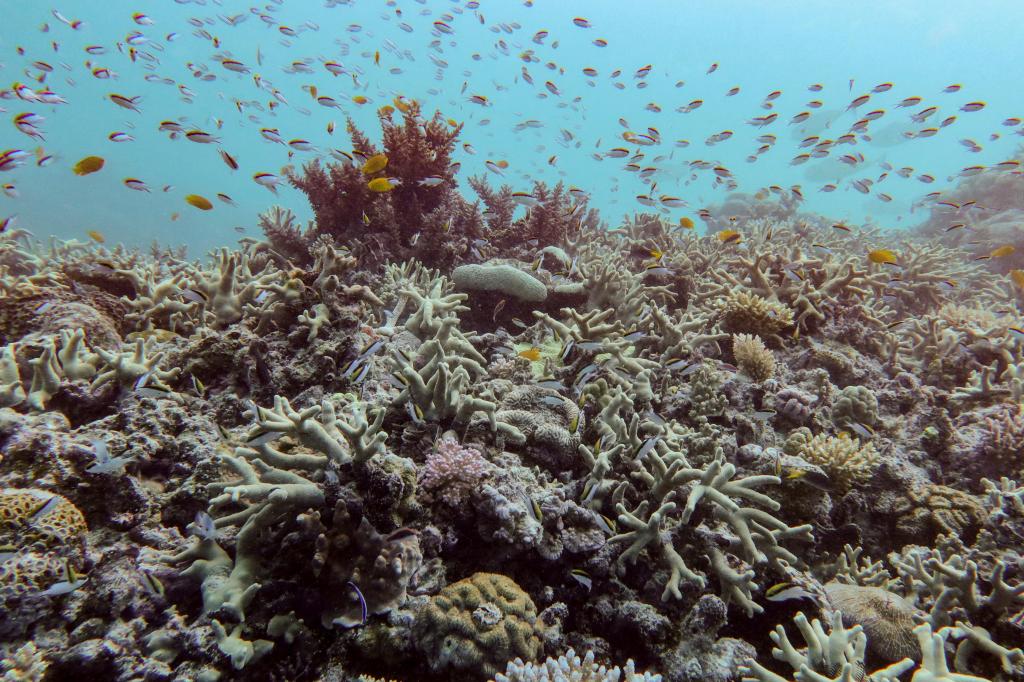
A new assessment by the International Union for Conservation of Nature (IUCN) finds that 96% of the world’s 127 tropical and subtropical shallow-water coral reef systems are in its highest risk category, critically endangered, when projected climate change is included. The IUCN presented the assessment at the United Nations’ COP17 biodiversity summit in Yerevan, Armenia, and warns that nearly all shallow-water reefs could face an extremely high risk of collapse by 2075. The threatened systems include Australia’s Great Barrier Reef, the Coral Triangle, the Mesoamerican Reef System, and reefs in the Red Sea.
Climate-driven heat stress is identified as the most consistent threat. When seawater becomes too warm, corals expel the algae that supply much of their nourishment, causing bleaching and potentially death. Other pressures include overfishing, especially of parrotfish and groupers; coastal development; pollution; tourism; and increasingly severe storms. As hard corals disappear, reefs may become dominated by algae, rubble, and sponges, supporting fewer species and putting animals such as reef fish, mussels, sea turtles, and sharks at risk.
The assessment uses a climate scenario projecting about 2.7°C of global warming above pre-industrial levels by 2100. Without projected future climate change, and considering changes over the past 50 years, only 24% of reefs would qualify as critically endangered. The IUCN says this difference leaves a limited opportunity to act: most reefs have not yet been lost, but choices made in the coming years will shape their condition by the end of the century. IUCN representatives call for ambitious emissions cuts, stronger protection and restoration, and sustained investment in resilient coastal ecosystems and dependent communities. The article’s message is grave but not wholly fatalistic: it says recovery remains possible if climate and conservation action are scaled up promptly.
Entities: International Union for Conservation of Nature (IUCN), Mishal Gudka, Grethel Aguilar, Great Barrier Reef, Coral Triangle • Tone: urgent • Sentiment: negative • Intent: inform
22-10-2026
A new assessment by the International Union for Conservation of Nature (IUCN) warns that 96% of the world’s shallow-water coral reef systems are critically endangered and could disappear by 2075. The study, the first global assessment of its kind, identifies warming oceans and marine heat waves—driven by climate change—as the most consistent threats to reefs. It covers 127 tropical and subtropical ecoregions, representing 72,726 square miles of coral reefs.
Major reef systems, including Australia’s Great Barrier Reef, the Coral Triangle, the Mesoamerican Barrier Reef System and the Red Sea reefs, are among those classified at the highest threat level. The article explains that reefs support about a quarter of marine species and are important to coastal communities and businesses through seafood, tourism and protection from erosion and storms. When a reef collapses, hard corals can be replaced by algae, rubble and sponges, leaving a much less diverse ecosystem.
IUCN representatives emphasize that the findings should spur action rather than despair, noting that some corals can recover from bleaching and that resilient reef pockets may persist. The warning comes amid other troubling indicators: a separate IUCN study found nearly 44% of reef-building coral species face elevated extinction risk, while a survey reported that bleaching had affected 84% of the world’s reefs, the largest such event in recorded history. The article also notes that 2024 was the hottest year on record and that ocean surface temperatures reached a record average away from the poles.
Experts say cutting greenhouse gas emissions is essential, alongside reducing pollution, overfishing and coastal development. The IUCN calls for stronger reef protection and restoration and sustained investment in resilient coastal ecosystems and the communities that depend on them.
Entities: International Union for Conservation of Nature (IUCN), Mishal Gudka, Grethel Aguilar, Great Barrier Reef, Coral Triangle • Tone: analytical • Sentiment: negative • Intent: inform
22-10-2026
A new International Union for Conservation of Nature (IUCN) assessment warns that 96% of the world’s coral reef systems are “critically endangered” and that nearly all shallow-water reefs face an extremely high risk of collapse by 2075. The assessment examined 127 tropical and subtropical reef systems covering 188,362 square kilometres, including major ecosystems such as Australia’s Great Barrier Reef, the Coral Triangle, the Mesoamerican Barrier Reef System and Red Sea reefs.
Climate change is identified as the most consistent threat. Rising ocean temperatures cause increasingly frequent and intense bleaching, while a possible “super” El Niño in 2026 could add further heat stress. The assessment uses a middle-of-the-road climate scenario projecting 2.7°C of warming above pre-industrial levels by 2100; current national commitments put the world on track for about 2.6°C this century, according to the United Nations.
Other pressures include overfishing, which disrupts ecological balances, as well as coastal development, pollution, tourism and stronger or more frequent storms. Overexploitation of parrotfish and certain groupers threatens 63% of reef ecosystems. A separate study published in Nature found that nearly half of coral species faced elevated relative extinction risk by 2020, with climate change the main driver.
The IUCN stresses that reefs are not yet lost. Without projections of future climate change, only 24% of systems would be classified as critically endangered based on the past 50 years, suggesting there is still a window for action. IUCN representatives call for ambitious emissions cuts, stronger reef protection and restoration, and sustained investment in resilient coastal ecosystems and dependent communities. They warn that choices made in the next few years will help determine whether reefs persist or transform into different ecosystems with less value to nature and people.
Entities: International Union for Conservation of Nature (IUCN), Mishal Gudka, Grethel Aguilar, Yerevan, Armenia, COP17 biodiversity summit • Tone: analytical • Sentiment: negative • Intent: warn