21-05-2026
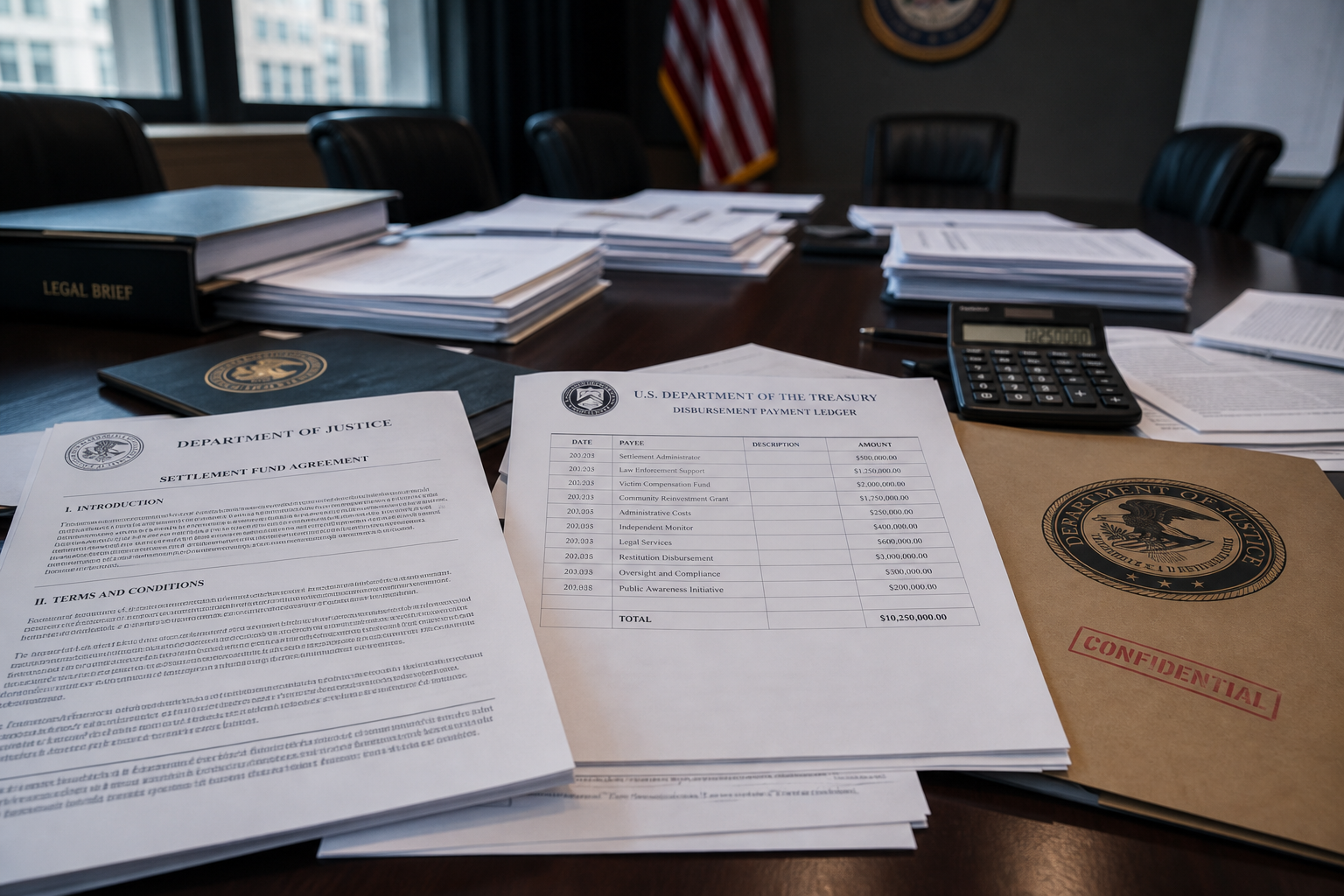
A Republican lawyer and conservative activist, Mike Howell, has asked Acting Attorney General Todd Blanche to appoint him to a five-member commission that will oversee a new Justice Department fund worth more than $1.7 billion. The fund was created through the DOJ’s settlement of President Donald Trump’s $10 billion lawsuit against the IRS over the leak of his tax returns, and it is intended to compensate people who claim they were harmed by government “weaponization.” Howell is a close ally of DOJ pardon attorney Ed Martin and has been active in efforts tied to Trump allies, including representing conservative claims of political targeting and helping guide Martin’s failed bid to become U.S. attorney for D.C. Howell argues that his background testifying before Congress, litigating, and advocating for people he says were targeted for their politics, religion, or protected rights makes him a suitable candidate to help oversee the fund. If selected, he would hold significant influence over who receives payments through 2028. The article frames the fund as the latest example of Trump’s broader effort to reward supporters and pursue retribution, while noting that the DOJ says there are no partisan requirements for claims. A separate first claim for compensation has already been filed by former Trump adviser Michael Caputo, who says he was targeted in the Russia investigation.
Entities: Mike Howell, Ed Martin, Todd Blanche, Donald Trump, Justice Department • Tone: analytical • Sentiment: neutral • Intent: inform
21-05-2026
CNN’s annotated article examines a controversial settlement between Donald Trump, his family, The Trump Organization, and the Internal Revenue Service that creates a nearly $1.8 billion “Anti-Weaponization Fund” for people who claim they were unfairly targeted by previous administrations. The arrangement stems from a lawsuit over the unauthorized disclosure of Trump’s tax records, but it goes far beyond that dispute: the federal government agreed to issue a formal apology, while Trump and his co-plaintiffs agreed to drop their claims for more than $230 million and to abandon similar future claims. The article explains that the fund will be controlled by a commission selected by the attorney general, removable by the president, and allowed to set its own rules, with limited transparency and little public oversight. The money comes from taxpayer funds Congress had previously set aside for settlements, and any unused balance would return to the government.
The piece also highlights a second set of settlement terms released later, which bars the IRS from pursuing future investigations or claims against Trump, his family, trusts, companies, or affiliates over past tax issues. CNN notes that critics have described the arrangement as a slush fund and a form of political corruption, and that legal experts are divided on whether courts can block it. The article emphasizes the unusual lack of judicial review, since the underlying case was dismissed before the settlement was submitted to a judge, and underscores the broad protection the deal appears to give Trump and his businesses from future federal tax scrutiny.
Entities: Donald Trump, Eric Trump, The Trump Organization, Internal Revenue Service (IRS), Anti-Weaponization Fund • Tone: analytical • Sentiment: negative • Intent: analyze
21-05-2026
The article examines the Trump administration’s newly created $1.8 billion fund intended to compensate people who say they were mistreated by the federal government, and argues that it appears to depart from longstanding Justice Department practice and a recent internal policy against third-party settlements. Legal experts and former Justice Department veterans say the fund is unusual because it would use taxpayer money to pay claimants who were not part of the underlying lawsuit, potentially without a judge’s oversight, and because it reportedly includes immunity from tax penalties for President Trump, his sons, and the Trump Organization. Acting Attorney General Todd Blanche defended the arrangement as consistent with past settlements, but critics say it more closely resembles an improvised political payout than a traditional legal settlement.
The piece explains how eligibility could be broad and uncertain. Blanche has suggested that people such as Hunter Biden or Eric Adams might qualify if they were harmed by government “weaponization,” and Trump allies have used the term expansively to describe perceived political targeting. The article notes that the administration has promised quarterly reports, but privacy laws may limit public disclosure of recipients and amounts.
A major theme is the contrast between this fund and the normal use of the Treasury’s Judgment Fund, which is typically used after a court judgment or where Justice Department lawyers document litigation risk. The article compares the new fund unfavorably to the Keepseagle settlement, where a judge oversaw a class-action case and payments were tied to specific plaintiffs. It also highlights the tension with a 2025 Justice Department memo from Pam Bondi that largely prohibited settlements directing money to third parties who were neither victims nor parties to the suit. Overall, the article portrays the fund as legally questionable, politically charged, and potentially inconsistent with prior administration policy.
Entities: Trump administration, Justice Department, Todd Blanche, Pam Bondi, Judgment Fund • Tone: analytical • Sentiment: negative • Intent: analyze
21-05-2026
The article argues that President Trump is using the power of the presidency to advance his own financial and political interests in ways that are unusually direct, brazen, and potentially corrupt. It focuses on two recent developments: a deal that effectively shields Trump from Internal Revenue Service audits of his past returns, and a $1.8 billion taxpayer-funded program for people aligned with Trump’s claims of mistreatment, some of whom were involved in the Jan. 6 attack on the Capitol. The piece frames these actions as part of a broader pattern in which Trump, his family, and allies blur the line between public office and private gain.
The article says Trump has leveraged policy, pardons, business relationships, and regulatory decisions to enrich his family and associates while weakening the guardrails that traditionally constrained presidents. Examples include Trump-related cryptocurrency ventures benefiting from lighter regulation, a pardon for Binance’s founder, and foreign business ties in the Gulf that appear to intersect with U.S. policy choices. It also notes that Trump’s disclosure of thousands of stock trades raises questions about whether his portfolio is influenced by government decisions, especially since he has not placed assets in a true blind trust.
Democrats and even a few Republicans criticize the arrangements as corrupt or troubling, but the article emphasizes that Trump still commands strong loyalty within his party and faces little effective institutional resistance. The White House rejects the corruption accusations and insists Trump acts in the public interest. Overall, the piece presents Trump’s second-term governance as a highly personalized, self-serving use of executive power that has become more open and less constrained than in previous administrations.
Entities: Donald Trump, Trump administration, Trump Organization, Internal Revenue Service (IRS), Jan. 6 attack on the Capitol • Tone: analytical • Sentiment: negative • Intent: analyze
21-05-2026
Miranda Devine argues that the Trump administration’s proposed $1.7 billion “Anti-Weaponization Fund” for victims of alleged lawfare has been undermined by officials invoking Hunter Biden as someone who could theoretically apply. She says this comparison is offensive because Hunter Biden was not a victim of selective prosecution, but rather someone who benefited from his father’s administration’s protection and obstruction. Devine frames the fund as a morally justified effort to compensate people she describes as real victims of Biden-era lawfare—conservatives, Trump allies, pro-life activists, and whistleblowers who were investigated or prosecuted unfairly. She criticizes Acting Attorney General Todd Blanche and Vice President JD Vance for using Hunter as a bipartisan talking point, saying it makes the program look partisan and insulting to those who suffered reputational, financial, and personal harm. The article also attacks the broader Biden-era justice system as politicized, referencing Russiagate, January 6 prosecutions, and FACE Act cases. Devine concludes that while the compensation fund could still be salvaged, it should be paired with a truth-and-reconciliation process to document abuses and restore victims’ reputations, rather than becoming a taxpayer-funded giveaway or political gesture.
Entities: Hunter Biden, Candace Owens, Todd Blanche, JD Vance, Joe Biden • Tone: negative • Sentiment: negative • Intent: critique