21-05-2026
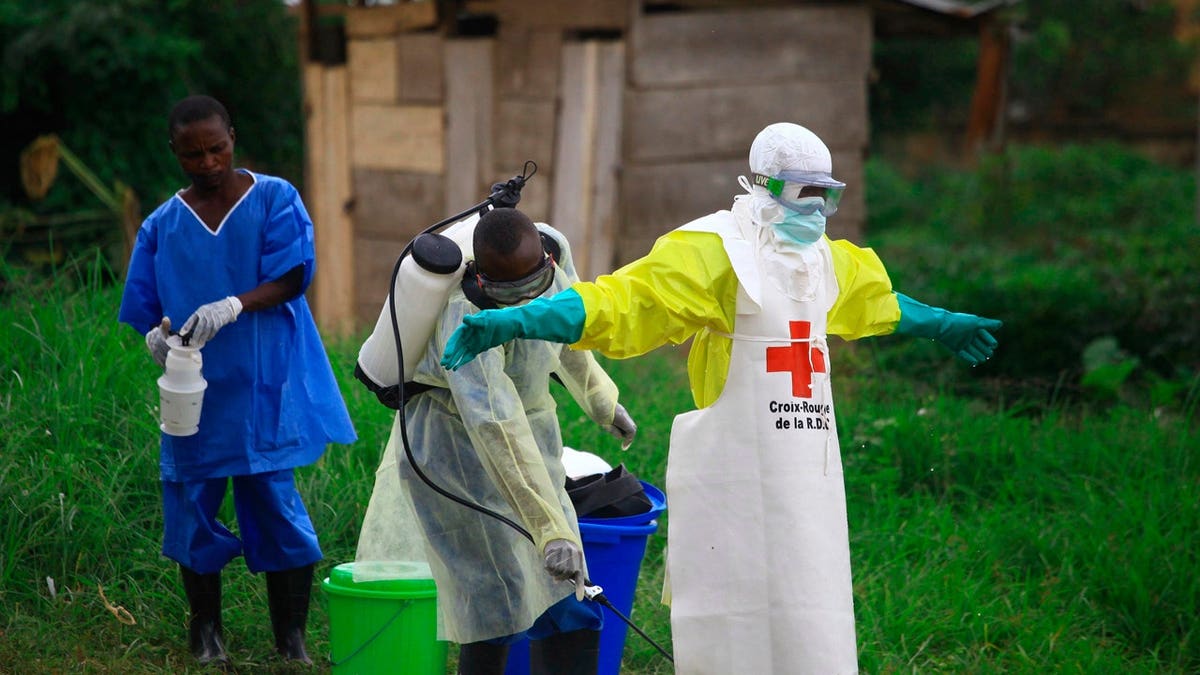
The article reports on the worsening Ebola outbreak in the Democratic Republic of Congo (DR Congo), where the World Health Organization says it may take six to nine months before a vaccine for the specific Bundibugyo strain could be ready. WHO officials say the outbreak is likely larger than confirmed figures indicate because of delays in detection and reporting. The organization has confirmed 51 cases in DR Congo and two in neighboring Uganda, with suspected cases and deaths far higher. The outbreak is centered in eastern DR Congo, especially Ituri and North Kivu provinces, where local health facilities are reportedly overwhelmed and frontline workers remain inadequately protected despite incoming supplies of protective equipment.
WHO director-general Tedros Adhanom Ghebreyesus said the emergency is serious at national and regional levels but not a pandemic threat, and that the WHO’s emergency committee does not consider it a pandemic emergency. The article explains that the Bundibugyo strain is especially difficult to combat because there is no approved vaccine or drug for it, unlike the better-known Zaire strain. Experimental vaccines are in development, but one may not be ready for clinical use for six to nine months, while another may reach clinical trial material in two to three months, pending animal data. The article also notes that the UK has pledged up to £20 million to support containment efforts, including infection control, surveillance, and frontline health workers. It emphasizes the challenges of response in a conflict-affected region where symptoms can be mistaken for malaria or typhoid and where public fear and reduced contact, such as avoiding handshakes, are already visible.
Entities: World Health Organization (WHO), Dr Tedros Adhanom Ghebreyesus, Dr Vasee Moorthy, Democratic Republic of Congo (DR Congo), Uganda • Tone: urgent • Sentiment: negative • Intent: inform
21-05-2026
An Air France flight from Paris to Detroit was diverted to Montreal after U.S. officials determined that one passenger should not have boarded the U.S.-bound aircraft because the traveler was from the Democratic Republic of Congo, where Ebola-related entry restrictions were in effect. U.S. Customs and Border Protection said the passenger had been placed on the flight “in error” and that the plane was not allowed to land at Detroit Metropolitan Wayne County Airport due to public health restrictions intended to reduce the risk of Ebola transmission. The rest of the passengers were later flown from Montreal to Detroit on the same aircraft.
The article explains that the diversion occurred amid tightening U.S. rules tied to the Ebola outbreak in central Africa. On Monday, the CDC said people without U.S. passports who had traveled to Congo, Uganda, or South Sudan in the prior three weeks would be restricted from entering the country. The Department of Homeland Security later announced that starting Thursday, U.S.-bound flights carrying foreign travelers who had been in those countries within 21 days would be routed to Washington-Dulles for enhanced health screening.
The article also places the event in the broader context of the Ebola outbreak in eastern Congo, which was confirmed on May 15. WHO Director-General Tedros Adhanom Ghebreyesus reported at least 600 suspected cases and 139 suspected deaths, and medical experts noted the outbreak involves the Bundibugyo strain, for which there are no approved vaccines or treatments.
Entities: Air France Flight 378, Paris-Charles de Gaulle International Airport, Detroit Metropolitan Wayne County Airport, Montreal Trudeau International Airport, U.S. Customs and Border Protection (CBP) • Tone: analytical • Sentiment: neutral • Intent: inform
21-05-2026
The World Health Organization says the Ebola outbreak in the Democratic Republic of Congo is serious at the national and regional level but does not meet the threshold for a “pandemic emergency.” WHO officials said the situation is currently a public health emergency of international concern, the second-highest alarm level under international health rules, but not a global pandemic emergency. The outbreak has confirmed cases in eastern Congo’s Ituri and North Kivu provinces, with additional confirmed cases reported in Uganda and among a U.S. national who was evacuated to Germany for treatment.
WHO Director-General Tedros Adhanom Ghebreyesus said 51 cases have been confirmed in the DRC, but the real scale is likely larger, with nearly 600 suspected cases and 139 suspected deaths. Officials believe Ebola may have been spreading for a couple of months before detection, and WHO emphasized contact tracing, isolation, and treatment to break transmission chains. The emergency committee agreed that the outbreak warrants serious concern but does not satisfy criteria for a pandemic emergency.
The article also addresses criticism from U.S. Secretary of State Marco Rubio, who said the WHO was late in identifying the outbreak. Tedros responded that the criticism may reflect a misunderstanding of how international health regulations work and how WHO’s role differs from that of national governments. The piece places this dispute in the broader context of U.S.-WHO tensions following President Trump’s withdrawal from the organization and earlier criticism over COVID-19 response.
Entities: World Health Organization (WHO), Tedros Adhanom Ghebreyesus, Democratic Republic of Congo (DRC), Ebola, Ituri Province • Tone: analytical • Sentiment: negative • Intent: inform
21-05-2026
The article reports that World Health Organization Director-General Tedros Adhanom Ghebreyesus expressed deep concern over the size and rapid spread of an Ebola outbreak in the Democratic Republic of the Congo and Uganda. The WHO is convening its Emergency Committee to review the situation after officials reported more than 500 suspected cases in the DRC, 33 confirmed cases there, two confirmed cases in Uganda, and 131 deaths across the affected region. Tedros said the outbreak’s spread into urban areas such as Kampala and Goma, along with the conflict-affected province of Ituri, raises the risk of further transmission. In response, the WHO approved $3.9 million in emergency funding to support national authorities, and the organization had already declared the outbreak a public health emergency over the weekend.
The article also notes that the U.S. issued an urgent travel warning for the DRC, emphasizing that Ebola is a rare but severe and often fatal hemorrhagic fever that spreads through direct contact with infected people, bodily fluids, contaminated corpses, and contaminated objects. The State Department said it cannot provide emergency services to U.S. citizens in Ituri province and urged people not to travel there for any reason. The piece briefly connects the outbreak to broader global health concerns, including a separate hantavirus outbreak tied to the MV Hondius cruise ship that has killed three passengers and left multiple cases under investigation. Overall, the story focuses on the escalating Ebola emergency, the international response, and the risks of cross-border spread.
Entities: World Health Organization (WHO), Tedros Adhanom Ghebreyesus, Democratic Republic of the Congo (DRC), Uganda, Kampala • Tone: urgent • Sentiment: negative • Intent: inform
21-05-2026
Ebola fears are rising in eastern Congo as a fast-moving outbreak of the rare Bundibugyo strain spreads through one of the world’s most fragile public health and security environments. Healthcare workers in Ituri and North Kivu say they are undertrained, underprotected, and overwhelmed, while local communities face shortages of masks, disinfectants, and isolation space. The World Health Organization has declared the outbreak a public health emergency of international concern, warning that the true scale is likely much larger than confirmed figures suggest. Officials report at least 51 confirmed cases in Congo and two in Uganda, with 139 suspected deaths and nearly 600 suspected cases, though outside analysts believe the real number may already exceed 1,000.
The outbreak is occurring amid armed conflict, displacement, and recurring attacks by militants, further complicating containment efforts. Families at treatment centers described harrowing scenes of relatives rapidly worsening, bleeding, and vomiting before dying. Health workers say suspected patients are being mixed with other hospital patients, and some facilities lack proper triage, isolation, and protective gear. The WHO says a vaccine for the Bundibugyo strain is still months away, leaving current response efforts heavily dependent on emergency care, infection control, and security access.
The article also highlights international involvement, including U.S. funding pledges and the medical evacuation of Americans from the region to Germany and the Czech Republic. Overall, the story paints a picture of a dangerous outbreak spreading in an area already strained by war, weak infrastructure, and limited public health capacity.
Entities: Ebola, Bundibugyo virus, Congo, Ituri, North Kivu • Tone: urgent • Sentiment: negative • Intent: inform
21-05-2026
An Air France flight traveling from France to Detroit was diverted to Montreal after U.S. officials determined that one passenger from the Democratic Republic of Congo should not have boarded because of Ebola-related entry restrictions. U.S. Customs and Border Protection said the passenger had been allowed on the plane “in error,” and the flight was barred from landing in Michigan over public-health and travel-rule concerns. Air France said it complied with U.S. authorities and that there was no medical emergency on board.
The incident comes amid renewed concern about Ebola outbreaks in eastern and central Africa, prompting U.S. agencies to tighten travel protocols. The Centers for Disease Control and Prevention and the Department of Homeland Security introduced heightened screening and entry restrictions earlier in the week to reduce the risk of the virus entering the United States. A new DHS policy, set to take effect the next day, would require flights carrying passengers from the Congo, Uganda, and South Sudan to land at Washington-Dulles International Airport.
The article also places the diversion in the broader context of the Ebola outbreak in the Democratic Republic of Congo, where officials reported hundreds of suspected cases, dozens of confirmed infections, and multiple deaths. World Health Organization chief Tedros Adhanom Ghebreyesus said the risk of global spread is low, but warned that the epidemic is larger than the confirmed case count and likely to grow. Overall, the story focuses on aviation disruption caused by public-health restrictions and the international response to the outbreak.
Entities: Air France Flight 378, Detroit Metro Wayne Airport, Montreal Trudeau International Airport, US Customs and Border Protection, Ebola outbreak • Tone: urgent • Sentiment: negative • Intent: inform