20-07-2026
A US service member was killed and another injured in northern Iraq after a controlled detonation of unexploded ordnance from a downed Iranian attack drone, according to US Central Command. The death came one day after an Iranian attack on a US base in Jordan killed two American soldiers and left another missing, with Centcom later saying unidentified remains were found at the Jordan site and that verification was ongoing. The article describes a rapidly escalating exchange of strikes between the US and Iran over eight days, including attacks on infrastructure, maritime threats in the Strait of Hormuz, and additional missile launches and interceptions in Jordan and near Israel.
The piece places the latest deaths within a broader regional conflict that has spread across Iraq, Jordan, Iran, Kuwait, and waters near the Strait of Hormuz. The US says its strikes are intended to degrade Iran’s ability to threaten shipping and punish the IRGC for the Jordan attack, while Iran says US strikes have hit civilian infrastructure and that vessels defying its warnings in the strait have already been involved in “accidents.” The article also notes international concern, including calls for restraint from the UN nuclear watchdog, as reports emerged of strikes near an under-construction nuclear power plant and other sites in Iran. Overall, the story emphasizes mounting casualties, reciprocal attacks, disputed claims about targets, and the risk of wider regional escalation.
Entities: US Central Command (Centcom), Iranian attack drone, Jordan, Iraq, Strait of Hormuz • Tone: urgent • Sentiment: negative • Intent: inform
20-07-2026
Oil prices rose sharply on Monday as escalating U.S.-Iran tensions raised fears of disruptions to global energy flows through the Strait of Hormuz, one of the world’s most critical oil chokepoints. Brent crude for September delivery climbed about 2.54% to move above $90 per barrel, while West Texas Intermediate for August delivery rose roughly 2.29% to $84.38. The move came after the United States launched another round of strikes against Iranian targets, and after the U.S. military confirmed that a third American service member had been killed in recent operations linked to the broader conflict.
The article explains that the latest escalation followed an Iranian attack in Jordan that had already killed two U.S. personnel and left another missing, with investigators later recovering unidentified remains near the attack site. U.S. Central Command said the strikes would continue in order to degrade Iranian military capabilities used to target commercial ships and civilian mariners transiting the Strait of Hormuz. Centcom said it has hit Iranian coastal surveillance and air defense systems, maritime assets, and missile and drone storage facilities, as well as Islamic Revolutionary Guard Corps units tied to the July 17 attack in Jordan.
Analysts cited in the article warned that the global crude market is tightening as Gulf exports fall, increasing the risk of inventory shortages later in the year. One strategist said oil stocks could become tight by September and argued for staying long Brent, with a target range of $95 to $105 per barrel. Overall, the article frames the price jump as a market response to rising geopolitical and supply-chain risk in the Middle East.
Entities: Brent crude, West Texas Intermediate (WTI), United States, Iran, Strait of Hormuz • Tone: analytical • Sentiment: negative • Intent: inform
20-07-2026
The article reports that the U.S. military carried out a ninth straight night of strikes against Iran, intensifying a conflict centered on control of the Strait of Hormuz and the security of commercial shipping. U.S. Central Command said the latest three-hour operation targeted Iranian military command centers, air defense and coastal surveillance sites, maritime assets, and missile and drone launch sites in an effort to reduce Tehran’s ability to attack civilian vessels and mariners. The escalation has fueled fears of a broader war after accusations from Washington and Tehran that each violated a June memorandum of understanding.
The fighting has pushed oil prices higher, with Brent crude rising to around $90.7 a barrel and WTI to $84.6, while traffic through Hormuz has slowed to its lowest level in three weeks. The article notes that the strait, which previously handled roughly 20% of global oil traffic, remains a critical chokepoint even as U.S. officials insist flows are still continuing at about two-thirds of normal volume. The conflict’s human cost is also rising: the U.S. says a third American service member was killed over the weekend, bringing U.S. military deaths in the nearly five-month war to 17, while Iran says at least 50 people were killed and more than 500 wounded in recent strikes.
The article also details regional spillover, including attacks and air-defense alerts in Bahrain, Saudi Arabia, Jordan, and Kuwait, as well as Iranian claims that two oil tankers exploded near the strait. It highlights growing concern about civilian infrastructure damage, including a strike on the Bonji desalination plant that left about 10,000 people without water. Overall, the piece portrays a dangerous and expanding regional conflict with direct implications for global energy markets and maritime security.
Entities: Iran, United States, U.S. Central Command (CENTCOM), Strait of Hormuz, Brent crude • Tone: urgent • Sentiment: negative • Intent: inform
20-07-2026
CNN’s live updates describe a rapidly escalating conflict between the United States and Iran that has entered a ninth straight night of strikes, with explosions reported across Iran and renewed fears of a broader regional war. President Donald Trump said Iran was hit “very hard” after the latest round of U.S. attacks, while the Pentagon and CENTCOM reported continuing military operations against Iranian targets. The conflict’s human toll is worsening: the U.S. confirmed another service member was killed in northern Iraq during the controlled detonation of a downed Iranian drone, following the deaths of two American troops in Jordan, bringing total U.S. military fatalities in the broader conflict to 17. Iran, for its part, says it has continued launching missiles and drones at “enemy targets,” while regional governments report ongoing air defenses, intercepted attacks, and damage to infrastructure in Kuwait, Bahrain, Jordan, and elsewhere.
The article emphasizes that the fighting is no longer limited to isolated tit-for-tat attacks. U.S. strikes have expanded to Iranian roads, tunnels, railways, ports, bridges, and power infrastructure, while Iran has broadened its own targeting across multiple countries in the region and threatens Gulf Arab ports. The Strait of Hormuz remains a central flashpoint, with U.S. officials warning that Iran is obstructing shipping and maritime authorities reporting a vessel on fire near Oman. Analysts quoted in the piece warn that the global oil supply and regional stability are being threatened, especially as energy facilities in the Gulf continue to be damaged. Despite the scale of the attacks, Iran appears capable of sustaining military pressure, and U.S. leaders, including Vice President JD Vance and Secretary of State Marco Rubio, signal that airstrikes alone may not end the conflict, even as Washington says it remains open to diplomacy if Tehran is willing.
Entities: United States, Iran, Donald Trump, Marco Rubio, JD Vance • Tone: urgent • Sentiment: negative • Intent: inform
20-07-2026
CNN’s analysis argues that the latest escalation in the Iran conflict exposes a major gap in President Donald Trump’s strategy: the White House has not clearly explained what the endgame is or how the current military pressure will achieve it. The article says the renewed US air campaign, combined with Iranian retaliation that has already killed and wounded US personnel, is raising the stakes for Washington and threatening broader regional instability. A central theme is Iran’s ability to impose costs through its disruption of the Strait of Hormuz, a chokepoint critical to global shipping and energy markets. Trump appears to be intensifying strikes because he cannot politically or economically accept that disruption, yet the article contends that the administration has not said whether its goal is simply to protect shipping, degrade Iranian capabilities, or prepare for a wider conflict potentially involving ground forces.
The piece emphasizes the uncertainty created by Trump’s mixed messaging, including his failure to address the war clearly in a national speech and his earlier claim that he had effectively ended the conflict. It notes rising US casualties, the lack of clarity over civilian targeting, and the possibility that the administration may be willing to tolerate wider economic shocks to pressure Iran. The article also frames the war as a risky attempt to undo the failures of the first phase, while warning that if Trump cannot restore free navigation through the Strait of Hormuz, the campaign could be remembered as a strategic disaster. Commentary from administration officials and lawmakers shows partisan division, with some Republicans arguing the military is winning and some Democrats saying Trump launched a war of choice without an imminent threat.
Entities: Donald Trump, Iran, Strait of Hormuz, Jordan, Israel • Tone: analytical • Sentiment: negative • Intent: analyze
20-07-2026
CNN’s analysis argues that the renewed US-Iran confrontation has rapidly escalated from limited tit-for-tat exchanges into a conflict that could spread beyond the original flashpoints. Over the past week, the United States has expanded its strikes from Iranian coastal radar and drone sites to broader infrastructure, while Iran has widened its retaliatory targeting across several countries in the region. The article says the confrontation is now at a dangerous inflection point, with analysts warning that both sides have abandoned the June memorandum meant to restrain hostilities. The deaths of US service members in Jordan and continued Iranian missile attacks have raised the stakes further, making a negotiated off-ramp less likely in the short term.
The piece emphasizes that the strategic struggle has shifted away from Iran’s nuclear program and toward control of the Strait of Hormuz, a chokepoint vital to global energy and trade. Iran appears to believe it can outlast President Trump by inflicting pressure on US forces and the wider economy, including through threats to shipping and possible coordination with Houthi allies in the Red Sea. Meanwhile, Washington’s Gulf partners are worried about the conflict spreading to ports and critical infrastructure across the region and the economic damage that could follow.
The article concludes that a decisive US military victory appears unlikely without a far larger war effort, potentially including ground forces, something Trump has publicly resisted. With both sides showing little appetite for compromise and the risk of regional spillover increasing, the conflict is portrayed as moving toward a point where events could slip beyond any one actor’s control.
Entities: United States, Iran, Donald Trump, Strait of Hormuz, Kuwait • Tone: urgent • Sentiment: negative • Intent: analyze
20-07-2026
The article reports on escalating U.S.-Iran hostilities and centers on comments from Seyed Mohammad Marandi, an Iranian-American academic the article describes as a regime mouthpiece. Marandi claims Tehran has spent decades preparing for a possible U.S. ground invasion and says Iran would welcome such a scenario, asserting that the country has decentralized and hidden its missile and drone arsenal underground to make it harder to destroy. He also says Iran has recently introduced a new missile into the conflict and is prepared for a prolonged land war.
The piece places those remarks in the context of renewed U.S. airstrikes on Iranian military targets during a deteriorating ceasefire arrangement. It says the conflict has widened across western and southern Iran, while Iran has launched missile and drone attacks on U.S.-linked facilities in Jordan, Kuwait, and Bahrain. The article describes U.S. strikes on bridges, tunnels, surveillance positions, and underground weapons storage, and notes explosions in Khorramabad, a city linked to the Imam Ali Missile Base. It also references the strategic importance of the Strait of Hormuz and the collapse of a 60-day ceasefire memorandum meant to open the door to nuclear talks. Overall, the article frames Iran as signaling confidence and readiness for a deeper war, while portraying the region as moving toward further escalation.
Entities: Seyed Mohammad Marandi, Glenn Diesen, Iran, Tehran, United States • Tone: analytical • Sentiment: negative • Intent: inform
20-07-2026
Oil prices surged on Sunday evening as the conflict between the United States and Iran widened, raising fears of further disruption to energy supplies and financial markets. Brent crude rose about 3 percent and crossed $90 a barrel, while West Texas Intermediate climbed to around $84. The article explains that investors are watching several critical indicators, especially shipping through the Strait of Hormuz, Chinese oil demand, and damage to Russian and Ukrainian energy infrastructure, all of which could further tighten global fuel supplies.
The escalation has already affected regional energy systems. Shipping through the Strait of Hormuz has fallen sharply, and energy infrastructure in the Middle East has been hit again, including sites in Kuwait. The United States has expanded attacks beyond military targets to include Iranian bridges and other critical infrastructure, suggesting the conflict may broaden further. At the same time, global oil stockpiles are lower than they were earlier in the year, and Ukrainian strikes on Russian refineries have reduced diesel output.
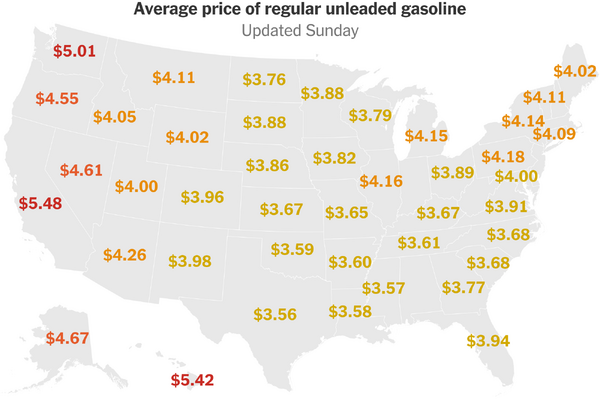
The market reaction has been mixed. U.S. stock futures were little changed, while Asian markets responded unevenly, with sharp declines in Japan and South Korea and gains in Hong Kong. Gasoline and diesel prices in the United States continued to rise, with the national average for gasoline nearing $4 a gallon and diesel reaching $5.10, both significantly higher than before the war began. The article emphasizes that fuel markets are under strain because many refineries are offline or operating below capacity, increasing the risk of continued price pressure for consumers and investors alike.
Entities: Oil prices, Brent crude, West Texas Intermediate, United States, Iran • Tone: analytical • Sentiment: negative • Intent: inform
20-07-2026
The article describes a rapidly escalating conflict between the United States and Iran that has moved beyond limited military strikes and into a broader, more dangerous confrontation involving civilian infrastructure, regional shipping lanes, and the risk of wider war. Analysts quoted in the piece argue that both governments are approaching a “wake-up moment” in which they must decide whether to pursue diplomacy or continue escalating in ways that could spiral out of control. The article highlights how strikes on water and desalination plants, attacks on ships in the Strait of Hormuz, and retaliation against U.S. forces in Jordan have increased the human and economic costs of the war while expanding its geographic reach.
The report emphasizes that neither side can easily afford further escalation. For Washington, the war risks domestic political blowback, economic disruption, and potentially damaging consequences for President Trump and his Republican allies ahead of midterm elections. For Tehran, the war is compounding an already fragile economy, worsening infrastructure damage, and increasing internal dissent, as shown by a petition signed by hundreds of prominent Iranians calling for an end to the conflict. At the same time, analysts say each side may be taking risky actions to preserve leverage before a possible negotiating table. The United States is considering ways to weaken Iran’s ability to control shipping in the strait, while Iran appears intent on demonstrating that it still has the capacity to retaliate and shape events.
Overall, the article presents the situation as precarious and volatile, with little confidence that either side has a clean military solution. The most immediate warning is that miscalculation could deepen the war further, and the most urgent takeaway is that diplomacy may be the only viable off-ramp before the conflict becomes unmanageable.
Entities: United States, Iran, Tehran, Washington, Strait of Hormuz • Tone: urgent • Sentiment: negative • Intent: inform
20-07-2026
US and Iranian forces continued to exchange strikes for a ninth straight day, deepening a dangerous regional conflict centered on the Strait of Hormuz and raising fears of a broader war. The article reports that U.S. Central Command launched a new wave of attacks aimed at degrading Iran’s ability to target commercial shipping, while Iranian media said missiles hit several cities across Iran and Iranian forces struck U.S. and allied positions in Syria and Kuwait. The fighting has already produced fresh American casualties: a service member was confirmed killed in northern Iraq during a controlled detonation involving unexploded ordnance linked to a downed Iranian drone, following two earlier U.S. deaths in Jordan and a missing service member. Those losses brought total U.S. military fatalities since the war began to 17, with more than 420 wounded. The article also describes widening regional spillover, including a reported attack on a Kuwaiti desalination plant, a vessel fire near Oman, and warnings from the U.S. Embassy in Bahrain about potential Iranian threats in Manama. Oil prices rose sharply as markets reacted to the escalation, with Brent crude moving above $90 a barrel. Overall, the piece frames a rapidly intensifying confrontation that is threatening energy supplies, maritime security, and regional stability, while underscoring the risk of a return to full-scale hostilities.
Entities: United States, Iran, US Central Command, Strait of Hormuz, Tasnim news agency • Tone: urgent • Sentiment: negative • Intent: inform
20-07-2026
U.S. stock futures were mixed Monday morning after Wall Street’s major indexes finished last week lower, with investor sentiment pressured by rising geopolitical तनाव in the Middle East and renewed concerns about the impact on oil prices. The article opens with the market backdrop: S&P 500 futures and Nasdaq-100 futures were modestly higher, while Dow futures were flat. In Asia-Pacific trading, markets were mixed, and European futures also pointed to a subdued, uneven open.
The main driver of market anxiety was escalating conflict between the U.S. and Iran. The article reports that the U.S. military carried out a ninth straight night of strikes against Iran, aiming to damage Tehran’s ability to threaten commercial shipping in the Strait of Hormuz. Those developments pushed oil prices higher, with Brent crude moving above $90 per barrel and West Texas Intermediate climbing above $84-$85. Treasury yields also edged up as investors responded to the geopolitical risk and digested recent economic data.
The piece also notes weakness in semiconductor stocks after a difficult week for chip names. The S&P 500, Nasdaq Composite, Dow, and the VanEck Semiconductor ETF all posted weekly losses, and BTIG’s Jonathan Krinsky warned that semiconductors may have further downside before forming a true bottom.
Beyond the macro picture, the article highlights several individual stock movers in Asia. Alibaba shares surged after unveiling a new AI model, Qwen 3.8 Max, while Zhongji Innolight rose on Hong Kong listing approval. Hyundai Motor fell on reports of renewed partial strikes by workers in South Korea. The article concludes with attention turning to a busy earnings week in the U.S., including reports from Alphabet, Tesla, and Intel.
Entities: Stock market, S&P 500, Nasdaq Composite, Dow Jones Industrial Average, VanEck Semiconductor ETF (SMH) • Tone: analytical • Sentiment: negative • Intent: inform
20-07-2026
A Fox News report says a U.S. service member was killed in northern Iraq during a controlled detonation of unexploded ordnance from a downed Iranian one-way attack drone. CENTCOM said a second U.S. service member was wounded in the same incident and is receiving medical treatment. The article also notes that, in Jordan, U.S. personnel recovered unidentified remains while searching for a separate service member who went missing after an Iranian attack on Friday. CENTCOM said the remains are undergoing examination to determine identity. The story places the Iraq death in the context of a broader escalation involving Iranian drone and missile attacks and U.S. retaliatory strikes across the region. It also references earlier CENTCOM reporting that two U.S. service members were killed in the Jordan attack, four others were medically evacuated and later discharged, and that additional information is being withheld pending family notification. Overall, the article is a developing national-security update focused on casualties, ongoing search efforts, and the latest consequences of U.S.-Iran hostilities in the Middle East.
Entities: CENTCOM, U.S. service member, Iran, Iraqi, Jordan • Tone: urgent • Sentiment: negative • Intent: inform
20-07-2026
Secretary of State Marco Rubio said the United States remains open to diplomacy with Iran even as the military confrontation between the two countries intensifies. Speaking at Joint Base Andrews before leaving for an ASEAN summit in Manila, Rubio said the U.S. has repeatedly tried to engage Iran and would continue to do so if Tehran changes its behavior. He emphasized that Iran has been sending signals through direct and indirect channels that it wants to negotiate, but there has been no visible public progress toward talks amid the recent escalation.
The article places Rubio’s comments in the context of a rapidly widening conflict centered on maritime attacks in the Strait of Hormuz, a crucial route for global oil shipments. Iran’s Islamic Revolutionary Guards Corps said two oil tankers exploded after attempting to travel through a route Tehran had warned ships not to use, though it stopped short of directly claiming responsibility. A British maritime monitoring agency had earlier reported a vessel on fire near Oman. According to the article, Iran’s attacks on commercial shipping helped trigger the weeklong cycle of strikes between Iran and the United States, with both sides continuing to assert influence over the waterway.
Rubio argued that Iran’s attacks on ships violate a June memorandum of understanding between Washington and Tehran, and he rejected the idea that the United States should bear sole responsibility for protecting international shipping indefinitely. He said other countries need to contribute more, either financially or with equipment, to share the burden of securing the Strait of Hormuz.
Entities: Marco Rubio, United States, Iran, Joint Base Andrews, Maryland • Tone: analytical • Sentiment: neutral • Intent: inform