18-10-2026
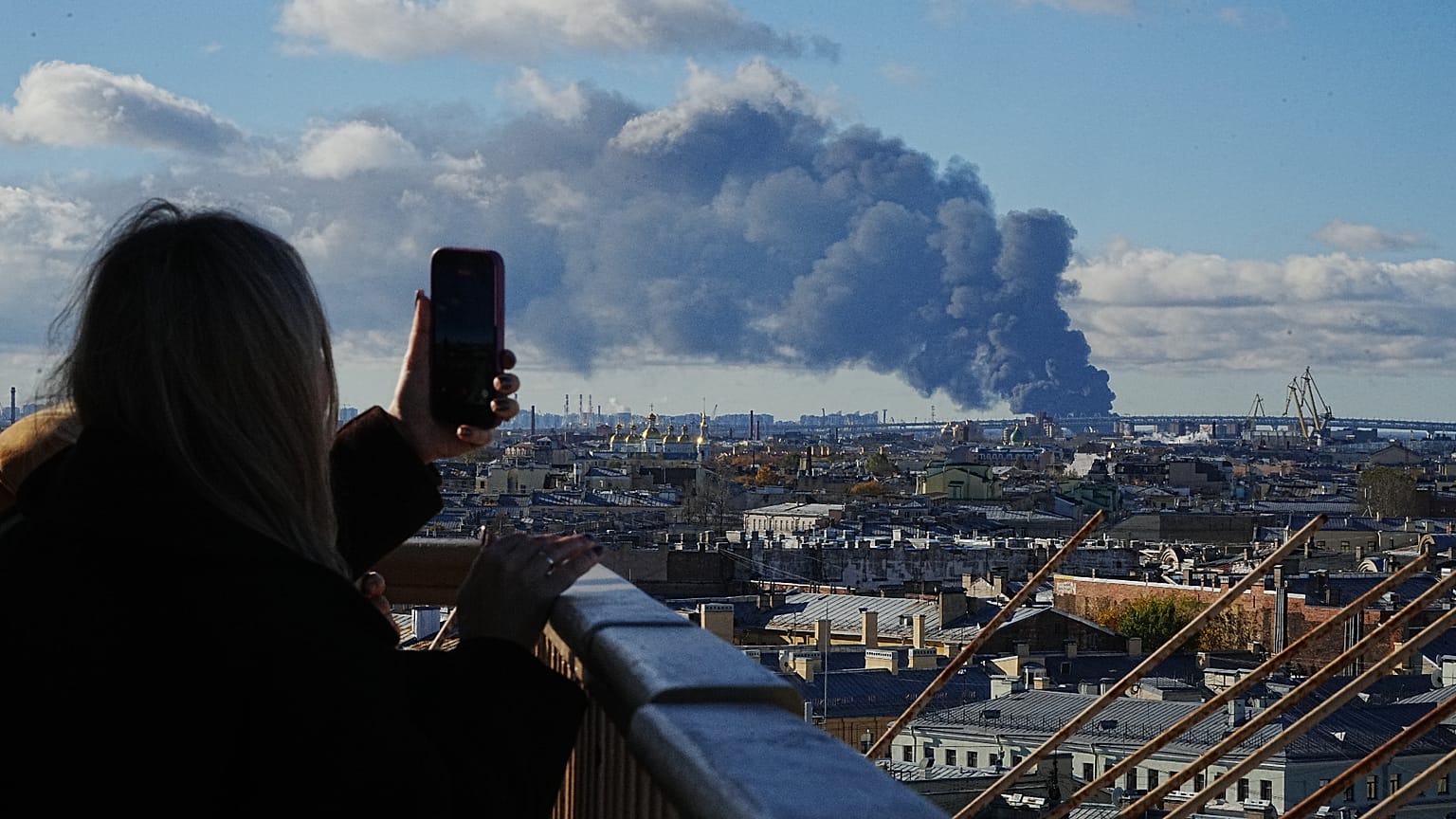
An overnight attack on St Petersburg killed at least one person and injured at least five, while hitting two oil facilities: the St Petersburg Oil Terminal and the Ruchyi oil depot. Fires were being extinguished, according to regional Governor Alexander Beglov. A logistics centre operated by Ozon and a data centre belonging to VKontakte were also targeted. Ozon said its staff had been evacuated and none was injured; VK said its services remained available despite user reports of outages. Damage was also reported to residential buildings, and Pulkovo Airport was temporarily closed.
The strikes come amid escalating attacks on energy infrastructure during Russia’s full-scale invasion of Ukraine. Ukraine had paused attacks on Russian oil facilities for three days after US President Donald Trump announced an “energy ceasefire,” but resumed them earlier this week, saying such strikes limit revenue supporting Moscow’s war effort. Kyiv had not commented on the latest attack. Ukrainian President Volodymyr Zelensky accused Russia of continuing to target Ukraine’s energy sector during the pause, saying it had been attacked 76 times since the announcement.
The article also describes tensions between Washington and Kyiv over a US deal to import Russian diesel, intended to reduce energy prices that have risen during the Iran war. Zelensky said the deal amounted to investing in Russia’s war effort. Trump’s temporary suspension of some sanctions on Russia has also drawn criticism, including from US Republicans.
Both countries have intensified attacks on energy infrastructure ahead of winter. The UN said the first two weeks of October had been the deadliest for Ukrainian civilians in years, while Russian attacks have left hundreds of thousands without power. Zelensky said tens of thousands remained without electricity and reported that Russia had launched nearly 2,700 drones, 1,700 aerial bombs and 66 missiles in the previous week, most aimed at energy facilities. Russia’s defence ministry, meanwhile, said it had shot down more than 1,000 Ukrainian drones over Russian territory overnight.
Entities: St Petersburg, St Petersburg Oil Terminal, Ruchyi oil depot, Alexander Beglov, Volodymyr Zelensky • Tone: analytical • Sentiment: negative • Intent: inform
18-10-2026
Ukrainian forces launched more than 1,000 drones across Russia in a major aerial bombardment that set fires at oil facilities in St. Petersburg. Local Governor Alexander Beglov said one person was killed and five wounded. The fires affected the Petersburg Oil Terminal and the Ruchi oil depot. Russian companies Ozon and VK also confirmed that a logistics centre and a data centre, respectively, were targeted. Russia’s Defence Ministry said it had destroyed 1,015 Ukrainian drones over 15 Russian regions, Crimea and the Black Sea.
The attacks occurred amid rising tensions between Kyiv and Washington. U.S. President Donald Trump has criticized Ukraine’s strikes on Russian oil infrastructure. The report also describes continued Russian attacks on Ukraine: a woman was killed and at least two people, including a six-year-old girl, were wounded in two strikes on Zaporizhzhia. Local officials said two apartment buildings, 18 cars and an educational institution were damaged.
The article places the strikes in the context of a proposed energy ceasefire announced by Trump on Oct. 11. Although he said Russia and Ukraine had agreed to the arrangement, he gave no details. Kyiv reported Russian attacks on energy sites afterward, and Ukraine said it resumed strikes on Russian oil following a three-day pause. President Volodymyr Zelenskyy said Russia had attacked Ukraine’s energy, oil and gas sectors 76 times in the week after Trump’s announcement. The account presents the attacks and the ceasefire’s uncertain status as part of the continuing war and strained relations between Ukraine and the Trump administration.
Entities: Volodymyr Zelenskyy, Donald Trump, Alexander Beglov, Mykhailo Semikin, St. Petersburg • Tone: analytical • Sentiment: negative • Intent: inform
18-10-2026
Ukraine remains unable to use satellite communications to support interceptor systems against fast-moving Russian drones, President Volodymyr Zelenskyy said, citing speed limits that cause Starlink connections in Ukraine to shut off above 161 km/h. Zelenskyy said Ukrainian officials were seeking answers from the U.S. military and SpaceX, but had been told the problem was technical. He contrasted the reported limits in Ukraine with higher speeds available in the European Union and said the disruptions had cost Ukraine drones and connectivity. Ukrainian diplomatic representative Denys Sienik later said Kyiv had not received confirmation that service had been fully restored.
U.S. Secretary of State Marco Rubio denied that Washington deliberately slowed Starlink and said Ukraine had never been given access to Starshield, a separate military product controlled by the U.S. government. He said Ukraine uses Starlink and that any service disruption was not ordered by the United States; he also said his understanding was that service had returned to its previous state. Elon Musk likewise said the U.S. government controls Starshield and decides how it is used. The article reports that Starshield is important to Ukrainian military communications and long-range drone operations, while Ukrainian officials and soldiers described sudden equipment problems beginning late Tuesday.
The dispute comes amid worsening tensions between Trump and Zelenskyy over the war and U.S. policy toward Russia. Trump denied restricting Ukraine’s Starlink access and said he did not believe Musk was responsible. Zelenskyy criticized the U.S. decision to waive restrictions on Russian diesel purchases, warning that further sanctions relief could follow. Trump said Russia and Ukraine had agreed to an energy ceasefire, but Zelenskyy said Russian attacks continued and that Ukraine would resume strikes on Russian refineries. Russia did not confirm agreeing to a ceasefire. Trump and Musk also made public remarks critical of Zelenskyy, while the White House said sanctions enforcement could hinder U.S. efforts to negotiate a peace agreement.
Entities: Volodymyr Zelenskyy, Donald Trump, Marco Rubio, Elon Musk, Denys Sienik • Tone: analytical • Sentiment: negative • Intent: inform
18-10-2026
Ukraine faces mounting uncertainty about its ability to sustain the war as President Donald Trump’s decisions raise doubts about U.S. support. The article focuses on a U.S.-Russia agreement allowing Russia to supply diesel to global markets, a waiver of sanctions provisions, and reported restrictions on Ukraine’s access to U.S. intelligence and SpaceX’s Starshield service. Ukrainian President Volodymyr Zelenskyy condemned the sanctions waiver, arguing that it benefits Russia, and warned that the diesel agreement could lead to further sanctions relief.
Experts cited by CNBC say the diesel shipment—4.8 million metric tons, or roughly ten days of U.S. demand and one day of global demand—is too small to make a noticeable difference to fuel prices. An initial phase could bring Russia up to $1.25 billion in export revenue over three months, but the estimated addition to federal budget revenue is less than $30 million per month, a small share of Russia’s income. Analysts therefore see the deal’s greater importance as political: it eases sanctions pressure and may encourage Moscow to believe that continued pressure can win further Western concessions without Russian compromises.
The article also describes the reported restrictions on Starshield, a military-focused Starlink service. Ukrainian officials say reduced service impaired the ability to intercept some Russian drones, and that Ukraine lacked advance warning of incoming ballistic missiles before civilian deaths. Serhiy Derkach said the restrictions encouraged Russia to intensify attacks on civilian infrastructure. The White House did not respond to CNBC’s request for comment, and Russian authorities did not respond to its requests either.
Analysts warn that the sanctions exemption lasts until April 2027 and could enable more Russian diesel exports than initially announced. They also say that using U.S. military or intelligence support to constrain Ukrainian strikes on Russian oil refineries could have more serious consequences, since those attacks have imposed economic costs on Moscow. Overall, the article presents the developments as a strategic and political setback for Ukraine and the Western coalition as winter approaches.
Entities: Donald Trump, Volodymyr Zelenskyy, Vladimir Putin, Sergey Aleksashenko, Maria Snegovaya • Tone: analytical • Sentiment: negative • Intent: analyze
18-10-2026
President Donald Trump has waived two major provisions of the Lindsey O. Graham Sanctioning Russia and Iran Act of 2026, citing the national interest of the United States. The law, signed in September, would have required the administration to raise duties on Russian imports by as much as 500% and impose tariffs of up to 100% on countries such as China and India that are major purchasers of Russian oil or gas. Trump’s executive order came two days before the provisions were due to take effect. It leaves sanctions imposed under earlier executive orders in place.
Ukrainian President Volodymyr Zelenskyy condemned the waiver, saying it benefits Russia and could encourage further sanctions relief. He had already warned that a separate U.S. decision to temporarily ease sanctions on Russian diesel exports could lead to additional exemptions, including for gas, individuals, and the banking and chemical sectors. That diesel measure, intended to ease a supply crunch linked to the war in Iran, runs through April 2027. Oil revenue is an important source of funding for Russia’s war against Ukraine.
The waiver drew praise from Kirill Dmitriev, Russian President Vladimir Putin’s economic envoy, who called it a historic moment and said U.S.-Russia economic dialogue and peacemaking efforts would continue. Democratic Senator Richard Blumenthal, a co-drafter of the sanctions legislation, sharply criticized Trump, arguing that the decision favors Russia and its war effort over Americans, Congress, and European allies.
The article notes that high fuel prices are politically sensitive ahead of the November 3 midterm elections, with Republicans holding narrow majorities in both chambers of Congress. It also describes Ukraine’s continuing reliance on U.S. military technology and intelligence, despite efforts to develop alternatives, and mentions reports that Ukraine restricted Starlink’s military application, Starshield. SpaceX CEO Elon Musk said the U.S. government and president were ultimately responsible for any limits on the network.
Entities: Donald Trump, Volodymyr Zelenskyy, Lindsey O. Graham Sanctioning Russia and Iran Act of 2026, Lindsey Graham, Richard Blumenthal • Tone: analytical • Sentiment: negative • Intent: inform
18-10-2026
Ukrainian forces attacked St Petersburg and Russia’s surrounding Leningrad region with drones overnight into Sunday, reportedly striking an oil terminal and a data centre operated by VK. Russian media described the assault as one of the largest on the area since Russia’s full-scale invasion of Ukraine began in February 2022. Local officials said one person was killed and 15 injured, while regional governor Aleksandr Drozdenko reported that 144 drones were shot down over Leningrad region. Falling debris caused fires and damage to 55 vehicles, and power outages affected two transformer substations in Yanino and around 50 apartment blocks, home to approximately 20,000 people. VK said its data centre was attacked but that its services continued to operate normally.
St Petersburg governor Aleksandr Beglov reported fires at civilian infrastructure sites in several city districts and at the St Petersburg oil terminal. No injuries were initially reported in the city. A fire also broke out at an Ozon warehouse, where employees were evacuated. Smoke rose over the warehouse complex, roads were closed, and Pulkovo airport suspended flights for more than seven hours before Russia’s aviation authority lifted restrictions at 10 a.m. Moscow time.
The article also reports Ukrainian President Volodymyr Zelenskyy’s account of Russian attacks on Ukraine’s energy infrastructure on Saturday night. He said substations in Vinnytsia, Zhytomyr, Khmelnytskyi and Odesa regions were targeted, leaving tens of thousands of families without power as repair crews worked to restore electricity. Zelenskyy also reported that attacks on residential buildings killed two people and injured 12. He said Russia had used nearly 2,700 attack drones, 1,700 aerial bombs and 66 missiles against Ukraine over the preceding week.
Entities: Volodymyr Zelenskyy, Aleksandr Drozdenko, Aleksandr Beglov, St Petersburg, Leningrad region • Tone: neutral • Sentiment: negative • Intent: inform
18-10-2026
US Secretary of State Marco Rubio said President Donald Trump’s decision to waive sanctions and tariffs targeting Russia would last 60 days, giving the administration time to assess the measures’ effects on the global and US economies. Rubio argued that restrictions affecting multiple countries must be considered alongside conflicts that are influencing energy prices, including the US war on Iran and Houthi attacks on Saudi Arabia. He said these conflicts were interacting and affecting oil and diesel prices as well as broader economies.
Trump described the waiver as a good decision for the United States and the world, although the article notes that it was unclear whether he had firmly settled on the policy. The move drew criticism from lawmakers in both parties after Trump signed an executive order exempting Russia from sanctions and tariffs that Congress had adopted the previous month. Those measures were intended to target Russian officials, oligarchs and financial institutions, and to give Trump authority to sanction major purchasers of Russian oil and gas. Their stated purpose was to restrict funding for supporters of Russian President Vladimir Putin and Russia’s war against Ukraine.
Republican Senators Thom Tillis and Ted Cruz criticized the decision. Tillis argued that the administration should address the Iran conflict rather than ease pressure on Putin, while Cruz called the waiver a mistake. The order followed an agreement between Trump and Putin allowing Russian diesel exports in exchange for easing sanctions. Rubio said Russian diesel would reach the global market regardless, with the key question being how much would go to the United States, where diesel is important to transport, agriculture and construction. Rising fuel costs are beginning to affect the US economy amid cost-of-living concerns and approaching midterm elections. Ukrainian President Volodymyr Zelensky warned that Washington might lift further sanctions and said the move rewards Putin.
Entities: Marco Rubio, Donald Trump, Vladimir Putin, Volodymyr Zelensky, Thom Tillis • Tone: analytical • Sentiment: negative • Intent: inform
18-10-2026
A large-scale Ukrainian drone attack on Saint Petersburg killed at least one person and injured five, according to the city’s governor, Alexander Beglov. Fires broke out at the Saint Petersburg oil terminal, the Ruchyi oil depot and industrial warehouses; 12 apartment blocks were damaged and flights at Pulkovo airport were restricted. Regional governor Alexander Drozdenko said Russian air defences shot down 144 drones, and state media described the attack as the largest on the city since Russia’s 2022 invasion. The social network VKontakte and retailer Ozon also reported damage to facilities in the city. In the wider Leningrad region, a substation strike left 20,000 people without power, and a woman and three children were hospitalised after debris caused a house fire and possible carbon monoxide poisoning.
The attack came amid disputes over a US-announced “energy ceasefire” that neither side had agreed to beforehand and which had quickly collapsed. Ukrainian President Volodymyr Zelensky said Russia had struck Ukrainian energy, oil and gas facilities 76 times since the announcement, and accused Moscow of leaving families without power ahead of winter. Russia also struck substations in four Ukrainian regions and killed two people at an agricultural enterprise in Volyn, he said. Zelensky described Ukrainian attacks on Russian refineries as retaliation for Russia’s campaign against Ukraine’s energy infrastructure.
The article places the strikes within strained US-Ukraine relations and stalled peace efforts. President Donald Trump has criticised Ukrainian refinery attacks over their effect on fuel prices and blocked a proposed package of new sanctions on Russia. Residents in Saint Petersburg described the attacks as part of a grim routine, while one said he feared fuel shortages. The report concludes that the conflict continues without a diplomatic breakthrough, with Zelensky urging allies to pressure Russia to make peace.
Entities: Saint Petersburg, Ukraine, Russia, Volodymyr Zelensky, Vladimir Putin • Tone: analytical • Sentiment: negative • Intent: inform
18-10-2026
Ukraine launched more than 1,000 drones across Russia in one of its largest aerial bombardments, setting fires at an oil export terminal and an oil depot in St. Petersburg. Local Governor Alexander Beglov said one person was killed and five were wounded. Russian officials reported intercepting or destroying 1,015 Ukrainian drones across 15 regions, Crimea and the Black Sea. A logistics center operated by retailer Ozon and a VK data center were also targeted, according to the companies. Separately, Russian strikes on Zaporizhzhia in southern Ukraine killed a woman and wounded at least two other people, including a six-year-old girl. Local officials reported damage to apartment buildings, cars and an educational institution.
The attacks unfolded amid disagreement over an “energy cease-fire” announced by US President Donald Trump on Oct. 11. Trump said Russia and Ukraine had agreed to halt attacks on energy infrastructure, but gave no details. Ukraine said Russia continued striking its energy sector, while Kyiv confirmed that it had resumed attacks on Russian oil infrastructure after a three-day pause. Ukrainian President Volodymyr Zelensky said Russia had attacked Ukraine’s energy, oil and gas sectors 76 times in the week following Trump’s announcement. He also said energy facilities in four regions had been hit overnight, leaving tens of thousands of families without power, and accused Moscow of seeking to cause a blackout.
Zelensky argued that Russia was not reciprocating the cease-fire and that pressure on Moscow was necessary for peace. Kremlin spokesperson Dmitry Peskov said Ukraine was resisting Russia’s invasion but could not alter the course of events. Trump, meanwhile, said he had not yet decided whether to impose further sanctions on Russia, after signing an executive order waiving planned restrictions on grounds of US national interest.
Entities: Ukraine, Russia, St. Petersburg, Petersburg Oil Terminal, Ruchi oil depot • Tone: analytical • Sentiment: negative • Intent: inform
18-10-2026
Ukrainian President Volodymyr Zelensky said that US intelligence sharing with Ukraine has resumed after a pause of about three days. In a prerecorded interview on NBC’s “Meet the Press,” he said the interruption had ended and thanked the US for restoring access. Zelensky said Ukraine did not receive warnings about Russian ballistic-missile attacks during the pause, emphasizing that the United States has intelligence capabilities other supporting countries do not. The gap, he said, weakened Ukraine’s ability to prepare for attacks.
The article notes that Ukraine has improved its ability to counter Russian drones and conduct drone strikes, but remains vulnerable to ballistic missiles, in part because of a reported shortage of Patriot interceptors. The intelligence pause reportedly occurred during tensions between Kyiv and Washington over Ukrainian attacks on Russian energy infrastructure. President Donald Trump had blamed those attacks for contributing to higher diesel and oil prices. Trump announced an energy ceasefire the previous week, which reportedly surprised Kyiv. Ukraine said it temporarily stopped strikes on Russian energy targets, but resumed them after Russia continued attacking Ukrainian energy sites.
The article also reports Ukrainian claims that access to a military version of Starlink was throttled, affecting Ukraine’s ability to intercept drones and launch its own drone attacks. It says accounts differ over who ordered the restriction and whether access has been fully restored.
Asked why Trump seemed more complimentary toward Russian President Vladimir Putin than toward Zelensky, the Ukrainian leader suggested his own bluntness may be a factor. Zelensky described himself as honest and supportive of the United States, called Putin “a killer,” and said he preferred clear partners to people who conceal their character behind a smile.
Entities: Volodymyr Zelensky, Donald Trump, Vladimir Putin, Rob Finnerty, Ukraine • Tone: analytical • Sentiment: negative • Intent: inform
18-10-2026
One person was killed and 15 injured in a Ukrainian drone attack targeting oil facilities, logistics operations and data-centre infrastructure in St Petersburg and Russia’s Leningrad region, according to local authorities. St Petersburg Governor Alexander Beglov reported fires at the St Petersburg oil terminal, an oil depot and industrial warehouses. Russian e-commerce company Ozon said its logistics hub in St Petersburg was on fire, while internet company VK reported that drones had attacked its data centre in the Leningrad region. VK said its services remained available to users as normal. Ukrainian drone producer Fire Point separately said the Ukrainian military had struck a VK data centre near St Petersburg.
Russia’s Defence Ministry said air-defence units had downed 1,015 Ukrainian drones over Russian regions overnight. The article also reports Moscow’s response through remarks attributed by TASS to Kremlin spokesman Dmitry Peskov. He said Russia was continually responding to Ukrainian attacks with systematic, large-scale strikes. Asked how Russia might respond to the attack on St Petersburg, Peskov said Ukraine’s resistance would not change the course of events.
The report presents accounts from local authorities, affected companies, a Ukrainian drone producer and Russian government sources. It describes the human toll and damage or fires at several sites, but provides no further details about the identity of the person killed, the injured, the extent of damage, or the circumstances of Russia’s next response.
Entities: St Petersburg, Leningrad region, Ukraine, Russia, Alexander Beglov • Tone: neutral • Sentiment: negative • Intent: inform
18-10-2026
US Secretary of State Marco Rubio said President Donald Trump’s 60-day pause on sweeping sanctions and tariffs targeting Russia would give the administration time to analyse their effects on the global and US economies. Rubio noted that the restrictions would affect multiple countries, and argued that conflicts involving Iran and Yemen were adding pressure to energy prices and economic conditions worldwide.
Trump signed an executive order on Oct 16 exempting Russia from measures Congress had adopted in September, shortly before they were due to take effect. The law included sanctions on Russian officials, oligarchs and financial institutions, and authorised sanctions on major buyers of Russian oil and gas. Its stated purpose was to restrict funding for supporters of Russian President Vladimir Putin and Russia’s war on Ukraine.
The decision drew criticism from lawmakers in both parties. Republican senators Thom Tillis and Ted Cruz called the move irresponsible and a mistake, respectively. Tillis argued that Trump should address the Iran situation rather than ease pressure on Putin. Trump defended the decision as beneficial to the US and the world, though the article says it was unclear whether he had made a final decision about the measures.
The pause followed a deal between Trump and Putin allowing Russian diesel exports in exchange for easing sanctions. With higher diesel prices linked to the Iran war affecting the US economy and voters concerned about the cost of living ahead of November’s midterm elections, Rubio said the key question was how much of the fuel would reach the US. Ukraine’s President Volodymyr Zelensky warned that the US might lift further sanctions and said Trump’s action “rewards” Putin.
Entities: Donald Trump, Marco Rubio, Vladimir Putin, Volodymyr Zelensky, Thom Tillis • Tone: analytical • Sentiment: neutral • Intent: inform
18-10-2026
A Russian presidential envoy described US President Donald Trump’s decision to suspend a new package of sanctions on Russia as a “historic moment.” Trump signed an executive order waiving sanctions and tariffs aimed at Russian energy revenues on Friday, shortly before they were due to take effect. The decision followed a public clash with Ukrainian President Volodymyr Zelensky and has prompted speculation that Trump is increasingly aligning with Moscow, nearly five years into Russia’s war against Ukraine. Kirill Dmitriev, an envoy for President Vladimir Putin, said the suspension of the Lindsey Graham Act was significant and argued that the proposed measures would have harmed the US economy and global markets. The legislation targeted Russia’s energy and defence sectors, Putin and other senior officials. The report says the Kremlin and Putin had not yet commented on Trump’s decision, which it characterizes as a diplomatic victory for Russia. It also recalls that Western countries imposed extensive sanctions after Russia launched its invasion in 2022. Separately, the article describes Russian attacks on Ukrainian infrastructure. Russia carried out an overnight assault on targets including ArcelorMittal’s steelworks in Kryvyi Rih, which had suspended operations in September after earlier missile strikes, and vessels using the port of Odesa. Russia’s defence ministry said its forces also struck electricity infrastructure in Zhytomyr, a steel plant in Zaporizhzhia, a cargo vessel in the Black Sea that it alleged was carrying military supplies, and a vehicle-repair plant in Lutsk. The article reports the ministry’s claims without independent verification in the text.
Entities: Donald Trump, Vladimir Putin, Kirill Dmitriev, Volodymyr Zelensky, United States • Tone: analytical • Sentiment: negative • Intent: inform
18-10-2026
Ukrainian President Volodymyr Zelenskyy says restrictions affecting Ukraine’s military use of SpaceX’s Starshield satellite communications network appear to be intentional, rather than the result of technical problems. Starshield is described as a militarised version of Starlink. Zelenskyy said internet speed limitations remain in place across Ukraine and have significantly slowed connections. To investigate whether the issue was caused by equipment or network failures, Ukraine sent vehicles using Starshield to Europe for speed tests. Those tests found the system operated normally there, while the restrictions remained within Ukraine. Zelenskyy therefore characterized the limitations as a planned operation.
The report also describes Ukraine’s reliance on Starshield for military operations. The system helps Ukrainian air defences intercept jet-powered drones launched by Russia against Kyiv and other cities, and supports the targeting of artillery strikes. Restrictions could consequently affect communications and capabilities relevant to Ukraine’s defence.
The article presents differing statements about who is responsible for the limits. US President Donald Trump said he had not ordered restrictions on Ukraine’s access to the system and did not think SpaceX Chairman Elon Musk had done so either. Musk, however, said on Wednesday that limits on speed or usage are decided by the US military and ultimately by the president. The report does not establish who initiated the restrictions or provide an explanation for them. Its central point is Zelenskyy’s assessment that the limitations are deliberate, based in part on the contrast between normal operation in Europe and restricted speeds in Ukraine.
Entities: Volodymyr Zelenskyy, Donald Trump, Elon Musk, Ukraine, Kyiv • Tone: analytical • Sentiment: neutral • Intent: inform
18-10-2026
Al Jazeera’s Newsfeed reports that a suspected Ukrainian drone swarm attacked the port area of St Petersburg, Russia. The article’s description says video posted on social media shows multiple explosions and fires around the port. Witnesses say an oil terminal and a data centre were hit. The item was published on 18 October 2026.
The report is brief and provides limited detail. It does not identify the witnesses, explain how the video was verified, or independently confirm the reported damage or the identity of those responsible. Its wording therefore presents the drone attack as suspected and attributes the claims about the oil terminal and data centre to witnesses. No information is given about casualties, the extent of damage, the response to the incident, or any official statements from Russian or Ukrainian authorities. The available content focuses on the reported explosions and fires and the alleged targets, rather than offering broader military or political analysis. Overall, it is a concise breaking-news video description about a reported attack on infrastructure in St Petersburg, with key details framed as preliminary claims rather than fully verified findings.
Entities: St Petersburg, Russia, Ukraine, Al Jazeera, Ukrainian drone swarm • Tone: neutral • Sentiment: negative • Intent: inform
18-10-2026
The United States has resumed sharing intelligence with Ukraine after a brief interruption, according to Ukrainian President Volodymyr Zelenskiy. In comments published on Sunday, Zelenskiy said the sharing had been interrupted and then “de-blocked,” adding that it was working again and that Ukraine was thankful. The intelligence is important to Ukraine’s ability to defend itself against Russian missile strikes, particularly fast-moving ballistic missiles fired in waves at Ukrainian cities. The report says Ukraine has relied on US intelligence to detect those missiles.
Zelenskiy made the remarks in an interview with NBC’s Meet the Press. His account follows statements earlier in the week by US President Donald Trump, who said Washington was continuing to share intelligence. That assertion came despite Ukrainian officials’ reports that some Russian strikes had occurred without warning. The article does not specify how long the pause lasted, why the interruption occurred, or what changes led to the resumption. It reports Zelenskiy’s confirmation that intelligence-sharing is now functioning again, while noting the differing public accounts around the interruption and the warnings Ukraine received ahead of strikes.
Entities: United States, Ukraine, Volodymyr Zelenskiy, Donald Trump, Russia • Tone: neutral • Sentiment: neutral • Intent: inform