17-10-2026
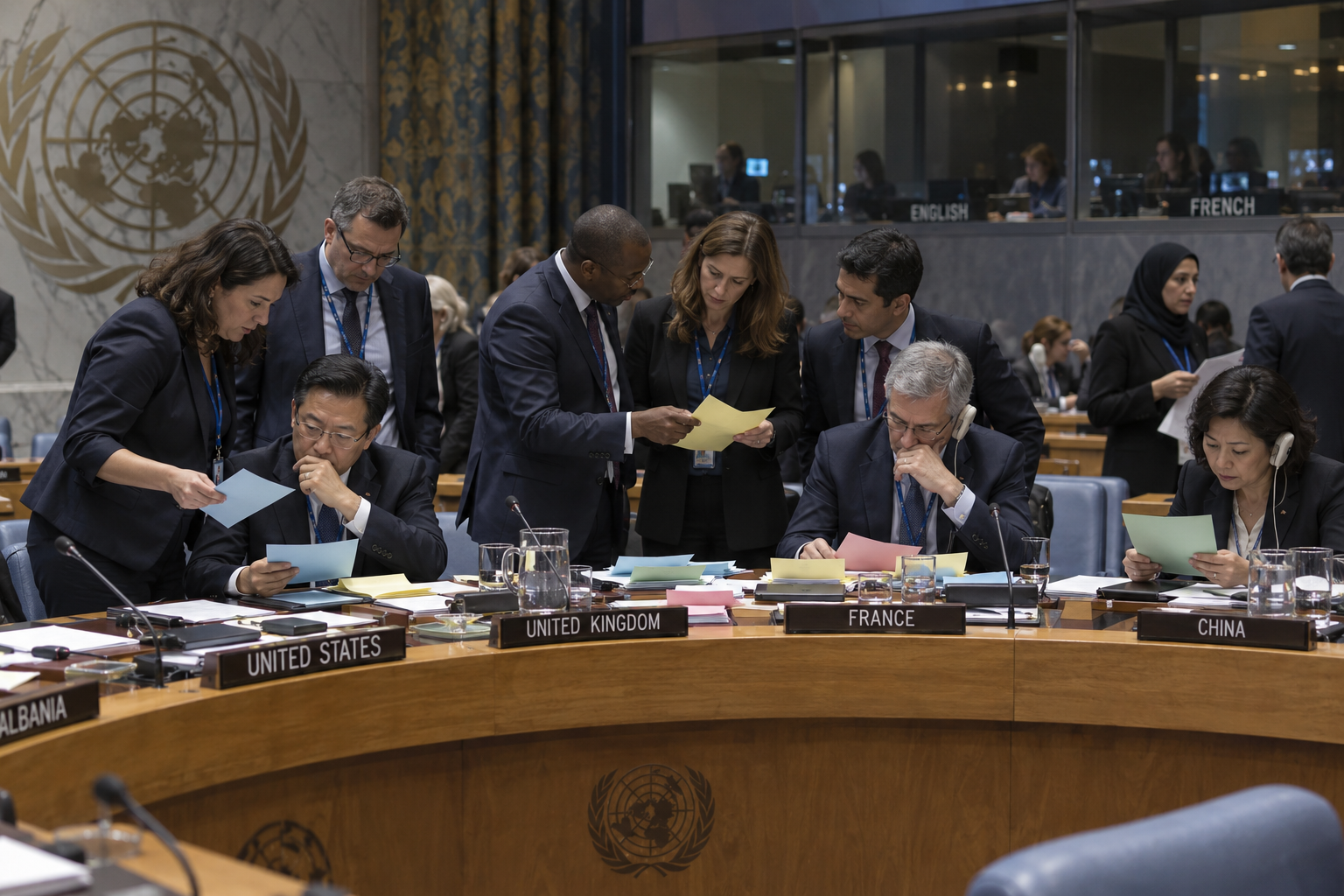
All seven candidates seeking to become the next United Nations secretary-general received at least one “discourage” vote from a permanent member of the Security Council in Friday’s informal straw poll, according to a diplomat. Such a vote functions as a veto. The poll marked the first time the five permanent members—Britain, China, France, Russia and the United States—used colored straws to signal vetoes, while the 10 elected members used plain markers. Costa Rican candidate Rebeca Grynspan received the most “encourage” votes and again led the field, but also drew five “discourage” votes, including two from permanent members. US media reports say Washington opposes all seven contenders. US envoy Mike Waltz declined to comment on those reports, saying the United States wants “the best.” He also noted that countries are entitled to put forward additional candidates. Possible entrants mentioned by diplomats include Nickolay Mladenov, Lana Nusseibeh and Feridun Hadi Sinirlioglu. Other candidates in the race are Carolyn Rodrigues-Birkett, Rafael Grossi, Macky Sall, Ivonne A-Baki, Maria Fernanda Espinosa and Olara Otunnu. The next secretary-general will succeed António Guterres, whose second five-year term ends on December 31, 2026. A candidate needs at least nine votes on the 15-member Security Council and must avoid a veto by any of its five permanent members. A successful candidate is then submitted to the General Assembly for confirmation. The anonymous straw poll, created in the early 1980s to help resolve a deadlock, has continued despite criticism of its lack of transparency. Each council member labels candidates “encourage,” “discourage” or “no opinion.” By tradition, the position rotates among regions, suggesting a Latin American candidate should be selected this time, though candidates from Africa are also in the race.
Entities: United Nations secretary-general selection, UN Security Council, Security Council straw poll, Rebeca Grynspan, Mike Waltz • Tone: analytical • Sentiment: neutral • Intent: inform
17-10-2026
Senegal’s former president Macky Sall has withdrawn from the contest to become the next United Nations secretary-general. He announced his decision on Saturday, a day after an informal UN Security Council straw poll in which all seven candidates received at least one “discourage” vote, which can amount to a veto when cast by a permanent member. Sall said he hoped instead to help a consensus candidate emerge.
Candidates need at least nine “encourage” votes from the Council’s 15 members. A negative vote from any of the five permanent members—Britain, China, France, Russia or the United States—effectively blocks a candidate. In an earlier poll in July, Sall received six votes in favour, seven against and two abstentions. The polls are nonbinding, and further rounds are expected before a final ballot in the autumn.
Costa Rica’s Rebecca Grynspan remained the frontrunner after Friday’s poll, with seven positive votes, although she also received five “discourage” votes, including two from permanent members. Sall’s candidacy had a complicated path: Senegal initially did not support it, and Burundi nominated him. Senegalese President Bassirou Diomaye Faye later backed Sall following a meeting between them in July.
The article notes the tradition that the UN’s top post rotates among regions. On that basis, Latin America is due to provide the next leader, and most of the seven candidates are from the region. Sall’s departure leaves Uganda’s Olara Otunnu as the only African still in the contest.
Entities: Macky Sall, United Nations, UN Security Council, Senegal, Bassirou Diomaye Faye • Tone: analytical • Sentiment: neutral • Intent: inform
17-10-2026
Costa Rica’s Rebeca Grynspan remained narrowly ahead in the sixth UN Security Council vote to select the next Secretary General, but she received two discouraging votes from the Council’s five permanent members. Argentina’s Rafael Grossi and Guyana’s Carolyn Rodrigues-Birkett each received eight encouraging and six discouraging votes, also facing opposition from two permanent members. The use of colour-coded ballots for the first time made clear which votes came from the permanent members and which came from the elected members, giving this round a sharper indication of the candidates’ prospects than earlier polls.
The close results have raised uncertainty about whether any of the leading candidates can secure agreement among the permanent members. Minh-Thu Pham, a former adviser to Kofi Annan, said the narrow differences could leave a path open for new candidates, though she cautioned that an entrant might not resolve the deadlock. None of the seven candidates in the poll has withdrawn, and no new candidates have entered the race.
US Ambassador Mike Waltz said Washington wants a Secretary General focused on the UN’s core work of maintaining international peace and security. He downplayed regional rotation and gender as selection priorities, saying the US wants the most qualified candidate. Pham said it was encouraging that Waltz thought the Council could conclude the process before year’s end, but warned that time for new candidates to gain support is running out.
Pham also cautioned that agreement among the US, China and Russia might not be enough to secure broader Council support. She contrasted the current political environment with 2006, when Washington and Beijing helped rally support for Ban Ki-moon, and warned that a rushed process could prompt resistance from the General Assembly if candidates were not given the usual informal hearings. The article concludes that the race remains unsettled and that many factors must align before the Council can choose a successor.
Entities: Rebeca Grynspan, Rafael Grossi, Carolyn Rodrigues-Birkett, Jose Mulino, Minh-Thu Pham • Tone: analytical • Sentiment: neutral • Intent: inform