17-09-2026
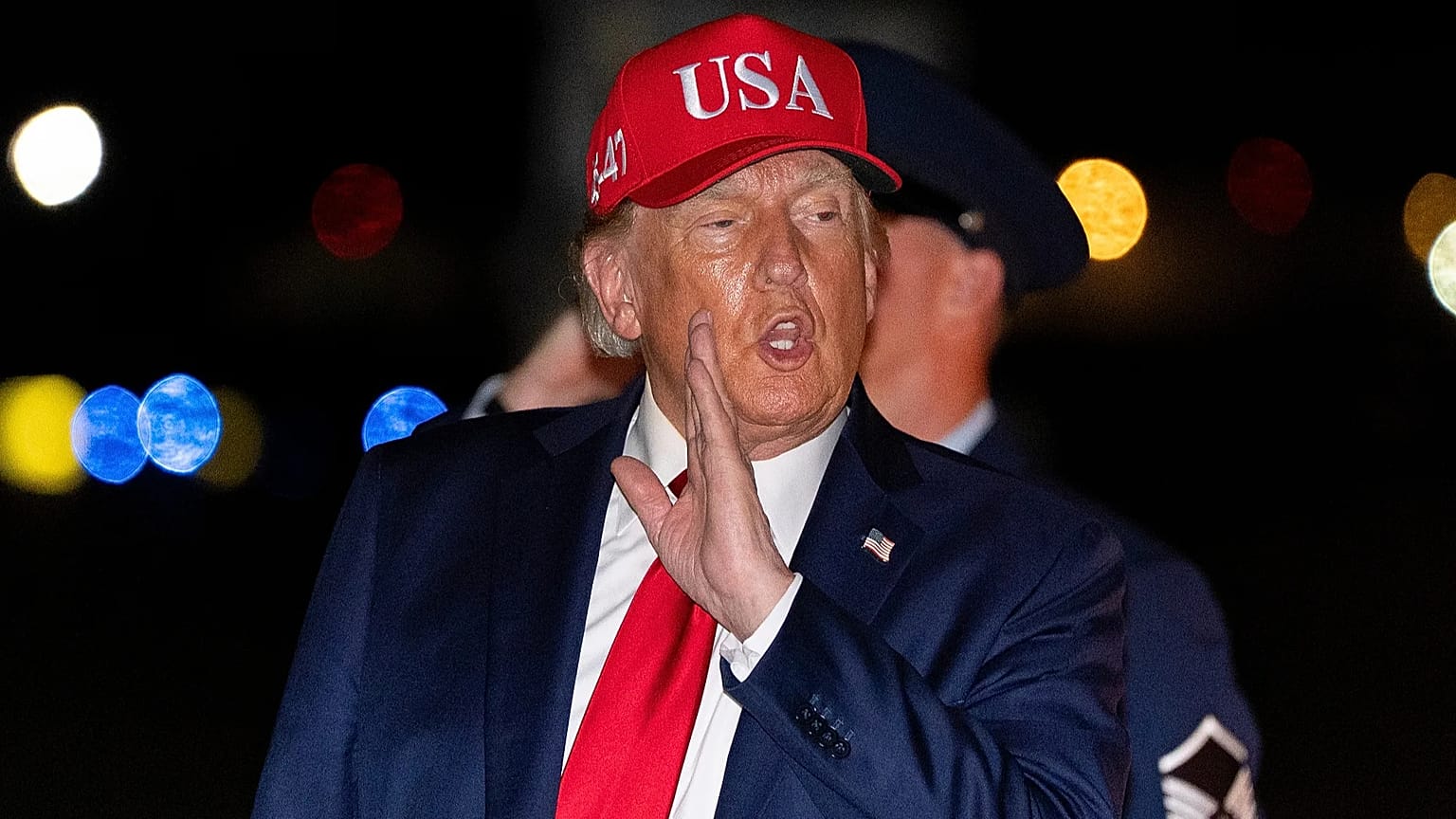
US President Donald Trump has warned the European Union that it could face substantial new tariffs if it proceeds with a proposal to give Canada “associate member” status. Speaking to reporters in Charlotte, North Carolina, Trump said the US response would depend on the EU’s intentions. If the proposal were made in good faith, he said, it would be acceptable, but if it were intended to harm the US, Washington would impose “very heavy tariffs.” He also suggested that the US could stop trading with Europe in several areas.
Trump dismissed the possibility of Canada joining the EU as “laughable” and described Canada as a “terrible trade partner.” His comments followed European Commission President Ursula von der Leyen’s proposal to explore associate membership for Canada, which would make it the EU’s first country with such a status. The initiative comes as Ottawa seeks closer economic and strategic ties with Europe while relations with Washington deteriorate.
The meaning of associate membership remains uncertain. The status is not currently provided for under EU treaties, and von der Leyen did not specify the rights or obligations it would entail. Any formal proposal would also require approval from the EU’s member states.
Canadian Prime Minister Mark Carney’s office welcomed the prospect of a stronger alliance with Europe but did not explicitly endorse associate membership. Carney has previously referred to Canada’s goal as a “unique alliance” rather than EU membership. Canada and the EU are already discussing expanded cooperation in trade, technology, defence, energy, critical minerals and the Arctic. More detailed discussions are expected at a Canada-EU summit in Montreal next month. The broader effort reflects Canada’s attempt to reduce its economic dependence on the US amid an escalating trade dispute between the two neighbours.
Entities: Donald Trump, Mark Carney, Ursula von der Leyen, United States, Canada • Tone: analytical • Sentiment: negative • Intent: inform
17-09-2026
The article reports that European Commission President Ursula von der Leyen has endorsed exploring a new form of “associate membership” for Canada, potentially making it the European Union’s first country to receive such a status. Speaking to the European Parliament, von der Leyen said the EU and Canada share similar positions on democracy, artificial intelligence, climate change, geopolitics, Ukraine, defence, raw materials and supply chains. She argued that closer partnerships are increasingly important as the international rules-based system comes under pressure.
The proposal comes as relations between Canada and the United States deteriorate. Trade negotiations between Ottawa and Washington collapsed the previous month, followed by new tariffs and renewed tension over President Donald Trump’s repeated suggestion that Canada could become the 51st US state. Trump called the EU-Canada proposal “laughable” and threatened severe tariffs or an end to trade with Europe if he considered it hostile.
The article notes that associate membership does not currently exist in the EU and that creating such a status could take years. Some EU countries may prefer to expand existing trade and defence agreements, while ten member states have still not ratified the EU’s free-trade agreement with Canada. Canadian Prime Minister Mark Carney, who attended the speech, has described the relationship as a potential “unique alliance.”
Von der Leyen also proposed a European Security Council involving countries including the UK, Ukraine, Norway and Canada. The body could provide emergency consultations during security crises, but some governments fear it might duplicate or compete with NATO. Other proposals addressed AI regulation, business bureaucracy, children’s social-media use, the cost of living and emergency responses to mass migration. Human-rights groups warned that tighter migration measures could undermine asylum protections, particularly for vulnerable people.
Entities: Ursula von der Leyen, Mark Carney, Donald Trump, European Union, Canada • Tone: analytical • Sentiment: neutral • Intent: inform
17-09-2026
U.S. President Donald Trump threatened to impose severe tariffs on the European Union or suspend trade with the bloc if it proceeds with a proposal to make Canada the EU’s first associate member. Trump called the idea “laughable” and criticized Canada as a poor trading partner, while saying his response would depend on whether he viewed the move as hostile.
The proposal was announced by European Commission President Ursula von der Leyen during her annual State of the European Union address. She said Brussels wanted to elevate its relationship with Canada through cooperation in manufacturing, defense industries, technology, energy, artificial intelligence and Arctic affairs. Associate membership is not currently a formal status under EU treaties, meaning any arrangement would need to be created and approved by the bloc’s member states.
The initiative represents a notable change in the EU’s position. Germany had proposed associate membership for Ukraine in May, but the bloc had responded cautiously. Canada, meanwhile, has expressed interest in a distinctive security and economic relationship with Europe without seeking full EU membership. Ottawa has increasingly pursued alternatives to dependence on the United States after months of escalating trade tensions and the collapse of bilateral negotiations.
Trump has already imposed a 50% tariff on Canadian goods and plans to prohibit Canadian dairy, alcohol and automotive imports later in September, prompting retaliatory measures from Ottawa. Canada already has a free-trade agreement with the EU that eliminates tariffs on about 99% of goods, although the agreement still requires ratification by 10 EU countries. It is also the only non-European participant in the EU’s SAFE defense-procurement initiative.
The article notes that new U.S. tariffs on European goods would test a trade framework reached by Washington and Brussels last year, which established a 15% tariff ceiling on most EU exports to the United States. The EU has not said whether it will advance the associate-membership plan despite Trump’s threat, and several member states were reportedly surprised by von der Leyen’s announcement.
Entities: Donald Trump, Ursula von der Leyen, Mark Carney, European Union, Canada • Tone: analytical • Sentiment: negative • Intent: inform
17-09-2026
US President Donald Trump has threatened the European Union with severe economic retaliation if it proceeds with a proposal to make Canada an associate member of the bloc. European Commission President Ursula von der Leyen announced the initiative during her annual address to the European Parliament in Strasbourg, describing it as a way to open the EU to Canada. Because the EU currently has no such associate-membership arrangement, the relationship would have to be developed from scratch.
Trump said the proposal could constitute a “hostile act.” He warned that the United States could impose “very serious tariffs” or halt trade with Europe in response, while also dismissing the idea of Canada joining the EU as “laughable.” His remarks add a new point of tension to already strained US-EU and US-Canada relations.
Canada’s interest in closer ties with Europe comes amid a major deterioration in its relationship with Washington during Trump’s second term. Canada was among the early targets of Trump’s tariff policy. Trade negotiations between Ottawa and Washington broke down the previous month, after which Trump imposed additional measures and Canadian Prime Minister Mark Carney vowed to retaliate.
The article also places the dispute in the wider context of deteriorating transatlantic relations. Trump’s push for US control of Greenland, an autonomous territory within the Kingdom of Denmark, has further alarmed European governments. The EU itself was affected by Trump’s broad tariff campaign, although Washington and Brussels later reached an agreement intended to reduce those tariffs. The proposed Canadian associate membership therefore reflects both Canada’s search for economic and political alternatives and the broader uncertainty surrounding relations between North America and Europe.
Entities: Donald Trump, Ursula von der Leyen, Mark Carney, European Union, Canada • Tone: analytical • Sentiment: negative • Intent: inform
17-09-2026
US President Donald Trump has threatened to impose “very serious tariffs” or cut trade with the European Union after European Commission President Ursula von der Leyen proposed making Canada the bloc’s first associate member. Trump called the idea of Canada joining the EU “laughable” and described Canada as a “terrible trade partner,” while warning that Washington would respond harshly if the proposal had hostile intentions.
Von der Leyen presented the proposal during her annual State of the European Union address, with Canadian Prime Minister Mark Carney attending. She said the EU and Canada would expand their existing free trade agreement, the Comprehensive Economic and Trade Agreement (CETA), through an “Alliance for the Future.” The partnership would cover trade and economic security as well as advanced manufacturing, technology, defense production, the Arctic, energy, critical minerals, batteries, artificial intelligence, quantum computing and cybersecurity.
The initiative reflects efforts by both Canada and the EU to reduce their dependence on the United States amid worsening trade and political tensions under Trump. Canada sends roughly 70% of its exports to the US, but Carney has sought a “unique alliance” with Europe and argued that middle powers should cooperate rather than negotiate separately with dominant countries. Ottawa has retaliated against US tariffs and rejected terms it believes would undermine Canadian sovereignty.
Canada is not seeking full EU membership, which officials say would require surrendering too much sovereignty. Instead, it wants the closest possible relationship with the bloc while preserving its independence. Canada has already joined the EU’s defense procurement program and has discussed associate membership with European officials. The EU, meanwhile, has reached a separate trade arrangement with Washington that caps tariffs on most EU exports at 15%, while Europe has removed tariffs on US industrial goods. The dispute risks further straining transatlantic trade and accelerating Canada’s strategic shift toward Europe.
Entities: Donald Trump, Ursula von der Leyen, Mark Carney, Jonathan Wilkinson, Canada • Tone: analytical • Sentiment: negative • Intent: inform
17-09-2026
US President Donald Trump has threatened to impose severe trade restrictions on the European Union after EU Commission President Ursula von der Leyen proposed making Canada the bloc’s first associate member. Trump said on Wednesday that the arrangement could be viewed as a “hostile act” and warned that Washington might respond with “very serious tariffs” or halt trade with Europe across multiple sectors.
Von der Leyen raised the idea shortly before Canadian Prime Minister Mark Carney was scheduled to address the European Parliament. The proposal would represent a significant expansion of the EU’s relationship with Canada, although the article provides no details about the possible terms or institutional structure of associate membership.
The initiative comes as Canada and the European Union seek to strengthen ties and reduce their dependence on the United States amid what the article describes as an aggressive approach by the Trump administration. The timing highlights growing tensions between Washington and its traditional partners, as Canada and the EU explore closer political and economic cooperation.
Trump dismissed the proposed partnership as “laughable” when questioned by reporters. Nevertheless, he indicated that he would regard the plan seriously if it were judged hostile to US interests. His warning introduces the possibility of a new trade confrontation between the United States and the EU, involving tariffs or restrictions on commercial exchanges.
The article presents the proposal and Trump’s response as an emerging diplomatic and economic dispute. It does not report that tariffs or a trade cutoff have already been implemented, but it emphasizes the potential consequences of the US president’s warning as Canada prepares to address the European Parliament.
Entities: Donald Trump, United States, Canada, European Union, Ursula von der Leyen • Tone: urgent • Sentiment: negative • Intent: inform