16-09-2026
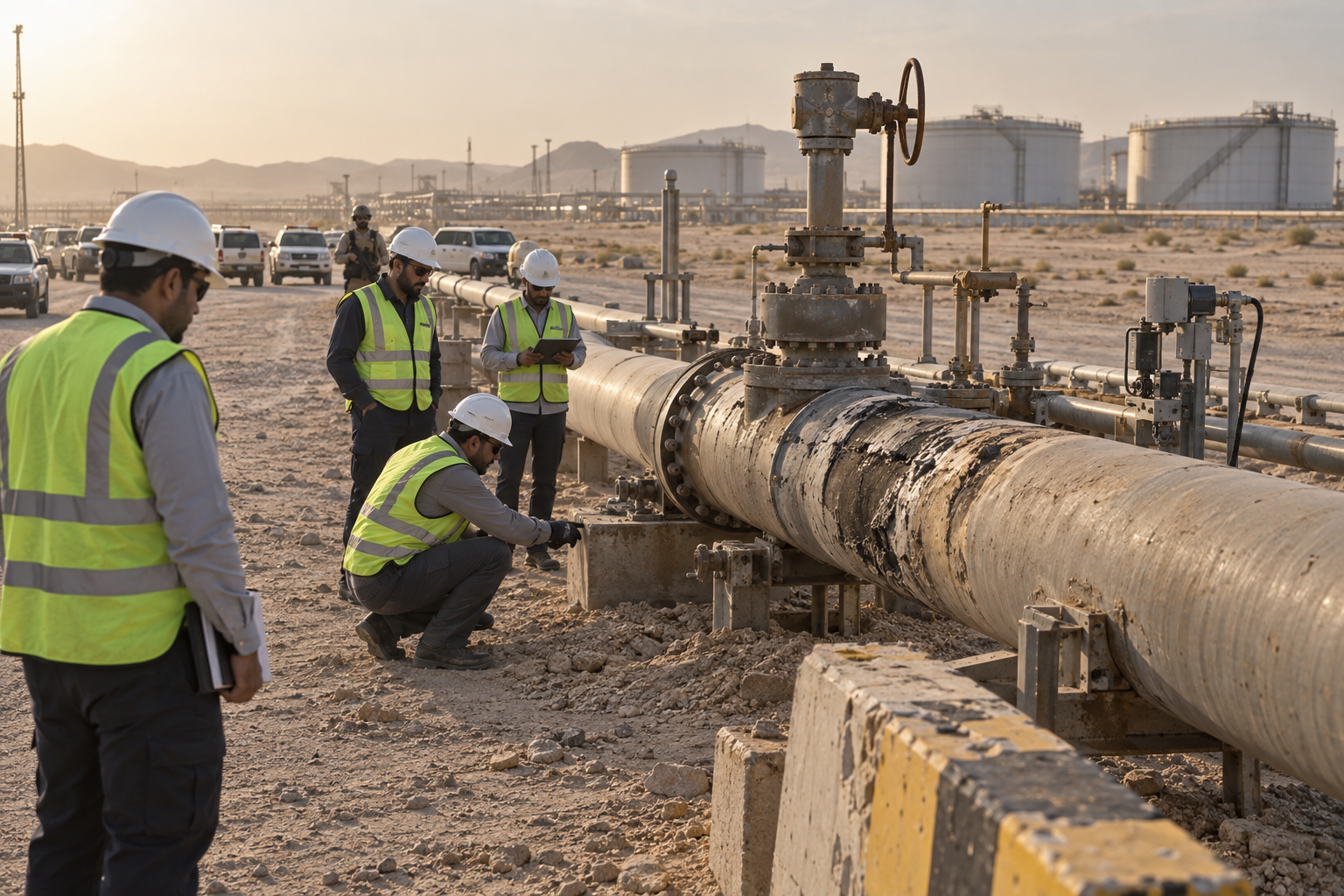
A drone attack on Saudi Arabia’s East-West oil pipeline, launched from Iraqi territory, has intensified pressure on Iraqi Prime Minister Ali al-Zaidi to demonstrate that armed factions operate under state authority. The strike threatened a major share of global oil supplies and pushed Brent crude above $108 per barrel, while also raising the prospect of renewed US and Saudi military action against Iraqi groups.
No organization has claimed responsibility. The Islamic Resistance in Iraq, an umbrella of pro-Iranian factions, denied involvement, while Iraqi authorities said they found launch traces in Maysan province and seized a drone-launch platform. Iraqi officials suspect a splinter faction, but analysts believe the attack may have been carried out by an established faction or a cell linked directly to Iran’s Islamic Revolutionary Guard Corps, using a front group to obscure responsibility.
Al-Zaidi responded by dismissing a regional commander, creating an investigative committee, closing border crossings with Iran and deploying troops. However, critics view these measures as largely symbolic, noting that similar attacks have occurred before and that enforcement against powerful factions has repeatedly failed. Attempts to search or arrest members of Harakat al-Nujaba were blocked or reversed, although a Kataib Hezbollah member was sentenced for kidnapping a US journalist.
The attacks also threaten Iraq’s improving relationship with Saudi Arabia, including potential investment, energy and transport projects. Some Iran-aligned factions oppose Baghdad’s outreach to Riyadh and efforts to diversify Iraq’s economy and reduce reliance on Iran.
The article argues that al-Zaidi’s central problem is not a lack of military capability but a lack of political confidence and reliable support from Washington and Gulf partners. Although Iraq’s Counter Terrorism Service may be capable of confronting faction leaders, officials fear that the US would not back the government in a major internal confrontation. As the US-led coalition prepares to withdraw, armed groups appear increasingly confident that they can resist state control without facing decisive consequences.
Entities: Ali al-Zaidi, Iraq, Saudi Arabia’s East-West oil pipeline, Maysan province and the Duwayrij River, Islamic Resistance in Iraq • Tone: analytical • Sentiment: negative • Intent: analyze
16-09-2026
The article reports that Saudi Arabia has cancelled some oil deliveries to Europe following drone attacks that shut down the East-West pipeline, a major export route carrying oil toward the Red Sea. The disruption represents a rare interruption to Saudi oil shipments and has reportedly triggered concern in global energy markets. According to the report, buyers are rushing to find alternative supplies after the pipeline blast affected the flow of Saudi crude.
The article presents the incident as a significant energy and geopolitical development because Saudi Arabia is a major oil producer and Europe relies on international markets to maintain fuel and industrial supplies. However, the brief report does not provide details about who carried out the drone attacks, the exact location of the blast, the extent of the pipeline damage, or how long the shutdown is expected to last. It also does not specify how much oil was cancelled, which European customers were affected, or what alternative producers buyers are approaching.
The report emphasizes the immediate market reaction, describing global panic and a rush for replacement supplies. Its focus is therefore on the disruption to oil deliveries and the potential implications for energy security rather than on a detailed account of the attack itself. The publication date is listed as 16 September 2026, and the report is presented by Al Jazeera under its conflict and news coverage.
Entities: Saudi Arabia, Europe, East-West pipeline, Red Sea, Drone attacks • Tone: urgent • Sentiment: negative • Intent: inform
16-09-2026
The article argues that Iran-backed Houthi rebels have become the most serious new threat to global oil supplies after seizing control of key positions near Yemen’s Bab al-Mandeb Strait and allegedly attacking Saudi Arabia’s 745-mile East-West oil pipeline. The disruption has endangered Saudi Arabia’s ability to export crude, contributing to a rise in oil prices to $108 per barrel.
According to the article, the Houthis exploited divisions within the anti-Houthi coalition. Yemen had maintained a fragile truce since 2022 between the Houthis and the internationally recognized government backed by Saudi Arabia. UAE-supported forces had also helped contain the rebels, but the alliance fractured in December after Saudi forces bombed weapons shipments intended for those groups. The United Arab Emirates subsequently withdrew from the conflict.
The breakdown was particularly damaging because UAE-backed forces controlled Perim Island and coastal ports near the Bab al-Mandeb Strait, a strategically important 20-mile-wide waterway. A rapid Houthi offensive reportedly captured those positions, allowing the group to threaten Saudi shipping. The strait had become especially important after Iran closed the Strait of Hormuz, leaving Saudi Arabia dependent on the longer route through the Suez Canal.
The article says Saudi Arabia has faced criticism for responding too slowly and allegedly failing to provide requested air support. Crown Prince Mohammed bin Salman reportedly asked President Trump for US military assistance, but Trump declined to launch new attacks. Saudi oil exports were already falling, with shipments from the kingdom’s main Red Sea port down nearly half to 2.5 million barrels per day. After the pipeline attack, industry sources estimated that Yanbu had only five to seven days of exports available.
Entities: Houthi rebels, Saudi Arabia, Yemen, Iran, Bab al-Mandeb Strait • Tone: urgent • Sentiment: negative • Intent: warn