16-07-2026
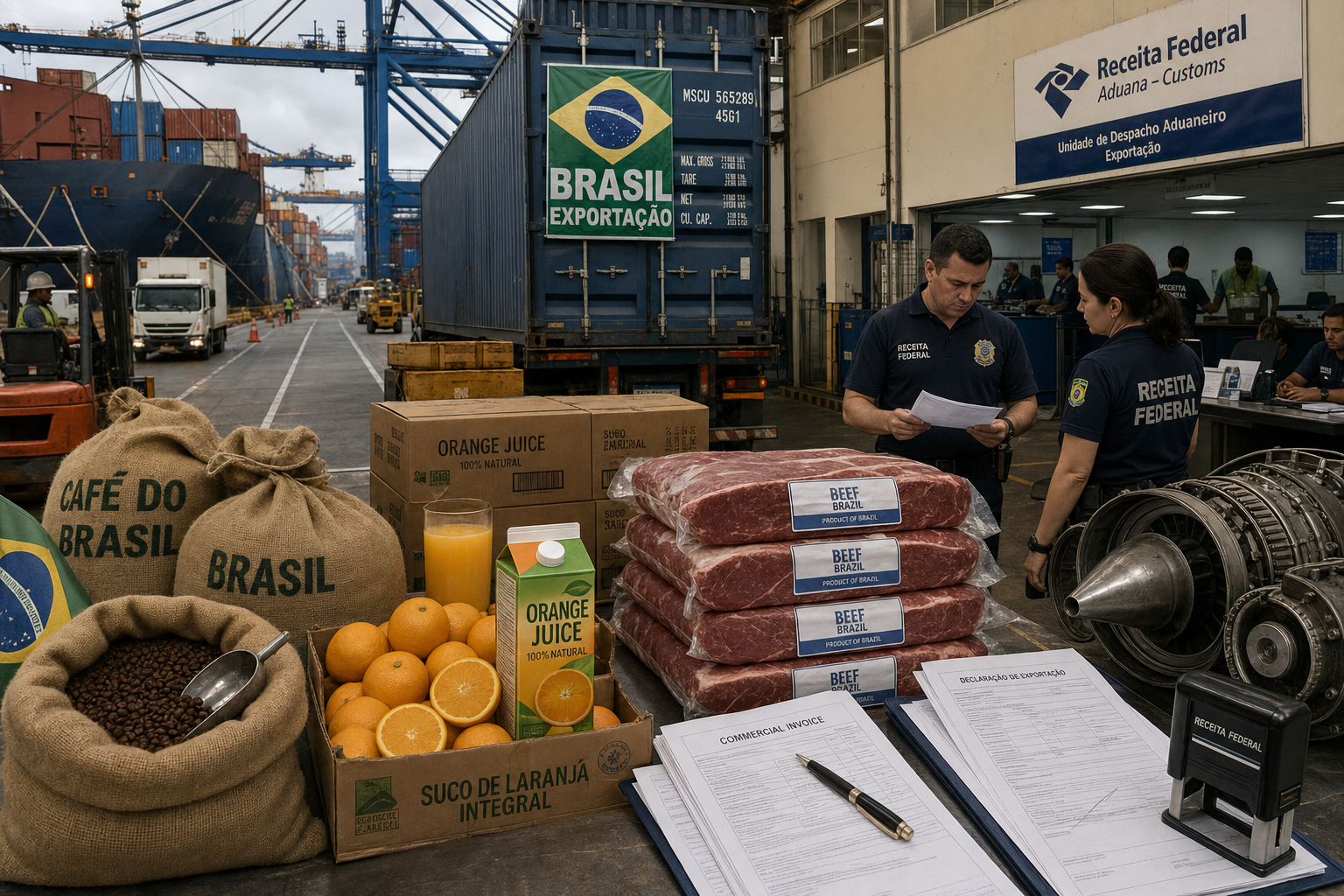
The article reports that the United States will impose 25% tariffs on imports from Brazil beginning July 22, following a yearlong investigation by the Office of the U.S. Trade Representative into what the administration describes as unfair Brazilian trade practices. The White House says the tariffs target goods for which there are limited U.S. substitutes or where restrictions would be less likely to disrupt supply chains. Exemptions include coffee, beef, oranges and orange juice, some oil and gas products, and aerospace parts and components.
U.S. Trade Representative Jamieson Greer said Brazil’s practices have harmed U.S. workers and producers, citing issues such as alleged censorship pressure on U.S. technology companies, weak anti-corruption enforcement, and land-use practices tied to illegally logged land. Senior administration officials said the tariffs are being applied strategically under Section 301 of the Trade Act of 1974 and argued that the decision is based on long-standing trade concerns rather than politics.
Brazilian President Luiz Inácio Lula da Silva strongly rejected the move, calling it unjustified and arguing that U.S. government statistics show a large cumulative U.S. surplus in trade with Brazil over the past 15 years. The article also notes the broader legal and political context: Trump’s earlier tariffs under a different statute were limited by a Supreme Court ruling in February, and tensions with Brazil had been influenced by Trump’s previous 50% tariff on Brazil tied to the prosecution of Jair Bolsonaro. Despite those tensions, relations between Trump and Lula briefly appeared to improve earlier in the year. The piece places the new tariffs within an evolving trade dispute marked by legal challenges, selective exemptions, and competing claims about fairness and political motivation.
Entities: Brazil, United States, White House, U.S. Trade Representative (USTR), Jamieson Greer • Tone: analytical • Sentiment: neutral • Intent: inform
16-07-2026
The article reports that the United States will impose a 25% tariff on most imports from Brazil starting July 22, following a yearlong Section 301 investigation into what Washington describes as unfair trade practices. The probe focused on several Brazilian policies and practices, including pressure on U.S. technology companies to remove political content and suspend accounts, preferential tariffs for Mexico and India, weak intellectual property enforcement, and barriers in Brazil’s ethanol market. Some goods, including beef, orange juice, aircraft and parts, and energy products, are exempt. The move comes after a U.S. Supreme Court decision in February struck down President Donald Trump’s earlier 50% tariff on Brazilian goods, prompting the administration to pursue new tariff authority through Section 301. U.S. officials argued the measures are needed to protect American workers and companies, while Secretary of State Marco Rubio accused President Luiz Inacio Lula da Silva’s government of failing to negotiate in good faith. The article also notes that a separate U.S. forced-labor probe could lead to an additional 12.5% duty, potentially increasing pressure on Brazilian exports. Beyond trade, the dispute has become entangled in Brazil’s October presidential election, with Lula accusing Senator Flavio Bolsonaro of helping spark the tariffs, an allegation Bolsonaro denies. The story highlights escalating economic and political tensions between the two countries.
Entities: United States, Brazil, Section 301 of the Trade Act of 1974, Donald Trump, Luiz Inacio Lula da Silva • Tone: analytical • Sentiment: negative • Intent: inform
16-07-2026
The article reports that the United States will impose a 25% tariff on some Brazilian imports following a yearlong investigation by the Office of the U.S. Trade Representative into what Washington says are “unfair” Brazilian trade practices. According to USTR Jamieson Greer, the investigation found that Brazilian policies harm U.S. interests in areas including digital trade, preferential tariffs, and ethanol market access. The tariffs are set to take effect on July 22 and include exemptions for certain goods considered important to supply chains or not produced in the United States, such as some raw materials, pharmaceuticals, and coffee.
The article also highlights the political dimension of the dispute. Secretary of State Marco Rubio said on X that President Luiz Inácio Lula da Silva and his government have not negotiated in good faith, framing the tariffs as a consequence of Brazil’s refusal to make a deal. The piece notes that the measures follow earlier trade threats from President Donald Trump, including a previously announced 50% tariff that was later dropped, as well as accusations tied to Brazil’s treatment of former President Jair Bolsonaro. The story places the move in the broader context of Section 301 of the Trade Act of 1974, a tool usually aimed at countries with large trade surpluses with the U.S., while pointing out that the U.S. actually ran a trade surplus with Brazil last year. The article ends by noting that the situation is still developing.
Entities: United States, Brazil, 25% tariffs, U.S. Trade Representative (USTR), Jamieson Greer • Tone: analytical • Sentiment: neutral • Intent: inform
16-07-2026
The Trump administration announced that it will impose a new 25 percent tariff on Brazil beginning next Wednesday, saying Brazil has engaged in unfair trade practices against the United States. The tariff will cover thousands of Brazilian products, though key exports such as oil and gas, beef, coffee, oranges, and aircraft parts will be exempt. Brazilian ethanol will be taxed. The move comes after a long and turbulent trade dispute between the two countries: the administration previously imposed and then partially rolled back tariffs on Brazil, and later lost a legal battle when the Supreme Court ruled its earlier use of an emergency law unlawful. The new tariff will instead rely on Section 301, the trade authority used to investigate and respond to alleged unfair practices. The article frames the tariff as part of a broader pattern in which the Trump administration has used trade policy against Brazil for both economic and political reasons. It notes that last year’s tariffs were partly intended to help Jair Bolsonaro, Trump’s ally and Brazil’s former president, while the current dispute also intersects with Brazilian domestic politics ahead of October’s election. Brazil’s government rejected the measure, calling it unjustified, and said it would seek countermeasures and a WTO resolution. The piece also highlights U.S. accusations involving Brazil’s digital payment system, intellectual property enforcement, corruption, social media takedowns, and trade preferences for other countries, while noting that U.S. exports to Brazil exceed imports and that Brazil has improved deforestation rates in recent years.
Entities: Donald Trump, Brazil, The Trump administration, Section 301, Supreme Court • Tone: analytical • Sentiment: negative • Intent: inform