15-07-2026
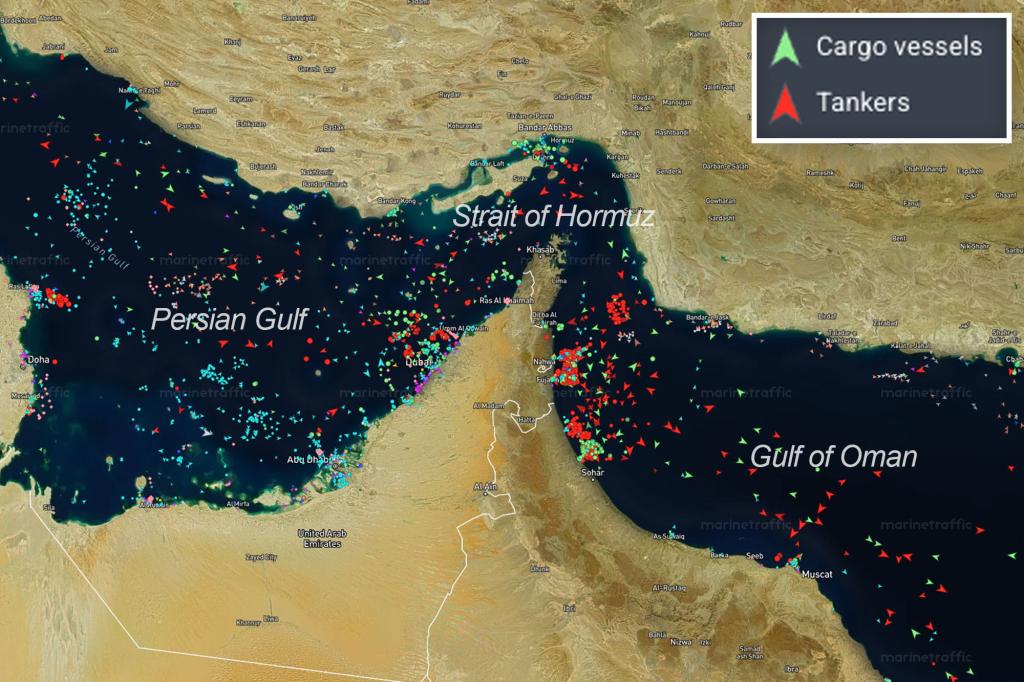
The article argues that the uneasy ceasefire between Iran and the United States is weakening again, with the Strait of Hormuz emerging as the central fault line. Although a tentative agreement reached last month was meant to prevent a return to full-scale conflict, both sides interpret its vague language very differently. Iran believes the deal gives it authority over the strategic waterway, while the US sees it as requiring Tehran to ensure free passage for global shipping and energy supplies. This disagreement has been sharpened by recent attacks on vessels, parliamentary moves in Tehran to formalize Iran’s role, and growing resistance from regional states such as Qatar, Oman, and the United Arab Emirates.
The article emphasizes that the dispute is not only about maritime administration but also about leverage, deterrence, sanctions, and Iran’s broader strategy after war and assassinations. Iran views control of the strait as both a bargaining chip and an economic lifeline if sanctions remain in place. At the same time, the piece highlights internal Iranian divisions over whether to use battlefield gains to negotiate or to keep pressing the confrontation. On the US side, political and economic pressures may still push Washington back toward talks, but the core nuclear issue has been overshadowed by the immediate crisis over the strait. Overall, the article presents the situation as fragile, ambiguous, and highly prone to renewed escalation, while still leaving open a narrow possibility of compromise through mediation.
Entities: Strait of Hormuz, Iran, United States, Mohammad Bagher Ghalibaf, Lyse Doucet • Tone: analytical • Sentiment: neutral • Intent: analyze
15-07-2026
The article argues that Donald Trump’s rapid reversal on a proposed 20% fee for ships passing through the Strait of Hormuz highlights how difficult it remains for him to bring the Iran war to a close. After initially announcing that vessels transiting the strait, including those of U.S. allies, would have to pay a surcharge to cover American security costs, Trump quickly abandoned the idea and shifted to a broader offer of trade and investment deals with Gulf states. The piece frames this as the latest sign that the conflict—now months old and still marked by fragile, uneven ceasefire efforts—is not nearing a stable resolution.
The article explains that while U.S. military actions have damaged Iranian targets and reduced some of Iran’s defense capabilities, they have not forced Tehran to surrender or relinquish its ability to disrupt shipping in Hormuz. A memorandum of understanding that once looked like a path to de-escalation is described as effectively dead after renewed U.S. strikes and the resumption of a blockade on Iranian shipping. Iran has responded with attacks on U.S. allies and commercial shipping, pushing traffic through the strait toward a standstill.
The piece emphasizes the political and economic risks Trump faces. Escalation could raise oil prices and inflation, creating domestic backlash and weakening Republicans ahead of midterm elections, while a negotiated settlement may still leave a hostile Iranian regime in place. Analysts quoted in the article suggest the conflict is becoming a war of attrition, with neither side able to secure a decisive victory, and Trump lacking a clear path forward beyond temporary adjustments and ad hoc bargaining.
Entities: Donald Trump, Iran, United States, Strait of Hormuz, Gulf allies • Tone: analytical • Sentiment: negative • Intent: analyze
15-07-2026
The article reports a major escalation in tensions between the United States and Iran, with President Donald Trump threatening to strike Iranian bridges and power plants if Tehran does not return to negotiations. The warning came amid continued exchanges of fire for a fourth straight day and alongside renewed U.S. military actions against Iran’s ability to threaten commercial shipping in the Strait of Hormuz. Trump also reversed an earlier proposal to impose a 20% fee on shipping through the strait, replacing it with an expectation of large trade and investment deals from Gulf states and a renewed U.S. blockade of Iranian ports.
The piece explains the strategic importance of the Strait of Hormuz, where shipping traffic has slowed sharply and oil prices have risen because of attacks on commercial vessels. It details accusations from U.S. and Gulf officials that Iran has targeted civilian ships and crew members, while Iran says it is defending itself and denies pressure will force it back to talks. The article also cites international law concerns, including warnings that deliberate attacks on civilian infrastructure could amount to war crimes under the Geneva Conventions. Overall, the story frames a rapidly worsening confrontation with military, economic, and diplomatic consequences for the region and the global energy market.
Entities: Donald Trump, Iran, United States, Strait of Hormuz, Fox News • Tone: urgent • Sentiment: negative • Intent: inform
15-07-2026
The article explains why the United States has struggled to assert full control over the Strait of Hormuz amid escalating conflict with Iran. President Trump has tried a range of approaches, including airstrikes, naval blockades, threats, and negotiations, to force Iran to reopen the vital shipping corridor and restore tanker traffic. But experts say that fully securing the strait would likely require far more U.S. military power than currently deployed, potentially including a large naval armada and even tens of thousands of troops on Iranian territory. Iran’s long-standing preparation for asymmetric warfare, including dispersed weapons production, hidden launch sites, drones, missiles, and decentralized military command, makes it difficult to neutralize its ability to disrupt shipping. Meanwhile, commercial vessels are already avoiding traditional routes because of mines, threats, and attacks, forcing them into alternative paths under U.S. overwatch. Analysts warn that even verbal threats from Iran can deter shipping, and that the Trump administration has not shown a willingness to commit the level of force required for a sustained escort-and-clearance operation. The piece frames the Strait of Hormuz as a test of wills and a costly strategic dilemma, with consequences for oil prices, U.S. political liability, and the risk of broader war.
Entities: Strait of Hormuz, Iran, United States, Donald Trump, U.S. Navy • Tone: analytical • Sentiment: neutral • Intent: inform
15-07-2026
President Trump formally notified Congress that U.S. military action against Iran had restarted on July 7, following the collapse of a monthslong ceasefire and renewed exchanges of fire between the two countries. In the letter, addressed to Senate President pro tempore Chuck Grassley, Trump described the latest U.S. strikes as limited and designed to minimize civilian casualties, saying they targeted Iranian military sites that threaten U.S. forces and commercial shipping. The administration also announced a renewed blockade on Iranian ports and vessels.
The article explains that, under the War Powers Resolution, presidents must notify Congress within 48 hours of initiating hostilities and that military action is generally limited to 60 days without congressional authorization. The Trump administration had previously argued that hostilities ended after an earlier ceasefire, but critics in Congress say that interpretation is legally invalid and that the administration is trying to restart the clock by treating the conflict as stopped and then resumed. Democrats in both chambers have pushed resolutions to restrain further action, and some Republicans have resisted doing so in order to allow diplomacy more time. With renewed strikes and a less optimistic view of negotiations, the future of congressional reaction remains uncertain. The piece highlights a growing constitutional and political fight over executive war powers, the legality of the U.S. campaign against Iran, and the risk of continued escalation in the Strait of Hormuz and beyond.
Entities: Donald Trump, Chuck Grassley, Adam Schiff, Thomas Massie, Iran • Tone: analytical • Sentiment: negative • Intent: inform
15-07-2026
The article reports on President Trump’s brief threat to impose a 20% fee on cargo transiting the Strait of Hormuz, a move shipping and logistics experts said would be illegal and could cost the largest vessels tens of millions of dollars per shipment. Analysts warned the proposal would set a dangerous precedent by normalizing politically imposed tolls on an international waterway, potentially undermining maritime law and encouraging other countries to do the same. Lloyd’s List, Hapag-Lloyd, and maritime law experts argued there is no legal basis for charging vessels simply for exercising transit passage rights through an international strait. The article also notes that the announcement initially drove oil prices higher and came amid ongoing conflict involving Iran, which had already disrupted traffic through the strait. Later the same day, Trump reversed course, saying the fee would be replaced by trade and investment deals from Gulf states, though no details were provided. The piece situates the controversy within broader disputes over the Strait of Hormuz, U.S.-Iran tensions, and the legal and economic risks of treating a critical global shipping lane as a toll road.
Entities: Donald Trump, Strait of Hormuz, United States, Iran, Gulf states • Tone: analytical • Sentiment: neutral • Intent: inform
15-07-2026
The article examines whether Donald Trump is truly serious about ending the ceasefire with Iran after a new round of violence and rhetoric. It argues that, despite Trump’s public threats, the confrontation may be part bluster and part bargaining, with talks still expected to resume in Islamabad. The piece focuses less on Trump’s consistency than on the transformation inside Iran following the death of Ayatollah Ali Khamenei. His funeral becomes a political spectacle revealing a regime shifting away from clerical rule and toward a more militarized, ultranationalist order dominated by the Islamic Revolutionary Guard Corps (IRGC).
According to the article, Iran’s new leadership is eager to project strength and use military pressure rather than diplomacy. The IRGC appears to be taking a more central role, while clerics and traditional religious figures seem sidelined. The funeral procession, spread over multiple cities and even into Iraq, symbolized this new configuration of power. It also showed Iran’s regional reach, especially through allied militias in Iraq and its renewed intimidation of Gulf states.
Yet the article argues that two major constraints could still restrain Iran’s generals: military risk and economic weakness. American strikes show the possibility of escalation, while Iran’s fragile economy, sanctions, poverty, unemployment, and damaged industrial base limit how much punishment the regime can absorb. The article concludes that national renewal and relief for ordinary Iranians would require accommodation with enemies, not simply more defiance and war.
Entities: Donald Trump, Iran, Ayatollah Ali Khamenei, Islamic Revolutionary Guard Corps (IRGC), Strait of Hormuz • Tone: analytical • Sentiment: negative • Intent: analyze
15-07-2026
The article reports that Iran may be preparing to challenge a newly reimposed U.S. naval blockade on Iranian ports by deploying vessels in the Persian Gulf and Strait of Hormuz that could help it evade American military enforcement. According to maritime intelligence firm Windward, 23 Iranian vessels in the Strait are behaving suspiciously—using fraudulent flags, switching off transponders, or otherwise operating as “dark vessels” in a shadow fleet. The piece explains that Iran has long relied on sanctions-evasion tactics such as secretive cargo swaps, hidden ownership structures, and shell companies to keep exporting oil, much of it to China. Several of the tracked vessels are carrying crude, including tankers that appear to be using circuitous routes through regional oil terminals to disguise the origin of their cargo. The article places this in the context of Iran’s dependence on oil revenue, noting that the previous U.S. blockade reduced exports but did not eliminate them, and that it worsened Iran’s already severe inflation and food inflation. The story suggests the next phase of the blockade could become a significant test of Iran’s ability to keep its oil flowing under renewed U.S. pressure.
Entities: Iran, United States, Strait of Hormuz, Persian Gulf, David Goldman • Tone: analytical • Sentiment: negative • Intent: inform
15-07-2026
CNN’s live updates describe a rapidly escalating conflict between the United States and Iran, with Washington launching a fourth consecutive night of strikes, restoring a naval blockade of Iranian ports, and intensifying economic sanctions. President Donald Trump renewed threats to hit Iranian civilian infrastructure, including power plants and bridges, and said the strikes would continue until he decides they are sufficient. The article reports regional spillover effects as Jordan said it intercepted three missiles launched from Iran, while Iran claimed—without independent verification—that it hit US military targets in Jordan, Kuwait, and Bahrain. CNN notes that some Iranian claims have been contradicted or could not be confirmed, and the US military has been asked to comment.
The live blog also highlights the strategic uncertainty surrounding a possible ground campaign. Trump floated the possibility in a Fox News interview but gave no specifics, while analysts explained the high risks and logistical challenges of an amphibious assault on Iranian territory. The article says US forces in the region include the 11th Marine Expeditionary Unit aboard the USS Boxer Amphibious Ready Group and the Army’s 82nd Airborne Division Immediate Response Force, both of which could be used in rapid operations.
In parallel with the military actions, the US Treasury announced additional sanctions targeting Mohammad Hossein Shamkhani, a major figure in Iran’s oil-smuggling and “shadow fleet” networks tied to both Tehran and Moscow. The piece says the sanctions reflect a broader economic pressure campaign meant to weaken Iran’s ability to finance its war effort. Overall, the article portrays a widening confrontation involving missile exchanges, naval restrictions, sanctions, and uncertainty about whether the conflict could expand further.
Entities: United States, Iran, Donald Trump, Jordan, Kuwait • Tone: urgent • Sentiment: negative • Intent: inform
15-07-2026
President Donald Trump escalated his public threats against Iran, saying the United States would intensify airstrikes and eventually target the country’s power plants and bridges unless Tehran agrees to negotiate. In an interview with Fox News reporter Trey Yingst, Trump said the U.S. would continue to strike Iran “very hard” over several days and then, beginning the following week, expand the campaign to infrastructure targets such as power plants and bridges. He framed the strategy as a pressure tactic intended to force the Iranian regime to come “to the table” and accept a deal.
The article places these remarks in the context of an ongoing military campaign in which U.S. forces have been bombing coastal parts of Iran for four straight days and the U.S. Navy has reimposed a blockade in the Strait of Hormuz. Trump argued that military strength is the only effective way to negotiate with Iran and portrayed the Iranian leadership as still resistant but weakening. He compared Iran to a boxer that must be “beat up” more before surrendering, and suggested that certain hardline figures in the Iranian government are preventing a diplomatic settlement.
The piece also references Trump’s prior threats against Iranian infrastructure, including earlier warnings tied to the Strait of Hormuz, and notes that those threats previously contributed to a short-lived cease-fire. Trump said a strike on Kharg Island, a major Iranian oil-export hub, was possible but unlikely, and stated he did not currently plan to send U.S. ground troops, implying that other actors could handle any ground campaign if needed. Overall, the article describes a sharp escalation in U.S. pressure on Iran through both military action and public rhetoric aimed at coercing negotiations.
Entities: Donald Trump, Trey Yingst, Iran, Tehran, Strait of Hormuz • Tone: urgent • Sentiment: negative • Intent: inform
15-07-2026
The article argues that President Trump is struggling to impose his will on Iran, revealing the limits of his improvisational, force-driven foreign policy. After initially proposing to charge tolls on ships in the Strait of Hormuz and then reversing himself within a day, Trump appears uncertain about how to proceed in a war that has dragged far beyond its expected duration. The piece portrays the conflict as a political and strategic quagmire: the cease-fire has broken down, negotiations are stalled, and Trump has not developed a coherent military or diplomatic plan. Analysts cited in the article say he underestimated Iran’s regime resilience, overestimated the power of American coercion, and lacked a robust national security process to challenge his assumptions.
The article places this struggle in the broader historical context of U.S. presidents finding the Middle East difficult to control. It contrasts Trump’s success pressuring allies elsewhere with his inability to bend Iran, and it suggests that Iran may be able to outlast him politically and economically. The piece notes that Trump has returned to threats of force, a blockade, and possible strikes on Iranian nuclear sites, but that public opposition and the risk of wider fallout constrain his options. Some experts argue the Iran war may damage Trump’s legacy, while others say it will remain secondary unless Americans begin dying. Overall, the article presents the war as a test of Trump’s power, judgment, and strategic discipline, one that he is currently failing.
Entities: Donald Trump, Iran, Strait of Hormuz, Tehran, Vali Nasr • Tone: analytical • Sentiment: negative • Intent: analyze
15-07-2026
Iran has escalated its maritime threats amid rising tensions with the United States and its allies, warning that it may close additional strategic sea lanes beyond the Strait of Hormuz. In a statement reported by Iran’s state news agency, the Islamic Revolutionary Guard Corps (IRGC) said that if Iran is denied access to export routes, it could deny access to others as well, framing regional energy exports as something that should either be shared by all or denied to all. The article says analysts believe Iran is signaling that it could use its Houthi allies in Yemen to target the Bab el-Mandeb Strait, the narrow passage linking the Red Sea and the Gulf of Aden. Such a move would threaten one of the world’s most important energy and shipping corridors, affecting Saudi oil exports and global maritime traffic.
The piece also notes that a senior Houthi official warned that the group was prepared to close the Bab el-Mandeb if Saudi Arabia continued military action in Yemen. That official reportedly said such a step could drive oil prices to as high as US$200 a barrel. The threat comes as Houthi forces resumed attacks after accusing Saudi Arabia of bombing an airport under their control, breaking a four-year truce. Overall, the article portrays a widening regional confrontation in which maritime chokepoints and energy infrastructure are becoming central leverage points in the conflict between Iran, its allies, and the United States and its regional partners.
Entities: Iran, Islamic Revolutionary Guard Corps (IRGC), Strait of Hormuz, United States, naval blockade • Tone: urgent • Sentiment: negative • Intent: inform
15-07-2026
US President Donald Trump escalated tensions with Iran by reinstating a naval blockade on Iranian ports and threatening strikes on key energy and infrastructure targets if Tehran does not return to negotiations. The move came amid renewed hostilities between the United States and Iran, including drone and missile attacks reported by both sides, alleged Iranian attacks on commercial shipping in the Strait of Hormuz, and US strikes inside Iran. Iran said it had closed the Strait of Hormuz again, intensifying fears over one of the world’s most important energy chokepoints.
The article describes a rapidly widening conflict that has already disrupted global shipping and pushed Brent crude oil to its highest level since mid-June, with benchmark prices up 15 per cent in a week. The Strait of Hormuz, through which about a fifth of global oil and gas shipments passed before the war, remains central to the crisis. Trump said energy targets would be hit next if Iran refused to negotiate, while his administration also resumed strikes aimed at degrading Iranian capabilities used against commercial shipping. Iran, meanwhile, insisted that military pressure and economic blockade would not force it back to the table.
The fighting has spilled across the region, involving reported attacks in Jordan, Bahrain, Kuwait, and near Bandar Abbas and Qeshm Island, and has raised concerns in Washington, the Gulf, and the wider international community about a broader regional war, civilian harm, and global economic fallout. The article also notes criticism of Trump’s earlier idea of imposing a transit fee on shipping through the strait, which he later dropped in favor of seeking Gulf investment deals. Overall, the piece portrays a volatile and dangerous escalation with significant geopolitical and economic consequences.
Entities: Donald Trump, Iran, United States, Strait of Hormuz, Iranian ports • Tone: urgent • Sentiment: negative • Intent: inform
15-07-2026
CNBC’s Daily Open reports that President Donald Trump abruptly backed away from his proposal to charge ships a fee for transiting the Strait of Hormuz, instead suggesting Gulf states would pay through investment in the United States. The retreat came amid continued U.S. strikes on Iranian targets and rising oil prices, but markets largely shrugged off the geopolitical tensions. U.S. stocks ended higher, helped by a cooler-than-expected inflation reading of 3.5% and strength in chip stocks, while Asian markets and U.S. futures also advanced.
The piece also highlights a sharp selloff in IBM shares after the company posted weak preliminary second-quarter results, marking its worst day on record. On the monetary policy front, Federal Reserve chairman Kevin Warsh used congressional testimony to take a hard line on inflation, describing it as an unfair burden and calling for a change in central bank policy. Separately, the article notes remarks from Commerce official Jeffery Kessler suggesting that very few of Nvidia’s H200 AI chips have been shipped to China and Hong Kong, a possible sign those sales may have restarted. In a final note, the article briefly covers Warren Buffett’s accelerated charitable giving, as he moves to distribute Berkshire Hathaway shares to family foundations with the goal of giving away his Berkshire wealth within about eight years.
Entities: Donald Trump, Strait of Hormuz, Iran, U.S. stock markets, Oil prices • Tone: analytical • Sentiment: neutral • Intent: inform
15-07-2026
Oil prices moved higher in choppy trading after the U.S. escalated military pressure on Iran, striking targets linked to missiles, drones, naval operations, and coastal defenses near the Strait of Hormuz. At the same time, Washington reinstated a naval blockade on vessels traveling to and from Iranian ports, deepening fears of disruption in one of the world’s most important energy chokepoints. U.S. West Texas Intermediate crude for August delivery rose 0.64% to $79.85 per barrel, while September Brent climbed 0.95% to $85.53 per barrel. The article says U.S. Central Command conducted a seven-hour operation involving fighter aircraft, drones, and naval vessels, aiming to reduce Iran’s ability to threaten commercial shipping. The strikes were part of a broader escalation after Iran allegedly targeted civilians and attacked commercial vessels over the prior week, causing deaths, injuries, and disappearances among crew members. Analysts warned that expectations for a quick reopening of the Strait of Hormuz were too optimistic and said oil prices could surge further, potentially retesting $100 per barrel if hostilities continue or if regional oil infrastructure is hit.
Entities: Oil prices, Brent crude, WTI crude, Strait of Hormuz, Iran • Tone: urgent • Sentiment: negative • Intent: inform
15-07-2026
The article reports that the U.S. military has used one-way attack sea drones in combat for the first time, striking an Iranian naval facility at Bandar Abbas Naval Base on the Strait of Hormuz. According to U.S. Central Command (CENTCOM), multiple sea surface drones were deployed on Sunday to hit a submarine and ship maintenance facility, and released video appears to show drones racing toward a dock before exploding. CENTCOM said the operation was successful and claimed it degraded Iran’s ability to continue attacking commercial shipping in the region.
The story identifies the drone used as Saronic’s 24-foot Corsair Autonomous Service Vehicle, a Texas-based system designed for long-range, high-payload missions. Saronic said it was proud its technology supported the mission, and the company’s background is noted, including its public unveiling of the Corsair in 2024 and a later production contract with the U.S. Navy. The article places the strike in the broader context of modern warfare, especially the growing importance of drones in conflicts such as the war in Ukraine. A CENTCOM spokesman said the incident reflected the U.S. military’s effort to rapidly field new capabilities for warfighters and emphasized that operationalizing new tools remains a priority.
Entities: U.S. military, U.S. Central Command (CENTCOM), Iran, Bandar Abbas Naval Base, Strait of Hormuz • Tone: analytical • Sentiment: neutral • Intent: inform
15-07-2026
Middle Eastern oil producers are accelerating efforts to reduce reliance on the Strait of Hormuz after Iran’s attacks on ships, threats to impose tolls, and broader wartime disruption have raised fears over a critical global energy chokepoint. The article says the United Arab Emirates and Iraq already have major pipeline projects underway, while Saudi Arabia is considering expanding its own export infrastructure and Dubai is planning a new port to help move goods without passing through the strait. According to Goldman Sachs, these projects could materially increase the share of Gulf oil exports that can bypass Hormuz by 2027-2028, potentially making as much as 60% of Gulf oil “strait-proof.” The UAE’s West-East Pipeline, about half complete, is a centerpiece of that strategy and would double the country’s overland capacity when finished. Iraq’s Basra-Haditha pipeline is another ambitious route intended to protect exports from regional disruptions. Even so, the article emphasizes that the region cannot fully escape Hormuz’s strategic importance, since millions of barrels per day still depend on the waterway and alternative routes also face vulnerabilities tied to instability in the Red Sea and the Bab el-Mandeb Strait.
Entities: Strait of Hormuz, Iran, Persian Gulf, United Arab Emirates, Iraq • Tone: analytical • Sentiment: neutral • Intent: inform