14-07-2026
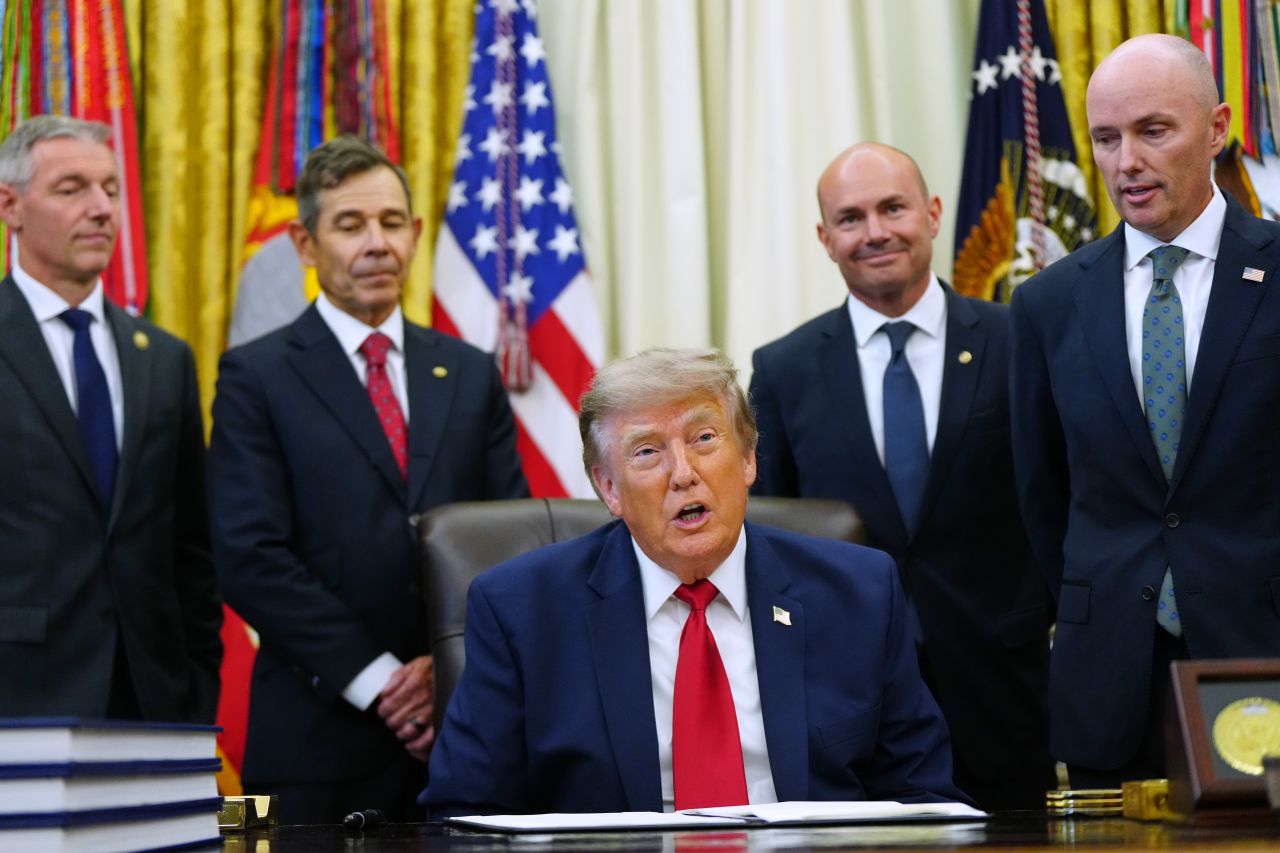
President Trump formally notified Congress that U.S. military action against Iran had restarted on July 7, after a ceasefire with Iran was declared over and the United States carried out new strikes on Iranian targets. According to a letter obtained by CBS News, Trump said the strikes were a response to Iranian attacks on commercial vessels in the Strait of Hormuz and were intended to be limited, measured, and aimed at military sites threatening U.S. forces and shipping. The letter was sent to comply with the War Powers Resolution, which requires the president to notify Congress within 48 hours of the start of hostilities and limits unauthorized military action to 60 days, with a possible 30-day withdrawal period.
The article explains that the administration had previously told Congress that hostilities had ended after a ceasefire in early April, but now argues that Iran’s recent attacks violated a memorandum of understanding and justified renewed U.S. strikes. Trump says the U.S. remains prepared to take further action if necessary. The issue has reignited a constitutional and political dispute over presidential war powers. House and Senate lawmakers had already passed or considered measures to restrict Trump’s ability to continue military operations against Iran without congressional authorization, and Democrats say they are exploring legal options. Some Republicans are divided, with critics such as Rep. Thomas Massie arguing that the administration is trying to evade the War Powers Resolution by treating the conflict as having been restarted rather than continuous. Sen. Adam Schiff has introduced a new resolution challenging the administration’s position and calling for U.S. forces to be removed from hostilities with Iran.
Entities: Donald Trump, Chuck Grassley, Iran, United States, U.S. Congress • Tone: analytical • Sentiment: neutral • Intent: inform
14-07-2026
President Donald Trump said the United States would take on the role of “guardian” of the Strait of Hormuz and suggested that other nations would have to pay the U.S. for securing the vital shipping lane. In remarks on Truth Social and in a Fox News interview, Trump said the U.S. would resume or reinforce a blockade on Iranian ports and vessels while allowing other countries free passage through the strait. He framed the move as a matter of fairness, arguing that the U.S. has protected the waterway for decades without compensation and should now be reimbursed for the costs of maintaining security.
The article places Trump’s comments in the context of a worsening U.S.-Iran confrontation over control of the Strait of Hormuz, one of the world’s most important maritime chokepoints. Maritime traffic has already fallen significantly since the U.S. and Israel launched strikes on Iran, and the dispute has complicated efforts to reach a broader peace arrangement. Iran, meanwhile, has accused the U.S. of violating earlier understandings and said the southern route recommended by U.S. officials is unsafe. Iranian forces have attacked several vessels, prompting additional U.S. airstrikes. Later, Iran’s Strait authority declared passage through the strait “currently unfeasible” because of hostile U.S. actions.
Overall, the article reports escalating rhetoric and military action on both sides, with Trump portraying U.S. control of the strait as necessary, justified, and potentially profitable, while Iran argues the U.S. has disrupted lawful navigation and violated agreements.
Entities: Donald Trump, Strait of Hormuz, United States, Iran, Fox News • Tone: analytical • Sentiment: neutral • Intent: inform
14-07-2026
CNBC’s Daily Open focuses on the sharp escalation in Middle East tensions after President Donald Trump reinstated a naval blockade in the Strait of Hormuz and proposed a 20% toll on cargo passing through the waterway. The move, framed by Trump as reimbursement for U.S. protection of the region, immediately rattled oil markets and drew criticism from shipping interests and international bodies, which questioned the legality and practicality of mandatory tolls. The article says the blockade and toll threat deepen investor anxiety after a ceasefire effectively collapsed and as the U.S. carried out another round of strikes on targets in Iran. The military situation remains tense, with Jordan intercepting missiles from Iran and sirens sounding in Bahrain. Beyond the conflict, the piece notes a new air-defense coalition involving Ukraine and its allies, aimed at countering Russia’s ballistic missile threat. On the economic front, the article highlights a key data day: Chinese exports rose at their fastest pace since 2021, helped by AI-related demand and tariff front-running, while U.S. CPI is expected to show softer headline inflation due to a sharp drop in energy prices even as core inflation remains elevated. The article closes with a brief business note on Chinese humanoid robotics startup LimX Dynamics, which is preparing for an IPO and raising large pre-IPO funding, reflecting the urgency among Chinese startups to list before market conditions or competition worsen.
Entities: Donald Trump, Strait of Hormuz, Iran, U.S. Central Command (CENTCOM), United Nations maritime agency • Tone: analytical • Sentiment: negative • Intent: inform
14-07-2026
Oil prices climbed on Tuesday after President Donald Trump announced plans to impose shipping fees on vessels transiting the Strait of Hormuz and to reinstate a blockade of Iranian ports, heightening fears of supply disruption in one of the world’s most critical oil chokepoints. U.S. West Texas Intermediate (WTI) crude for August delivery rose 1.83% to $79.57 per barrel, while Brent crude for September delivery increased 1.7% to $84.72, adding to a sharp 9.6% gain from the previous session. Trump said the U.S. would charge fees “at the rate of 20% on all cargo shipped” through the Strait and described the U.S. as the “guardian” of the route, while also announcing the blockade on Iranian ports near the strait. U.S. Central Command said the blockade would take effect at 4 p.m. ET on Tuesday. Citi warned that the policy materially raises the risk of further military escalation and could keep oil prices elevated for longer if Iran delays returning to an MoU until after the U.S. midterm elections. The article also notes that roughly one-fifth of global oil supplies passed through the Strait of Hormuz before earlier U.S.-Israeli strikes on Iran, and that shipping traffic had only recently begun recovering after a period of disruption caused by Iranian attacks on vessels and a temporary interim agreement between Washington and Tehran.
Entities: Donald Trump, United States, Iran, Tehran, Strait of Hormuz • Tone: urgent • Sentiment: negative • Intent: inform
14-07-2026
U.S. stock futures moved lower in early Tuesday trading after a volatile prior session driven by escalating tensions between the United States and Iran. Markets were reacting to President Donald Trump’s announcement that he would reinstate a blockade on Iranian shipping through the Strait of Hormuz and impose fees on vessels transiting the crucial waterway. The move sent oil prices sharply higher and weighed on equities, with the S&P 500, Nasdaq Composite, and Dow all finishing the previous session lower. Investors also watched Treasury yields rise as concerns grew that higher crude prices could keep inflation elevated.
The article situates U.S. market weakness within a broader global picture. Asia-Pacific markets traded mixed to lower, reflecting risk aversion tied to Middle East developments, although some individual markets such as Japan’s Nikkei and South Korea’s Kospi showed gains at points during the session. Safe-haven assets were mixed, with gold edging up and Treasury yields climbing. The piece also highlights notable corporate and macroeconomic catalysts ahead, including major U.S. bank earnings from JPMorgan Chase, Goldman Sachs, and Bank of America, alongside the day’s consumer price index release.
Beyond the immediate market reaction, the article includes several related global economic updates. China reported stronger-than-expected June exports and imports, pointing to resilient trade activity amid AI-related demand and tariff-related shipment rushing. Singapore posted second-quarter GDP growth above expectations, driven by manufacturing strength. Meanwhile, SK Hynix shares in South Korea extended losses following a Nasdaq debut, illustrating broader volatility in Asian equities. Overall, the article presents a market dashboard focused on geopolitical risk, inflation concerns, earnings season, and key economic data releases shaping investor sentiment.
Entities: Donald Trump, Iran, United States, Strait of Hormuz, Truth Social • Tone: analytical • Sentiment: negative • Intent: inform
14-07-2026
President Donald Trump’s proposal to impose a 20% fee on cargo moving through the Strait of Hormuz has revived concerns about global oil supply security and the possibility of a broader disruption to markets. While the fee itself would likely raise shipping costs—Lipow Oil Associates estimates it could add about $16 per barrel to crude shipped through the strait—analysts say the greater significance is the signal it sends: that tensions could escalate and the waterway could again be shut, removing large volumes of oil from the market.
The article explains that traders had been anticipating stronger supply after a U.S.-Iran memorandum of understanding signed last month, but that optimism has now weakened. Citi warned that implementing the fee could materially raise the risk of military escalation, and potentially prompt Iran to abandon the memorandum until after the U.S. midterm elections, a scenario that could keep oil prices elevated for longer.
Beyond the direct financial effect, experts stress the physical supply risk. If vessel traffic through the Strait of Hormuz remains depressed or the route is blocked, exporters may be unable to move crude out of the Gulf, eventually filling storage tanks and forcing producers to cut output. Recent shipping data show a sharp drop in traffic through the strait. Oil prices reacted higher, with both WTI and Brent extending gains after a strong prior session. The article also notes that this challenge may collide with signs of recovering Asian demand, especially from China, which could intensify pressure on supply if Middle Eastern exports become less reliable.
Entities: Donald Trump, Strait of Hormuz, oil prices, Lipow Oil Associates, Andy Lipow • Tone: analytical • Sentiment: negative • Intent: inform
14-07-2026
The article reports a sharp escalation in U.S.-Iran tensions centered on the Strait of Hormuz, a crucial global energy shipping route. U.S. Central Command said it completed a third consecutive night of strikes on Iranian military targets, saying the operation hit coastal defense systems, missile and drone sites, and maritime capabilities in order to further degrade Iran’s ability to attack commercial shipping. In retaliation, Iran struck Gulf targets, including two Emirati oil tankers in the Strait of Hormuz and triggered missile alerts in Bahrain. The UAE said the attacks caused fires, material damage, and the death of one Indian crew member, while eight others were injured.
The article emphasizes the broader economic and maritime consequences of the conflict. Shipping traffic through Hormuz is reportedly slowing, with vessel crossings down about 52% week over week, and ships increasingly taking more defensive routes. As a result, war-risk premiums are expected to rise sharply, and some shipowners and charterers are pausing decisions to transit the waterway. The escalation also appears to have unraveled a ceasefire tied to an interim U.S.-Iran agreement from the previous month intended to reopen the strait and allow 60 days of negotiations.
Markets reacted quickly to the developments, with Brent crude rising 2% to $85 a barrel and West Texas Intermediate up 2.3% to $80. The article frames the conflict as a direct threat to a corridor that historically carried a large share of the world’s oil and gas, underscoring the geopolitical and economic stakes of the widening confrontation.
Entities: U.S. Central Command, Iran, Strait of Hormuz, United Arab Emirates, Bahrain • Tone: urgent • Sentiment: negative • Intent: inform
14-07-2026
CNN political analyst Stephen Collinson argues that Iran is exploiting Donald Trump’s own negotiating style and habit of making hardline, self-contradictory deals to deepen the president’s dilemma over the renewed war. The article says Trump publicly criticized Iran for breaking an agreement, even though he has often abandoned international deals himself, including the Paris Climate Accord and the Obama-era Iran nuclear agreement. Iran, meanwhile, responded with sarcasm and leverage of its own, especially over the Strait of Hormuz, where it effectively controls a vital chokepoint for global shipping. The piece contends that the administration rushed into a vague memorandum of understanding (MOU) that Iran interpreted as strengthening its future authority over the waterway, rather than limiting it. Collinson argues that Trump’s team underestimated Iran’s willingness and ability to shape the deal’s meaning, and that the 60-day timeline for a broader settlement was unrealistic from the start.
The article also highlights the strategic stalemate now emerging. Despite US strikes and threats, Iran was able to disrupt shipping with relatively limited force, showing that geography and asymmetric tactics still give Tehran leverage against a much stronger military power. At the same time, both sides appear to be keeping escalation below all-out war for now: Trump has not launched the kind of broad attacks that could cause heavy US casualties or large-scale civilian destruction, and Iran has restrained its reprisals. Analysts quoted in the story suggest there is still room for diplomacy, even as daily attacks risk spiraling out of control. Ultimately, the article frames Trump as trapped in a war he says he has already won but cannot clearly end, with the central question remaining how he gets out of it.
Entities: Donald Trump, Iran, Abbas Araghchi, JD Vance, Vladimir Putin • Tone: analytical • Sentiment: neutral • Intent: analyze
14-07-2026
CNN’s live update article describes a rapidly escalating conflict between the United States and Iran, with the US launching a third consecutive night of strikes on Iranian territory while President Donald Trump told Congress that “limited” military action had resumed. The report says Iranian media described explosions in several locations, including Bandar Abbas and the islands of Kish, Qeshm, and Abu Musa, while the US Central Command said it was targeting a broad swath of Iranian military sites. The article also says the US will restore a naval blockade on vessels traveling to and from Iranian ports, a move that helped push global oil prices sharply higher.
The piece tracks a breakdown of the fragile ceasefire and details tit-for-tat attacks across the region. Iran reportedly struck US regional allies and claimed to have disabled “rogue supertankers,” while the UAE said Iranian missiles hit two of its tankers in Omani waters, killing one crew member. Bahrain also came under attack, and Saudi Arabia and Yemen’s Iran-backed Houthi rebels exchanged fresh strikes, suggesting wider regional spillover. The article places these events in a day-by-day timeline, showing how military activity intensified from July 11 through July 13.
The live update also includes reporting on the first-ever US use of one-way sea drones in an attack strike on Iran, as well as broader strategic consequences. It notes that Chinese exports rose strongly during the crisis, partially offsetting economic strain from Middle East disruption, while crude prices surged. Overall, the article presents a volatile and fast-moving war environment with mounting military, economic, and diplomatic consequences.
Entities: United States, Iran, Donald Trump, US Central Command (CENTCOM), Islamic Revolutionary Guard Corps (IRGC) • Tone: urgent • Sentiment: negative • Intent: inform
14-07-2026
The article argues that the recent US-Iran conflict has moved from a “phony peace” into a more openly unstable phase because Iran has resumed attacks on shipping in the Strait of Hormuz. The author frames the Strait as the central strategic issue in the war, contending that earlier ceasefires and a memorandum of understanding (MOU) were deceptive and fundamentally confused, since the United States and Iran interpreted the agreement in radically different ways. According to the article, the MOU did not secure true freedom of navigation; instead, it effectively allowed Iran to retain leverage over a waterway crucial to global commerce, including the possibility of charging transit fees after a short period. The piece argues that President Donald Trump was right to reject the arrangement, reimpose sanctions, and seek a stronger American posture in the Strait. However, it also warns that restoring control will be difficult because Iran has already shown it can disrupt shipping with relatively limited force, while the American public is tired of the war and expects it to end through diplomacy. The article concludes that Iran is unlikely to surrender its strategic advantage easily and that the current situation reflects the collapse of two widely touted but hollow peace efforts.
Entities: Strait of Hormuz, Iran, United States, President Donald Trump, US-Iran war • Tone: analytical • Sentiment: negative • Intent: analyze
14-07-2026
The article argues that President Donald Trump should treat reopening the Strait of Hormuz as a central strategic objective and use decisive military force, if necessary, to ensure freedom of navigation. It claims Iran has demonstrated bad faith by attacking a commercial ship and signaling that it intends to control the strait, despite any cease-fire or memorandum of understanding. The piece frames the issue not as a narrow U.S.-Iran bargaining chip but as a global principle: international waterways must remain open, and no country should be allowed to levy tolls or exert territorial control over them.
The author contends that the Strait of Hormuz is too important to world commerce to tolerate Iranian interference, noting that more than 20% of global oil passes through it and that closure would damage the global economy as well as U.S. consumers. The article also praises Trump’s tougher posture, including airstrikes and renewed sanctions, but criticizes any plan for the U.S. to collect reimbursement or shipping tolls, arguing that this would undermine the principle of free navigation. Instead, it calls for escalating pressure on Iran, including broader attacks on regime targets, seizing Iranian tankers, and possibly taking Kharg Island, until Tehran agrees to permanently reopen the strait before any broader negotiations proceed. Overall, the piece is a forceful intervention urging maximum pressure and uncompromising enforcement of maritime access.
Entities: Donald Trump, Iran, Tehran, Strait of Hormuz, United States • Tone: urgent • Sentiment: negative • Intent: persuade
14-07-2026
The article describes a rapid unraveling of President Trump’s claimed cease-fire with Iran, as he resumed military strikes, notified Congress that fighting had restarted, and reimposed a naval blockade in the Strait of Hormuz. In a striking policy reversal, Trump also announced that the United States would impose a 20% toll on shipping through the strait, even though his administration had previously denounced such fees as violations of international law when Iran had threatened them. The move triggered concern from lawmakers, energy markets, and international bodies, while also exposing contradictions in the administration’s stated principles about free passage and maritime law.
Trump framed the blockade and tolls as compensation for U.S. protection of a vital global shipping route and continued to threaten further strikes against Iran, including possibly bombing a fortified site near Natanz. Yet the article emphasizes that the administration has no clear strategy for ending the conflict, and that neither military escalation nor negotiation has produced a stable outcome. Congress has already voted to require Trump to end the war or seek authorization to continue it, but Trump continues to claim broad authority to conduct operations without lawmakers’ approval. The piece also notes that oil prices rose and stocks fell in response to the renewed tension, underscoring the conflict’s economic and geopolitical consequences.
Entities: Donald Trump, Iran, Strait of Hormuz, U.S. Congress, U.S. Central Command • Tone: analytical • Sentiment: negative • Intent: inform
14-07-2026
The article reports that President Trump’s proposed 20 percent fee on cargo moving through the Strait of Hormuz could sharply raise shipping costs for oil and other goods and intensify uncertainty in an already dangerous maritime conflict zone. Shipping experts say the charge, if applied to the value of cargo, could more than double the cost of moving oil through the strait. Using one estimate, a barrel of oil that costs about $80 could face an additional $16 in fees on top of the roughly $10 per barrel already charged for transport, raising total shipping costs to about $26 per barrel. For a very large tanker, that could mean more than $30 million in added expense, likely passed along in part to consumers.
The piece explains that the proposal comes as the United States and Iran are fighting for influence over ship traffic in the strait, a critical route for global energy supplies. The U.S. military has been guiding ships along routes closer to Oman, while Iran has objected and attacked vessels it says are using those routes. Trump also said he was reinstating a U.S. naval blockade of ships using Iranian ports. Ship operators described the fee as exorbitant, and analysts expressed skepticism that it would actually be implemented because of the burden it would impose.
Experts emphasized the practical dilemma for shipping companies: paying a potentially massive U.S. fee could expose them to Iranian attack, while avoiding it could mean defying the United States and dealing with Iran instead. The article also notes that U.S. officials have long opposed fees on international waterways, including when Iran has tried to impose them, with Secretary of State Marco Rubio recently saying tolls or fees are not allowed under existing international law. Iran’s foreign minister responded dismissively but said Tehran would be “fair.”
Entities: Donald Trump, Strait of Hormuz, United States, Iran, Oman • Tone: analytical • Sentiment: neutral • Intent: inform
14-07-2026
The article reports that two Emirati oil tankers, the Mombasa and Al Bahiyah, were struck by Iranian cruise missiles in the Strait of Hormuz, killing one Indian crew member and injuring eight others. The United Arab Emirates Ministry of Defence said the vessels were hit in the southern lane of the strait while in Omani territorial waters, and that fires caused by the attack were brought under control. The UAE condemned the incident as a blatant attack and said it reserves the right to respond firmly to threats against its security and stability.
The report places the attack in the context of a wider and rapidly escalating confrontation involving Iran, the United States, and Israel. The Islamic Revolutionary Guard Corps said it had hit two offending supertankers after repeated warnings, though it did not identify the vessels or confirm they were the same tankers mentioned by the UAE. The UK Maritime Trade Operations agency separately reported that a tanker had been struck by an unknown projectile near Oman, but Reuters could not verify whether that was the same incident. Iran did not immediately comment.
The article emphasizes the strategic importance of the Strait of Hormuz, through which a large share of global oil and gas shipments normally passes. It notes that the latest attacks come amid renewed US strikes on Iran, Iranian attacks on US bases, and growing uncertainty over an interim agreement to reopen the strait and reduce hostilities. The overall picture presented is one of rising military confrontation with potentially serious consequences for global energy flows and regional stability.
Entities: United Arab Emirates, UAE Ministry of Defence, Iran, Islamic Revolutionary Guard Corps (IRGC), Strait of Hormuz • Tone: urgent • Sentiment: negative • Intent: inform
14-07-2026
CNBC’s Daily Open reports that investors are on edge as renewed Middle East tensions push energy markets higher and weigh on risk sentiment. The main driver is U.S. President Donald Trump’s proposal of a 20% toll on cargo moving through the Strait of Hormuz, alongside his decision to reinstate the Iran blockade. Those developments sent Brent crude surging more than 9% in the previous session, marking its biggest daily gain since 2020, and kept oil prices elevated in Asian trading. The article says the geopolitical shock has already rippled into U.S. equities, with the S&P 500, Nasdaq Composite, and Dow all falling overnight amid fears of broader disruption and a tech sell-off.
Despite the volatility, U.S. stock futures were little changed as investors looked ahead to key earnings reports and inflation data, suggesting some temporary stabilization after the prior selloff. Asian markets also opened lower, reflecting a broader risk-off mood, while traders awaited China’s trade data. The piece notes that Singapore’s economy grew 5.7% in the second quarter, exceeding expectations thanks to strong manufacturing growth, offering a rare positive macroeconomic datapoint in an otherwise cautious market environment.
The article ends with a separate news item on a U.K.-Switzerland services free trade agreement. The deal is expected to boost British exports by billions of pounds, improve travel through e-gates, and remove data roaming charges, illustrating a contrasting story of economic cooperation and market-opening policy amid the more dominant geopolitical and market anxiety in the first half of the article.
Entities: Donald Trump, Strait of Hormuz, Iran blockade, Brent crude, S&P 500 • Tone: analytical • Sentiment: negative • Intent: inform