15-07-2026
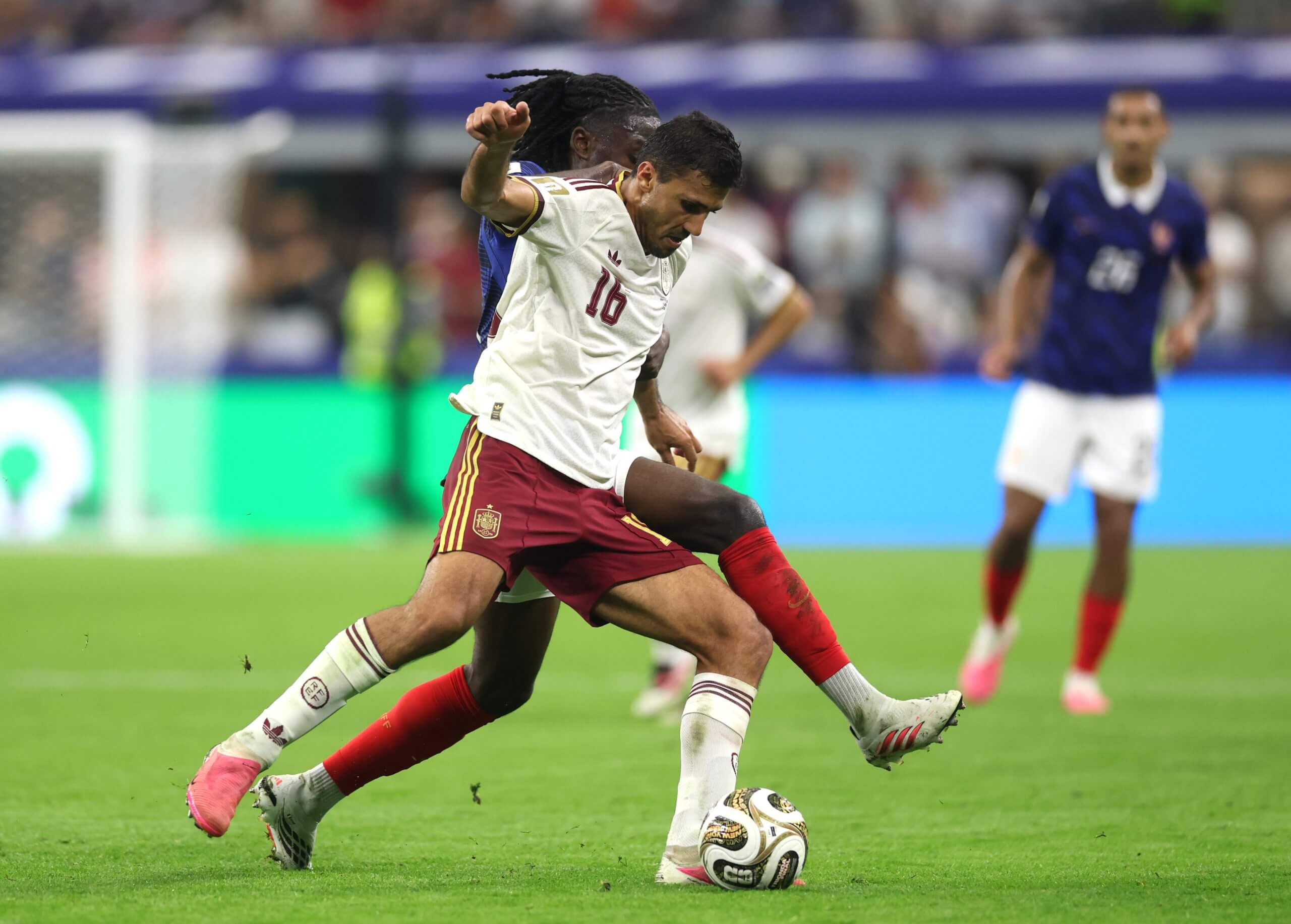
Spain advanced to the World Cup final with a convincing 2-0 semifinal victory over France in Arlington, Texas, delivering a disciplined and efficient performance against one of the tournament’s strongest teams. Mikel Oyarzabal opened the scoring from the penalty spot in the 22nd minute after 18-year-old Lamine Yamal drew a foul with sharp play in the penalty area. Spain then doubled its lead in the 58th minute when Pedro Porro finished a give-and-go sequence with Dani Olmo, effectively sealing the match. Yamal, who had just turned 19, was also close to scoring himself but was denied by a tight offside call. The win sent Spain to its second-ever World Cup final and its first since winning the title in 2010.
The article emphasizes Spain’s tournament dominance and recent history of success against France, noting that this was the third straight summer Spain had beaten France in a semifinal across major competitions. France, meanwhile, fell short of reaching a third consecutive World Cup final after winning the title in 2018 and losing the 2022 final on penalties. Instead, France will play in the third-place match in Florida. The piece also highlights Spain’s defensive excellence, including goalkeeper Unai Simón’s run of shutouts, and the team’s extended unbeaten streak in regular time. Overall, the article frames Spain’s victory as a statement win built on tactical control, youthful standout performances, and a strong defensive record.
Entities: Spain, France, World Cup, Arlington, Texas, MetLife Stadium • Tone: analytical • Sentiment: neutral • Intent: inform
15-07-2026
This CNN analysis argues that Spain’s 2-0 semifinal victory over France at the 2026 World Cup feels strikingly similar to Spain’s path to glory in 2010. The piece opens with the author admitting apprehension before the match, noting France’s dominance in the tournament and Spain’s inconsistent performances, especially relative to the hype surrounding Lamine Yamal. Once Spain wins comfortably, the article frames the result as a familiar pattern: controlled possession, strong defense, narrow wins, and gradual momentum, much like Spain’s 2010 championship run.
The article then explains how this current Spain team differs from, yet still echoes, the tiki-taka era. It contrasts the possession-heavy style that opponents have learned to counter with a more dynamic approach seen in Euro 2024, where wing play from Yamal and Nico Williams became central. Because both wingers were injured entering the World Cup, coach Luis de la Fuente initially struggled to adapt, particularly in the opening match against Cape Verde. Over time, however, he blended Spain’s classic midfield dominance with more direct, wing-based creativity.
Against France, the article highlights Rodri’s control in midfield, the excellence of Fabián Ruiz and Dani Olmo, and the solidity of Spain’s defense, including Laporte, Cubarsí, Porro, and goalkeeper Unai Simón. Yamal’s flashes of brilliance, especially the move that earned a penalty, and Williams’ late cameo reinforce the idea that Spain’s identity now combines tradition with flair. The article concludes that if Spain beats England in the final, the 2026 campaign will not just resemble 2010 — it will complete the historical echo and restore the joy of being world champions.
Entities: Spain, France, Germany, England, Cape Verde • Tone: analytical • Sentiment: positive • Intent: analyze
15-07-2026
CNN’s short video report captures the reaction of Spain supporters after Spain’s victory over France in a World Cup semifinal. Reporter Don Riddell asks fans what they believe was the key to the win, and the responses range from praise for teamwork to chants of “Cucurella,” showing how strongly many fans credited defender Marc Cucurella for the result. The piece highlights the playful, celebratory mood among Spanish fans and how a single player can become a symbol of national excitement after a major tournament victory. Rather than offering a deep tactical breakdown, the article focuses on fan sentiment, emphasizing the emotional and informal way supporters interpret a big sports moment. It frames the win through the lens of street-level fan reaction, making Cucurella the centerpiece of a lighthearted postgame narrative. The video format and brief report underscore that this is a quick, human-interest sports item centered on fan culture after a high-profile World Cup semifinal.
Entities: Spain, France, World Cup semifinal, Marc Cucurella, Don Riddell • Tone: neutral • Sentiment: positive • Intent: inform
15-07-2026
France’s World Cup campaign ended in disappointment with a 2-0 semi-final defeat to Spain, who outclassed Didier Deschamps’ side in Dallas and ended their bid for a third straight final. France had entered the match as tournament favorites after a string of impressive attacking performances, but they struggled badly against Spain’s controlled, technically superior approach. The article says France were overrun in midfield, with Adrien Rabiot hampered early by a yellow card and Aurélien Tchouameni lacking sharpness after injury. Spain’s game management, especially their ability to slow the tempo and dictate possession, exposed France’s weaknesses and left their attacking stars ineffective.
Michael Olise is singled out as a symbol of France’s failure, as he repeatedly lost possession and was neutralized by Rodri. Other French attackers, including Ousmane Dembélé, Bradley Barcola, Desiré Doué, and Kylian Mbappé, also failed to make an impact. Spain scored through a Mikel Oyarzabal penalty in the 22nd minute and a Pedro Porro goal shortly before the hour mark. Coach Didier Deschamps admitted France were second best, while substitute Rayan Cherki said Spain’s ability to control tempo made the match harder than expected. The article concludes with a picture of French devastation at the final whistle, underscoring how thoroughly Spain dismantled their World Cup dream.
Entities: France, Spain, Didier Deschamps, Kylian Mbappé, Lamine Yamal • Tone: analytical • Sentiment: negative • Intent: inform
15-07-2026
Spain reached the World Cup final after defeating France 2-0 in a semi-final that the article frames as a triumph of collective discipline over star power. Although France entered the match with elite individual talent — including Kylian Mbappe, Ousmane Dembele and Michael Olise — Spain controlled the game through organization, midfield superiority, and targeted tactical planning. The article argues that Spain’s success is rooted in their lack of reliance on superstardom: they are a cohesive team built on shared structure, trust, and adaptability rather than individual brilliance. Luis de la Fuente’s side identified France’s weaknesses, especially in midfield and on the left side through Lucas Digne, and exploited them effectively. Lamine Yamal, despite being only 19, played a major role in unsettling France and drawing the penalty that helped Spain establish control. Rodri’s return to top form was also central, while players such as Pedro Porro, Aymeric Laporte, Pau Cubarsi, and Dani Olmo contributed standout performances. The piece contrasts Spain’s understated, collective identity with France’s more glamorous roster, suggesting that Spain’s unity, tactical clarity, and resilience have made them the tournament’s most complete team. It also emphasizes the cultural and emotional strength within the Spanish camp, portraying a group that remains unbeaten in 37 matches and is now one game away from the World Cup title.
Entities: Spain, France, Kylian Mbappe, Lamine Yamal, Rodri • Tone: analytical • Sentiment: neutral • Intent: analyze
15-07-2026
The article explains how Spain scored its second goal in a 2-0 semifinal victory over France at the World Cup 2026, using a detailed, play-by-play breakdown of the attack. Spain’s move began with Pedro Porro receiving the ball on the right flank while France’s defense was set deep. Lamine Yamal’s positioning pulled Lucas Digne wide, opening space in France’s back line, but Porro chose to drive inward rather than pass wide, forcing two French defenders to close on him. Porro then slipped the ball to Dani Olmo near the top of the penalty arc, effectively bypassing France’s midfield. Although Olmo could not cleanly control the pass, he quickly redirected it back to Porro, who had continued his run into the newly created gap. Porro finished the move with two touches and a shot into the near post, scoring an unmarked goal. The article emphasizes the tactical breakdown in France’s defense and uses 3-D visualization, photographs, and computer vision-based tracking to reconstruct the play. It also notes that Spain had already taken the lead with a penalty kick and would next face the winner of England vs. Argentina in the other semifinal. Overall, the piece is a technical, visual analysis of one decisive goal rather than a broader match report.
Entities: Spain, France, World Cup semifinal, Pedro Porro, Lamine Yamal • Tone: analytical • Sentiment: neutral • Intent: analyze