16-05-2026
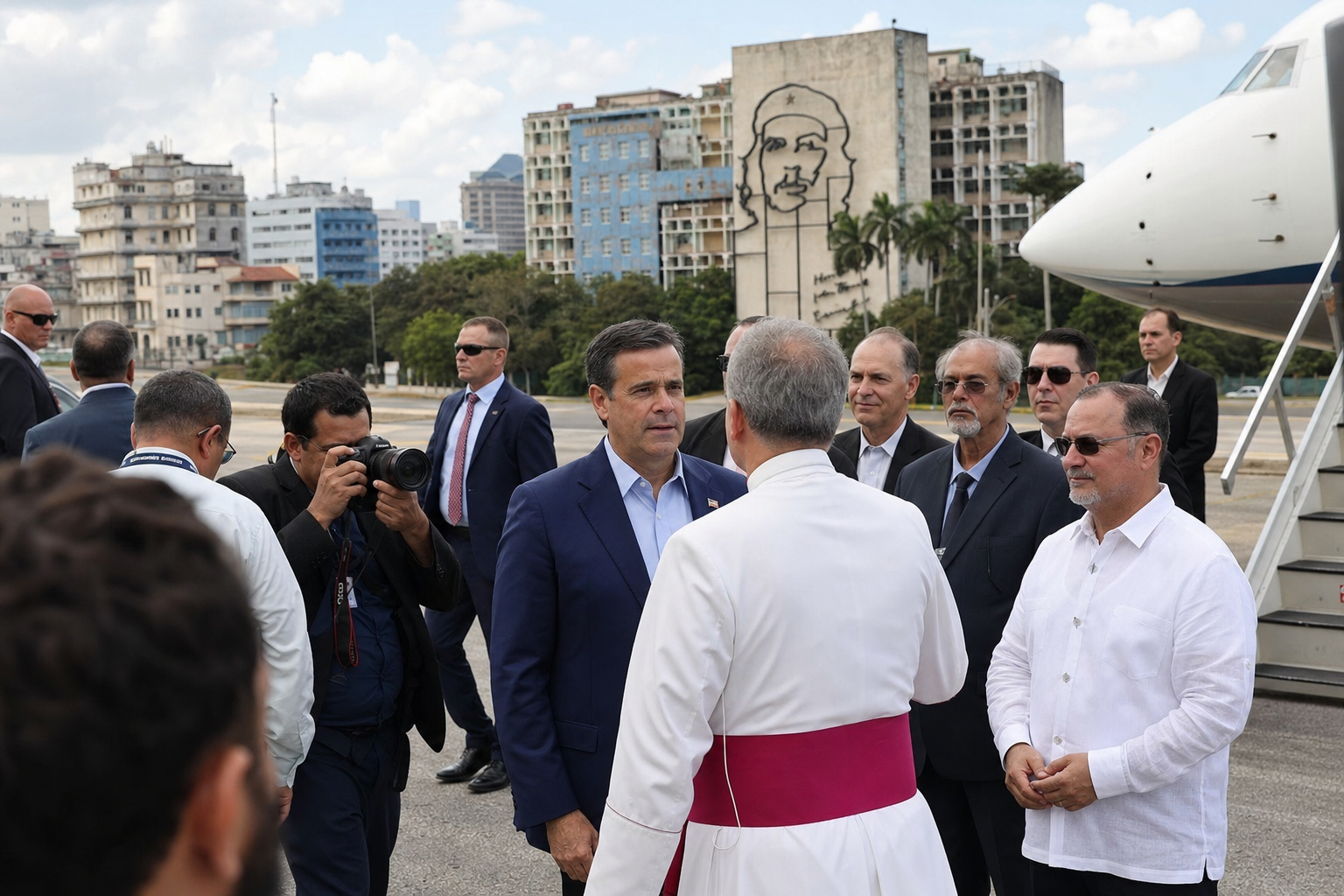
CIA director John Ratcliffe’s visit to Havana marks a rare diplomatic and intelligence-focused contact between the United States and Cuba at a moment of deepening crisis on the island. The meeting with Cuban officials took place as Cuba faces severe fuel shortages, nationwide blackouts, and growing public frustration, while the U.S. renewed an offer of $100 million in aid to relieve the effects of the country’s energy emergency. The U.S. said any assistance would be coordinated through the Catholic Church and other independent humanitarian organizations, not directly through the Cuban government, and framed the offer as contingent on Havana making broader political and security changes.
The article situates the visit within a wider escalation in U.S.-Cuba tensions. Washington is reportedly preparing charges against Raúl Castro over the 1996 shootdown of two civilian planes, a move that would significantly intensify pressure on the Cuban leadership. Cuba, meanwhile, blamed its worsening energy crisis on the U.S. blockade and sanctions, arguing that these measures are the real cause of the shortages that have shut schools, strained hospitals, and forced offices to close. Foreign Minister Bruno Rodríguez said Cuba was willing to hear the details of the aid proposal, but insisted that the best solution would be for the United States to ease or end its blockade. The article also highlights recent protests in Havana, where residents took to the streets after widespread blackouts, signaling mounting domestic anger over the crisis.
Entities: CIA, John Ratcliffe, Cuba, Havana, United States • Tone: analytical • Sentiment: negative • Intent: inform
16-05-2026
CIA Director John Ratcliffe made a rare trip to Havana, where he met with senior Cuban officials and delivered a message that the Trump administration is prepared to deepen economic and security engagement with Cuba if the government in Havana makes significant changes. The visit came as Cuba faces a severe energy crisis, including a major failure in its national power grid and ongoing shortages of oil and gas worsened by U.S. sanctions. According to the article, Ratcliffe met with officials including Raúl Rodríguez Castro, Cuba’s Interior Minister Lazaro Alvarez Casas, and the head of Cuban intelligence, and discussions reportedly covered intelligence cooperation, economic stability, and security concerns.
The article portrays the meeting as part of a broader U.S. strategy toward Cuba and Venezuela. U.S. officials also confirmed that the administration is moving toward indicting Raúl Castro in connection with the 1996 shootdown of planes from Brothers to the Rescue, an action that killed four people. At the same time, the State Department renewed an offer of $100 million in humanitarian aid for the Cuban people, contingent on Havana allowing delivery through independent groups such as the Catholic Church. Cuban officials said they were willing to accept aid if it followed recognized humanitarian procedures and said they want political dialogue despite strained relations.
The story places the Havana meeting in the context of President Trump’s public comments that talks with Cuba are imminent and broader U.S. concerns about Cuba, Venezuela, China, Russia, and Iran in the Western Hemisphere. Overall, it presents the visit as a high-level diplomatic signal combining pressure, conditional engagement, and humanitarian outreach amid Cuba’s worsening crisis.
Entities: John Ratcliffe, Cuba, Havana, Raúl Rodríguez Castro, Raúl Castro • Tone: analytical • Sentiment: neutral • Intent: inform
16-05-2026
Former Defense Secretary Robert Gates said Cuba’s greatest danger to the United States is not a direct military threat, but the possibility that the Communist-ruled island could collapse and trigger a large migration crisis toward Florida and the broader U.S. In a “Face the Nation” interview, Gates compared the risk to a repeat of the 1980 Mariel Boatlift, when roughly 125,000 Cubans fled to the United States and overwhelmed social services, especially in Florida. He argued that while Cuba’s support for Venezuela’s Nicolás Maduro and other regional activities may affect U.S. national security in peripheral ways, they do not amount to an imminent threat. The article places Gates’ comments in the context of escalating pressure from the Trump administration, including threats of military action, calls for reform, and an oil blockade that has pushed Cuba into a severe economic and fuel crisis. It also notes a rare trip by CIA Director John Ratcliffe to Havana, where U.S. officials reportedly signaled a willingness to expand economic and security engagement if Cuba makes major changes. Overall, the piece frames Cuba as a country in deep distress, with U.S. policy focused on coercion and concern about the consequences of instability rather than invasion.
Entities: Robert Gates, President Trump, Cuba, United States, Face the Nation with Margaret Brennan • Tone: analytical • Sentiment: negative • Intent: inform
16-05-2026
The article describes a renewed U.S. effort to indict Raúl Castro over Cuba’s 1996 shootdown of two civilian planes operated by Brothers to the Rescue, an exile humanitarian group. The attack killed four men, including three U.S. citizens, and became a defining trauma for the Cuban American community in Miami. According to people familiar with the matter, federal prosecutors in Miami are working toward a case that could include charges tied both to the shootdown and to drug trafficking. The move would be highly significant politically and symbolically, especially because Castro is no longer Cuba’s president but is still viewed as influential in the country’s leadership.
The article recounts the background of Brothers to the Rescue, founded during Cuba’s early-1990s migration crisis to save rafters at sea. Under José Basulto, the group also became increasingly confrontational with the Cuban government, flying near Cuban airspace and dropping human-rights leaflets, which Havana condemned as provocative and illegal. On Feb. 24, 1996, after pilots announced their route, Cuban MiG jets shot down the planes in international airspace without the standard warnings required under aviation conventions. The article details the victims, the radio exchanges, and the enduring grief of families and survivors. It also presents Cuba’s long-standing defense that the group violated its sovereignty and had engaged in anti-Cuban actions.
Overall, the piece frames the potential indictment as the culmination of three decades of demands for justice, while also underscoring the complexity of U.S.-Cuba relations and the unresolved legal and political legacy of the shootdown.
Entities: Raúl Castro, Brothers to the Rescue, Cuba, Miami, José Basulto • Tone: analytical • Sentiment: negative • Intent: inform