16-05-2026
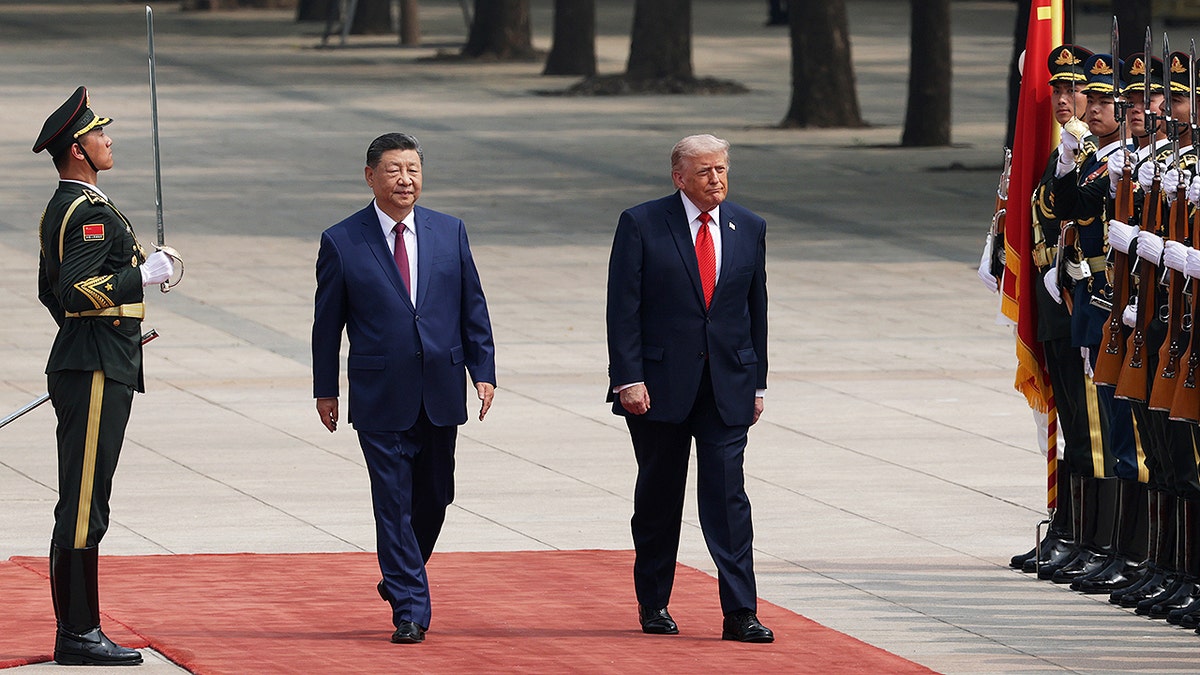
Fox News reports that President Donald Trump has pledged to raise the case of detained Chinese pastor Ezra Jin Mingri with Chinese President Xi Jinping during Trump’s Beijing visit, offering Jin’s family a rare point of hope after years of separation and fear. Jin, the founder and pastor of Zion Church, one of China’s largest independent underground Protestant congregations, has been detained for seven months along with dozens of other Christian leaders as part of a broader crackdown on unregistered churches. Jin’s daughter, Grace Drexel, who is pregnant with her third child and has not seen her father since 2020, speaks emotionally about the possibility that Trump might help secure his release and reunite the family. The article frames Jin as a gentle pastor rather than a political dissident and describes Zion Church as a community-oriented church operating outside Communist Party control. It also places the case within a wider context of worsening religious repression in China, especially under Xi Jinping’s “Sinicization” campaign and tightened religious regulations. The piece highlights Trump’s public statement that he would raise the matter, White House support for religious freedom, and the family’s hope that high-level diplomacy could lead to relief for a man allegedly suffering harsh detention conditions, including handcuffing, head shaving, and inadequate medical care.
Entities: Donald Trump, Xi Jinping, Ezra Jin Mingri, Grace Drexel, Zion Church • Tone: emotional • Sentiment: negative • Intent: inform
16-05-2026
The article centers on Mihrigul Tursun, a Uyghur woman living in the United States who says she endured torture, imprisonment, and the death of her infant son after returning to China from Egypt in 2015. Speaking in Washington, she recounts in harrowing detail her alleged detention inside China’s system of camps and prisons in Xinjiang, including underground cells, interrogations, overcrowding, and the psychological trauma that continues to affect her. Her testimony is framed against President Donald Trump’s visit to Beijing and his meeting with Chinese leader Xi Jinping, underscoring the broader geopolitical backdrop. Tursun says she speaks out despite fear for family members still in China and because she wants the world to understand that repression of Uyghurs is ongoing, not merely historical. The article also situates her experience within longstanding accusations from human rights groups and former detainees that China is conducting mass detention, forced labor, indoctrination, and religious repression against Uyghurs and other Muslim minorities. China denies the allegations, calling the facilities vocational training centers aimed at fighting extremism. Through Tursun’s account, the piece blends a personal survivor story with an indictment of China’s treatment of Uyghurs and a call for international attention during a high-stakes U.S.-China summit.
Entities: Mihrigul Tursun, Uyghurs, Xinjiang, Xinjiang Uyghur Autonomous Region, China • Tone: emotional • Sentiment: negative • Intent: inform
16-05-2026
Donald Trump said he raised the case of imprisoned Hong Kong democracy activist Jimmy Lai with Chinese President Xi Jinping during recent talks in Beijing, but came away with little optimism about Lai’s release. Trump described Lai as a “tough one” for Xi and later told Fox News that the response he received was “not positive” and that he did “not feel optimistic.” The article explains that Lai’s family and supporters had hoped Trump might use his meeting with Xi to secure freedom for the 78-year-old British citizen, who was sentenced to 20 years in prison after being convicted under Hong Kong’s national security law for foreign collusion and seditious publication.
The piece provides background on Lai’s role as the founder of Apple Daily and a prominent pro-democracy figure in Hong Kong. It notes that he was arrested in 2020 amid a sweeping crackdown on dissent following massive anti-government protests. The article also highlights growing concern over his health: his legal team and family say he has serious medical issues, has lost significant weight, and has been held in solitary confinement without air conditioning in extreme heat. These conditions have intensified fears that he could die in prison.
The article places Lai’s case in an international human-rights and diplomatic context, especially in the UK, where he is widely seen as being punished for defending the democratic promises associated with the 1997 handover of Hong Kong from British to Chinese rule. It also contrasts Trump’s stance with his occasional comments suggesting he had pressed Xi on the matter, while emphasizing that the latest talks produced no sign of progress.
Entities: Jimmy Lai, Donald Trump, Xi Jinping, Hong Kong, Apple Daily • Tone: neutral • Sentiment: negative • Intent: inform
16-05-2026
The article argues that Donald Trump’s approach to human rights in China marks a major break from long-standing US diplomatic practice. Historically, US presidents such as George W Bush and Barack Obama used visits to China to publicly raise cases involving religious freedom, civil society, Tibet, and dissidents, and those interventions sometimes produced practical benefits for activists. By contrast, Trump has shown little interest in making human rights central to his China policy, reflecting both his own indifference and a broader shift in US politics during the Trump era.
The piece contrasts Trump’s current posture with his earlier first term, when his administration included more China hawks and imposed sanctions tied to abuses in Xinjiang and Hong Kong. Now, however, those officials have been sidelined, while Trump has openly praised Xi Jinping as a “great leader” and a “friend.” The article also notes that China has become less responsive to Western criticism as its global power has grown, and that Chinese propaganda increasingly frames US criticism as hypocritical or hostile.
Although Trump told reporters that he did raise Jimmy Lai and detained pastors with Xi during their summit, human rights did not appear in the official readouts. The article suggests that any such mention was secondary to the broader reality: US human-rights advocacy has weakened, China is more confident and resistant, and activists inside China face a worsening environment under Xi Jinping’s crackdown on civil society, religious expression, ethnic rights, and dissent.
Entities: Donald Trump, Xi Jinping, Jimmy Lai, George W Bush, Barack Obama • Tone: analytical • Sentiment: negative • Intent: analyze