16-03-2026
The article discusses the feasibility of special forces obliterating Iran's nuclear programme. Last year, Donald Trump claimed to have 'obliterated' Iran's nuclear programme, but Iran retained a significant portion of its highly enriched uranium (HEU). Marco Rubio, America's secretary of state, suggested that a military operation might be necessary to seize the uranium. The article examines the possibility of such an operation, considering it one of the largest raids in military history. It highlights the challenges and complexities involved in conducting a successful mission deep inside Iran.
Entities: Iran, Donald Trump, Marco Rubio, America, Gulf states • Tone: analytical • Sentiment: neutral • Intent: inform
16-03-2026
The article discusses the ongoing war in the Persian Gulf involving Iran and its Arab neighbors, with a focus on Iran's praetorian guard, also known as the Revolutionary Guard. Despite the war, the Guard is expected to remain a significant force, albeit potentially diminished. The article analyzes the war's progress, the statements of key figures like Donald Trump, and the uncertainty surrounding Iran's new supreme leader. It also touches upon the potential escalation of the conflict and the involvement of Gulf states.
Entities: Iran, Persian Gulf, Donald Trump, Revolutionary Guard, Gulf states • Tone: analytical • Sentiment: neutral • Intent: inform
16-03-2026
The article discusses the escalating conflict between Iran and Gulf states, with a focus on the potential consequences of the conflict and the role of various actors, including the US, Israel, and Iran's praetorian guard. The article analyzes the impact of the conflict on the region, including the disruption of oil supplies and the potential for a wider war. It also examines the internal dynamics of Iran's leadership and the challenges facing the country's new leader. Additionally, the article touches on the implications of the conflict for Africa and the global economy.
Entities: Iran, Gulf states, US, Israel, Kenya • Tone: analytical • Sentiment: negative • Intent: inform
16-03-2026
The article discusses how commercial-satellite images, crucial for open-source intelligence (OSINT) in the Middle East, are disappearing due to Planet Labs' policy change. The company, which operates the world's largest fleet of Earth-imaging satellites, imposed a delay on publishing high-resolution images of the region after the war began, initially four days and later extended to two weeks. This change affects not only the Gulf states but also allied bases and Iran, hindering researchers and journalists' ability to monitor the conflict and hold governments accountable. The article highlights the significance of these images in providing transparency during the war and the implications of their unavailability.
Entities: Planet Labs, Middle East, Iran, Gulf states, open-source intelligence (OSINT) • Tone: negative • Sentiment: negative • Intent: inform
16-03-2026
The article discusses the escalating conflict between Iran and the US/Israel, with the war now in its third week. The conflict has resulted in significant casualties, with at least 2,400 people killed, including over 1,300 civilians. The US and Israel continue to bomb targets across Iran, while Iran launches missiles and drones at Israel and Gulf states. The conflict is affecting the Strait of Hormuz, a vital passageway for the world's energy supply. The article analyzes the progress of the war, the potential impact on Iran's praetorian guard, and the uncertainty surrounding Iran's new leader.
Entities: Iran, US, Israel, Donald Trump, Strait of Hormuz • Tone: analytical • Sentiment: negative • Intent: inform
16-03-2026
The article discusses how data analysis is being used to understand the progress of a war in the Middle East, specifically analyzing 1,615 distinct attacks, 2,875 missile and drone launches, and abnormal 'high-temperature events' at 208 strategic sites. The analysis aims to dispel the 'fog of war' by providing a clearer picture of events. The article touches on the potential escalation of the conflict, the involvement of Gulf states, and the impact on Iran's military capabilities.
Entities: Middle East, Iran, Gulf states, The Economist, war • Tone: analytical • Sentiment: neutral • Intent: inform
16-03-2026
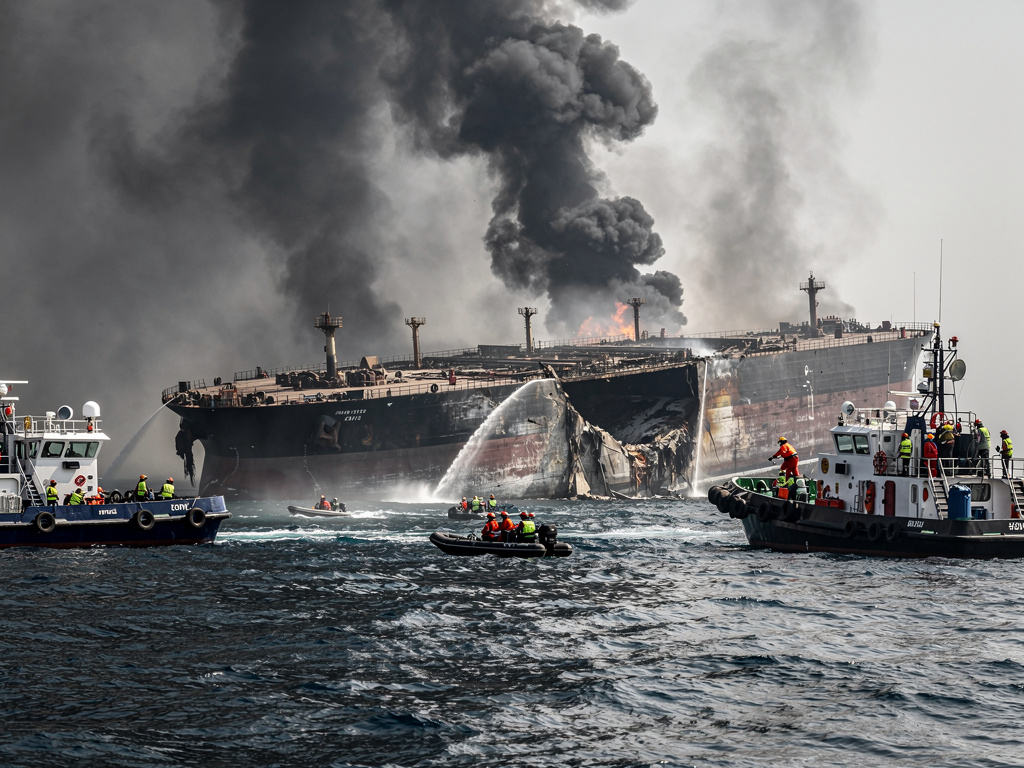
The US and Israel are engaged in a war with Iran, with the conflict entering its 17th day. US President Donald Trump is seeking international support to secure the Strait of Hormuz, a vital waterway for oil transport that has been effectively shut down since the war began. Despite reaching out to several countries, no firm commitments have been made to send warships. The conflict has led to a surge in oil prices, with Brent crude rising to $106.12 a barrel. The war has resulted in significant damage and loss of life across the Middle East, with over 2,200 people killed, including more than 1,300 in Iran. Israel has stated it plans to strike thousands of targets over the next three weeks, while Iran has claimed to have fired hundreds of missiles and drones at US and Israeli targets.
Entities: Donald Trump, US, Israel, Iran, Strait of Hormuz • Tone: neutral • Sentiment: negative • Intent: inform