15-06-2026
China’s national soccer team has once again missed out on the World Cup, but Chinese fans have found an unlikely figure to support: referee Ma Ning. Known in China as the “Card Master” for his strict, card-heavy officiating, the 46-year-old has become a viral symbol of national pride as the only Chinese referee at the tournament. Once a controversial figure who was often criticized by spectators, Ma has recently gained a surge of admiration on Chinese social media, where posts about him have drawn millions of views. He has also picked up major sponsorships from brands such as Lenovo and Hisense and built a large following on RedNote.
The article contrasts the usual fanfare of a national team send-off with China’s disappointment in failing to qualify again, noting that the country’s only World Cup presence remains through its match officials. Ma’s selection is especially notable because he has a long refereeing résumé, including FIFA certification since 2011, domestic top-flight matches, AFC competitions, and a fourth-official role at the 2022 World Cup in Qatar. He is joined at the 2026 tournament by two other Chinese officials. The piece also places Ma’s popularity in the broader context of China’s stalled soccer ambitions: the country has not qualified since 2002, and long-term plans to become a global soccer power have been slowed by corruption, financial troubles, the pandemic, and economic weakness. Still, fans are embracing Ma as a symbolic representative in place of the national team.
Entities: Ma Ning, China, World Cup, Chinese national soccer team, Chinese social media • Tone: analytical • Sentiment: neutral • Intent: inform
15-06-2026
This article is an interactive schedule-and-results tracker for the 2026 FIFA Men’s World Cup, presented by The Athletic. Rather than a traditional narrative story, it functions as a tournament dashboard that lets readers browse teams, groups, and match outcomes. The page lists all participating teams and highlights the competition’s group stage structure, organizing the field into groups A through L. It then provides a quick look at each group and the relative chances of advancement for the four teams in each group, expressed as percentages. For example, Mexico is shown with a strong chance in Group A, while powerhouses such as Spain, Germany, France, Argentina, England, and Brazil are all given very high odds of advancing. The tracker includes a broad set of national teams from across the world and is designed to be updated as the tournament progresses. Its main purpose is to help readers follow the 2026 World Cup schedule, scores, and results in one place, while also offering a snapshot of how likely each team is to move on from the group stage. The page is informational and data-driven, with no conventional reporting narrative beyond the standings-style display and the “Explore chances for each team” section.
Entities: 2026 FIFA Men’s World Cup, The Athletic, FIFA, United States, Mexico • Tone: analytical • Sentiment: neutral • Intent: inform
15-06-2026
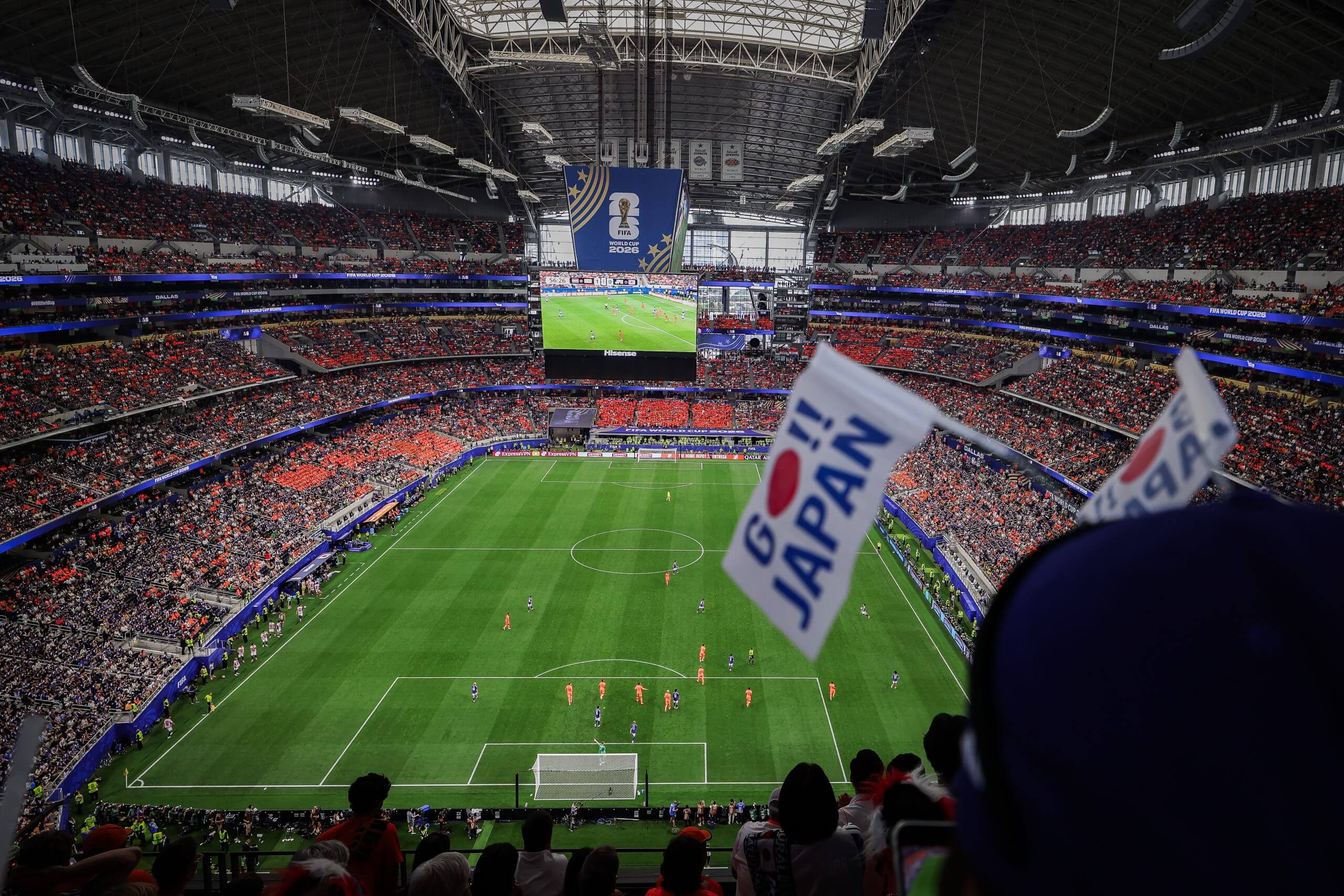
The article is a Matchday 4 World Cup recap that focuses on three major themes: the growing influence of diaspora players, questions about whether the final is being held in the best stadium, and the strong start by Asian teams in the expanded tournament. It opens with the day’s scoring output—19 goals total—highlighted by Germany’s 7-1 rout of Curacao and Sweden’s 5-1 win over Tunisia, alongside Japan’s dramatic late draw with the Netherlands and Ivory Coast’s narrow win over Ecuador. One major storyline is the way international football is increasingly shaped by players with multicultural and multinational backgrounds. Yasin Ayari’s muted goal celebration for Sweden against Tunisia becomes a symbol of the “diaspora World Cup,” with the article pointing to examples like Morocco fielding a starting XI entirely born outside the country, and Folarin Balogun choosing the United States over Nigeria or England. Another section argues that Dallas’s AT&T Stadium may be better suited than the final’s planned venue at MetLife Stadium, citing climate control, pitch quality, and the overall match experience compared with the problems of the New Jersey surface. The article also suggests Asian teams may be underestimated, noting Japan, South Korea, Australia, and Qatar’s positive early results and arguing that the group stage has shown more competitive balance than critics expected. It ends by previewing Monday’s matches, including Spain vs Cape Verde and Belgium vs Egypt.
Entities: World Cup 2026, Matchday 4, Germany, Sweden, Tunisia • Tone: analytical • Sentiment: neutral • Intent: analyze
15-06-2026
Michael Cox examines how the 2026 FIFA World Cup’s expansion to 48 teams complicates the idea of a nation’s “best” World Cup ever. Because earlier tournaments had different formats — 16, 24, 32, and now 48 teams — a team reaching the round of 16 in 2026 does not always equal a historic breakthrough. The article groups all 48 teams by their best previous World Cup finish, from champions such as Brazil, Germany, Argentina, France, Uruguay, England, and Spain to debutants like Cape Verde, Curacao, Jordan, and Uzbekistan. It highlights that some teams, such as Scotland, Algeria, Tunisia, New Zealand, Canada, and Ivory Coast, may be chasing milestones that are more complicated than simply “getting out of the group,” because earlier tournament structures or qualification systems sometimes made prior achievements more difficult or more impressive. The piece emphasizes how tournament expansion has created a historical comparison problem: some teams now have easier routes to knockout rounds than in past editions, while others are trying to match or surpass achievements from smaller, more demanding formats. Overall, it is a comparative, explanatory guide to the best World Cup performances in each nation’s history and what each team must do in 2026 to surpass them.
Entities: Michael Cox, The Athletic, 2026 FIFA World Cup, FIFA, Scotland • Tone: analytical • Sentiment: neutral • Intent: analyze
15-06-2026
BBC Sport reports that Somali referee Omar Artan will still receive his full World Cup 2026 tournament fee even though he was denied entry to the United States and therefore cannot officiate at the event. Artan, a FIFA referee since 2018 and the 2025 Confederation of African Football men’s referee of the year, was detained and questioned for 11 hours at Miami International Airport before border authorities rejected his diplomatic passport and single-entry US visa. A US official said his entry was refused over an alleged association with suspected members of terror organisations, while Artan said he was questioned about links to Al Shabab and denied knowing anything about the group. After being put on a flight back to Turkey, he received help from FIFA officials in Istanbul before continuing to Mogadishu. Despite the setback, BBC Sport says FIFA has committed to paying his salary because referees are paid after the tournament concludes and do not know the final fee in advance. The article also notes that Artan’s career remains on an upward trajectory: he has been invited to referee the UEFA Super Cup between Paris St-Germain and Aston Villa, and he has said he still hopes to officiate at the 2030 World Cup. The story situates his visa rejection within a wider discussion about travel restrictions and the impact they can have on participants in the 2026 World Cup.
Entities: Omar Artan, Somalia, United States, Miami International Airport, FIFA • Tone: analytical • Sentiment: neutral • Intent: inform