Articles in this Cluster
31-07-2026
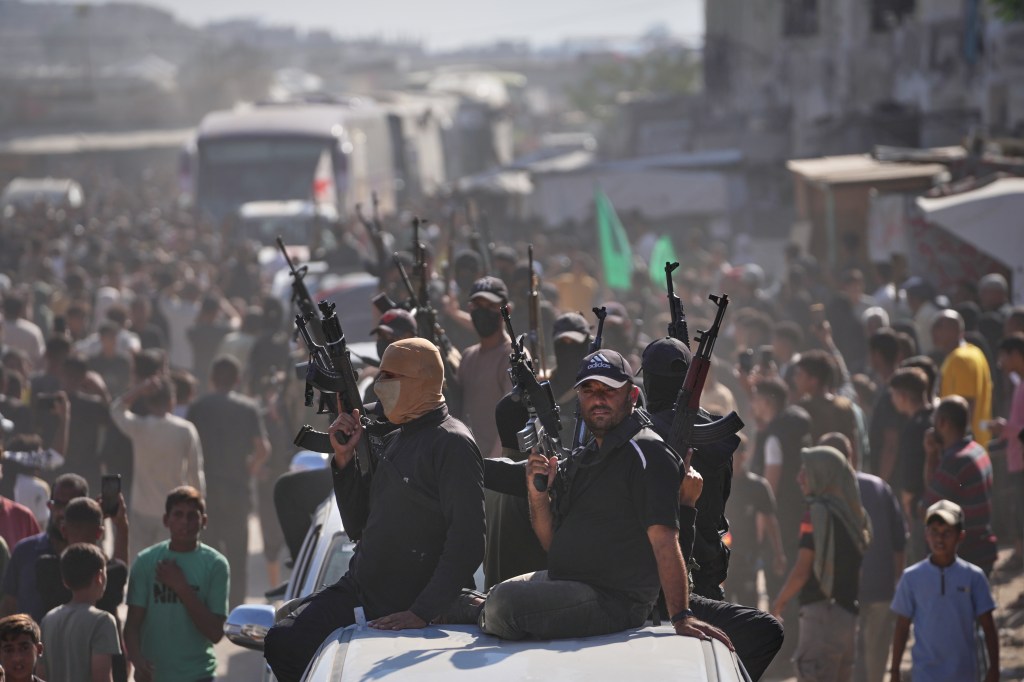
According to the article, Hamas has agreed for the first time to a framework that would require it to fully disarm in Gaza, a development that could become the most significant breakthrough yet in efforts to end the war. The plan reportedly calls for Hamas’s remaining heavy weapons to be inventoried and stored under Palestinian supervision, rather than handed over directly to Israel. The article says this shift came after months of difficult negotiations and after Hamas completed leadership elections that installed Gaza-based leader Khalil al-Hayya at the head of the movement. Palestinian officials involved in the talks believe the new leadership was prepared to make a historic political decision, influenced by the severe humanitarian crisis affecting more than two million Palestinians in Gaza.
At the same time, the article emphasizes that it is still unclear whether the deal will be implemented or respected by all sides. A Hamas negotiator described the discussions as long and extremely difficult, and stressed that Hamas insisted on the phrase “inventorying and storing weapons” under Palestinian oversight. The piece also notes widespread skepticism among Palestinians in Gaza, many of whom have seen repeated ceasefires and agreements collapse without delivering relief. For them, the key question is not the wording of the deal, but whether it will actually stop the war, allow displaced families to return home, and bring lasting improvement. The article concludes that while the move could be a first credible step toward ending a nearly three-year war, trust remains low and public enthusiasm in Gaza is muted.
Entities: Hamas, Rushdi Abualouf, Gaza, Cairo, Reuters • Tone: analytical • Sentiment: neutral • Intent: inform
31-07-2026
The article reports that US President Donald Trump said the new “Board of Peace” had reached an agreement on the complete disarmament of Hamas and other armed groups in Gaza, calling it a major step in the Trump-backed Gaza peace plan. A senior Hamas official told the BBC that Hamas had agreed in principle to disarm in Gaza, with an official statement expected soon. The board said the agreement followed months of intensive negotiations and would now move into implementation, including the inventorying and storage of Hamas’s remaining heavy weapons under Palestinian supervision and, eventually, dismantling its military infrastructure. The plan is part of the second phase of the US-brokered ceasefire framework, which also includes the withdrawal of Israeli troops and reconstruction of Gaza.
The article emphasizes that significant uncertainty remains, especially because Israel has not yet publicly accepted the reported terms. US officials said they were confident Israel would adhere to the plan, but also acknowledged Trump would be disappointed if Israel refused to withdraw. Reuters and other reports cited rare progress in Cairo talks, though an Israeli official said the terms were not satisfactory. The piece also notes that earlier Israeli and Hamas positions had clashed over disarmament, and that the broader peace proposal has been controversial, with concerns that the Board of Peace could supplant UN functions. The article places the development in the context of the wider war, citing high Palestinian and Israeli casualties, the 7 October 2023 Hamas attack on Israel, ICC arrest warrants, and a UN genocide finding rejected by Israel.
Entities: Donald Trump, Hamas, Board of Peace, Gaza, Israel • Tone: analytical • Sentiment: neutral • Intent: inform
31-07-2026
President Trump announced that Hamas and his proposed international "Board of Peace" have agreed to the next stage of a Gaza peace framework, centered on Hamas disarming and Israel eventually withdrawing from parts of Gaza. According to U.S. and Board of Peace officials, Hamas communicated through mediators that it accepted the final text of the plan, including decommissioning its weapons, though the timetable remains unclear and Israel has not publicly responded. The plan grows out of Trump’s earlier 20-point proposal to end the Israel-Hamas war, which began after Hamas’s Oct. 7, 2023 attack on southern Israel. That framework initially produced a ceasefire and hostage-release phase in October, while more difficult issues such as disarmament, security control, and Israeli redeployment were deferred.
The newly agreed roadmap would create a transitional Palestinian governing structure, the National Committee for the Administration of Gaza, under the auspices of the Trump-backed Board of Peace. A new police force and International Stabilization Force would handle security, while Hamas would relinquish governance and eventually all armed capacity. Officials said the agreement is still conditional and built on mutual distrust, meaning implementation will be phased and dependent on both sides meeting commitments. The article also notes skepticism from Israeli Defense Minister Gideon Sa'ar, who called Hamas’s earlier dissolution of its government a "trick" and insisted the group must disarm. Overall, the piece presents a potentially significant but still fragile step in negotiations over Gaza’s future governance, security, and the broader war’s endgame.
Entities: Donald Trump, Hamas, Board of Peace, Gaza Strip, Israel • Tone: analytical • Sentiment: neutral • Intent: inform
31-07-2026
President Donald Trump announced on Thursday that what he called the Board of Peace had reached a “historic” agreement for the complete disarmament of Hamas and other armed groups in Gaza, framing it as a major step in his broader, multi-phase plan to end the war in Gaza and establish a new governing structure. According to Trump and a Board of Peace official, the deal would require Hamas and other factions to hand over weapons in stages, beginning with police weapons and ending with personal weapons, while Israeli forces would eventually withdraw and an International Stabilization Force would help secure Gaza alongside a new Palestinian police force. However, Hamas had not confirmed the agreement by Thursday evening, and Palestinian Islamic Jihad said reports of the deal were inaccurate, underscoring the uncertainty surrounding implementation. The article notes that mediators from Egypt, Qatar, and Turkey had been involved in months of delicate negotiations, but skepticism remains in the region about whether Hamas will follow through. U.S. officials described the agreement as a breakthrough that could enable a transitional authority and a new Palestinian government in Gaza, while Israel reportedly remains cautious and unconvinced that Hamas will disarm. The article presents the announcement as a potentially significant diplomatic development, but one that still depends on conditions being met and on future verification steps.
Entities: Donald Trump, Hamas, Palestinian Islamic Jihad, Gaza, Israel • Tone: analytical • Sentiment: neutral • Intent: inform
31-07-2026
France 24 reports on a Hamas-Israel disarmament agreement announced by Donald Trump, describing it as a major step in a broader Gaza ceasefire and governance plan. According to Hamas and mediators cited in the article, the deal would require Hamas to place its weapons under the supervision of a committee linked to Trump’s Board of Peace, while Israeli forces would gradually withdraw from Gaza as disarmament progresses. The text of the agreement has not been made public, and Israel had not immediately responded at the time of publication.
The article explains that the plan’s implementation is now the central issue. Hamas negotiator Ghazi Hamad said the group accepted concessions to save civilians in Gaza, but warned that Hamas would only comply if Israel also met its obligations. A diplomatic source said the arrangement may involve eliminating tunnels, weapons depots, and production facilities. The Board of Peace said Hamas had agreed to a detailed roadmap and that a National Committee for Administration of Gaza would begin a phased transition to full authority, with an International Stabilization Force and a new Palestinian police force expected to help secure the territory.
France 24 also places the announcement in the broader context of Gaza’s continued devastation despite an October ceasefire. Israel still occupies more than half the territory, air and artillery strikes continue, and Palestinian casualties remain high. The article notes that tens of thousands still live in tents and that Hamas accuses Israel of repeated ceasefire violations. The next stage of negotiations is expected to be discussed in Cairo with mediators from the US, Qatar, Turkey, and Egypt, while officials stress that verification and sequencing of withdrawal and decommissioning will be critical.
Entities: Hamas, Donald Trump, Israel, Gaza Strip, Board of Peace • Tone: analytical • Sentiment: neutral • Intent: inform
31-07-2026
President Donald Trump announced that a deal had been reached for Hamas to disarm and for Israeli forces to withdraw from Gaza, presenting it as a major breakthrough in the long effort to implement the second phase of a U.S.-brokered ceasefire. But the article emphasizes that the agreement is far from settled: neither Hamas nor Israel immediately confirmed it, timelines for disarmament are vague, and major parts of the plan remain unresolved. According to officials, the framework would unfold in carefully staged phases, with a Gaza police force handing over weapons to a technocratic, Board of Peace-backed administration within two weeks, while heavier weapons, tunnel decommissioning, and the dismantling of Hamas infrastructure could take 200 to 350 days or longer. The piece underscores widespread skepticism, especially from Israel, about whether Hamas will truly give up its weapons or its influence in Gaza. It also notes the broader political and military context: the war began with Hamas’s Oct. 7, 2023 attack on southern Israel, Israel’s retaliation has devastated Gaza, and more than half the territory remains under Israeli control. The article frames Trump’s announcement as optimistic and potentially significant, but far from conclusive, with deep uncertainty over implementation, Hamas’s intentions, Israel’s response, and the role of Iran.
Entities: Donald Trump, Hamas, Israel, Gaza, Benjamin Netanyahu • Tone: analytical • Sentiment: neutral • Intent: inform
31-07-2026
President Trump said his newly formed Board of Peace had reached a "historic agreement" with Hamas to move toward the group’s complete disarmament in Gaza, calling it a "monumental step" toward lasting peace and security. According to Trump and U.S. officials, the deal is part of a broader 20-point peace plan first unveiled in September and would be implemented in phases. Hamas would be required to give up its weapons, disclose and dismantle its tunnel network, and allow Gaza to transition to a new Palestinian government working with the Board of Peace and an international stabilization force. In return, once disarmament is completed, Israeli forces would withdraw from Gaza and reconstruction would begin sector by sector.
The article notes that the process has been under negotiation for eight months and was finalized through mediators. U.S. officials said Israel is skeptical Hamas will fully disarm, but described the arrangement as a conditions-based deal rather than one relying on trust. Hamas, meanwhile, warned that it would not implement the agreement if Israel does not meet its own obligations, including withdrawing from Gaza and refraining from interference in the disarmament process. A U.S. official also said Iran tried unsuccessfully to discourage Hamas from accepting the deal.
Trump framed the agreement as a major breakthrough after the October 7 attacks, thanked negotiators and regional mediators Egypt, Qatar, and Turkey, and said Gaza would no longer be used as a base for terror attacks. The article presents the deal as a highly ambitious and still fragile step in a long-running effort to reshape Gaza’s security and governance.
Entities: Donald Trump, Board of Peace, Hamas, Gaza, Israel • Tone: analytical • Sentiment: neutral • Intent: inform
31-07-2026
The article explains the Trump-backed Board of Peace, an international body created earlier in the year as part of President Trump’s Gaza peace initiative. Initially framed as a mechanism to oversee a post-cease-fire reconstruction effort in Gaza, the board’s central challenge has been the disarmament of Hamas, which the article describes as a monumental and politically fraught task because the group views surrendering its weapons as equivalent to capitulation. According to Trump’s social media post, the board reached an agreement for Hamas to begin disarming, though the article notes that the details are unclear and that any actual disarmament process would be extremely difficult to carry out.
The story places the Board of Peace within a broader Trump-led strategy to shape Gaza’s future and, more ambitiously, to create an alternative diplomatic structure that could rival the United Nations while keeping Trump in a central leadership role. Under the board’s charter, Trump serves as chairman and could retain that position even after leaving office, with the article noting he may remain chairman “until he resigns it.” The piece also describes the board’s membership rules, including a requirement that countries contribute more than $1 billion to become permanent members, while still allowing others to join without charge for at least three years. More than 20 countries are listed as founding members, including several Middle Eastern states and Hungary, but important European allies such as France and Spain have declined to participate, citing concerns about international law and the U.N.
Entities: Donald Trump, Board of Peace, Hamas, Gaza Strip, Israel • Tone: analytical • Sentiment: neutral • Intent: inform
31-07-2026
US President Donald Trump announced that a “historic agreement” had been reached for the complete disarmament of Hamas as part of a broader Gaza peace framework, describing it as a critical step toward lasting peace and security and the formation of a new Palestinian government in Gaza. According to senior Hamas officials speaking to AFP, the deal reached with Israel includes provisions for Hamas’s weapons to be decommissioned gradually and for Israeli forces to withdraw from the Gaza Strip in phases. A Hamas negotiator said the movement was making concessions to protect civilians in Gaza from killing and displacement. The report says the disarmament issue has been one of the main obstacles in the ceasefire process that has been in place since October, and despite that truce, violence has continued, including Israeli strikes that killed at least four people on July 30. The article also outlines the next phase of Trump’s 20-point peace plan, which envisions a technocratic Palestinian body taking over day-to-day governance in Gaza, supported by an international stabilization force. However, key disagreements remain: Hamas says it is awaiting Israel’s response to its proposed amendments, while an Israeli source says the proposal still does not fully satisfy Israel’s demands for total disarmament and demilitarization of Gaza.
Entities: Donald Trump, Hamas, Israel, Gaza Strip, Cairo • Tone: analytical • Sentiment: neutral • Intent: inform